58 Results for "

cholinergic agonist

" in MedChemExpress (MCE) Product Catalog:
Products (58)

58 Results for "cholinergic agonist" in MCE Product Catalog:

35
35 Publications Verification
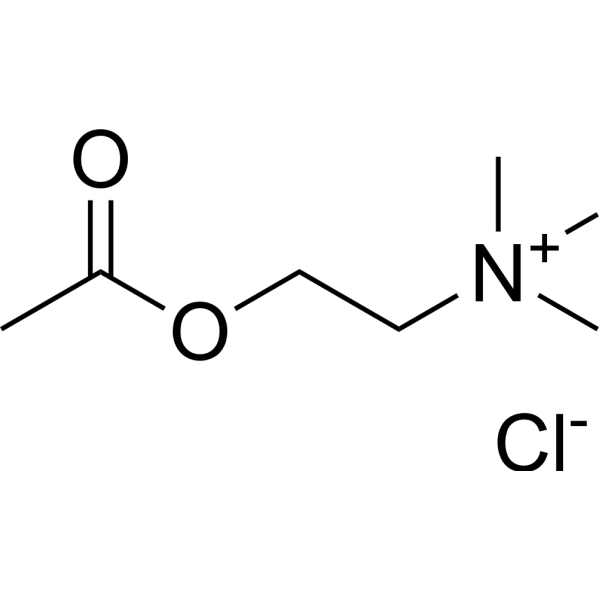
Cat. No.: HY-B0282
CAS No.: 60-31-1
Synonyms: ACh chloride
Acetylcholine (ACh) chloride, a neurotransmitter, is a potent cholinergic agonist. Acetylcholine chloride is a modulator of the activity of dopaminergic (DAergic) neurons through the stimulation of nicotinic acetylcholine receptors (nAChRs) . Acetylcholine chloride inhibits p53 mutant peptide aggregation in vitro .
loading...
    loading...
35
35 Publications Verification
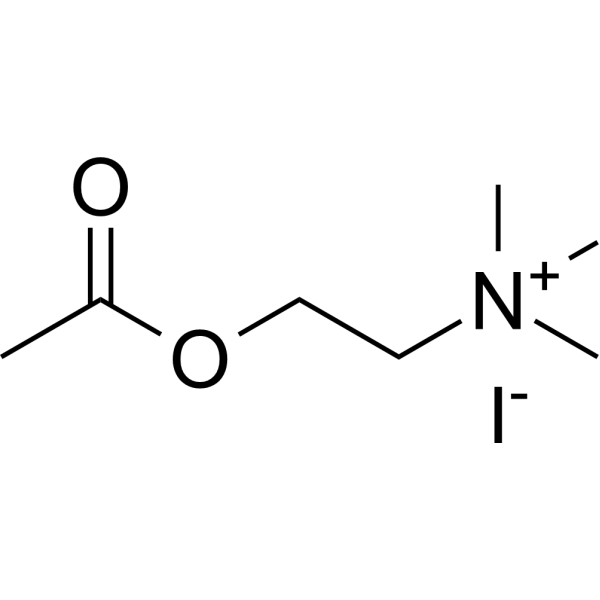
Cat. No.: HY-101086
CAS No.: 2260-50-6
Purity:  98.59%
Synonyms: ACh iodide
Acetylcholine (ACh) iodide, a neurotransmitter, is a potent cholinergic agonist. Acetylcholine iodide is a modulator of the activity of dopaminergic (DAergic) neurons through the stimulation of nicotinic acetylcholine receptors (nAChRs) . Acetylcholine iodide inhibits p53 mutant peptide aggregation in vitro .
loading...
    loading...
35
35 Publications Verification
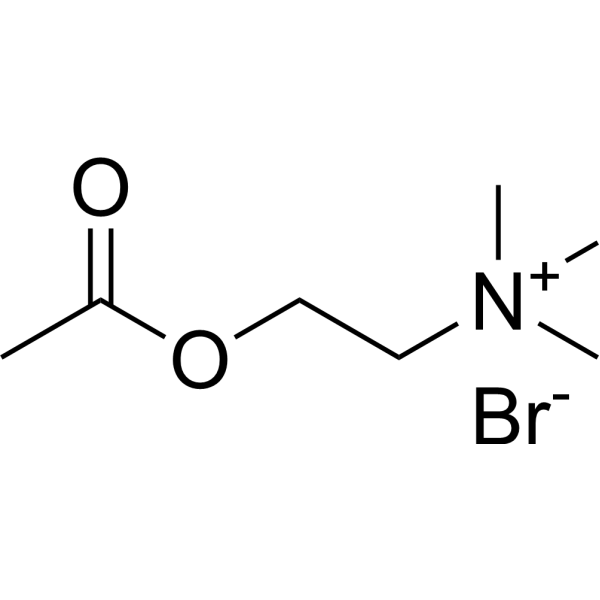
Cat. No.: HY-B0282A
CAS No.: 66-23-9
Synonyms: ACh bromide
Acetylcholine (ACh) bromide, a neurotransmitter, is a potent cholinergic agonist. Acetylcholine bromide is a modulator of the activity of dopaminergic (DAergic) neurons through the stimulation of nicotinic acetylcholine receptors (nAChRs) . Acetylcholine bromide inhibits p53 mutant peptide aggregation in vitro .
loading...
    loading...
9
9 Cited Publications
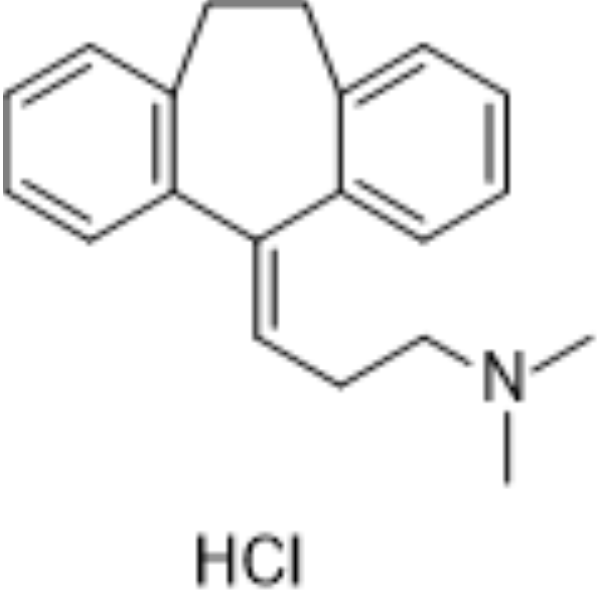
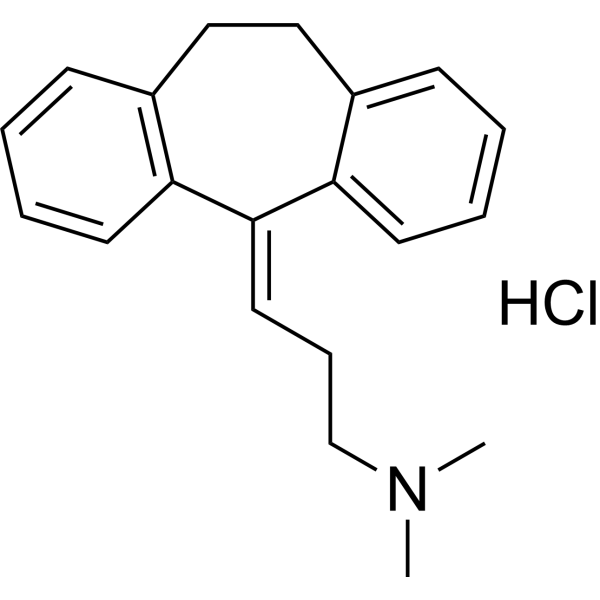
Cat. No.: HY-B0527A
CAS No.: 549-18-8
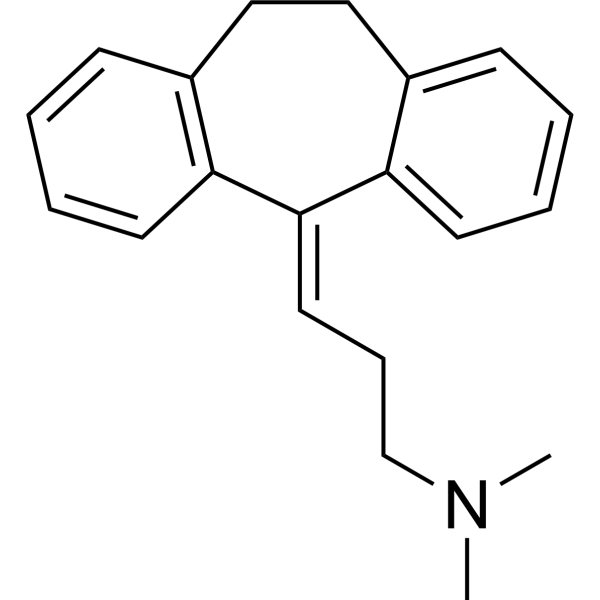
Amitriptyline hydrochloride is an orally active tricyclic antidepressant (TCA). Amitriptyline hydrochloride mainly exerts its antidepressant effect by blocking SERT (Ki = 3.45 nM) and NET (Ki = 13.3 nM), thereby increasing the concentrations of 5-hydroxytryptamine (5-HT) and norepinephrine (NE) in the synaptic cleft. Amitriptyline hydrochloride is also an agonist at α2A and TrkA/TrkB receptors, thereby exerting analgesic and neurotrophic activities (inhibiting cell apoptosis). Amitriptyline hydrochloride can reduce inflammation, angiogenesis and fibrosis. Amitriptyline hydrochloride binds to DAT (with Ki = 2.58 μM). Amitriptyline hydrochloride has high affinity for a series of receptors and can antagonize muscarinic cholinergic receptors (M1/M2/M3/M4/M5 receptors) (Ki = 11-24 nM), H1 receptors (Ki = 0.5-1.1 nM), adrenergic α1 receptors (Ki = 4.4 nM), etc., resulting in a series of side effects. Amitriptyline hydrochloride can block sodium channels and hERG potassium channel (IC50 = 4.78 μM) and it has cardiotoxicity .
loading...
    loading...
9
9 Cited Publications
Cat. No.: HY-B0527
CAS No.: 50-48-6
Amitriptyline is an orally active tricyclic antidepressant (TCA). Amitriptyline mainly exerts its antidepressant effect by blocking SERT (Ki = 3.45 nM) and NET (Ki = 13.3 nM), thereby increasing the concentrations of 5-hydroxytryptamine (5-HT) and norepinephrine (NE) in the synaptic cleft. Amitriptyline is also an agonist at α2A and TrkA/TrkB receptors, thereby exerting analgesic and neurotrophic activities (inhibiting cell apoptosis). Amitriptyline can reduce inflammation, angiogenesis and fibrosis. Amitriptyline binds to DAT (with Ki = 2.58 μM). Amitriptyline has high affinity for a series of receptors and can antagonize muscarinic cholinergic receptors (M1/M2/M3/M4/M5 receptors) (Ki = 11-24 nM), H1 receptors (Ki = 0.5-1.1 nM), adrenergic α1 receptors (Ki = 4.4 nM), etc., resulting in a series of side effects. Amitriptyline can block sodium channels and hERG potassium channel (IC50 = 4.78 μM) and it has cardiotoxicity .
loading...
    loading...
4
4 Cited Publications
Cat. No.: HY-12640
CAS No.: 22204-24-6
Purity:  99.97%
Synonyms: Pyrantel embonate
Target:  

Parasite nAChR

Research Areas:  

Infection

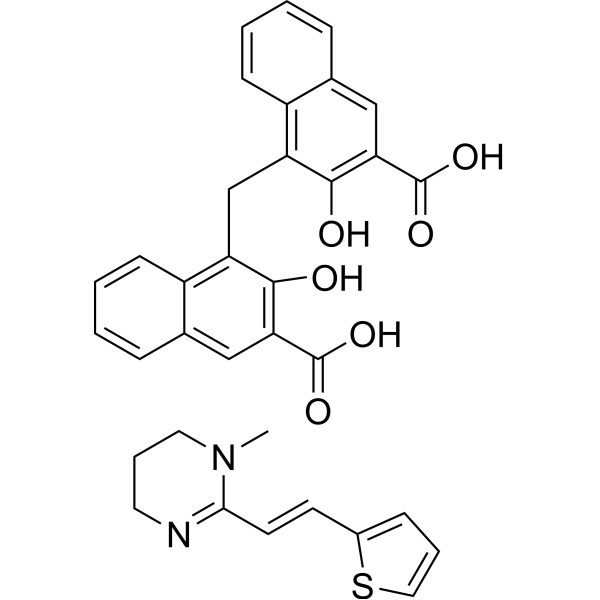
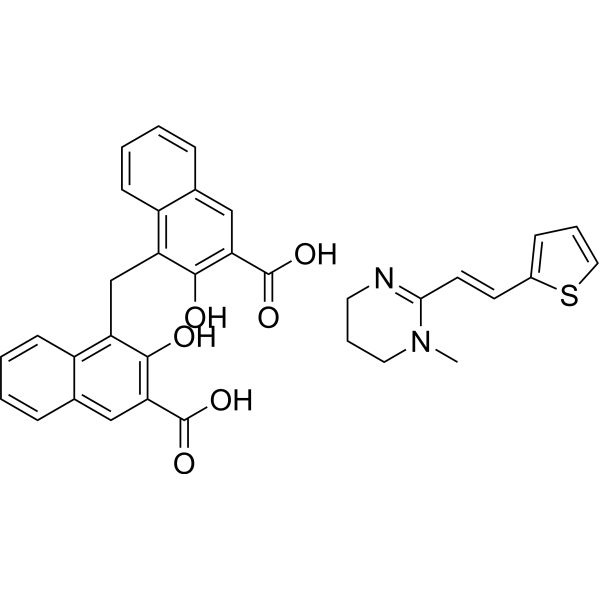
Pyrantel pamoate is an orally active antiparasitic agent. Pyrantel pamoate induces spastic paralysis in parasites via actions on neural and muscular cholinergic receptors as a nicotinic acetylcholine receptor (nAChR) agonist. Pyrantel pamoate eliminates both immature and mature endoparasites in horses. Pyrantel pamoate can be used in research related to parasitic infections .
loading...
    loading...
1
1 Cited Publications
Cat. No.: HY-B0282S1
CAS No.: 344298-95-9
Synonyms: ACh-d9chloride
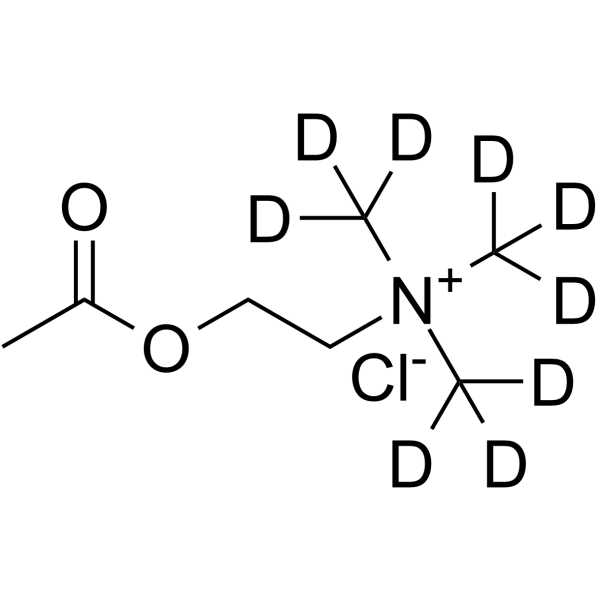
Acetylcholine-d9 (ACh-d9) chloride is the deuterated-labeled Acetylcholine (chloride) (HY-B0282). Acetylcholine (ACh) chloride, a neurotransmitter, is a potent cholinergic agonist. Acetylcholine chloride is a modulator of the activity of dopaminergic (DAergic) neurons through the stimulation of nicotinic acetylcholine receptors (nAChRs) . Acetylcholine chloride inhibits p53 mutant peptide aggregation in vitro .
loading...
    loading...
1
1 Cited Publications
Cat. No.: HY-12641
CAS No.: 33401-94-4
Purity:  98.69%
Target:  

Parasite nAChR

Research Areas:  

Infection

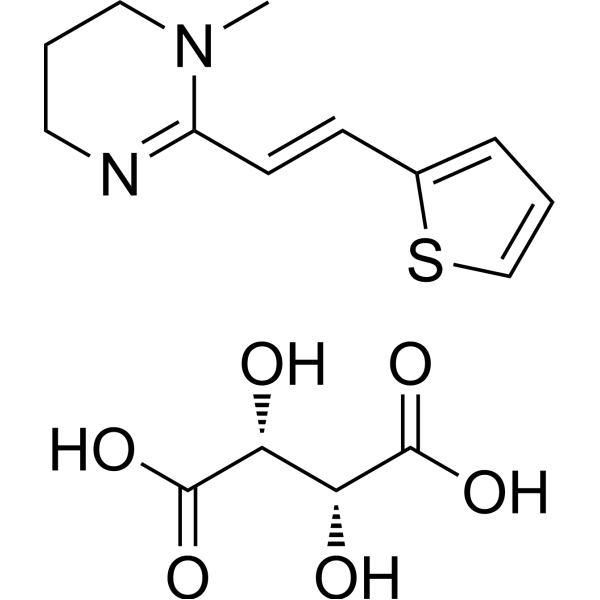
Pyrantel tartrate is an orally active antiparasitic agent. Pyrantel tartrate induces spastic paralysis in parasites via actions on neural and muscular cholinergic receptors as a nicotinic acetylcholine receptor (nAChR) agonist. Pyrantel tartrate eliminates both immature and mature endoparasites in horses. Pyrantel tartrate can be used in research related to parasitic infections .
loading...
    loading...
Cat. No.: HY-B0282S
CAS No.: 344298-94-8
Synonyms: ACh-d4 chloride
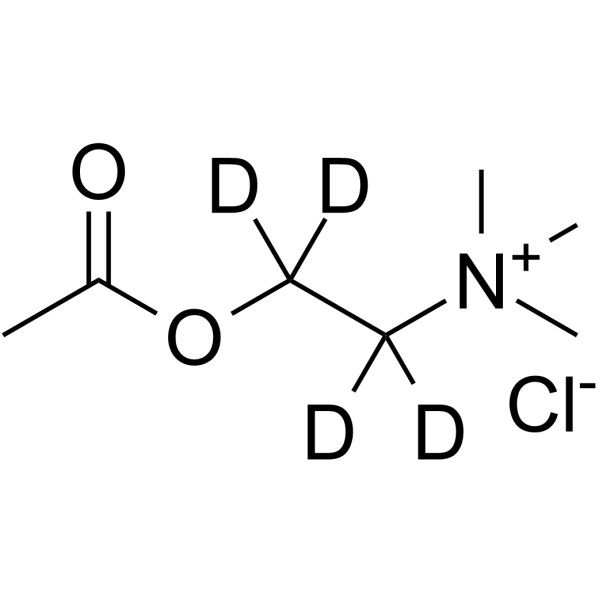
Acetylcholine-d4 (ACh-d4) chloride is the deuterated-labeled Acetylcholine chloride (HY-B0282). Acetylcholine (ACh) chloride, a neurotransmitter, is a potent cholinergic agonist. Acetylcholine chloride is a modulator of the activity of dopaminergic (DAergic) neurons through the stimulation of nicotinic acetylcholine receptors (nAChRs) . Acetylcholine chloride inhibits p53 mutant peptide aggregation in vitro .
loading...
    loading...
Cat. No.: HY-W027553
CAS No.: 62732-44-9
Synonyms: NIK-247 free base; Amiridine free base
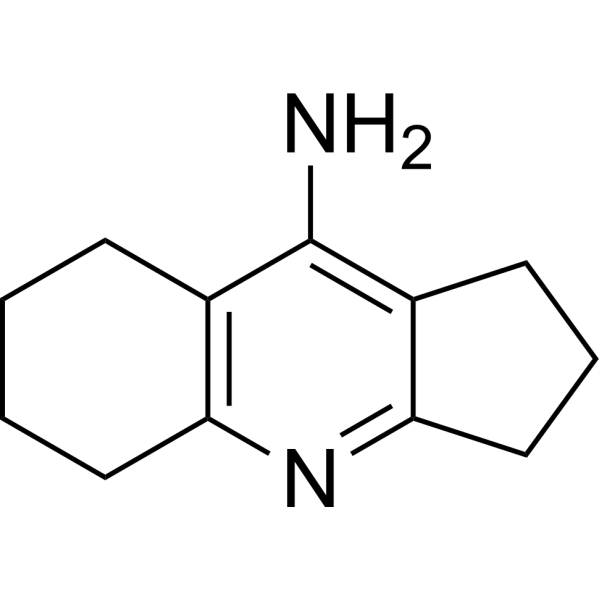
Ipidacrine is orally active and brain-penetrant AChE and BuChE inhibitors with IC50 values of 1 μM and 1.9 μM, respectively, which is also a partial agonist of M2-cholinergic receptors and a reversible cholinesterase inhibitor. Ipidacrine has a stimulating effect on neuromuscular transmission and excitation along the nerve fibres with a moderately anti-pain effect. Ipidacrine is an aminopyridines and is structurally similar to Tacrine (HY-111338). Ipidacrine is effective in various amnesia models, improves erectile function and inhibits K + and Na +-channels in the neuronal membrane in diabetic rats. Ipidacrine is promising for research of Alzheimer’s disease, ischaemic stroke, idiopathic neuropathy of the facial nerve, diabetes mellitus-induced erectile dysfunction and other deficits in central or peripheral cholinergic deseases .
loading...
    loading...
Cat. No.: HY-159829
CAS No.: 1803346-98-6
Synonyms: NBI-1117568; HTL-0016878
Target:  

mAChR

Research Areas:  

Neurological Disease

Direclidine (NBI-1117568, HTL-0016878) is a selective orthosteric agonist targeting the muscarinic acetylcholine M4 receptor, exhibiting very low affinity for M1, M2, M3, and M5 receptors. It binds to the orthosteric site of the M4 receptor in a non-covalent, competitive manner. Direclidine specifically activates the M4 receptor, inhibiting the release of acetylcholine from striatal cholinergic interneurons, thereby regulating the balance of the dopaminergic system and reducing psychiatric symptoms associated with excessive dopamine release. Direclidine can improve symptoms associated with neuropsychiatric disorders and is used in research on schizophrenia and other neuropsychiatric disorders .
loading...
    loading...
Cat. No.: HY-B0282R
CAS No.: 60-31-1
Synonyms: ACh chloride (Standard)
Acetylcholine chloride (Standard) (ACh chloride (Standard)) is the analytical standard of Acetylcholine chloride (HY-B0282). This product is intended for research and analytical applications. Acetylcholine (ACh) chloride, a neurotransmitter, is a potent cholinergic agonist. Acetylcholine chloride is a modulator of the activity of dopaminergic (DAergic) neurons through the stimulation of nicotinic acetylcholine receptors (nAChRs) . Acetylcholine chloride inhibits p53 mutant peptide aggregation in vitro .
loading...
    loading...
Cat. No.: HY-100907
CAS No.: 2504-11-2
Purity:  99.60%
Synonyms: Acetyl dl-carnitine chloride
Target:  

Cholinesterase (ChE)

Research Areas:  

Neurological Disease

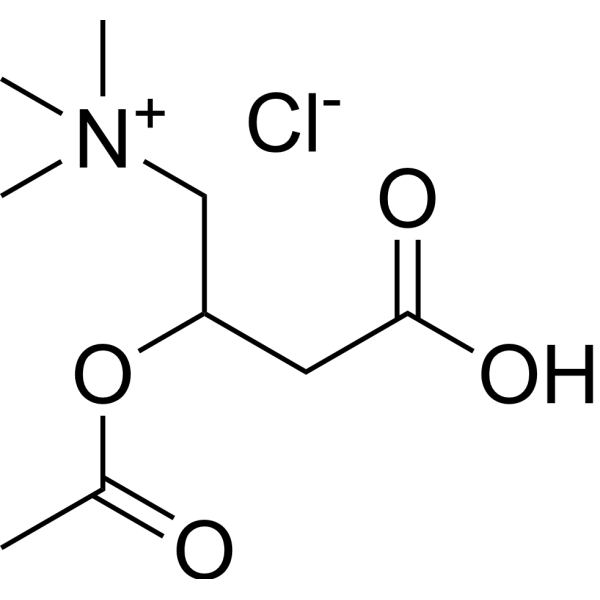
(±)-Acetylcarnitine chloride (Acetyl dl-carnitine chloride) is a weak cholinergic agonist with cholinergic properties. (±)-Acetylcarnitine chloride is an important intermediate in lipid metabolism .
loading...
    loading...
Cat. No.: HY-B0282AS
CAS No.: 93449-32-2
Synonyms: ACh-d9 bromide
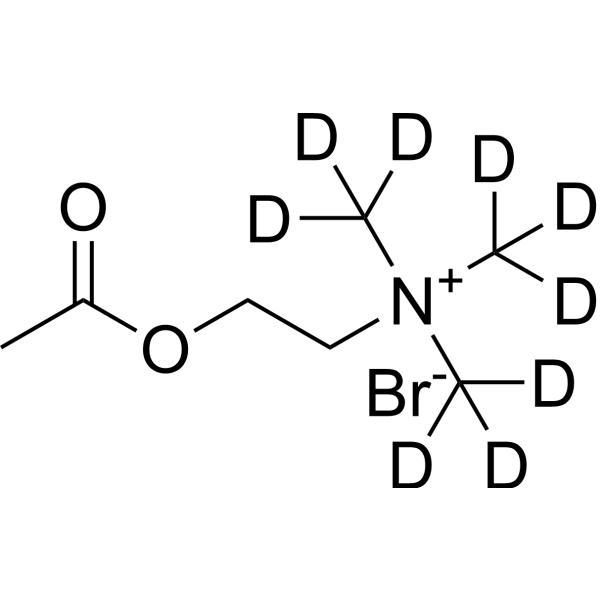
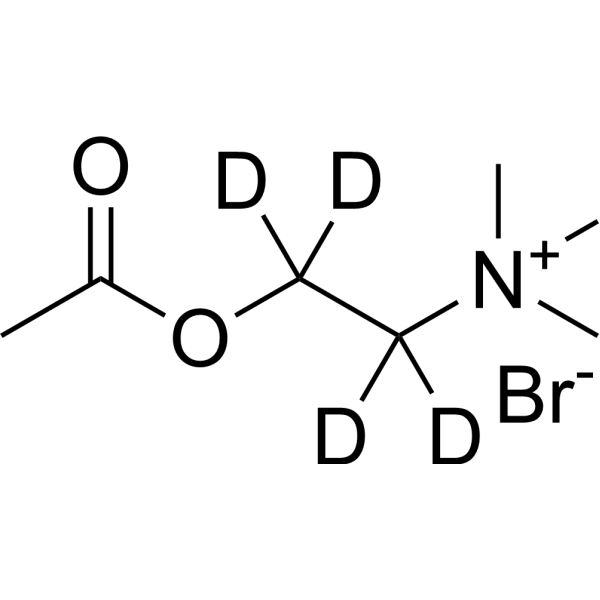
Acetylcholine-d9 (ACh-d9) bromide is the deuterated-labeled Acetylcholine bromide (HY-B0282A). Acetylcholine (ACh) bromide, a neurotransmitter, is a potent cholinergic agonist. Acetylcholine bromide is a modulator of the activity of dopaminergic (DAergic) neurons through the stimulation of nicotinic acetylcholine receptors (nAChRs) . Acetylcholine bromide inhibits p53 mutant peptide aggregation in vitro .
loading...
    loading...
Cat. No.: HY-B0282AS1
CAS No.: 93449-31-1
Synonyms: ACh-d4 bromide
Acetylcholine-d4 (ACh-d4) bromide is the deuterated-labeled Acetylcholine bromide (HY-B0282A). Acetylcholine (ACh) bromide, a neurotransmitter, is a potent cholinergic agonist. Acetylcholine bromide is a modulator of the activity of dopaminergic (DAergic) neurons through the stimulation of nicotinic acetylcholine receptors (nAChRs) . Acetylcholine bromide inhibits p53 mutant peptide aggregation in vitro .
loading...
    loading...
Cat. No.: HY-128855
CAS No.: 147025-53-4
Purity:  98.75%
Synonyms: WAL 2014 FU free base
Target:  

mAChR

Research Areas:  

Neurological Disease

Talsaclidine (WAL 2014 FU) is an orally active, blood-brain barrier-permeable muscarinic M1 receptor agonist. Talsaclidine activates the sympathetic nervous system and promotes adrenal catecholamine release in vivo. Talsaclidine exhibits extensive tissue distribution, kidney-dominant excretion and brain penetration properties, and it can be used in studies related to cholinergic signaling, cognitive function and Alzheimer's disease .
loading...
    loading...
Cat. No.: HY-12640R
CAS No.: 22204-24-6
Synonyms: Pyrantel embonate (Standard)
Research Areas:  

Infection

Pyrantel pamoate (Standard) (Pyrantel embonate (Standard)) is the analytical standard of Pyrantel pamoate (HY-12640). This product is intended for research and analytical applications. Pyrantel pamoate is an orally active antiparasitic agent. Pyrantel pamoate induces spastic paralysis in parasites via actions on neural and muscular cholinergic receptors as a nicotinic acetylcholine receptor (nAChR) agonist. Pyrantel pamoate eliminates both immature and mature endoparasites in horses. Pyrantel pamoate can be used in research related to parasitic infections .
loading...
    loading...
Cat. No.: HY-129591
CAS No.: 77392-58-6
Synonyms: PNU-97333
Target:  

Parasite nAChR

Research Areas:  

Infection

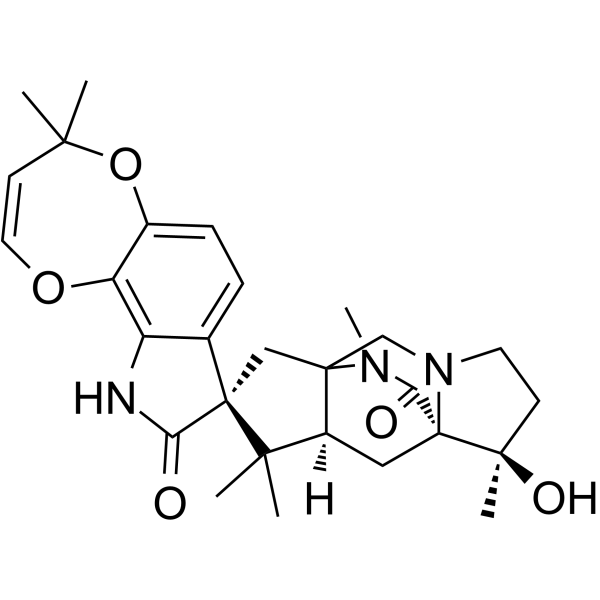
Paraherquamide A (PNU-97333) is an anthelmintic and nicotinic acetylcholine receptor (nAChR) antagonist, with pIC50 values ranging from 6.87 to 7.58 for L-type nAChR and from 4.84 to 5.54 for N-type nAChR. Paraherquamide A acts as a competitive antagonist against multiple nematode nAChR subtypes, as well as a mixed competitive-noncompetitive antagonist against nematode N-type nAChR. Paraherquamide A induces flaccid paralysis in parasitic nematodes without altering ATP levels, inhibits nematode motility, and antagonizes cholinergic agonist-induced muscle contraction in nematodes. Paraherquamide A can be used in studies related to nematode parasitic infections .
loading...
    loading...
Cat. No.: HY-B0527AR
CAS No.: 549-18-8
Amitriptyline hydrochloride (Standard) is the analytical standard of Amitriptyline hydrochloride (HY-B0527A). This product is intended for research and analytical applications. Amitriptyline hydrochloride is an orally active tricyclic antidepressant (TCA). Amitriptyline hydrochloride mainly exerts its antidepressant effect by blocking SERT (Ki = 3.45 nM) and NET (Ki = 13.3 nM), thereby increasing the concentrations of 5-hydroxytryptamine (5-HT) and norepinephrine (NE) in the synaptic cleft. Amitriptyline hydrochloride is also an agonist at α2A and TrkA/TrkB receptors, thereby exerting analgesic and neurotrophic activities (inhibiting cell apoptosis). Amitriptyline hydrochloride can reduce inflammation, angiogenesis and fibrosis. Amitriptyline hydrochloride binds to DAT (with Ki = 2.58 μM). Amitriptyline hydrochloride has high affinity for a series of receptors and can antagonize muscarinic cholinergic receptors (M1/M2/M3/M4/M5 receptors) (Ki = 11-24 nM), H1 receptors (Ki = 0.5-1.1 nM), adrenergic α1 receptors (Ki = 4.4 nM), etc., resulting in a series of side effects. Amitriptyline hydrochloride can block sodium channels and hERG potassium channel (IC50 = 4.78 μM) and it has cardiotoxicity.
loading...
    loading...
Cat. No.: HY-B2198
CAS No.: 13254-33-6
Synonyms: Actinomin chloride
Target:  

Cholinesterase (ChE)

Research Areas:  

Neurological Disease

Carpronium (Actinomin) chloride is an orally active cholinergic agonist, local vasodilator and parasympathomimetic agent. Carpronium chloride is structurally similar to acetylcholine. Carpronium chloride promotes hair growth, and oral overdose induces cholinergic crisis. Carpronium chloride is applicable to research related to alopecia areata .
loading...
    loading...

