4 Results for "

citrus canker

" in MedChemExpress (MCE) Product Catalog:
Products (4)

4 Results for "citrus canker" in MCE Product Catalog:

Cat. No.: HY-N12498
CAS No.: 123970-01-4
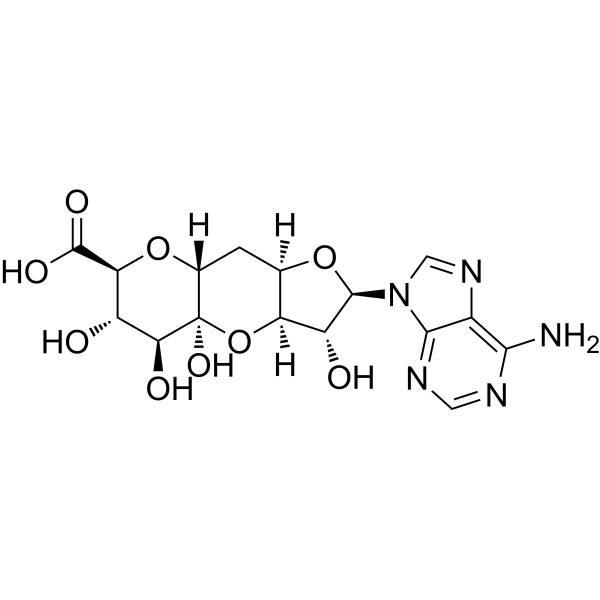
Aureonuclemycin can be isolated from Staphylococcus aureus to obtain its biosynthetic gene cluster. Aureonuclemycin exists in two forms: Type A and Type B. Aureonuclemycin A is a nucleoside antibiotic that is structurally similar to herbicides and contains adenine. Aureonuclemycin B contains 5′-deoxyadenosine and exhibits antibacterial activity. Aureonuclemycin can be used in the research of bacterial leaf blight in rice, citrus canker, and bacterial leaf spot in rice. .
loading...
    loading...
Cat. No.: HY-N9720
CAS No.: 36379-67-6
Herbarin is a quinone antibiotic. Herbarin complex has anti-Gram-positive bacteria, negative bacteria, Citrus Canker xanthomonas, potato early blight, Aspergillus Niger, Decaprous and other fungal activities .
loading...
    loading...
Cat. No.: HY-178212
CAS No.: 3065015-86-0
Antibacterial agent 292 is a 3-pyrazolylindole derivative. Antibacterial agent 292 is an anti-bacterial agent. Antibacterial agent 292 shows potent inhibitory activity against Xanthomonas oryzae pv oryzae (Xoo) and Xanthomonas axonopodis pv citri (Xac), with EC50 values of 2.54 and 3.49 μg/mL. Antibacterial agent 292 can suppress biofilm formation, bacterial motility, and extracellular polysaccharide production, induce morphological alterations and promote ROS accumulation, ultimately triggers bacterial apoptosis. Antibacterial agent 292 down-regulates the expression of genes associated with the type VI secretion system (T6SS). Antibacterial agent 292 can be used in rice bacterial blight and citrus canker .
loading...
    loading...
Cat. No.: HY-N18053
CAS No.: 6903-12-4
Anabsinthin is a dimeric sesquiterpene lactone. Anabsinthin can be found in Artemisia absinthium L. (wormwood). Anabsinthin modulates intracellular calcium levels, mediates anti-inflammatory and antioxidant effects. Anabsinthin inhibits Phorbol 12-myristate 13-acetate (HY-18739)-induced superoxide anion production, increased iNOS and MUC5AC protein expression, and IL-1β transcription upregulation. Anabsinthin can be used for the research of citrus canker .
loading...
    loading...

