28 Results for "

cognitive performance

" in MedChemExpress (MCE) Product Catalog:
Products (28)

28 Results for "cognitive performance" in MCE Product Catalog:

1
1 Cited Publications
Cat. No.: HY-B1124
CAS No.: 34161-24-5
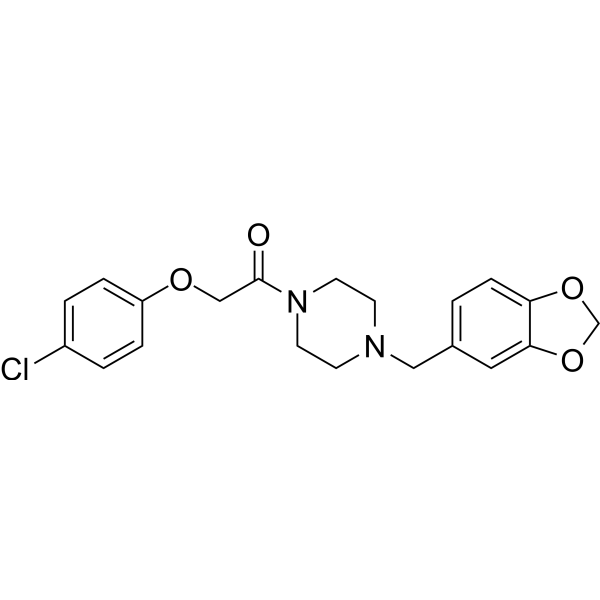
Fipexide, a parachloro-phenossiacetic acid derivative, is an orally active nootropic agent. Fipexide reduces striatal adenylate cyclase activity. Fipexide has positive effect on cognitive performance by dopaminergic neurotransmission. Fipexide is used for senile dementia research. Fipexide acts as a chemical inducer in callus formation, shoot regeneration and Agrobacterium infection .
loading...
    loading...
1
1 Cited Publications
Cat. No.: HY-121599
CAS No.: 123690-78-8
Purity:  ≥98.0%
Synonyms: SGS-742
Target:  

GABA Receptor

Research Areas:  

Neurological Disease

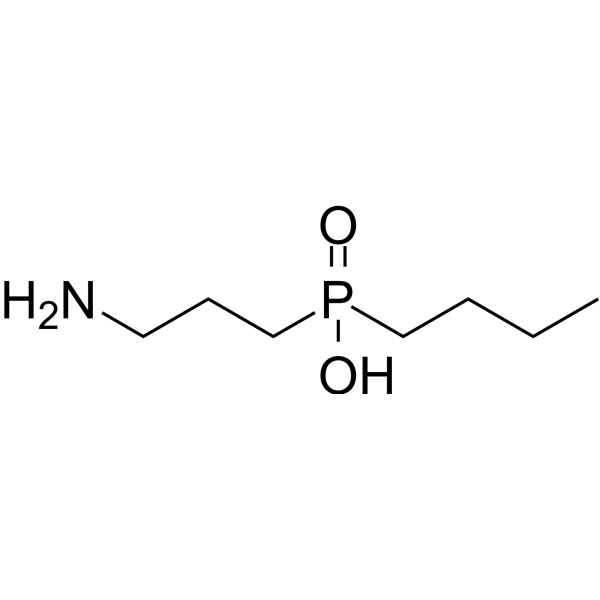
CGP 36742 (SGS-742) is an orally active and selective antagonist of GABAB receptor (IC50 = 36 µM). CGP 36742 is a brain-penetrant compound and improves cognitive performances. CGP 36742 can be used for depression study .
loading...
    loading...
1
1 Cited Publications
Cat. No.: HY-B1124A
CAS No.: 34161-23-4
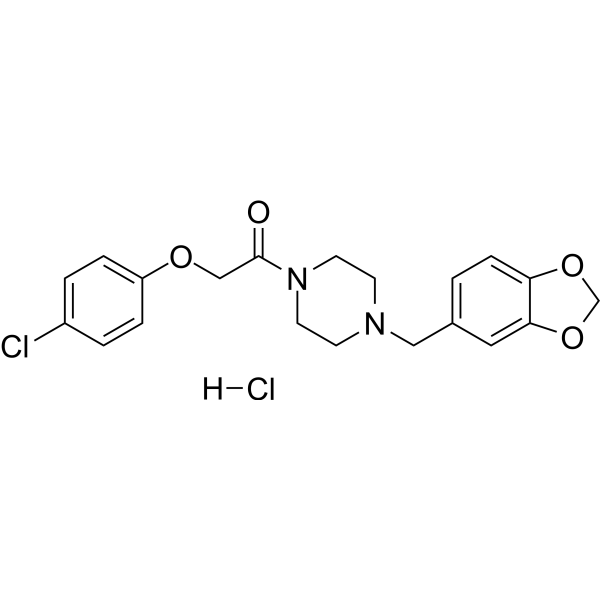
Fipexide hydrochloride, a parachloro-phenossiacetic acid derivative, is an orally active nootropic agent. Fipexide hydrochloride reduces striatal adenylate cyclase activity. Fipexide hydrochloride has positive effect on cognitive performance by dopaminergic neurotransmission. Fipexide hydrochloride is used for senile dementia research. Fipexide hydrochloride acts as a chemical inducer in callus formation, shoot regeneration and Agrobacterium infection .
loading...
    loading...
1
1 Cited Publications
Cat. No.: HY-103424
CAS No.: 1347744-96-0
Target:  

Dopamine Receptor

Research Areas:  

Neurological Disease

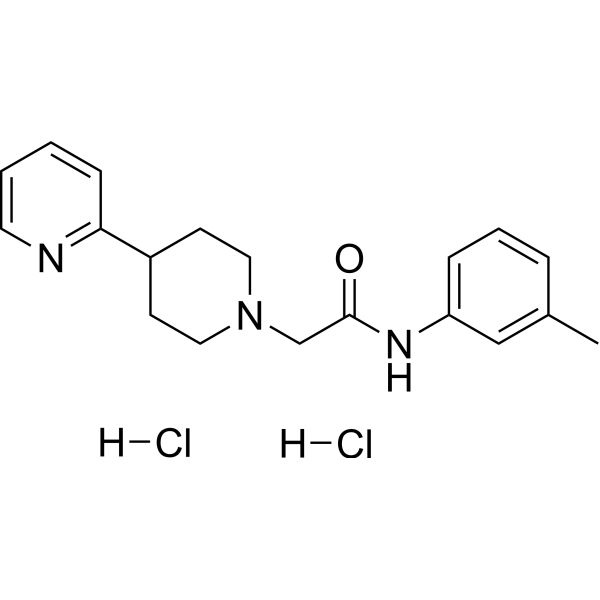
A-412997 dihydrochloride is a selective dopamine D4 receptor agonist. A-412997 dihydrochloride improves cognitive performance in rats and can be used in the research of psychiatric diseases .
loading...
    loading...
Cat. No.: HY-W009081
CAS No.: 2433-96-7
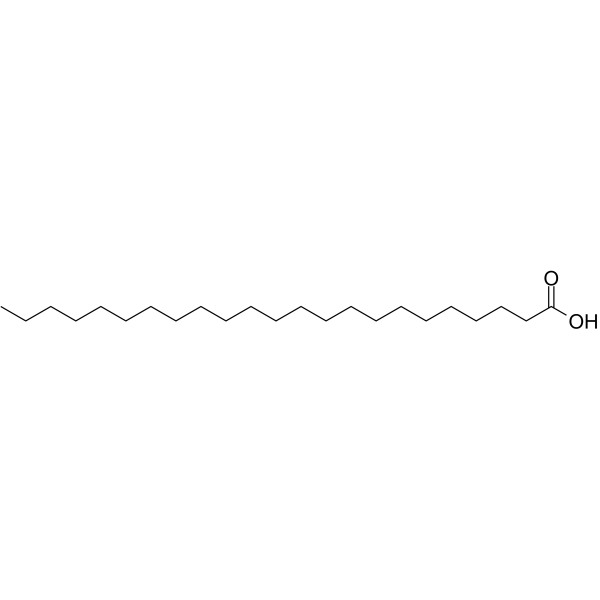
Tricosanoic acid is an endogenous agonist of long-chain saturated fatty acids and free fatty acid receptor FFAR1, which can activate hair growth. Tricosanoic acid (C23:0) has the activity of improving cognitive function by regulating neuronal membrane fluidity, inhibiting neuroinflammatory response, participating in myelination and neuronal energy metabolism. Tricosanoic acid expression levels are low in the prefrontal cortex of Alzheimer's disease (AD) models; while better cognitive performance corresponds to higher serum concentration levels. Tricosanoic acid can be used as a biomarker for diseases related to cognitive decline .
loading...
    loading...
Cat. No.: HY-103374
CAS No.: 101246-66-6
Purity:  99.55%
Synonyms: (-)-Eseroline phenylcarbamate; (-)-Phenserine
Research Areas:  

Neurological Disease

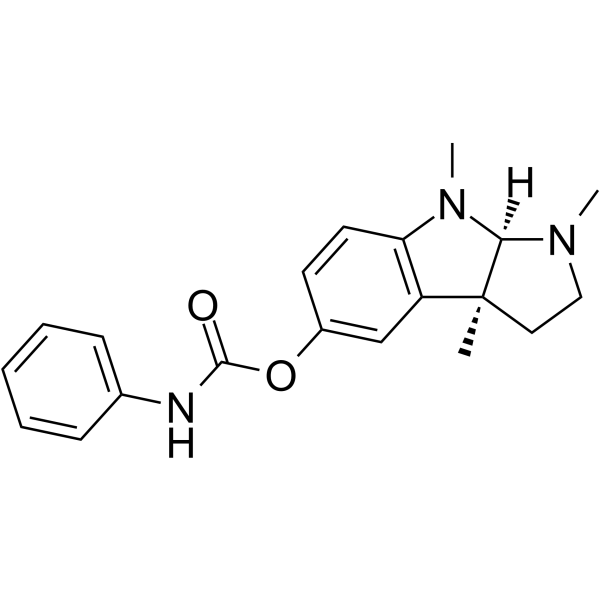
Phenserine ((-)-Eseroline phenylcarbamate) is a derivative of Physostigmine (HY-N6608) and is a potent, noncompetitive, long-acting and selective AChE inhibitor. Phenserine reduces β-amyloid precursor protein (APP) and β-amyloid peptide (Aβ) formation. Phenserine improves cognitive performance and attenuates the progression of Alzheimer's disease .
loading...
    loading...
Cat. No.: HY-W611371
CAS No.: 61694-81-3
Target:  

TRP Channel iGluR

Research Areas:  

Neurological Disease

FP802 is an orally active potent TwinF interface inhibitor that disrupts and detoxifies the NMDAR/TRPM4 death complex. FP802 exerts powerful neuroprotective effects in the 5xFAD mouse model of Alzheimer’s disease (AD) by preventing cognitive decline, preserving neuronal structural integrity, reducing amyloid-β plaque formation, and mitigating mitochondrial pathology . FP802 stops loss of motor neurons, reduces serum neurofilament light chain (NfL) levels, improves motor performance, and extends life in a mouse model of amyotrophic lateral sclerosis (ALS). FP802 can be used for AD and ALS research .
loading...
    loading...
Cat. No.: HY-W096638
CAS No.: 563-24-6
Target:  

Drug Intermediate

Research Areas:  

Neurological Disease

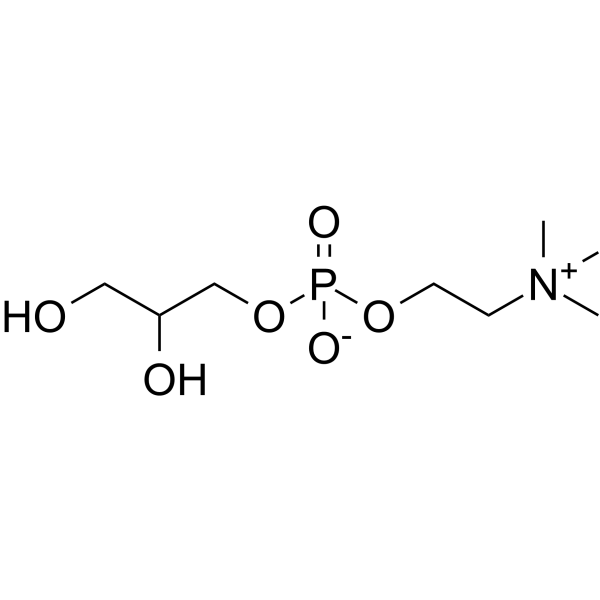
Glycerylphosphorylcholine is an orally active choline compound capable of crossing the blood-brain barrier. Glycerylphosphorylcholine is a precursor of the neurotransmitter acetylcholine. Glycerylphosphorylcholine can be used as a dietary supplement to improve cognitive ability and enhance athletic performance .
loading...
    loading...
Cat. No.: HY-W611371A
CAS No.: 2490401-57-3
Target:  

TRP Channel iGluR

Research Areas:  

Neurological Disease

FP802 dihydrochloride is an orally active potent TwinF interface inhibitor that disrupts and detoxifies the NMDAR/TRPM4 death complex. FP802 dihydrochloride exerts powerful neuroprotective effects in the 5xFAD mouse model of Alzheimer’s disease (AD) by preventing cognitive decline, preserving neuronal structural integrity, reducing amyloid-β plaque formation, and mitigating mitochondrial pathology . FP802 dihydrochloride stops loss of motor neurons, reduces serum neurofilament light chain (NfL) levels, improves motor performance, and extends life in a mouse model of amyotrophic lateral sclerosis (ALS) . FP802 dihydrochloride can be used for AD and ALS research .
loading...
    loading...
Cat. No.: HY-120192
CAS No.: 187608-26-0
Target:  

GABA Receptor

Research Areas:  

Neurological Disease

CGP 62349 is a selective and orally active GABAB receptor antagonist that improves cognitive performance in multiple learning paradigms .
loading...
    loading...
Cat. No.: HY-116507
CAS No.: 220099-91-2
Target:  

nAChR

Research Areas:  

Neurological Disease

AZD0328 is a selective α7 nAChR partial agonist. AZD0328 selectively enhances midbrain dopaminergic neuronal activity and enhances cortical dopamine levels in rats. AZD0328 improves cognitive performance .
loading...
    loading...
Cat. No.: HY-101339
CAS No.: 143137-37-5
Target:  

Others

Research Areas:  

Others

(R)-RS 56812 is a 5-HT3 receptor antagonist that enhances performance in monkeys on a delayed matching task. The (R) isomer produces more systematic improvements than the (S) isomer and has potential inhibitory effects in diseases involving cognitive decline.
loading...
    loading...
Cat. No.: HY-101339A
CAS No.: 143339-12-2
Target:  

5-HT Receptor

Research Areas:  

Others

(R)-RS 56812 hydrochloride is a 5-HT3 receptor antagonist that enhances performance in monkeys on a delayed matching task. The (R) isomer produces more systematic improvements than the (S) isomer and has potential inhibitory effects in diseases involving cognitive decline.
loading...
    loading...
Cat. No.: HY-118575
CAS No.: 201608-41-5
Target:  

5-HT Receptor

Research Areas:  

Neurological Disease

DR-4004 is a 5-HT7 receptor antagonist that attenuates the decreased level of performance produced by mCPP and the performance levels after p-chloroamphetamine (PCA) lesion of the 5-HT system. DR-4004 also reverses amnesia induced by Scopolamine (HY-N0296) and Dizocilpine (HY-15084B). DR-4004 is promising for research of schizophrenia, cognitive deficits and atypical antipsychotic agents .
loading...
    loading...
Cat. No.: HY-116881
CAS No.: 221660-80-6
Target:  

mAChR

Research Areas:  

Neurological Disease

SCH 57790 is a selective antegonist for muscarinic M2 receptor, which increases acetylcholine release, and thus improves cognitive performance. SCH 57790 reverses Scopolamine (HY-N0296)-induced memory deficits in mice, without significant toxicity (100 mg/kg) .
loading...
    loading...
Cat. No.: HY-W009081R
CAS No.: 2433-96-7
Tricosanoic acid (Standard) is the analytical standard of Tricosanoic acid (HY-W009081). This product is intended for research and analytical applications. Tricosanoic acid is an endogenous agonist of long-chain saturated fatty acids and free fatty acid receptor FFAR1, which can activate hair growth. Tricosanoic acid (C23:0) has the activity of improving cognitive function by regulating neuronal membrane fluidity, inhibiting neuroinflammatory response, participating in myelination and neuronal energy metabolism. Tricosanoic acid expression levels are low in the prefrontal cortex of Alzheimer's disease (AD) models; while better cognitive performance corresponds to higher serum concentration levels. Tricosanoic acid can be used as a biomarker for diseases related to cognitive decline .
loading...
    loading...
Cat. No.: HY-N11872
CAS No.: 220936-82-3
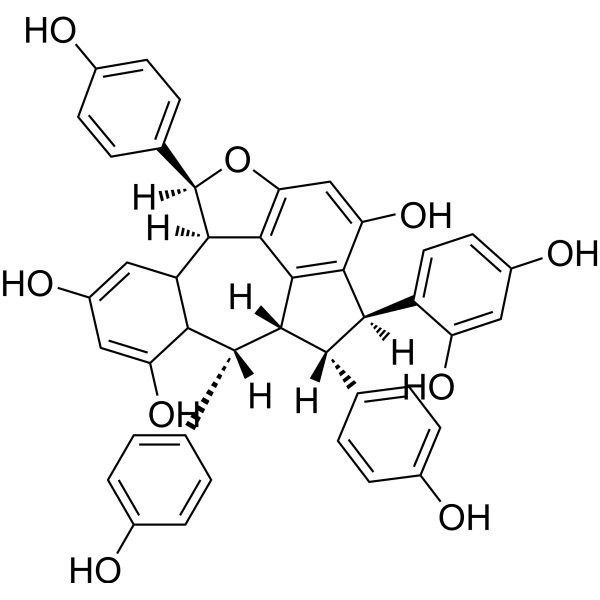
Suffruticosol A is a neuroprotective agent that restores scopolamine-induced cellular neurodegenerative damage. Suffruticosol A ameliorates hippocampal cholinergic deficits and partially enhances BDNF signaling. Suffruticosol A has neuromodulatory effects in a Scopolamine (HY-N0296)-induced model, restoring memory and cognitive performance in mice. Suffruticosol A can be isolated from seeds of P. lactiflora .
loading...
    loading...
Cat. No.: HY-103374A
CAS No.: 156910-61-1
Synonyms: (-)-Eseroline phenylcarbamate tartrate; (-)-Phenserine (+)-tartrate
Research Areas:  

Neurological Disease

Phenserine tartrate ((-)-Eseroline phenylcarbamate) is a derivative of Physostigmine (HY-N6608) and is a potent, noncompetitive, long-acting and selective AChE inhibitor. Phenserine tartrate reduces β-amyloid precursor protein (APP) and β-amyloid peptide (Aβ) formation. Phenserine tartrate improves cognitive performance and attenuates the progression of Alzheimer's disease .
loading...
    loading...
Cat. No.: HY-121599R
CAS No.: 123690-78-8
Synonyms: SGS-742 (Standard)
Research Areas:  

Neurological Disease

CGP 36742 (Standard) is the analytical standard of CGP 36742. This product is intended for research and analytical applications. CGP 36742 (SGS-742) is an orally active and selective antagonist of GABAB receptor (IC50 = 36 µM). CGP 36742 is a brain-penetrant compound and improves cognitive performances. CGP 36742 can be used for depression study .
loading...
    loading...
Cat. No.: HY-135493
CAS No.: 143137-35-3
Target:  

5-HT Receptor

Research Areas:  

Neurological Disease

RS-56812 is a partial agonist of the 5-HT3 receptor. RS-56812 significantly enhances the propulsive peristalsis of the colon. RS-56812 indirectly enhances cholinergic neurotransmission and improves the working memory performance of non-human primates. RS-56812 is used in research on diarrhea/colon peristalsis and cognitive disorders (such as Alzheimer's disease) .
loading...
    loading...

