19 Results for "

collagen 1

" in MedChemExpress (MCE) Product Catalog:
Products (19)

19 Results for "collagen 1" in MCE Product Catalog:

21
21 Publications Verification
Cat. No.: HY-E70005A
CAS No.: 9001-12-1
Synonyms: EC 3.4.24.3
Target:  

MMP

Research Areas:  

Others

Collagenase, Type I is a microbially derived matrix metalloproteinases (MMPs) and zinc peptidase. Collagenase, Type I breaks down collagens 1, 3, 7, 8, 10, gelatin, proteoglycans, aggrecan .

loading...
    loading...
16
16 Cited Publications
Cat. No.: HY-E70005B
CAS No.: 9001-12-1
Target:  

MMP

Research Areas:  

Others

Collagenase, Type II is a microbially derived matrix metalloproteinases (MMPs) and zinc peptidase. Collagenase, Type II breaksdown collagens1, 3, 5, 7, 8, 10, fibronectin, gelatin, aggrecann .

loading...
    loading...
1
1 Cited Publications
Cat. No.: HY-E70005E
CAS No.: 9001-12-1
Target:  

MMP

Research Areas:  

Others

Collagenase, Type V is a microbially derived matrix metalloproteinases (MMPs) and zinc peptidase. Collagenase, Type V breaksdown collagens1, 3, 5, 7, 8, 10, fibronectin, gelatin, aggrecann .

loading...
    loading...
1
1 Cited Publications
Cat. No.: HY-163121
CAS No.: 1096144-06-7
PST3.1a is an orally active and brain-penetrant N-acetylglucosamine glycosyltransferase (MGAT5) inhibitor with a human IC50 of 2 µM. PST3.1a inhibits TGFβR and FAK signaling pathway activity. PST3.1a alters β1,6-GlcNAc N-glycans and microtubule/microfilament integrity, increases OLIG2 expression, and inhibits proliferation, migration, invasiveness, and clonogenic capacities of glioblastoma initiating cells. PST3.1a reduces invasive and proliferative capacity of glioblastoma initiating cells in orthotopic graft models, increases overall survival of orthotopic graft model mice. PST3.1a blunts MGAT5 overexpression, decreases renal fibrosis via collagen 1, collagen 4, and galectin 3 downregulation in a rat chronic kidney disease model. PST3.1a can be used for the research of glioblastoma multiforme and chronic kidney disease .
loading...
    loading...
Cat. No.: HY-E70005C
CAS No.: 9001-12-1
Target:  

MMP

Research Areas:  

Others

Collagenase, Type III is a microbially derived matrix metalloproteinases (MMPs) and zinc peptidase. Collagenase, Type III breaksdown collagens1, 4, 9, 10, 14, fibronectin, MMP-9, gelatin, plasminogen, aggrecan,perlecan osteonectin

loading...
    loading...
Cat. No.: HY-158225
Synonyms: Col1MA
Methacrylated Type I collagen (Col1MA) is a methacrylated tissue engineering scaffold material that retains the basic properties of natural collagen . Methacrylated Type I collagen needs to self-assemble into fibrous hydrogel under the action of photoinitiator LAP (HY-44076), and target bioactive adhesion sites, play an inherent supporting role for tissue cells and biodegradable activity.
Application: cell culture, biological 3D printing, tissue engineering, etc.
loading...
    loading...
Cat. No.: HY-P4812
CAS No.: 143470-36-4
Research Areas:  

Metabolic Disease

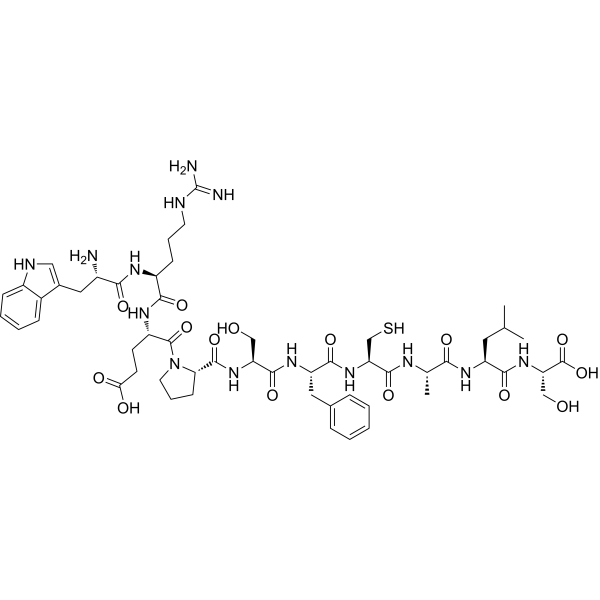
Prepro-von Willebrand factor (641-650) (bovine) is a fragment of Prepro-von Willebrand factor, which binds to type I collagen .
loading...
    loading...
Cat. No.: HY-169940
Target:  

HDAC

Research Areas:  

Inflammation/Immunology

Fibrostat (Compound 5n) is a selective HDAC6 inhibitor that exerts antifibrotic effects by inhibiting HDAC6 activity, with an IC50 value of 63 nM. It also exhibits good selectivity over HDAC1, HDAC3, HDAC5, HDAC8, HDAC10, and HDAC11. Fibrostat significantly downregulates fibrotic markers (fibronectin and collagen 1) in fibroblasts. Additionally, Fibrostat demonstrated no toxicity in rat-perfused heart and zebrafish larvae models. Fibrostat shows potential for research into fibrosis-related diseases .
loading...
    loading...
Cat. No.: HY-N5061
CAS No.: 144506-16-1
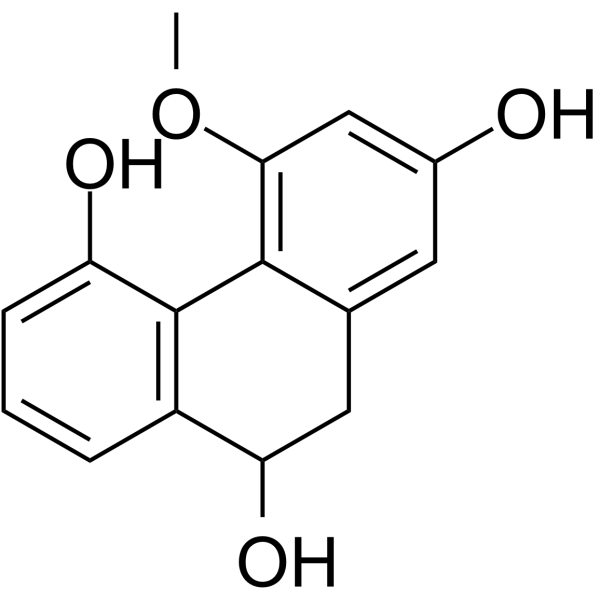
Rotundatin is useful in inhibition of the aggregation of platelets induced by arachidonic acid and collagen .
loading...
    loading...
Cat. No.: HY-115912
CAS No.: 901654-94-2
Target:  

Glycoprotein VI

Research Areas:  

Cardiovascular Disease

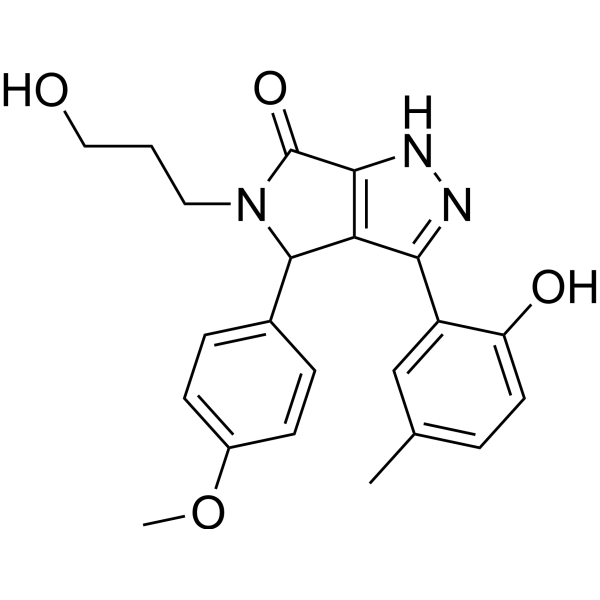
GPVI antagonist 3 (Compound 2) is a potential antagonist of Glycoprotein VI (GPVI). IC50 values of GPVI antagonist 3 are, respectively, 1.01 μM for collagen, 1.92 μM for CRP, 7.24 μM for convulxin and 51.74 μM for thrombin. Glycoprotein VI (GPVI) is a platelet major collagen receptor and a target for potent and safe antithrombotic research. GPVI antagonist 3 is a promising antiplatelet agent .
loading...
    loading...
Cat. No.: HY-N14932
CAS No.: 19207-26-2
Aggreceride A is a platelet aggregation inhibitor. Aggreceride A shows an inhibitory activity against aggregation induced by Adenosine 5'-diphosphate (ADP) (HY-W010918), Arachidonic acid (HY-109590) and PAF (platelet activating factor), but was less active against aggregation induced by collagen .
loading...
    loading...
Cat. No.: HY-N14933
CAS No.: 104700-85-8
Aggreceride B is a platelet aggregation inhibitor. Aggreceride B shows an inhibitory activity against aggregation induced by Adenosine 5'-diphosphate (ADP) (HY-W010918), Arachidonic acid (HY-109590) and PAF (platelet activating factor), but was less active against aggregation induced by collagen .
loading...
    loading...
Cat. No.: HY-N14934
CAS No.: 104700-86-9
Aggreceride C is a platelet aggregation inhibitor. Aggreceride C shows an inhibitory activity against aggregation induced by Adenosine 5'-diphosphate (ADP) (HY-W010918), Arachidonic acid (HY-109590) and PAF (platelet activating factor), but was less active against aggregation induced by collagen .
loading...
    loading...
Cat. No.: HY-W404758
CAS No.: 23351-51-1
Research Areas:  

Metabolic Disease

Calcium glucoheptonate is a highly water-soluble calcium supplement. Calcium glucoheptonate can increase the proliferation rate and Calcium intake of MG-63 cells and increase the activity of alkaline phosphatase (ALP). Calcium glucoheptonate can upregulate the expression of osteogenic-related genes and proteins,such as collagen-1, osteocalcin and osteocalcin. Calcium glucoheptonate can be used for the researches of osteoporosis and hypocalcemia .
loading...
    loading...
Cat. No.: HY-W740191
CAS No.: 32619-23-1
Synonyms: DHLNL
Research Areas:  

Others

Dihydroxylysinonorleucine is a reducible lysine-derived cross-link. Dihydroxylysinonorleucine can be used for the cross-linking of Collagen .
loading...
    loading...
Cat. No.: HY-W738852
Hydroxylysylpyridinoline-d6 is deuterium labeled Pyridinoline. Pyridinoline, a fluorescent material, is a bone resorption biomarker. Pyridinoline also is a type crosslink of collagen .
loading...
    loading...
Cat. No.: HY-182730
Research Areas:  

Others

1% Gelatin solution, for cell culture is a biochemical reagent commonly used in cell culture, whose main component is high-molecular-weight polypeptides obtained by hydrolysis of animal collagen. 1% Gelatin solution, for cell culture can be used to coat the surfaces of cell culture plates, Petri dishes and other vessels to promote the adhesion and proliferation of mammalian cells .
loading...
    loading...
Cat. No.: HY-123958
CAS No.: 785774-34-7
SB772077B is a ROCK inhibitor. SB772077B has an anti-inflammatory activity and enhances aqueous outflow facility (OF) by inactivating RhoA/ROCK signal pathway. SB772077B significantly reduces the mRNA level of β-catenin and protein level of fibrotic markers, such as vinculin, fibronectin, collagen 1 A and vimentin. SB772077B also has vasodialatory activity and decreases pulmonary and systemic blood pressure. SB772077B can be used for glaucoma research and pulmonary hypertensive disorder research .
loading...
    loading...
Cat. No.: HY-16342
CAS No.: 827034-92-4
NA808 is an Serine Palmitoyltransferase (SPT) inhibitor. NA808 reduces sphingomyelin synthesis, inhibits its activation in hepatic stellate cells, and decreases the expression of α-SMA protein and mRNA, as well as collagen 1A1 mRNA (IC50 0.16, 0.12, and 0.11 μM, respectively). NA808 inhibits HCV replication and reduces NS3 and RdRp protein expression in HCV replicon cells without significant cytotoxicity and exhibits almost no immunosuppressive effect at effective concentrations. NA808 demonstrates broad-spectrum antiviral activity in humanized chimeric liver mice infected with various HCV genotypes, and dose-dependently reduces serum and hepatic HCV RNA levels. NA808 can be used for research on non-alcoholic steatohepatitis and hepatitis C virus infection .
loading...
    loading...
  • 1

