35 Results for "

constriction

" in MedChemExpress (MCE) Product Catalog:
Products (35)

35 Results for "constriction" in MCE Product Catalog:

64
64 Publications Verification
Cat. No.: HY-101952
CAS No.: 363-24-6
Purity:  99.74%
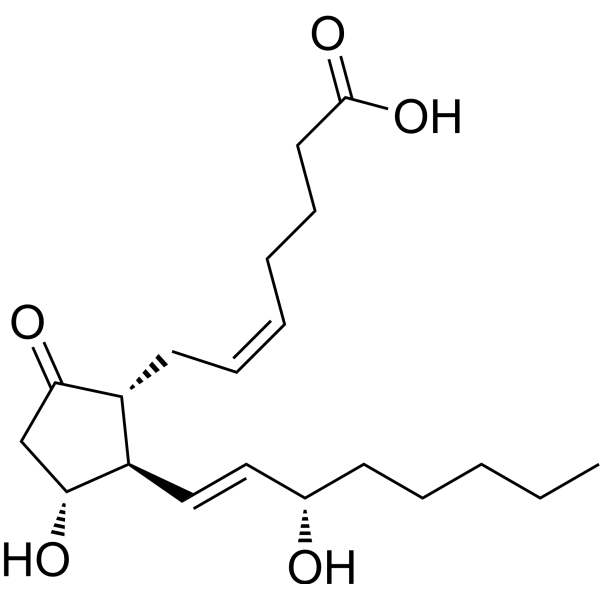
Synonyms: PGE2; Dinoprostone
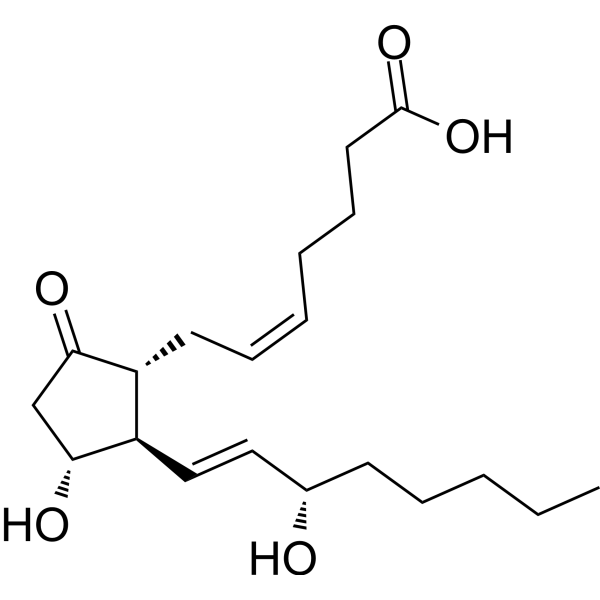
Prostaglandin E2 (PGE2) is a hormone-like substance that participate in a wide range of body functions such as the contraction and relaxation of smooth muscle, the dilation and constriction of blood vessels, control of blood pressure, and modulation of inflammation.
loading...
    loading...
2
2 Cited Publications
Cat. No.: HY-101952S
CAS No.: 34210-10-1
Purity:  99.90%
Synonyms: PGE2-d4; Dinoprostone-d4
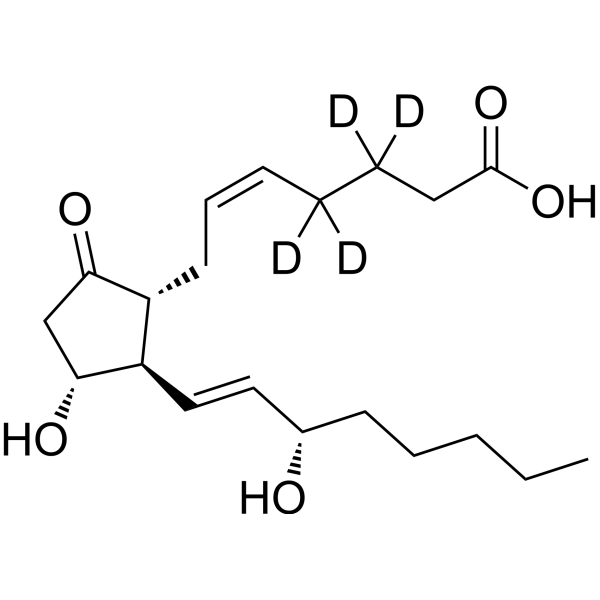
Prostaglandin E2-d4 is the deuterium labeled Prostaglandin E2. Prostaglandin E2 (PGE2) is a hormone-like substance that participate in a wide range of body functions such as the contraction and relaxation of smooth muscle, the dilation and constriction of blood vessels, control of blood pressure, and modulation of inflammation .
loading...
    loading...
2
2 Cited Publications
Cat. No.: HY-N1478
CAS No.: 24512-62-7
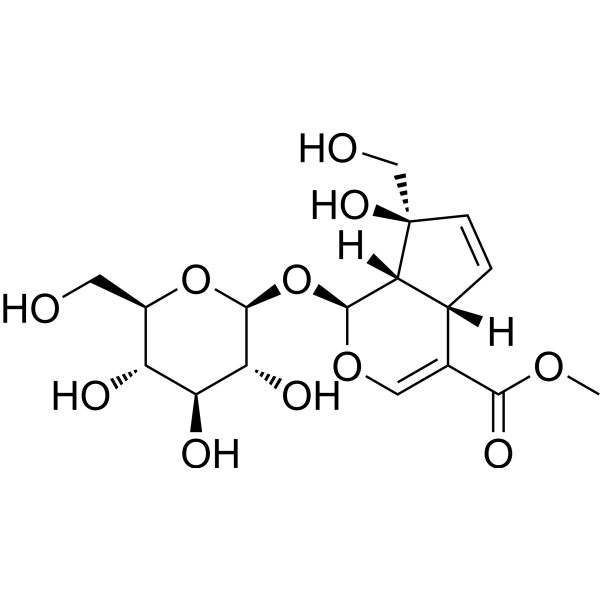
Gardenoside is an orally active natural compound found in Gardenia fruits. Gardenoside reliefs chronic constriction injury (CCI)-induced neuropathic pain by regulating the P2X3 and P2X7 receptors. Gardenoside has an inhibitory effect on free fatty acids (FFA)-induced cellular steatosis. Gardenoside reduces reactive oxygen species (ROS). Gardenoside can be used for anti-inflammatory, antinociceptive and hepatoprotective study .
loading...
    loading...
1
1 Cited Publications
Cat. No.: HY-120380
CAS No.: 133314-07-5
Purity:  99.8%
Target:  

MOFs PARP

Research Areas:  

Neurological Disease

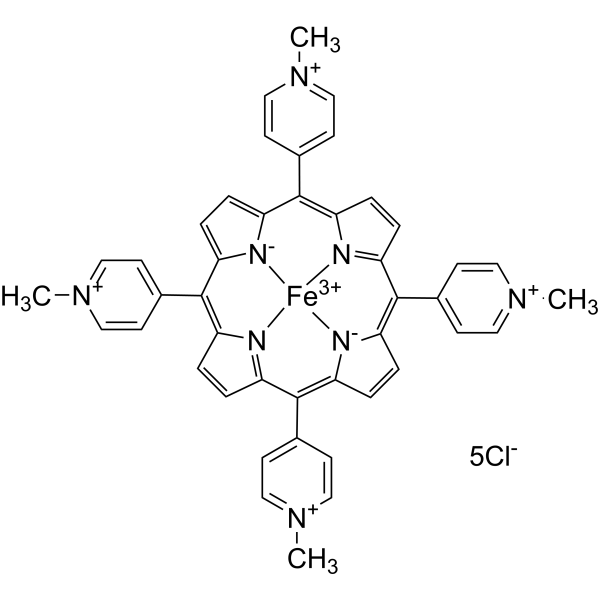
FeTMPyP is an orally active poly (ADP-ribose) polymerase (PARP) inhibitor. FeTMPyP inhibits cell death, nitrotyrosine formation, and depolarization of mitochondrial transmembrane potential. FeTMPyP reduces homocysteine-induced nitrosative stress and partially restores TFEB protein and mRNA levels. FeTMPyP improves functional and behavioral deficits caused by chronic constriction injury in rats. FeTMPyP alleviates acute cerebral infarction in a rat model of middle cerebral artery occlusion with mild hyperglycemia. FeTMPyP can be used in studies related to neuropathic pain, renal aging, ischemic penumbra, and hyperglycemic stroke .
loading...
    loading...
1
1 Cited Publications
Cat. No.: HY-101952R
CAS No.: 363-24-6
Synonyms: PGE2(Standard); Dinoprostone (Standard)
Prostaglandin E2 (Standard) is the analytical standard of Prostaglandin E2. This product is intended for research and analytical applications. Prostaglandin E2 (PGE2) is a hormone-like substance that participate in a wide range of body functions such as the contraction and relaxation of smooth muscle, the dilation and constriction of blood vessels, control of blood pressure, and modulation of inflammation.
loading...
    loading...
Cat. No.: HY-178281
CAS No.: 931928-13-1
Research Areas:  

Neurological Disease

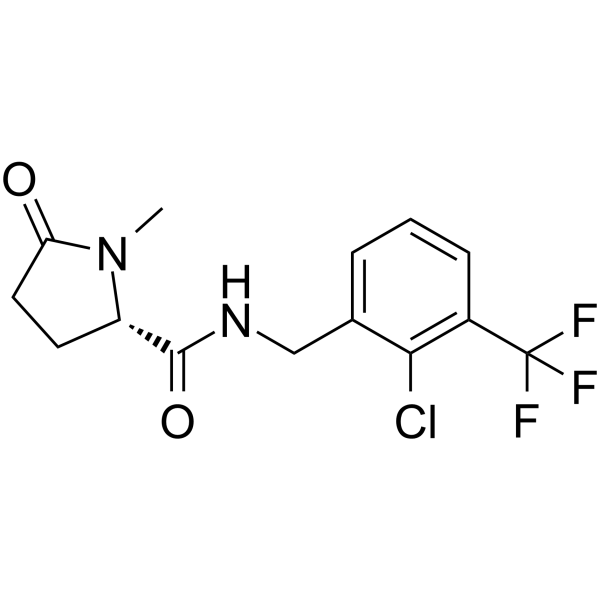
E0199 is a novel potent dual-target KV7/NaV modulator that activates the KV7 channel (KV7.2/7.3 (EC50 = 12.78 nM), KV7.2 (EC50 = 0.50 μM), and KV7.5 (EC50 = 27.14 nM) channels) while simultaneously blocks the NaV1.7 (IC50 = 0.52 μM), NaV1.8 (IC50 = 0.24 μM), and NaV1.9 (IC50 = 0.16 μM) channels. E0199 shows a potent analgesic effect without affecting heart and skeletal muscle ion channels critically in a chronic constriction injury (CCI) mouse model. E0199 can be used for Neuropathic pain (NP) research .
loading...
    loading...
Cat. No.: HY-W097625
CAS No.: 26964-24-9
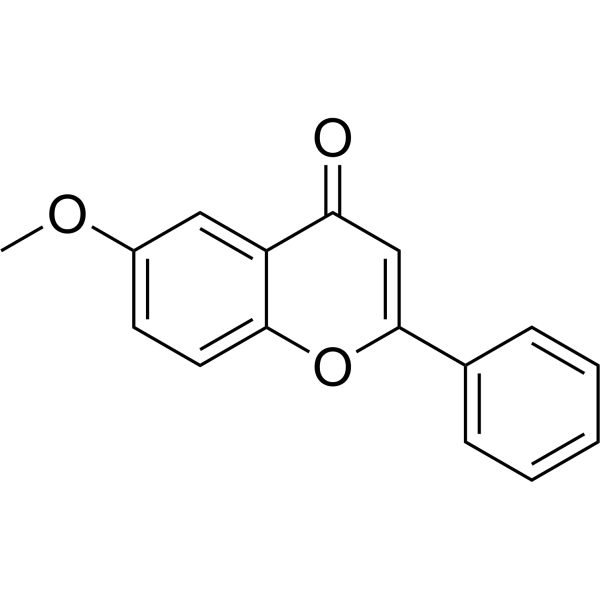
6-Methoxyflavone is an orally active methoxyflavone. 6-Methoxyflavone suppresses neuroinflammation in microglia through the inhibition of TLR4/MyD88/p38 MAPK/NF-κB dependent pathways and the activation of HO-1/NQO-1 signaling. 6-Methoxyflavone induces S-phase arrest through the CCNA2/CDK2/p21CIP1 signaling pathway in HeLa cells. 6-Methoxyflavone inhibits NFAT Translocation into the nucleus and suppresses T cell activation. 6-Methoxyflavone partially restores chronic ethanol-induced behavioral deficits in mice. 6-Methoxyflavone antagonizes chronic constriction injury and diabetes associated neuropathic nociception expression. 6-Methoxyflavone can be used for the study of cancer, inflammation and neurological diseases .
loading...
    loading...
Cat. No.: HY-101952S1
CAS No.: 1356347-42-6
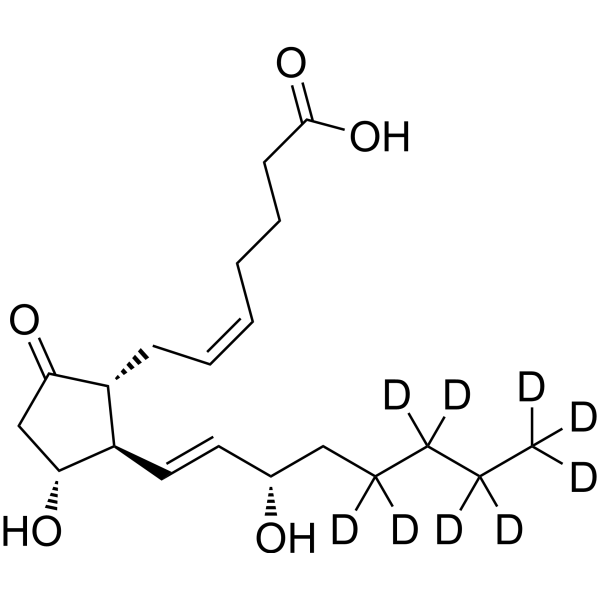
Synonyms: PGE2-d9; Dinoprostone-d9
Prostaglandin E2-d9 is the deuterium labeled Prostaglandin E2. Prostaglandin E2 (PGE2) is a hormone-like substance that participate in a wide range of body functions such as the contraction and relaxation of smooth muscle, the dilation and constriction of blood vessels, control of blood pressure, and modulation of inflammation .
loading...
    loading...
Cat. No.: HY-19888
CAS No.: 1001389-72-5
GSK-1482160 is an orally active and blood-brain barrier penetrant P2X7 receptor (P2X7R) negative allosteric modulator with pIC50s of 8.5 (human) and 6.5 (rat). GSK-1482160 reduces the efficacy of ATP at the P2X7 receptor without affecting its affinity, thereby inhibiting the release of IL-1β. GSK-1482160 is an effective radioligand and can be labeled with radioactive isotopes like 11C or 18F to image P2X7R. GSK-1482160 can be used for the studies of chronic joint pain and chronic constriction injury (CCI) .
loading...
    loading...
Cat. No.: HY-119304
CAS No.: 221148-46-5
Purity:  ≥99.0%
Target:  

COX

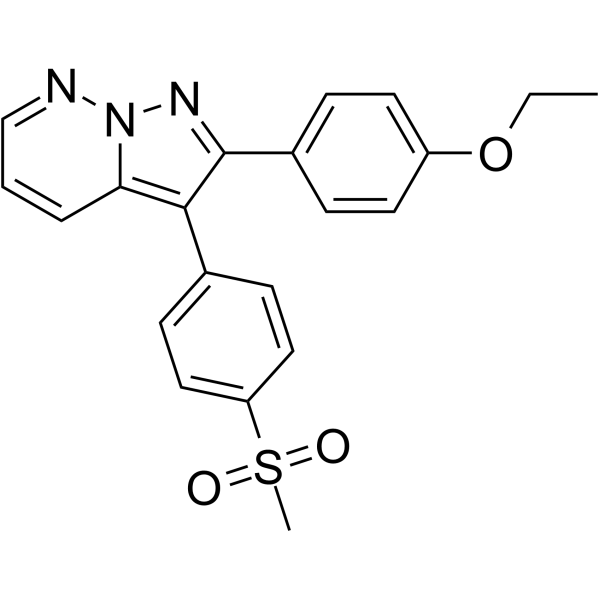
GW406381, a highly selective cyclooxygenase-2 (COX-2) inhibitor, attenuates spontaneous ectopic discharge in sural nerves of rats following chronic constriction injury .
loading...
    loading...
Cat. No.: HY-N10881
CAS No.: 142717-57-5
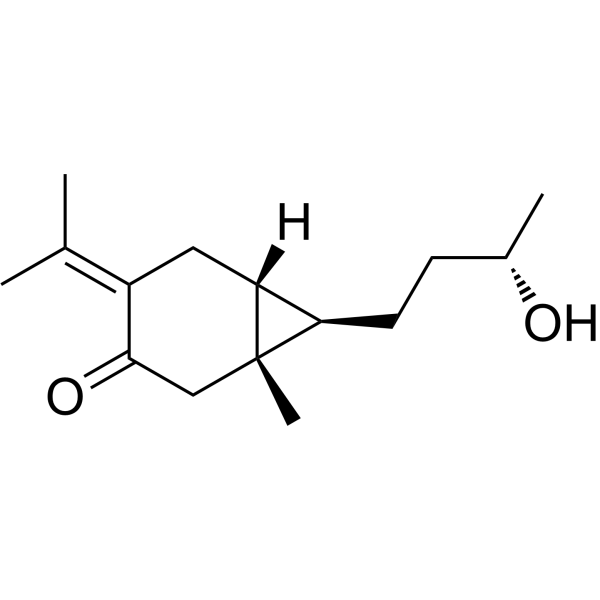
Dihydrocurcumenone is a carabrane-type sesquiterpene. Dihydrocurcumenone can be isolated from Curcuma zedoaria, and the common form is 4-dihydrocurcumenone. Curcuma zedoaria sesquiterpene has vascular relaxation activity. 4-dihydrocurcumenone can inhibit the high concentration of K + induced constriction of isolated rat aortic strips .
loading...
    loading...
Cat. No.: HY-178006
Target:  

P2Y Receptor

Research Areas:  

Neurological Disease

MRS4917 is an orally active, potent selective P2Y14 receptor (hP2Y14R) antagonist (IC50 = 2.88 nM, Ki = 1.67 nM) that shows >18,000 fold selectivity against P2Y6R (IC50 = 54 μM). MRS4917 demonstrates oral efficacy in reversing established mechanoallodynia in the chronic constriction injury (CCI) mouse model, while having no effect on thermoregulation. MRS4917 can be used for neurological diseases research .
loading...
    loading...
Cat. No.: HY-P10898
CAS No.: 2900996-95-2
Research Areas:  

Neurological Disease

GeX-2 is a truncated analogue of αO-conotoxin. GeX-2 activates GABAB receptor. GeX-2 inhibits α9α10 nAChR and CaV2.2 channels. GeX-2 alleviates pain in the rat model of chronic constriction injury .
loading...
    loading...
Cat. No.: HY-159931
CAS No.: 2920698-73-1
Target:  

AAK1

Research Areas:  

Neurological Disease

HW161023 (compound 5) is an orally active AP2-associated protein kinase 1 (AAK1) inhibitor with IC50 values of 5.4 nM and 11.9 μM aganist of AAK1and hERG, respectively. HW161023 inhibits the pain in chronic constriction injury of the sciatic nerve rat model .
loading...
    loading...
Cat. No.: HY-W115558
CAS No.: 17436-02-1
Target:  

Serine Racemase (SR)

Research Areas:  

Neurological Disease

L-Serine-O-sulfate potassium is a serine racemase (Srr) inhibitor. L-Serine-O-sulfate potassium attenuates the chronic constriction injury (CCI)-induced increases in NO levels, nNOS phosphorylation at Ser847, PKC-dependent GluN1 phosphorylation at Ser896, and the development of mechanical allodynia in mice. L-Serine-O-sulfate potassium can be used for the research of peripheral neuropathy .
loading...
    loading...
Cat. No.: HY-120484
CAS No.: 1219624-62-0
Target:  

Calcium Channel

Research Areas:  

Neurological Disease

A-1048400 is an orally active and selective calcium channel inhibitor with an IC50 value of 1.4 μM for N-type channels, 1.2 μM for T-type channel. A-1048400 inhibits neurotransmitter release and reduces membrane hyperexcitability, exerting potent analgesic activity. A-1048400 is promising for research of neuropathic pain (e.g., pain induced by spinal nerve ligation and chronic constriction injury) .
loading...
    loading...
Cat. No.: HY-N1478R
CAS No.: 24512-62-7
Gardenoside is an orally active natural compound found in Gardenia fruits. Gardenoside reliefs chronic constriction injury (CCI)-induced neuropathic pain by regulating the P2X3 and P2X7 receptors. Gardenoside has an inhibitory effect on free fatty acids (FFA)-induced cellular steatosis. Gardenoside reduces reactive oxygen species (ROS). Gardenoside can be used for anti-inflammatory, antinociceptive and hepatoprotective study .
loading...
    loading...
Cat. No.: HY-101317A
CAS No.: 148545-09-9
Synonyms: SB-205607
Target:  

Opioid Receptor

Research Areas:  

Metabolic Disease

TAN-67 (SB-205607) is a non-peptidic delta-opioid receptor agonist that exhibits significant antinociceptive activity in both diabetic and non-diabetic mice. TAN-67 demonstrates a marked and dose-dependent reduction in acetic acid-induced abdominal constrictions, with a notably stronger effect in diabetic mice compared to their non-diabetic counterparts. TAN-67's antinociceptive properties are primarily mediated through the activation of delta 1-opioid receptors, as indicated by the pronounced antagonism observed upon administration of a selective delta 1-opioid receptor antagonist.
loading...
    loading...
Cat. No.: HY-118220
CAS No.: 122089-44-5
Target:  

Thrombin

Research Areas:  

Cardiovascular Disease

EP 171 is a TP receptor agonist and human platelet activator. EP 171 can induce constriction of guinea pig trachea, and the constriction can be inhibited by the TP receptor antagonist EP 092. EP 171 binds to TP receptors on intact human platelets with an IC50 of 2.9 nM .
loading...
    loading...
Cat. No.: HY-124905
CAS No.: 103315-31-7
Target:  

Calcium Channel

Research Areas:  

Cardiovascular Disease

MCI-176 is a calcium antagonist. MCI-176 competitively inhibits calcium-induced constriction of coronary arteries .
loading...
    loading...

