
7 Results for "

cytoplasmic structures

" in MedChemExpress (MCE) Product Catalog:
Products (7)

7 Results for "cytoplasmic structures" in MCE Product Catalog:

Cat. No.: HY-P1732
CAS No.: 203716-10-3
Research Areas:  

Cancer

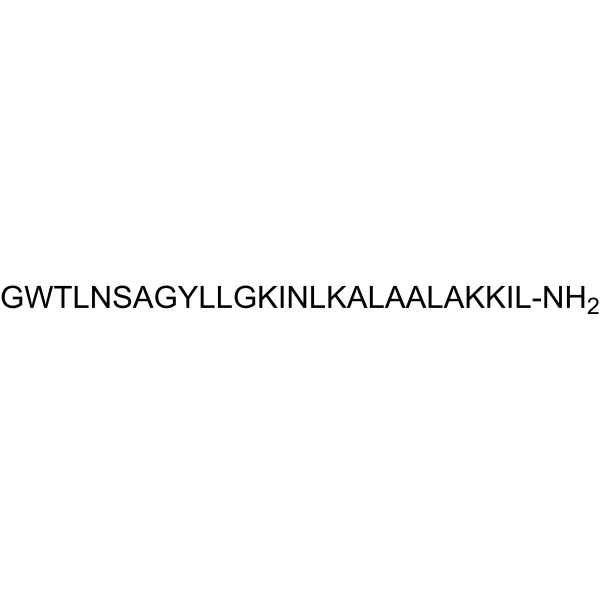
Transportan is an amphipathic cell-penetrating peptide containing 12 functional amino acids from the amino terminus of the neuropeptide galanin and mastoparan in the carboxyl terminus, connected via a lysine. Transportan interacts with galanin receptors and G-proteins, modulates GTPase activity, enters cells via direct translocation and endocytic pathways, accumulates in cytoplasmic, nuclear, and membranous structures, and delivers cargo including peptides, PNAs, proteins, siRNA, and liposomes [12].
loading...
    loading...
Cat. No.: HY-W088068
CAS No.: 68988-92-1
Wright's stain is a composite cell stain that mainly binds to intracellular nucleic acids, proteins and other components through thiazine dyes (such as methylene blue) and eosin. Wright's stain is pH-dependent (optimal pH 6.4-6.7) and achieves cell morphology resolution by differentially staining the cytoplasm and nucleus. Under alkaline conditions, thiazine dyes bind to nucleic acids to form purple, and acidic eosin binds to cytoplasmic proteins to form red, which can form contrasting cell morphological features. Wright's stain can clearly display the fine structures of blood cells and bone marrow cells (such as nuclear chromatin and granules) and quickly evaluate cell morphological abnormalities .
loading...
    loading...
Cat. No.: HY-W141394
CAS No.: 85079-00-1
Synonyms: N-Benzoyl-2′-O-methyladenosine
Bz-OMe-rA (N-Benzoyl-2′-O-methyladenosine) is a nucleoside analog with an N-benzoyl protecting group and a 2'-O-methyladenosine phosphoramidite unit. Bz-OMe-rA serves as a starting material for the chemical synthesis of the 5'-terminal cap structure of cytoplasmic polyhedrosis virus mRNA and also acts as a building block for solid-phase RNA oligonucleotide synthesis .
loading...
    loading...
Cat. No.: HY-136461
CAS No.: 22976-86-9
Synonyms: Polyoxorim
Target:  

Fungal Antibiotic

Research Areas:  

Infection

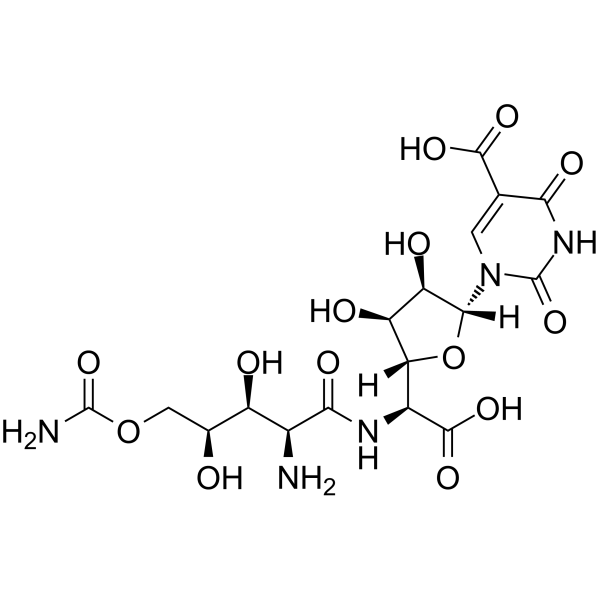
Polyoxin D (Polyoxorim) is an Antifungal Antibiotic. Polyoxin D inhibits Chitin synthase with an I50 of 1 mM for Stomoxys calcitrans chitin synthase. Polyoxin D causes swelling and rupture of fungal hyphal tips and budding yeast cells, haustorial encasement, haustorial wall thickening, widening of the extrahaustorial matrix, and cytoplasmic vesicles and tubular structures. Polyoxin D causes swelling of filamentous chains in Candida albicans and morphological changes in Agaricus bisporus and Coprinus cinereus. Polyoxin D is used in research on bean rust and Candida albicans infections .
loading...
    loading...
Cat. No.: HY-P991342
Synonyms: PCA062 antibody

Target:  

Cadherin

Research Areas:  

Cancer

CQY684 (PCA062 antibody) is a monoclonal antibody targeting CDH3/P-cadherin, which locks P-cadherin in an X-dimer conformation and enhances the stability of this adhesion structure. CQY684 induces P-cadherin phosphorylation and promotes its dissociation from the cytoplasmic region of P-cadherin. As an endocytosis inducer and lysosome-targeting agent, CQY684 facilitates the internalization of the P-cadherin-CQY684 complex and improves the turnover efficiency of P-cadherin. CQY684 serves as a platform for the delivery of intracellular anticancer compounds, which is achieved through the targeted lysosomal transport of the antibody-P-cadherin complex. CQY684 is applicable to the research of breast cancer, esophageal cancer, and head and neck cancer .
loading...
    loading...
Cat. No.: HY-P5319
Target:  

Calcium Channel

Research Areas:  

Others

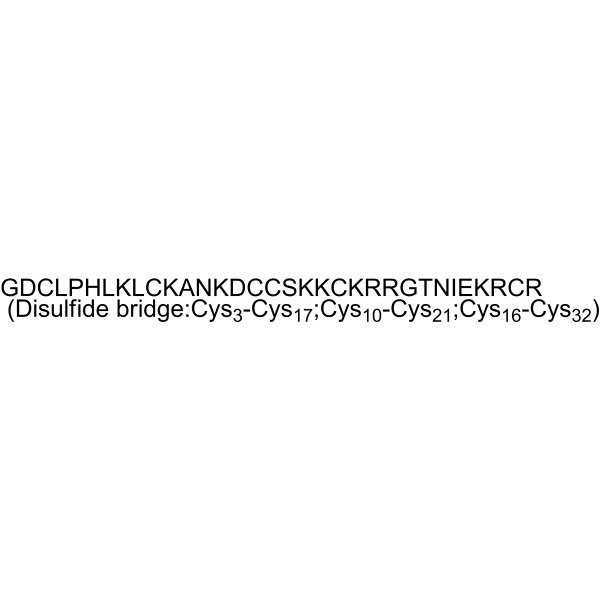
MCaE12A is a high-affinity modulator of RyR2 and increases RyR2 sensitivity to cytoplasmic calcium concentrations promoting channel opening. MCaE12A acts as an important tool for RyR2 structure-to-function studies as well as for manipulating Ca2+ homeostasis and dynamic of cardiac cell .
loading...
    loading...
Cat. No.: HY-D3108
CAS No.: 2569032-08-0
Target:  

Fluorescent Dye

Research Areas:  

Others

BV-1 is a fluorescent probe for viscosity detection and imaging in living cells. BV-1 can be used to detect changes in intracellular viscosity and mitochondrial viscosity in living cells. BV-1 responds to environmental viscosity via a molecular rotor mechanism. In a low-viscosity environment, the centrally located unsaturated structure induces a twisted intramolecular charge transfer (TICT) state and promotes non-radiative transitions, resulting in fluorescence quenching; when viscosity increases, molecular rotation is restricted, the TICT state is attenuated, and fluorescence is enhanced with a red shift. BV-1 can be used for real-time monitoring of changes in cytoplasmic viscosity and the viscosity increase during cell apoptosis. Ex/Em = 480/570 nm .
loading...
    loading...

