
16 Results for "

female mice

" in MedChemExpress (MCE) Product Catalog:
Products (16)

16 Results for "female mice" in MCE Product Catalog:

22
22 Publications Verification
Cat. No.: HY-B1192
CAS No.: 50-50-0
Synonyms: β-Estradiol 3-benzoate; 17β-Estradiol 3-benzoate
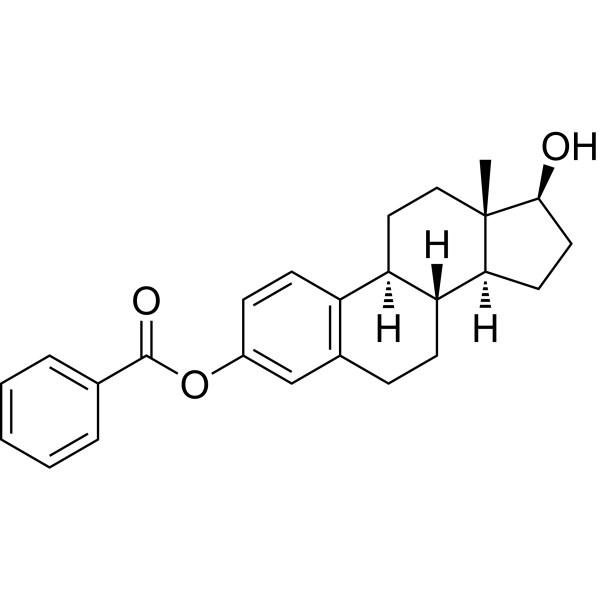
Estradiol benzoate (β-Estradiol 3-benzoate) is a HBx protein inhibitor and inhibits androgen and hepatitis B virus (HBV) transcription, replication. Estradiol benzoate shows antifertility effects, anti- Toxoplasma gondii activity and can improve memory behavior of Ovariectomy (Ovx) female mice .
loading...
    loading...
1
1 Cited Publications
Cat. No.: HY-B0111
CAS No.: 67392-87-4
Synonyms: Dihydrospirorenone
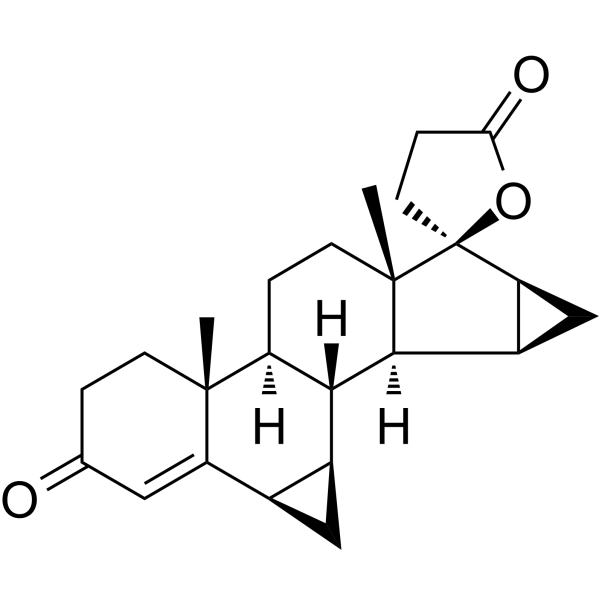
Drospirenone (Dihydrospirorenone) is an orally active fourth-generation progestin that interacts with the progesterone receptor (PR) and androgen receptor (AR). Drospirenone significantly decreases both plasminogen activator inhibitor-1 (PAI-1) and tissue plasminogen activator (tPA) via the AR. Drospirenone can produce DNA damage in bone marrow cells of female mice. .
loading...
    loading...
1
1 Cited Publications
Cat. No.: HY-B0708
CAS No.: 1743-60-8
Synonyms: 1,3,5(10)-Estratriene-3,17β-diol 17-acetate
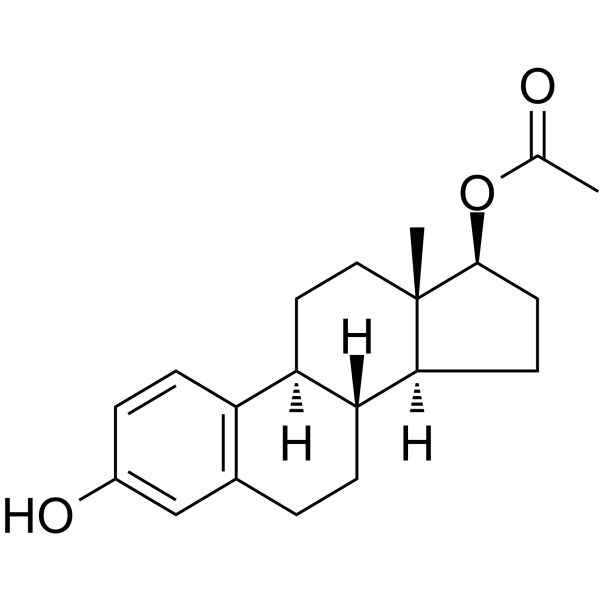
β-Estradiol 17-acetate (1,3,5(10)-Estratriene-3,17β-diol 17-acetate) is a long-acting endogenous estrogen precursor and also a cell viability and proliferation enhancer. β-Estradiol 17-acetate promotes the adhesion and proliferation of freshly isolated and revived female-derived human brain microvascular endothelial cells, and reverses the decreased viability of revived male-derived human brain microvascular endothelial cells. β-Estradiol 17-acetate exerts the microvascular protective effect of estrogen, enabling non-tumor human brain microvascular endothelial cells to be cultured in vitro for 2 months after cryopreservation. β-Estradiol 17-acetate is biotransformed into β-estradiol via hydrolase action in the in vitro skin of humans, hairless dogs, rats and hairless mice .
loading...
    loading...
Cat. No.: HY-P5883
CAS No.: 2126166-03-6
Synonyms: tatM2NX
Target:  

TRP Channel

TAT-M2NX (tatM2NX) is a selective inhibitor targeting human TRPM2 channels and exerts inhibitory effects on ischemic stroke. TAT-M2NX reduces H2O2-induced calcium influx via TRPM2 channels. After traumatic brain injury in mice, TAT-M2NX preserves hippocampal long-term potentiation, improves memory function, and reduces infarct volume after middle cerebral artery occlusion, but it shows no effect on female mice. TAT-M2NX can be used in studies related to traumatic brain injury and ischemic stroke .
loading...
    loading...
Cat. No.: HY-116568
CAS No.: 178928-70-6
Purity:  99.52%
Synonyms: JAU-6476
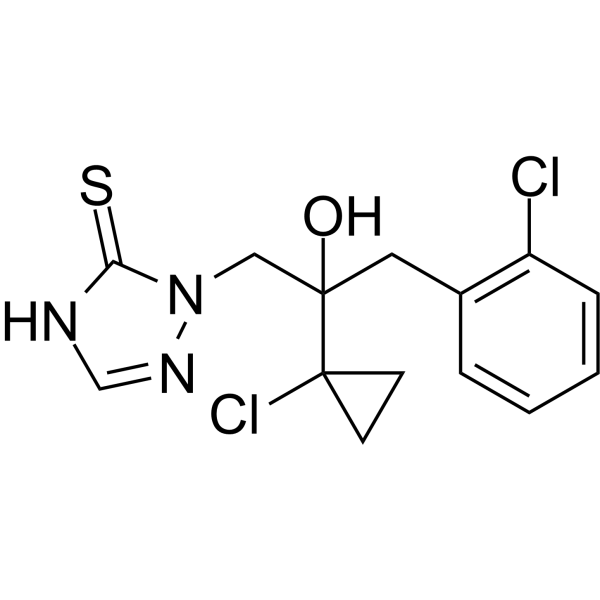
Prothioconazole is an orally active broad-spectrum fungicide. Prothioconazole weakly inhibits CaCYP51 activity in Candida albicans, with an apparent IC50 of approximately 120 μM. Prothioconazole disrupts Microtubule stability by reducing the acetylation level of α-tubulin. Prothioconazole induces Mitochondrial dysfunction, oxidative stress, DNA damage, and Apoptosis. Prothioconazole accumulates 14-methylated sterols and depletes ergosterol in cells, culture media, plants, and animals. Prothioconazole interferes with pyruvate metabolism and glycolysis/gluconeogenesis processes in mouse liver, downregulates Fasn mRNA expression, and induces hepatotoxicity and renal metabolic disorders. Prothioconazole reduces the fertility of female mice. Prothioconazole inhibits body weight gain and increases liver/kidney indices in mice. Prothioconazole can be used in studies related to candidiasis .
loading...
    loading...
Cat. No.: HY-N4031
CAS No.: 82375-29-9
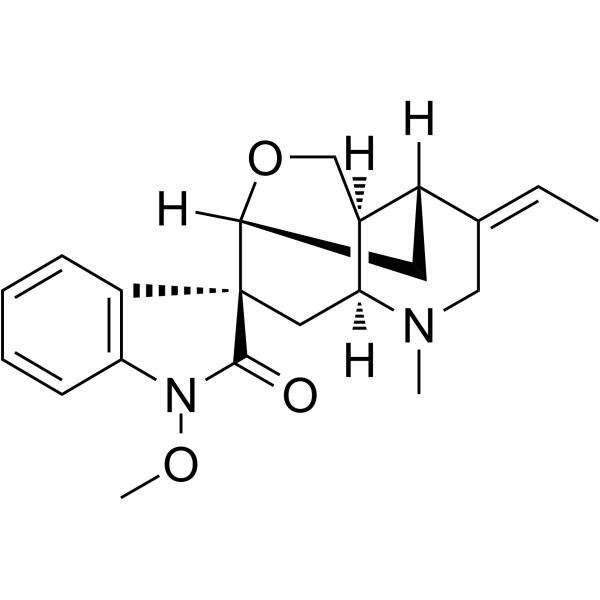
Humantenine is a highly toxic indole alkaloid from Gelsemium elegans (Gardn. & Champ.) Benth. that binds to RNA m6A modification regulatory proteins (ALKBH5, METTL). Humantenine stably binds via hydrogen bonding and hydrophobic interactions and disrupts the m6A methylation level of target genes, thereby impairing the expression of intestinal epithelial cell tight junction and cytoskeleton-related genes, causing intestinal barrier dysfunction and significant intestinal cytotoxicity. The intraperitoneal injection LD50 values of Humantenine are <1 mg/kg in mice, 1.2 mg/kg in male rats and 1.5 mg/kg in female rats, respectively. Species differences exist in the metabolism of Humantenine in human, porcine, goat and rat liver microsomes, and demethylation, dehydrogenation and oxidation occur in liver microsomes .
loading...
    loading...
Cat. No.: HY-B1192R
CAS No.: 50-50-0
Synonyms: β-Estradiol 3-benzoate (Standard); 17β-Estradiol 3-benzoate (Standard)
Estradiol benzoate (Standard) is the analytical standard of Estradiol benzoate. This product is intended for research and analytical applications. Estradiol benzoate (β-Estradiol 3-benzoate) is a HBx protein inhibitor and inhibits androgen and hepatitis B virus (HBV) transcription, replication. Estradiol benzoate shows antifertility effects, anti- Toxoplasma gondii activity and can improve memory behavior of Ovariectomy (Ovx) female mice .
loading...
    loading...
Cat. No.: HY-122303
CAS No.: 63065-90-7
Synonyms: 4-OH-DiPT hydrochloride
Target:  

5-HT Receptor

Research Areas:  

Neurological Disease

4-hydroxy DiPT hydrochloride is an 5-HT2A agonist that induces the head-twitch response (HTR) in mice, indicating psychoactivity . 4-hydroxy DiPT hydrochloride significantly reduced freezing responses to conditioned cues in a dose-dependent manner with a greater potency in female mice than male mice .
loading...
    loading...
Cat. No.: HY-24238
CAS No.: 2244569-14-8
Target:  

Cytochrome P450

Research Areas:  

Others

DLCI-1 is a potent and selective oral inhibitor of cytochrome P450 2A6 (CYP2A6) that markedly reduces nicotine self-administration in both male and female mice.
loading...
    loading...
Cat. No.: HY-133800
CAS No.: 1181224-13-4
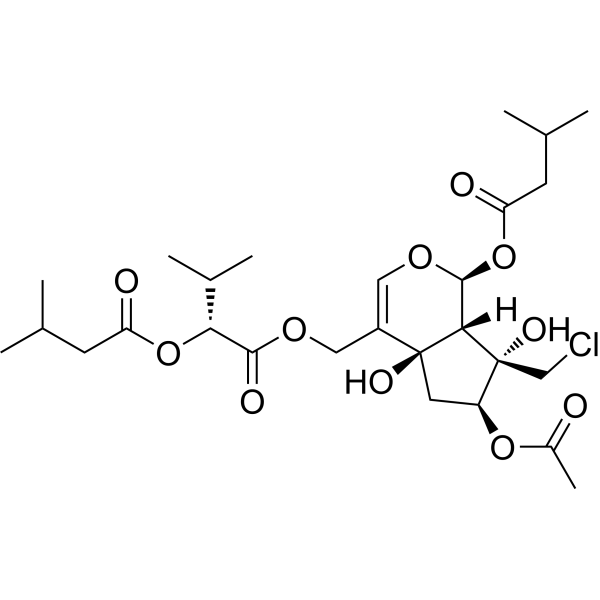
Volvaltrate B is an anticancer agent, iridoid, can be obtained from the root of valerian (Valeriana officinalis). Volvaltrate B is effective against ovarian tumors in female mice. Volvaltrate B has the potential to study cancer .
loading...
    loading...
Cat. No.: HY-150186
CAS No.: 2971704-85-3
Target:  

RXFP Receptor

Research Areas:  

Metabolic Disease

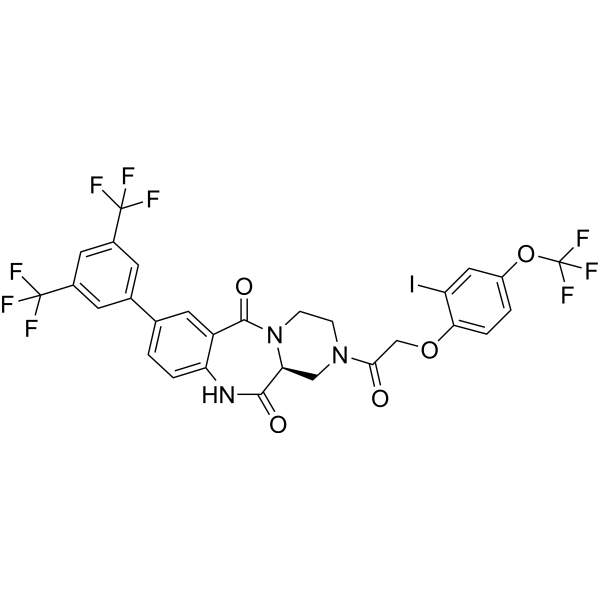
RXFP2 agonist 2 is a selective, orally active and allosteric RXFP2 agonist with an EC50 value of 0.38 μM. RXFP2 agonist 2 induces osteoblast mineralization. RXFP2 agonist 2 increases bone formation in female mice. RXFP2 agonist 2 has the potential for the research of osteoporosis .
loading...
    loading...
Cat. No.: HY-19392
CAS No.: 263754-93-4
Target:  

NO Synthase

Research Areas:  

Infection Cardiovascular Disease

LA-419 is an orally active nitric oxide (NO) donor. LA-419 can significantly reduce the amount of fecal worm eggs excreted, shorten the duration of egg excretion, and also decrease the number of larvae in the lungs and the number of parasitic females in the intestines in mice infected with S. venezuelensis. LA-419 can reduce the formation of atherosclerosis in apolipoprotein E-deficient mice. LA-419 can be used for the researches of infection and cardiovascular disease .
loading...
    loading...
Cat. No.: HY-185679
CAS No.: 2991244-19-8
Research Areas:  

Others

W19-LNP is a lipid nanoparticle formulated with a Ugi-reaction-derived ionizable lipid (W19). W19-LNP demonstrates highly selective mRNA delivery to the spleen in female BALB/c mice upon intravenous administration. W19-LNP can be used for the research of mRNA-based vaccine delivery, immune cell reprogramming, and gene-engineered cell preparation .
loading...
    loading...
Cat. No.: HY-150186A
CAS No.: 3123585-08-7
Research Areas:  

Metabolic Disease

(R)-RXFP2 agonist 2 is the R-type isomer of RXFP2 agonist 2 (HY-150186). RXFP2 agonist 2 is a selective, orally active and allosteric RXFP2 agonist with an EC50 value of 0.38 μM. RXFP2 agonist 2 induces osteoblast mineralization. RXFP2 agonist 2 increases bone formation in female mice. RXFP2 agonist 2 has the potential for the research of osteoporosis .
loading...
    loading...
Cat. No.: HY-119578
CAS No.: 72963-72-5
Target:  

Cytochrome P450

Research Areas:  

Cancer

Imiprothrin is an inducer that induces CYP1A2 and metallothionein 1a, with significant genotoxicity and cytotoxicity. In rat hepatocytes, Imiprothrin initiates detoxification responses by triggering the overexpression of these two genes. Imiprothrin induces chromosomal aberrations and micronucleus formation in rat bone marrow cells, and causes DNA damage in hepatocytes. Imiprothrin triggers oxidative stress in rats, leading to lipid peroxidation, excessive reactive oxygen species production and redox imbalance, which in turn impairs liver and kidney functions and causes tissue damage. Imiprothrin inhibits weight gain in mice, and even causes high mortality in female mice at high doses. However, it shows no carcinogenicity in rat experiments; among relevant indicators, aspartate aminotransferase and total protein are identified as sensitive toxicity biomarkers .
loading...
    loading...
Cat. No.: HY-P992555
Anti-Mouse BTLA/CD272 Antibody (6F7) is an anti-BTLA antibody that binds BTLA/CD272 and depletes BTLA + cells. Anti-Mouse BTLA/CD272 Antibody (6F7) increases IL-4, IL-10, IL-2, and IFN-γ expression, and decreases anti-PD-1-enhanced IL-12 (p40/p70). Anti-Mouse BTLA/CD272 Antibody (6F7) delays the onset of spontaneous diabetes in aged but not young female NOD mice, attenuates anti-PD-1-induced diabetes in both age groups, protects prediabetic NOD mice from anti-PD-1-induced insulitis, and reduces pancreatic islet B/helper T cell infiltration. Anti-Mouse BTLA/CD272 Antibody (6F7) can be used for research on type 1 diabetes and insulitis .
loading...
    loading...
  • 1

