

32 Results for "

fibrinolytic

" in MedChemExpress (MCE) Product Catalog:
Products (32)

32 Results for "fibrinolytic" in MCE Product Catalog:

14
14 Publications Verification
Cat. No.: HY-B0715
CAS No.: 6493-05-6
Synonyms: BL-191; Oxpentifylline
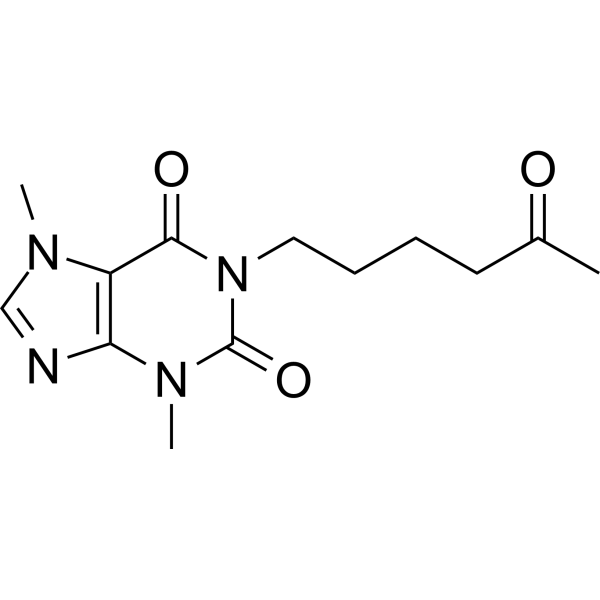
Pentoxifylline (BL-191), a haemorheological agent, is an orally active non-selective phosphodiesterase (PDE) inhibitor, with immune modulation, anti-inflammatory, hemorheological, anti-fibrinolytic and anti-proliferation effects. Pentoxifylline can be used for the research of peripheral vascular disease, cerebrovascular disease and a number of other conditions involving a defective regional microcirculation .
loading...
    loading...
5
5 Cited Publications
Cat. No.: HY-P2373
CAS No.: 133876-92-3
Target:  

PAI-1

Research Areas:  

Cardiovascular Disease

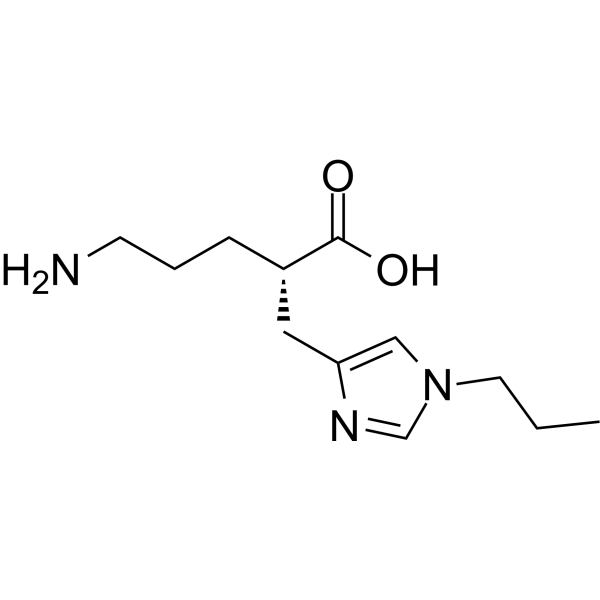
Kinase, Natto fermentation is a potent fibrinolytic enzyme. Kinase, Natto fermentation can break down blood clots by directly hydrolyzing fibrin and plasmin substrate. Kinase, Natto fermentation can be used for the research of cardiovascular diseases .
loading...
    loading...
5
5 Cited Publications
Cat. No.: HY-17566
CAS No.: 1405-37-4
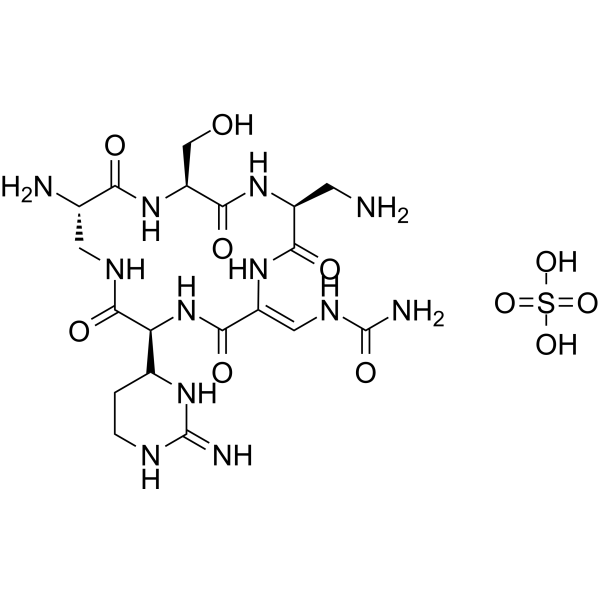
Capreomycin sulfate is a macrocyclic peptide antibiotic that inhibits phenylalanine synthesis in mycobacterial ribosomal translation. Capreomycin sulfate has anti-amyloidogenic and pro-fibrinolytic activities, reducing amyloid-induced cytotoxicity by inhibiting the occurrence of amyloid fibrillation. Capreomycin sulfate can be used in the study of multidrug-resistant tuberculosis, type 2 diabetes, Alzheimer's disease and Parkinson's disease .
loading...
    loading...
Cat. No.: HY-P2970
CAS No.: 37189-34-7
Stem bromelain (EC 3.4.22.32) is a cysteine protease and antibacterial agent. Stem bromelain can be isolated from the stem of the pineapple (Ananas comosus). Stem bromelain induces dose-dependent secretion of IL-12p70, and IL-6, induces Apoptosis, causes cleavage of full-length PARP protein, Caspase 3, and Caspase 9, increases Bax, and decreases Bcl-2. Stem bromelain possesses various fibrinolytic, antiedema, antithrombotic, and anti-inflammatory activities. Stem bromelain also exhibits in vivo antitumor and antileukemic activities, as well as antimetastatic effects. Stem bromelain has antimycobacterial activity. Stem bromelain provides protection against lead poisoning .
loading...
    loading...
Cat. No.: HY-129611
CAS No.: 9001-00-7
Target:  

Apoptosis

Research Areas:  

Inflammation/Immunology Cancer

Bromelain is an anti-inflammatory agent derived from pineapple stem that acts through down-regulation of plasma kininogen, inhibition of Prostaglandin E2 expression, degradation of advanced glycation end product receptors and regulation of angiogenic biomarkers as well as antioxidant action upstream in the COX-pathway . Bromelain exhibits various fibrinolytic, antiedematous, antithrombotic, and anti-inflammatory activities. Bromelain also possesses some anticancerous activities and promotes apoptotic cell death .
loading...
    loading...
Cat. No.: HY-131409
CAS No.: 62354-43-2
Purity:  99.55%
Synonyms: D-Val-Leu-Lys-p-itoailide dihydrochloride; D-VLK-pNA dihydrochloride; S 2251 dihydrochloride
Target:  

Fluorescent Dye

Research Areas:  

Others

D-Val-Leu-Lys-pNA (D-Val-Leu-Lys-p-nitroanilide) dihydrochloride is a chromogenic peptide substrate that serves as a characteristic substrate for plasmin and plasminogen. D-Val-Leu-Lys-pNA dihydrochloride acts as a sensitive substrate for the DFE27 serine protease derived from Bacillus subtilis DC27. Catalyzed by plasmin, D-Val-Leu-Lys-pNA dihydrochloride binds and hydrolyzes to release p-nitroaniline (pNA), which can be detected colorimetrically at 405 nm as a measure of fibrinolytic activity .
loading...
    loading...
Cat. No.: HY-B1399
CAS No.: 83-40-9
Synonyms: o-Cresotic acid; Hydroxytoluic acid
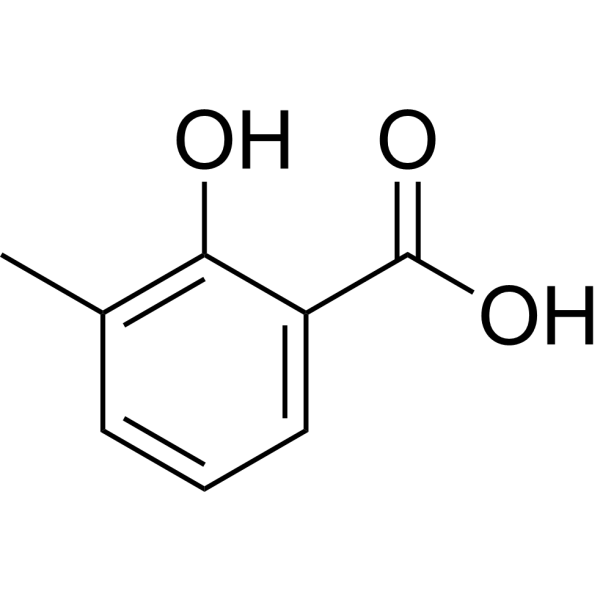
3-Methylsalicylic acid (o-Cresotic acid) is a derivative of salicylic acid. 3-Methylsalicylic acid exhibits significant fibrinolytic activity in human plasma by activating the fibrinolytic system. 3-Methylsalicylic acid can be used as an intermediate for the synthesis of other compounds. 3-Methylsalicylic acid inhibits the feeding of midges .
loading...
    loading...
Cat. No.: HY-165084
CAS No.: 383908-63-2
Synonyms: Soy PS sodium
L-α-Phosphatidylserine sodium (Soy PS sodium) is a negatively charged phospholipid that acts as an allosteric activator to activate latent plasminogen activator inhibitor-1 (PAI-1). L-α-Phosphatidylserine does not directly alter the catalytic activity of t-PA, but regulates fibrinolytic activity solely by inducing conformational remodeling of PAI-1. L-α-Phosphatidylserine sodium is an antigen targeting phosphatidylserine (PS) and can induce the production of polyclonal antibodies. L-α-Phosphatidylserine is mainly used in studies related to immunology, fibrinolytic system and coagulation homeostasis .
loading...
    loading...
Cat. No.: HY-122052
CAS No.: 400044-47-5
Target:  

Thrombin

Research Areas:  

Metabolic Disease

UK‑396082 is a potent thrombin activated fibrinolytic inhibitor (TAFI) inhibitor. UK‑396082 increases plasmin activity and induces a parallel decrease in ECM levels. UK‑396082 can be used in research of chronic kidney disease (CKD) .
loading...
    loading...
Cat. No.: HY-B0715S2
CAS No.: 1185995-18-9
Synonyms: BL-191-d5; Oxpentifylline-d5
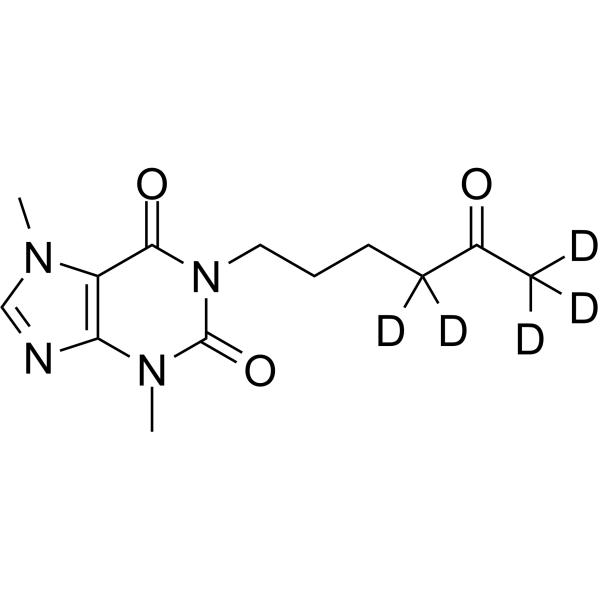
Pentoxifylline-d5 is the deuterium labeled Pentoxifylline. Pentoxifylline (BL-191), a haemorheological agent, is an orally active non-selective phosphodiesterase (PDE) inhibitor, with immune modulation, anti-inflammatory, hemorheological, anti-fibrinolytic and anti-proliferation effects. Pentoxifylline can be used for the research of peripheral vascular disease, cerebrovascular disease and a number of other conditions involving a defective regional microcirculation .
loading...
    loading...
Cat. No.: HY-B0715S
CAS No.: 1185878-98-1
Synonyms: BL-191-d6; Oxpentifylline-d6
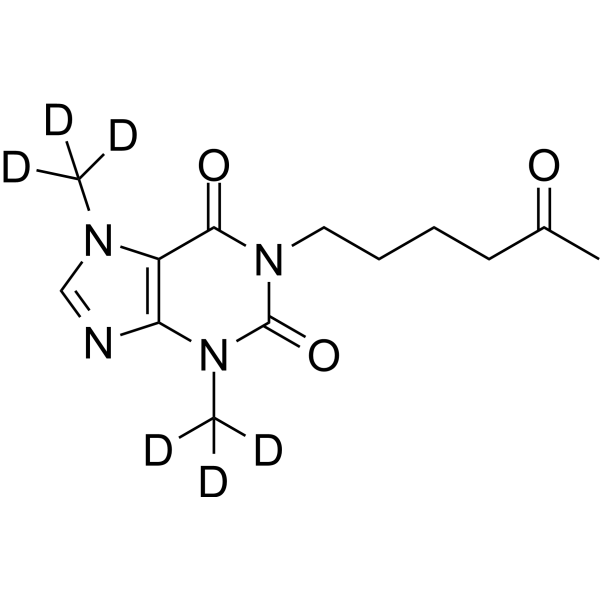
Pentoxifylline-d6 is the deuterium labeled Pentoxifylline. Pentoxifylline (BL-191), a haemorheological agent, is an orally active non-selective phosphodiesterase (PDE) inhibitor, with immune modulation, anti-inflammatory, hemorheological, anti-fibrinolytic and anti-proliferation effects. Pentoxifylline can be used for the research of peripheral vascular disease, cerebrovascular disease and a number of other conditions involving a defective regional microcirculation .
loading...
    loading...
Cat. No.: HY-B0715R
CAS No.: 6493-05-6
Synonyms: BL-191 (Standard); Oxpentifylline (Standard)
Pentoxifylline (Standard) is the analytical standard of Pentoxifylline. This product is intended for research and analytical applications. Pentoxifylline (BL-191), a haemorheological agent, is an orally active non-selective phosphodiesterase (PDE) inhibitor, with immune modulation, anti-inflammatory, hemorheological, anti-fibrinolytic and anti-proliferation effects. Pentoxifylline can be used for the research of peripheral vascular disease, cerebrovascular disease and a number of other conditions involving a defective regional microcirculation .
loading...
    loading...
Cat. No.: HY-U00134
CAS No.: 2179-37-5
Synonyms: Bencyclane; Benzcyclan
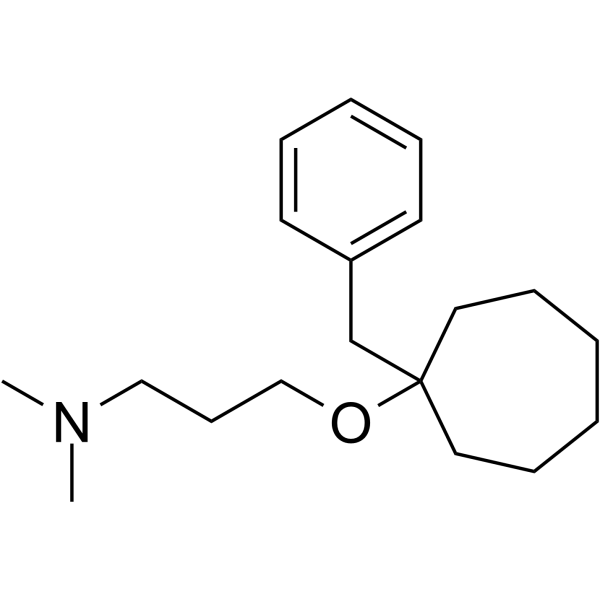
Benzcyclane (Bencyclane; Benzcyclan) is a vasodilator with serotonin receptor antagonism. Benzcyclane exerts atypical serotonin antagonistic effects in rabbit superior mesenteric arteries. Benzcyclane relaxes high K +-induced contractions in rabbit basilar arteries and superior mesenteric arteries, and selectively inhibits sympathetic nerve stimulation-induced contractions in rabbit pulmonary arteries. Benzcyclane exerts non-competitive norepinephrine antagonistic effects in rabbit superior mesenteric arteries, and slightly reduces the maximum contractile response induced by histamine. Benzcyclane relaxes smooth muscles, induces transient hypotension, inhibits thrombosis, and accelerates blood fibrinolytic activity. Benzcyclane increases cerebral glucose content/uptake, enhances hypoxia tolerance in mice, and increases cerebral blood supply in dogs. Benzcyclane is applicable to studies related to cerebral vascular circulation .
loading...
    loading...
Cat. No.: HY-N14452
CAS No.: 174689-41-9
Plactin A is a cyclic pentapeptide physiologically active substance and promotes the dissolution of fibrinolytic proteins .
loading...
    loading...
Cat. No.: HY-N14455
CAS No.: 174689-44-2
Target:  

Others

Plactin D is a cyclic pentapeptide physiologically active substance and promotes the dissolution of fibrinolytic proteins .
loading...
    loading...
Cat. No.: HY-B1399R
CAS No.: 83-40-9
Synonyms: o-Cresotic acid (Standard); Hydroxytoluic acid (Standard)
3-Methylsalicylic acid (Standard) is the analytical standard of 3-Methylsalicylic acid. This product is intended for research and analytical applications. 3-Methylsalicylic acid (o-Cresotic acid) is a derivative of salicylic acid. 3-Methylsalicylic acid exhibits significant fibrinolytic activity in human plasma by activating the fibrinolytic system. 3-Methylsalicylic acid can be used as an intermediate for the synthesis of other compounds. 3-Methylsalicylic acid inhibits the feeding of midges.
loading...
    loading...
Cat. No.: HY-172536
Synonyms: mPEG30000-SC; mPEG30000-Succinimidyl ester
Research Areas:  

Others

m-PEG30000-NHS ester (mPEG30000-SC) can be used to modify active molecules and improve their antigenicity, immunogenicity, and help prepare injection preparations. The modification of serine protease lumbrokinase (LK) by m-PEG-NHS ester does not affect its strong fibrinolytic and thrombolytic activities, and has good application prospects .
loading...
    loading...
Cat. No.: HY-W743984
Melagatran-d11 is the deuterium labeled Melagatran (HY-129056). Melagatran is a direct and orally active inhibitor of thrombin, without interacting with any other enzymes in the coagulation cascade or fibrinolytic enzymes aside from thrombin. Melagatran does not require endogenous co-factors for its antithrombin effect and may help to alleviate some of the damaging effects of endotoxemia . Melagatran has the potential to provide a rational approach in the prevention of arterial occlusion .
loading...
    loading...
Cat. No.: HY-168378
CAS No.: 63589-93-5
Synonyms: S-2251
Target:  

Fluorescent Dye

Research Areas:  

Others

D-Val-Leu-Lys-pNA (S-2251) is a chromogenic peptide substrate that serves as a characteristic substrate for plasmin and plasminogen. D-Val-Leu-Lys-pNA acts as a sensitive substrate for the DFE27 serine protease derived from Bacillus subtilis DC27. Catalyzed by plasmin, D-Val-Leu-Lys-pNA binds and hydrolyzes to release p-nitroaniline (pNA), which can be detected colorimetrically at 405 nm as a measure of fibrinolytic activity .
loading...
    loading...
Cat. No.: HY-B0715S3
CAS No.: 1185878-97-0
Synonyms: BL-191-d3; Oxpentifylline-d3
Pentoxifylline-d3 (BL-191-d3) is deuterium labeled Pentoxifylline. Pentoxifylline (BL-191), a haemorheological agent, is an orally active non-selective phosphodiesterase (PDE) inhibitor, with immune modulation, anti-inflammatory, hemorheological, anti-fibrinolytic and anti-proliferation effects. Pentoxifylline can be used for the research of peripheral vascular disease, cerebrovascular disease and a number of other conditions involving a defective regional microcirculation .
loading...
    loading...

