64 Results for "

glucosyl

" in MedChemExpress (MCE) Product Catalog:
Products (64)

64 Results for "glucosyl" in MCE Product Catalog:

1
1 Cited Publications
Cat. No.: HY-P75786
Purity:  ≥ 95%, as determined by reducing SDS-PAGE.
Synonyms: GBA1; Acid Beta-Glucosidase; Prev. GLUC; Glucocerebrosidase; Prev. GBA; glucosylceramidase; D-glucosyl-N-Acylsphingosine Glucohydrolase; Imiglucerase; Lysosomal Cholesterol Glycosyltransferase; Alglucerase; Lysosomal Acid glucosylceramidase; Beta-GC; Cholesterol glucosyltransferase; SGTase; Lysosomal Galactosylceramidase; Glucosidase, Beta; Acid (Includes glucosylceramidase); Cholesteryl-Beta-Glucosidase; glucosylceramidase-Like Protein; Lysosomal Glycosylceramidase; Lysosomal Glucocerebrosidase; Beta-glucosylceramidase 1; glucosylceramidase Beta; Glucosidase, Beta, Acid; GCB; Beta-Glucocerebrosidase; GC; glucosylceramidase Beta 1; Lysosomal Acid GCase
Species:  
Human
Source:  
HEK293
loading...
    loading...
Cat. No.: HY-N10634
CAS No.: 74365-77-8
Synonyms: C16 glucosyl(β) Ceramide (d18:1/16:0)
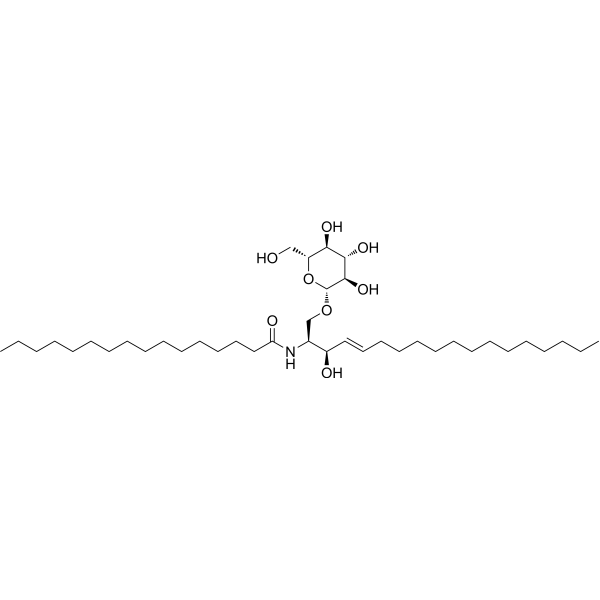
D-Glucosyl-β-1,1′-N-palmitoylsphingosine (C16 Glucosyl (β) Ceramide (d18:1/16:0)) is an endogenous Mincle ligand with immunostimulatory activity. D-Glucosyl-β-1,1′-N-palmitoylsphingosine binds to and activates macrophage-inducible C-type lectin (Mincle). D-Glucosyl-β-1,1′-N-palmitoylsphingosine is applicable to the research of immune system diseases .
loading...
    loading...
Cat. No.: HY-N15851
CAS No.: 82014-84-4
Category:  

Lipids

Target:  

Drug Derivative

C24 Glucosyl(β) ceramide (d18:1/24:0), C24-Ceramide (d18:1/24:0) (HY-134508A) derivative, is a β-glucosyl ceramide and can be used for the research of lipid.
loading...
    loading...
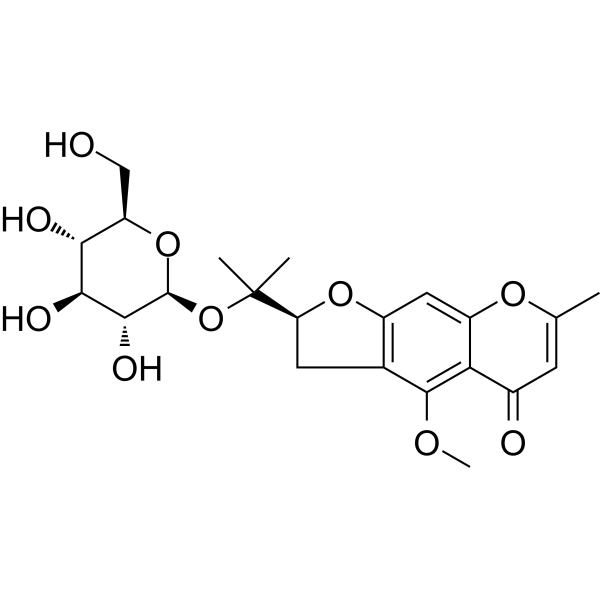
Cat. No.: HY-N0442
CAS No.: 84272-85-5
Synonyms: 4'-O-β-D-glucosyl-5-O-methylvisamminol
5-O-Methylvisammioside (4'-O-β-D-Glucosyl-5-O-methylvisamminol) is an orally active natural chromone glycoside and multiple biological activities. 5-O-Methylvisammioside inhibits ferroptosis by activating the Nrf2/HO-1 signaling axis. 5-O-Methylvisammioside alleviates intestinal barrier damage by inhibiting the ROS/NF-κB/NLRP3 pathway. 5-O-Methylvisammioside exerts a protective effect against acute liver injury by reducing ALT/AST, decreasing inflammatory infiltration, and inhibiting IκB-α phosphorylation and NF-κB nuclear translocation. 5-O-Methylvisammioside blocks the HMGB1/RAGE/MEK/ERK signaling axis to exert anti-tumor and anti-angiogenic effects. 5-O-Methylvisammioside improves depression-like behaviors by inhibiting Src kinase and the NF-κB pathway .
loading...
    loading...
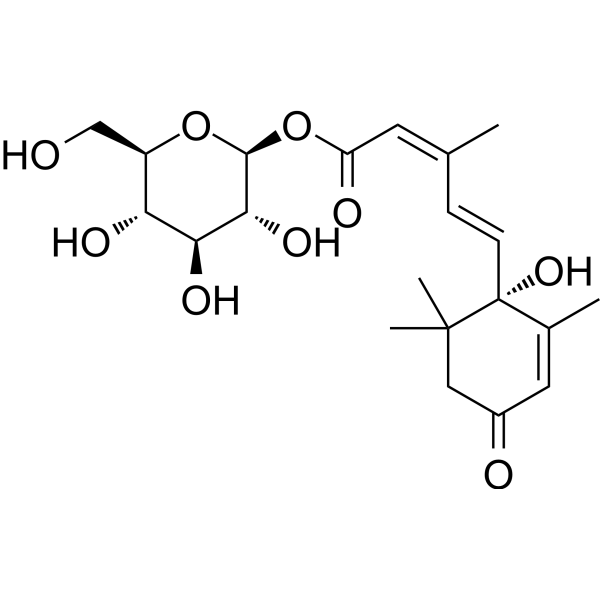
Cat. No.: HY-111974
CAS No.: 21414-42-6
Purity:  95.04%
Synonyms: ABA-GE; (S)-cis,trans-Abscisic acid glucosyl ester
β-D-Glucopyranosyl abscisate (ABA-GE) is a hydrolyzable abscisic acid (ABA) conjugate that accumulates in the vacuole and presumably also in the endoplasmic reticulum. The deconjugation of β-D-Glucopyranosyl abscisate allows the rapid formation of free ABA in response to abiotic stress conditions such as dehydration and salt stress. β-D-Glucopyranosyl abscisate contributes to the maintenance of ABA homeostasis .
loading...
    loading...
Cat. No.: HY-170035
CAS No.: 95119-86-1
Synonyms: C18 glucosyl(β) ceramide (d18:1/18:0); D-glucosyl-β-1,1' N-stearoyl-D-erythro-sphingosine
Target:  

Fungal Wnt β-catenin

Research Areas:  

Infection Neurological Disease Cancer

GlcCer (d18:1/18:0) (C18 Glucosyl(β) ceramide (d18:1/18:0)) is a glycosphingolipids that activates the Wnt/β-catenin pathway by targeting LRP6. GlcCer (d18:1/18:0) drives EMT, migration, invasion and GBA1-mediated liver cancer metastasis. GlcCer (d18:1/18:0) accumulates to impair lysosomal function and induce toxic α-synuclein aggregation. GlcCer (d18:1/18:0) supports growth, sporulation, germination and virulence in Penicillium digitatum. GlcCer (d18:1/18:0) is reduced in demyelinated mouse corpus callosum. GlcCer (d18:1/18:0) can be used for the research of liver cancer, synucleinopathies, fungal, Parkinson’s disease and Gaucher disease .
loading...
    loading...
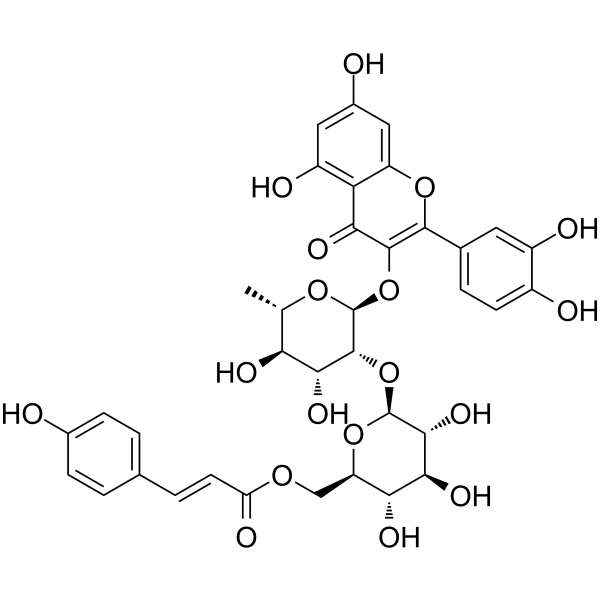
Cat. No.: HY-N6964
CAS No.: 143061-65-8
Synonyms: Quercetin-3-O-[2-O-(6-O-p-hydroxyl-E-coumaroyl)-D-glucosyl]-(1→2)-L-rhamnoside
Quercetin 3-O-β-D-(6''-p-coumaroyl) glucopyranosyl (1→2)-α-L-rhamnopyranoside (Quercetin-3-O-[2-O-(6-O-p-hydroxyl-E-coumaroyl)-D-glucosyl]-(1→2)-L-rhamnoside) is a flavonoid glycoside present in Ginkgo biloba leaves, with antioxidant activity. Quercetin 3-O-β-D-(6''-p-coumaroyl) glucopyranosyl (1→2)-α-L-rhamnopyranoside serves as the major antioxidant component in Shuxuening Injection .
loading...
    loading...
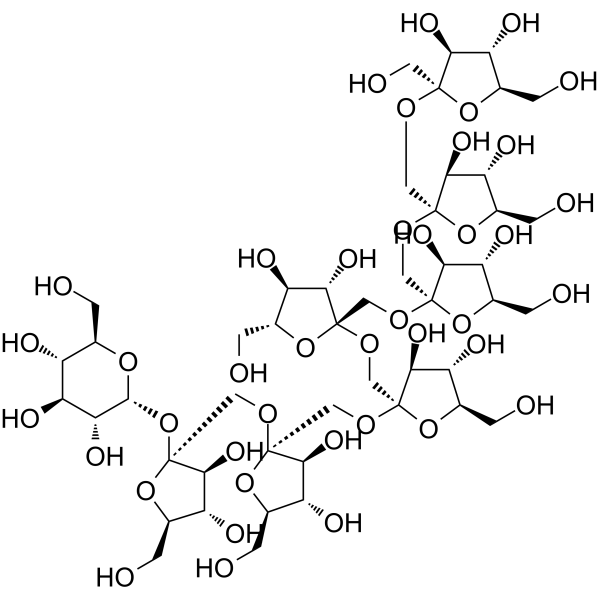
Cat. No.: HY-N6836
CAS No.: 62512-21-4
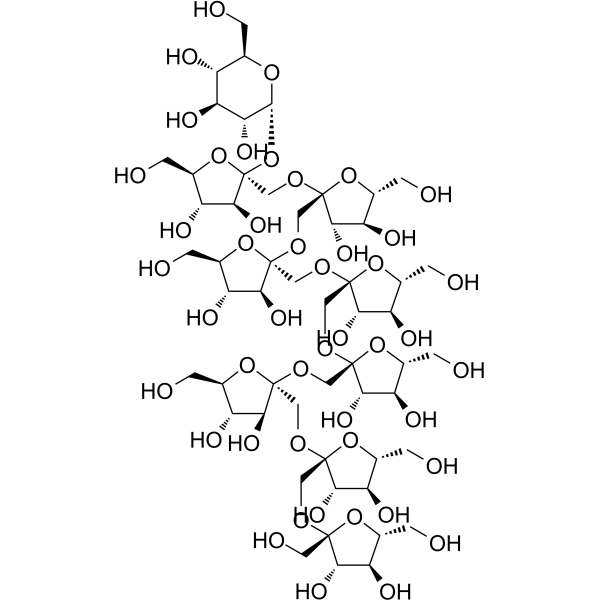
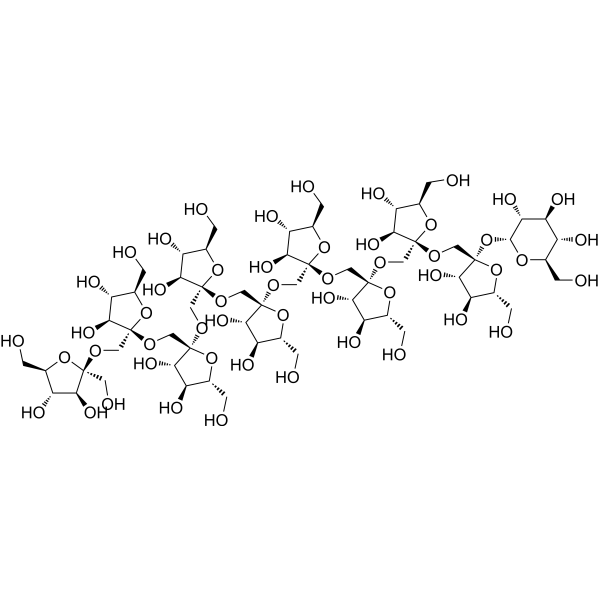
Fructo-oligosaccharide DP8/GF7 belongs to fructooligosaccharides (FOS) with degree of polymerization (DP=8). Fructo-oligosaccharides (FOS) are composed of 7 fructose units linked by (2→1)-β-glycosidic bonds and having a single D-glucosyl unit at the non-reducing end .
loading...
    loading...
Cat. No.: HY-146906S
CAS No.: 2260670-13-9
Research Areas:  

Others

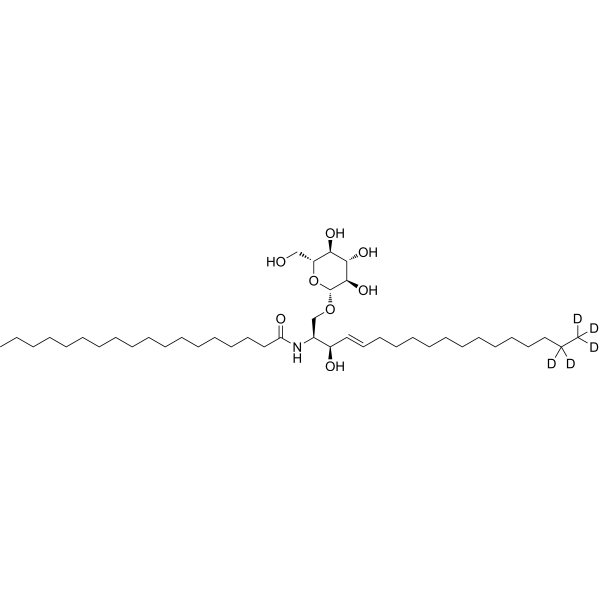
C18 Glucosyl(ß) ceramide-d5 is deuterium labeled C18 Glucosyl(ß) ceramide.
loading...
    loading...
Cat. No.: HY-N15905
CAS No.: 119242-43-2
C20 Glucosyl(β) ceramide (d18:1/20:0) is a β-glucosyl ceramide.
loading...
    loading...
Cat. No.: HY-N7607
CAS No.: 143016-74-4
Quercetin-3-O-D-glucosyl]-(1-2)-L-rhamnoside is a flavonoid glycoside with antioxidant activity and free radical scavenging activity. Quercetin-3-O-D-glucosyl]-(1-2)-L-rhamnoside can scavenge free radicals such as ABTS+ and can be used in the study of antioxidant-related diseases (such as cardiovascular diseases and neurodegenerative diseases) .
loading...
    loading...
Cat. No.: HY-W356117
CAS No.: 94885-03-7
Target:  

Fluorescent Dye

Research Areas:  

Metabolic Disease

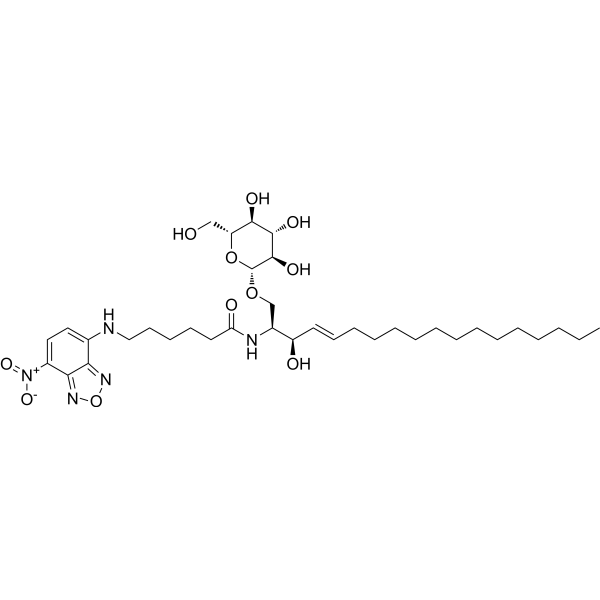
C6 NBD Glucosylceramide is a glucosylceramide fluorescent derivative (Ex=466 nm, Em=535 nm). C6 NBD Glucosylceramide can be used to study the metabolism and internalization of glucosylceramide and also for the determination of glucosyl ceramide synthase activity .
loading...
    loading...
Cat. No.: HY-129411
CAS No.: 441061-33-2
Purity:  98.60%
Synonyms: ACT-519276; OGT2378
Research Areas:  

Metabolic Disease

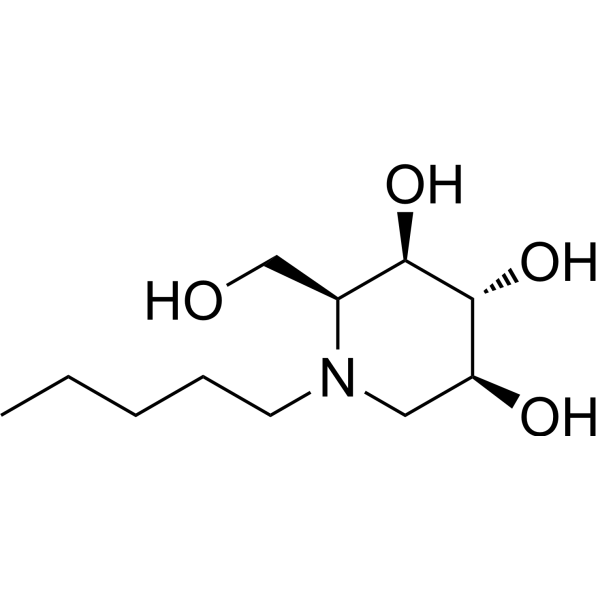
Sinbaglustat (OGT2378) is a dual inhibitor of glucosylceramide synthase (GCS) and non-lysosomal glucosyl ceramidase (GBA2). Sinbaglustat is an orally available N-alkyl iminosugar that crosses the blood-brain barrier. Sinbaglustat can be used for the research of central neurodegenerative diseases associated with lysosomal dysfunctions .
loading...
    loading...
Cat. No.: HY-N6835
CAS No.: 143625-74-5
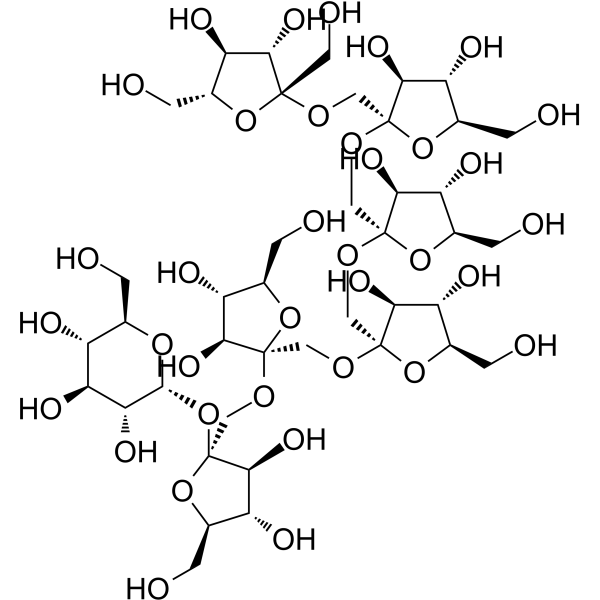
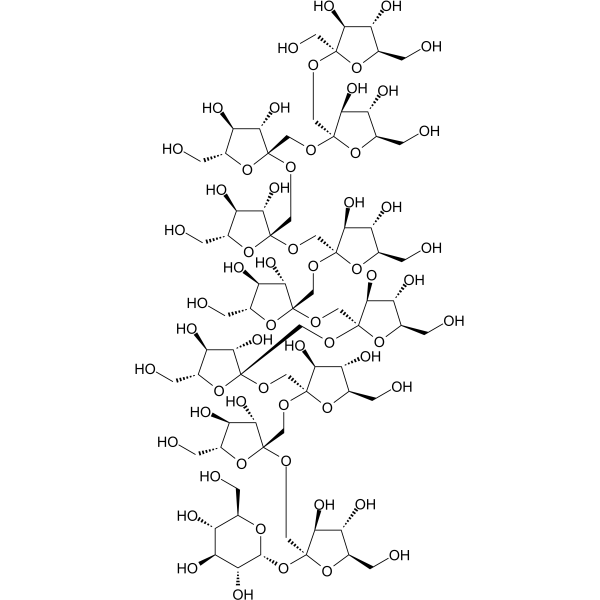
Fructo-oligosaccharide DP9/GF8 belongs to fructooligosaccharides (FOS) with degree of polymerization (DP=9). Fructo-oligosaccharides (FOS) are composed of 8 fructose units linked by (2→1)-β-glycosidic bonds and having a single D-glucosyl unit at the non-reducing end .
loading...
    loading...
Cat. No.: HY-N15809
CAS No.: 74611-94-2
Category:  

Lipids

Target:  

Endogenous Metabolite

C20 Galactosyl(?) ceramide (d18:1/20:0) is a β-Glucosyl ceramide.
loading...
    loading...
Cat. No.: HY-N6837
CAS No.: 62512-20-3
Fructo-oligosaccharide DP7/GF6 belongs to fructooligosaccharides (FOS) with degree of polymerization (DP=7). Fructo-oligosaccharides (FOS) are composed of 6 fructose units linked by (2→1)-β-glycosidic bonds and having a single D-glucosyl unit at the non-reducing end .
loading...
    loading...
loading...
    loading...
Cat. No.: HY-N6834
CAS No.: 118150-64-4
Fructo-oligosaccharide DP10/GF9 belongs to fructooligosaccharides (FOS) with degree of polymerization (DP=10). Fructo-oligosaccharides (FOS) are composed of 9 fructose units linked by (2→1)-β-glycosidic bonds and having a single D-glucosyl unit at the non-reducing end .
loading...
    loading...
Cat. No.: HY-N7009
CAS No.: 137405-40-4
Fructo-oligosaccharide DP12/GF11 belongs to fructooligosaccharides (FOS) with degree of polymerization (DP=12). Fructo-oligosaccharides (FOS) are composed of 11 fructose units linked by (2→1)-β-glycosidic bonds and having a single D-glucosyl unit at the non-reducing end .
loading...
    loading...
Cat. No.: HY-P2723
CAS No.: 9032-14-8
Target:  

Endogenous Metabolite

Research Areas:  

Metabolic Disease

Dextran sucrase is an extracellular glucosyltransferase. It uses sucrose as a glucosyl donor to transfer D-glucopyranosyl groups to growing dextran chains, while releasing fructose, thereby catalyzing the synthesis of dextran with α-(1→6) glycosidic bonds as the main component. In the presence of acceptor sugars such as maltose, dextran sucrase also catalyzes the synthesis of oligosaccharides. Dextran sucrase can be used in studies related to dextran, glucooligosaccharides and glycosyl transfer .
loading...
    loading...