27 Results for "

histological staining

" in MedChemExpress (MCE) Product Catalog:
Products (27)

27 Results for "histological staining" in MCE Product Catalog:

73
73 Publications Verification
Cat. No.: HY-B0324A
CAS No.: 548-62-9
Synonyms: Basic Violet 3; Gentian Violet; Methyl Violet 10B
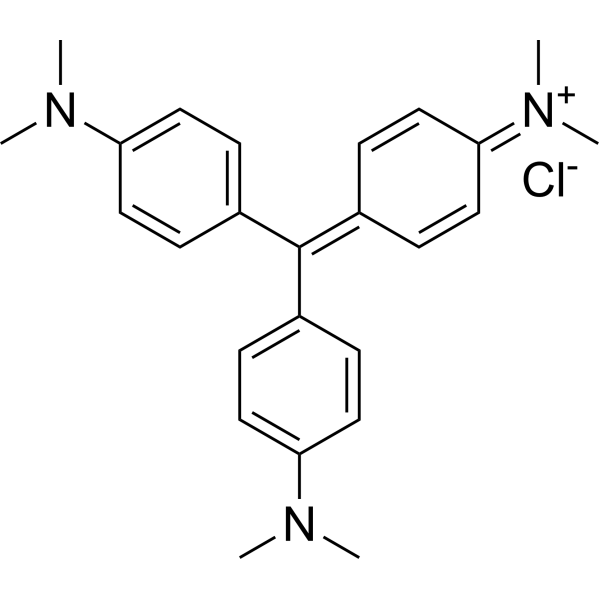
Crystal Violet, also known as Gentian violet, methyl violet 10B, is a triphenyl-methane, an alkaline dye that binds to DNA in the nucleus of a cell, staining it a deep purple. It is often used for Gram staining to classify bacteria, or for cell or histological staining[1].
loading...
    loading...
12
12 Cited Publications
Cat. No.: HY-N0116
CAS No.: 517-28-2
Synonyms: Natural Black 1; Haematoxylin
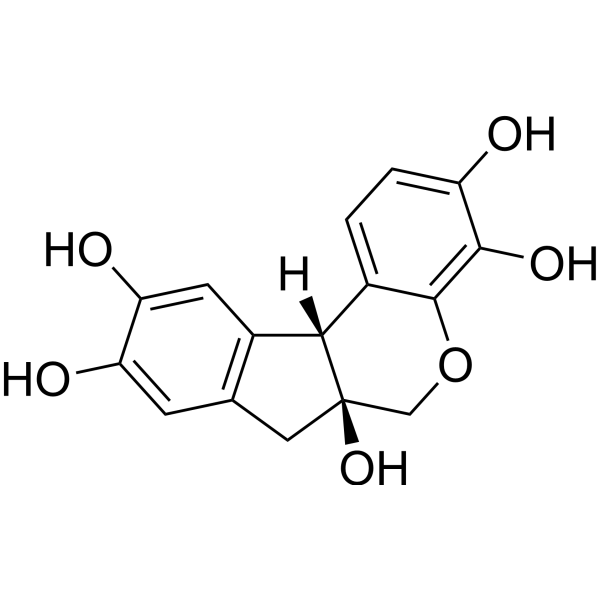
Hematoxylin (Natural Black 1), a naturally occurring flavonoid compound derived from Caesalpinia sappan Linn.. Hematoxylin is a nuclear stain in histology and is also a potent Aβ42 fibrillogenesis inhibitor with an IC50 of 1.6 μM.
loading...
    loading...
1
1 Cited Publications
Cat. No.: HY-W110798
CAS No.: 115-39-9
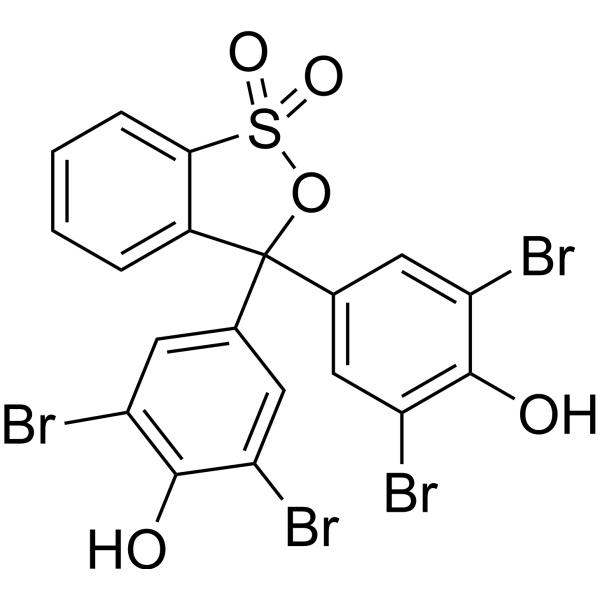
Bromophenol blue indicator (3.0-4.6) is a synthetic dye commonly used as an acid-base indicator with a transition range of pH 3.0-4.6. Bromophenol blue indicator (3.0-4.6) is water soluble and changes color from yellow to blue as the pH of the solution changes from acidic to basic. Its unique chemical properties make it an important ingredient in a variety of scientific applications, especially in biochemistry and molecular biology. In addition, it can be used as a stain in microbiology and histology. However, Bromophenol blue indicator (3.0-4.6) has potential irritating and staining properties.
loading...
    loading...
1
1 Cited Publications
Cat. No.: HY-126367
CAS No.: 5141-20-8
Purity:  ≥75.0%
Synonyms: Acid Green 5
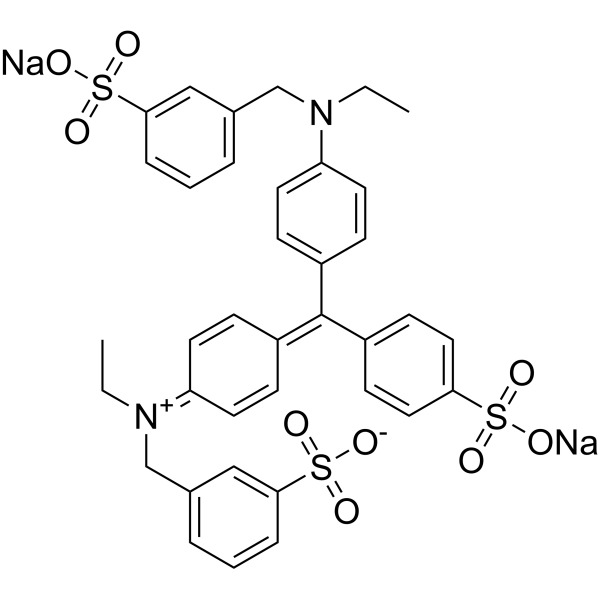
Light green SF yellowish (Acid Green 5) is a water-soluble triarylmethane dye. Light green SF yellowish serves as a histological stain that selectively labels mitochondria, collagen, and cartilage, while being an essential component of Papanicolaou staining. Light green SF yellowish is commonly used as a cytoplasmic counterstain for nuclear stains, and is applied in Masson's trichrome staining for collagen fibers, Pap staining, and cytological polychromatic staining in histopathology. Light green SF yellowish also induces growth inhibition and local fibrosarcomas in rats and exerts mild pulmonary tumorigenicity in mice .
loading...
    loading...
1
1 Cited Publications
Cat. No.: HY-W250150
CAS No.: 5486-84-0
Research Areas:  

Others

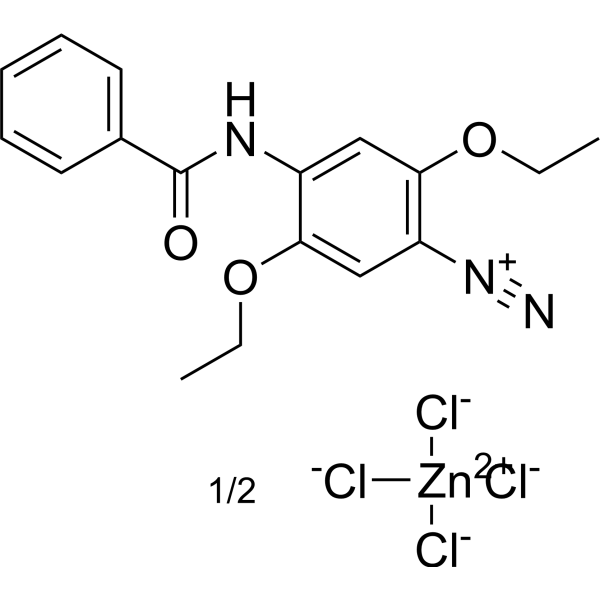
Fast blue bb salt (hemi(zinc chloride) salt is a water-soluble dye commonly used as a histological stain in various biological applications such as staining cellular components or detecting enzyme activity. Fast blue BB salt has a unique Chemical properties that allow it to bind to specific proteins to form a blue product that can be detected by microscopy or spectrophotometry. This makes it a useful tool for visualizing and quantifying target proteins in tissue samples or cell cultures.
loading...
    loading...
1
1 Cited Publications
Cat. No.: HY-K0607

MCE Modified Safranin O–Fast Green Cartilage Staining Kit through an optimized staining system, cartilage matrix and bone tissue in histological sections can be clearly distinguished. This method provides high staining contrast, good sensitivity, simple operation, and good reproducibility, and is widely used for cartilage morphology observation, studies of cartilage injury and degeneration, osteochondral tissue development research, and related histological analyses.

loading...
    loading...
Cat. No.: HY-D0955
CAS No.: 78338-22-4
Synonyms: Thionine acetate
Research Areas:  

Infection

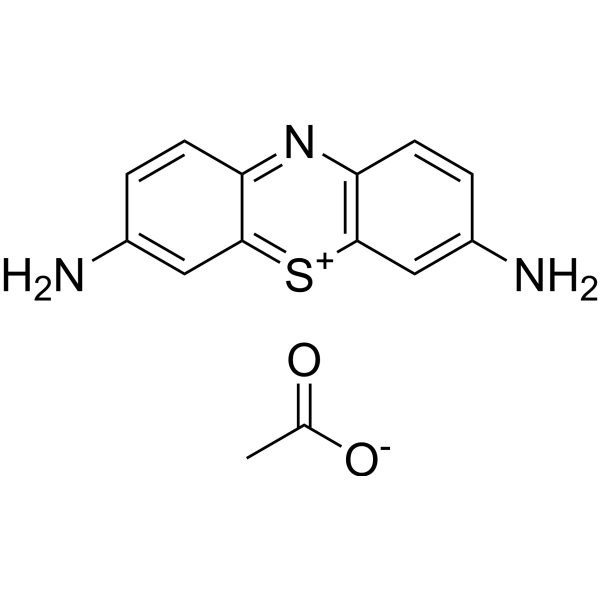
Thionin acetate is a compound present in the seeds, stems, roots, and leaves of many plant species with antibacterial activity. Thionin acetate is a metachromatic cationic histological dye widely used in biological staining, such as Nissl staining .
loading...
    loading...
Cat. No.: HY-D0003
CAS No.: 28983-56-4
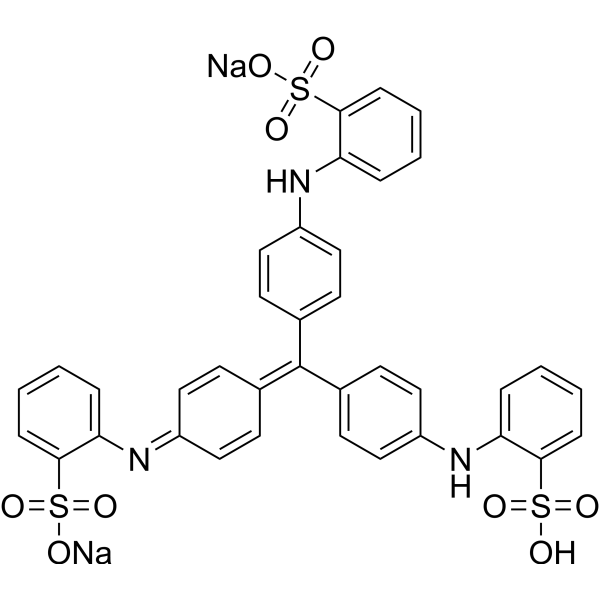
Methyl blue belongs to the group of triaminotriphenylmethane dyes. Methyl blue is widely used as antiseptic dye in polychrome staining method and has applications in histological and microbiological staining solutions. Methyl blue has been used as a model to study the effect of various catalysts on photodegradation of dyes .
loading...
    loading...
Cat. No.: HY-DY2001
CAS No.: 548-62-9
Crystal Violet (solution) , also known as Gentian violet, methyl violet 10B, is a triphenyl-methane, an alkaline dye that binds to DNA in the nucleus of a cell, staining it a deep purple. It is often used for Gram staining to classify bacteria, or for cell or histological staining .
Solvent and Concentration: Sterile water: 5 mg/mL (0.5%)
loading...
    loading...
Cat. No.: HY-D0957
CAS No.: 2390-59-2
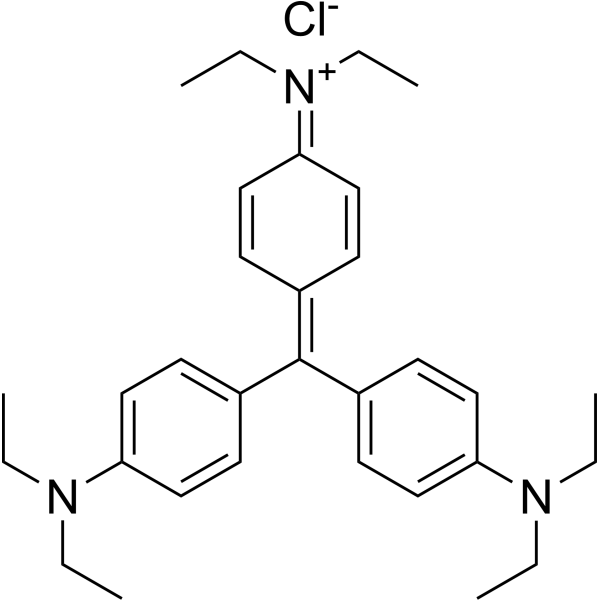
Ethyl Violet is a triphenylmethane cationic dye with antibacterial activity. Ethyl Violet is applicable to research related to antibacterial therapy and histological staining .
loading...
    loading...
Cat. No.: HY-D1480
CAS No.: 2766-77-0
Target:  

Fluorescent Dye

Research Areas:  

Others

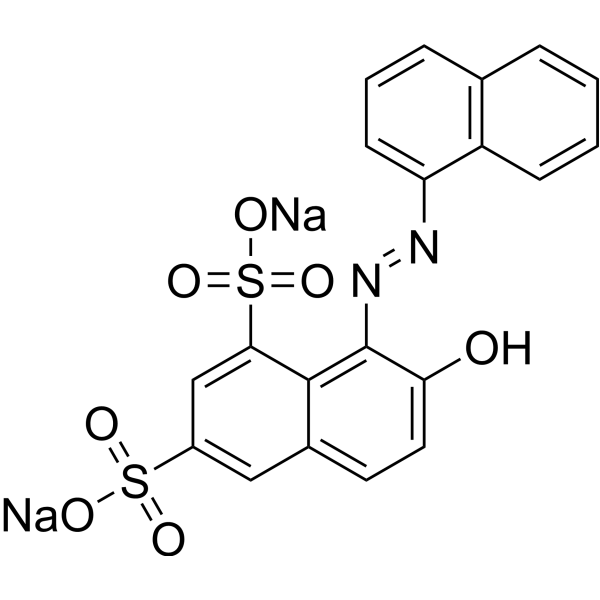
Crystal Ponceau 6R is a red azo dye. Crystal Ponceau 6R used in histology, for staining fibrin with the martius, scarlet and blue (MSB) Trichrome stain .
loading...
    loading...
Cat. No.: HY-W250143
CAS No.: 6586-04-5
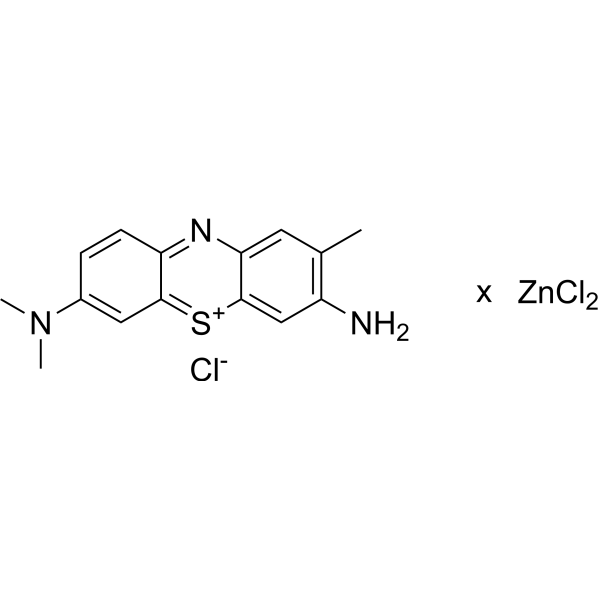
Toluidine blue (ZnCl2) is a basic thiazine dye commonly used as a biological stain for microscopy. It has a deep bluish-purple color and is commonly used to stain nucleic acids such as DNA and RNA, as well as to stain mast cells, cartilage, and other connective tissues. Toluidine blue (ZnCl2) stains the acidic components of these tissues, such as sulfated or carboxylated mucopolysaccharides. It is frequently used in histology, cytology, and pathology applications to aid in the diagnosis of various diseases and conditions. The dye is usually applied to tissue sections prior to microscopic examination and can be differentiated using an acidic alcohol solution. Toluidine blue (ZnCl2) is a relatively simple and inexpensive stain with good reproducibility, making it a popular choice for many laboratories.
loading...
    loading...
Cat. No.: HY-B0324AS
CAS No.: 1266676-01-0
Synonyms: Basic Violet 3-d6; Gentian Violet-d6; Methyl Violet 10B-d6
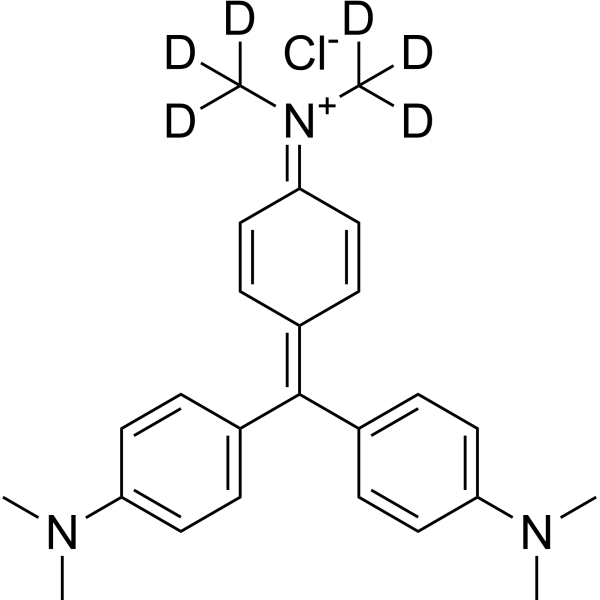
Crystal Violet-d6 is the deuterium labeled Crystal Violet (HY-B0324A). Crystal Violet, also known as Gentian violet, methyl violet 10B, is a triphenyl-methane, an alkaline dye that binds to DNA in the nucleus of a cell, staining it a deep purple. It is often used for Gram staining to classify bacteria, or for cell or histological staining .
loading...
    loading...
Cat. No.: HY-W250306
CAS No.: 4197-24-4
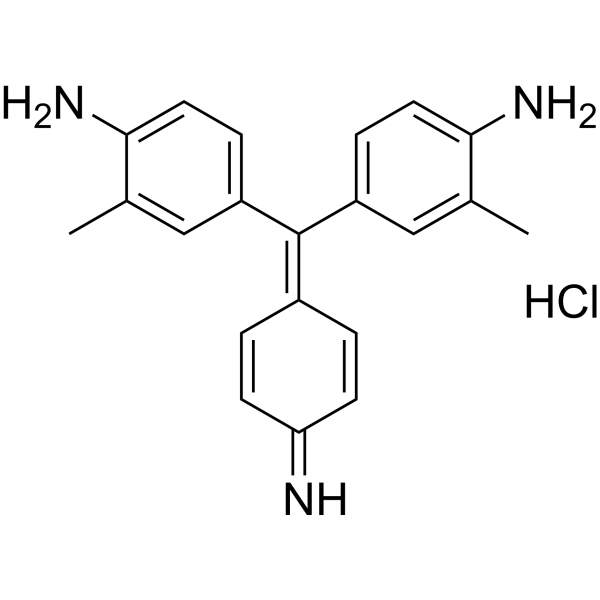
Carbol fuchsin is a histological stain used in microbiology to distinguish acid-fast bacteria from non-acid-fast bacteria. It is a mixture of basic fuchsin, phenol, and water and is commonly used in the Ziehl-Neelsen staining technique for the detection of tuberculosis and other mycobacterial infections. Carbol fuchsin stains the cell walls of acid-fast bacteria bright red, while other cells are unstained or slightly stained. This makes it easier to see and identify these microbes under a microscope. Carbol fuchsin is also used in veterinary medicine and phytopathology for similar purposes.
loading...
    loading...
Cat. No.: HY-W110884
CAS No.: 3564-18-9
Research Areas:  

Others

Eriochrome cyanine R indicator (C.I. 43820) is a hydroxy triphenylmethane metal complexing dye that forms colored complexes with ferric ions. Eriochrome cyanine R indicator (C.I. 43820) can serve as a nuclear/myelin stain, selectively staining nuclei through an anionic iron-dye complex that binds arginine-rich proteins via weak non-ionic forces, with iron ions rendering nuclei, myelin, and erythrocytes blue. Eriochrome cyanine R indicator (C.I. 43820) can be used as a histological staining reagent alternative to Hematoxylin (HY-N0116) for nuclear and myelin staining; it can also serve as a metal colorimetric indicator for analytical chemistry .
loading...
    loading...
Cat. No.: HY-W019997
CAS No.: 78377-23-8
Synonyms: 1-Pyrenyldiazomethane
PDAM (1-Pyrenyldiazomethane) is a compound 1-Pyrenyldiazomethane with strong biomarker and fluorescence activity. PDAM is used as a stain for cell imaging in histological studies, which can clearly mark specific cell structures. PDAM is also used as a hematological stain to improve the visualization of cellular components and help make more accurate diagnoses.
loading...
    loading...
Cat. No.: HY-B1750
CAS No.: 2768-90-3
Synonyms: Quinaldine blue
Target:  

Fluorescent Dye

Research Areas:  

Others

Pinacyanol chloride (Quinaldine blue) is a bright blue cyanine dye. Pinacyanol chloride is used for staining chromosomes in histology and for staining bacteria in biochemistry .
loading...
    loading...
Cat. No.: HY-K0603

MCE Alcian Blue Staining Solution (pH 1.0) is commonly used for selective detection of sulfated mucins in histological research, including cartilage staining, mucin type differentiation, and aiding in the identification of mucinous epithelial tumors.

loading...
    loading...
Cat. No.: HY-DY2026
Target:  

Fluorescent Dye

Research Areas:  

Others

Nissl Staining Solution (Toluidine Blue Method) is an acidic histological staining labeling reagent based on Toluidine Blue (HY-D0220). Nissl Staining Solution (Toluidine Blue Method) stains brain nuclei, cells, and sections of brain tissues processed for in vitro autoradiography or perfusion. It consistently labels all neuronal somata and differentiates cell layers .
loading...
    loading...
Cat. No.: HY-K0602

MCE Alcian Blue Staining Solution (pH 2.5) is commonly used for the detection of acidic mucopolysaccharides and mucins in histological studies. It is suitable for cartilage staining, visualization of mucin distribution, evaluation of intestinal metaplasia in gastrointestinal tissues, and the auxiliary identification of mucin-producing epithelial tumors.

loading...
    loading...

