4 Results for "

intestinal enterocytes

" in MedChemExpress (MCE) Product Catalog:
Products (4)

4 Results for "intestinal enterocytes" in MCE Product Catalog:

2
2 Cited Publications
Cat. No.: HY-117779
CAS No.: 1569309-92-7
Purity:  99.07%
Target:  

Apoptosis

Research Areas:  

Endocrinology

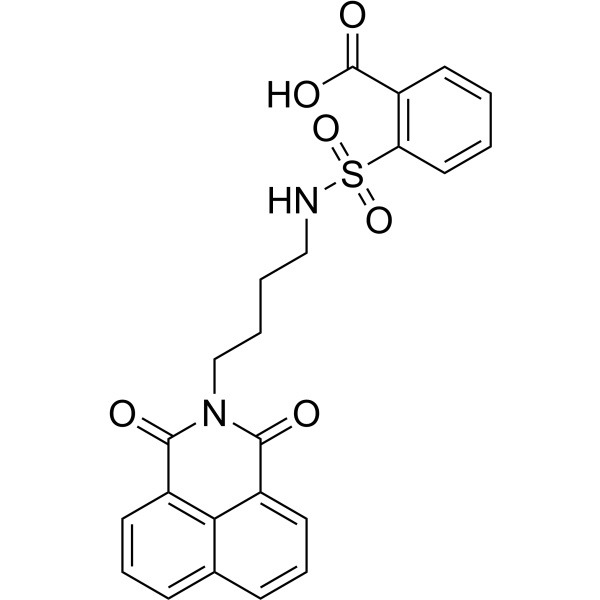
DBIBB is a specific nonlipid agonist of the type 2 G protein coupled receptor for lysophosphatidic acid (LPA2). DBIBB mitigates the gastrointestinal radiation syndrome, increases intestinal crypt survival and enterocyte proliferation, and reduces apoptosis. DBIBB represents a agent candidate capable of mitigating acute radiation syndrome caused by high-dose γ-radiation to the hematopoietic and gastrointestinal system .
loading...
    loading...
Cat. No.: HY-B0819
CAS No.: 14816-18-3
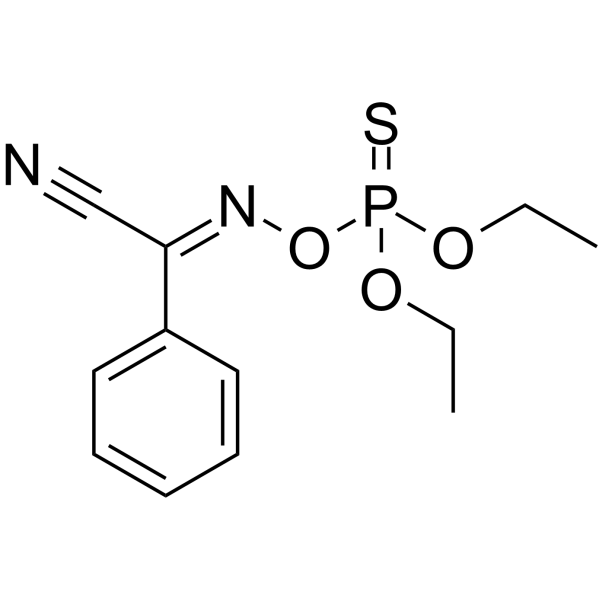
Phoxim is an organophosphorus pesticide and an orally active inhibitor of cholinesterase and CYP3A, which induces neurotoxicity in Caenorhabditis elegans and causes nephrotoxicity characterized by glomerular atrophy and interstitial fibrosis. Phoxim induces inhibition of the autophagy pathway. Phoxim induces dopaminergic neuron degeneration and exacerbates Aβ-induced paralysis. Phoxim damages enterocytes and disrupts intestinal barrier integrity. Phoxim induces ROS accumulation. Phoxim induces mitochondrial apoptosis, involving upregulation of Bad, Bax, caspase-3, and caspase-9 and downregulation of Bcl-2. Phoxim inhibits mitochondrial functional enzymes (COX, Ca 2+-Mg 2+-ATPase, SDH). Phoxim upregulates Nrf2 mRNA expression in the jejunal mucosa. Phoxim increases TNF-α and decreases IL-6 and IL-8 in the intestinal mucosa. Phoxim alters gut microbial composition by increasing total bacteria and Escherichia coli and reducing Lactobacillus. Phoxim enhances energy metabolism in silver carp by upregulating key glycolytic and gluconeogenic enzymes. Phoxim is used in research on neurodegenerative diseases, nephrotoxicity, intestinal oxidative stress and barrier dysfunction, and bacterial sepsis .
loading...
    loading...
Cat. No.: HY-P1841
CAS No.: 89750-15-2
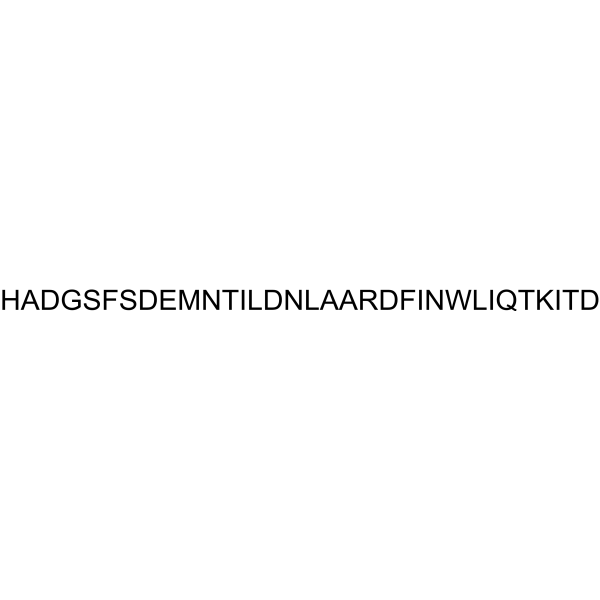
Glucagon-Like Peptide (GLP) II, human is a 33-amino acid peptide derived from the C-terminal of proglucagon and mainly produced by the intestinal L cells. Glucagon-Like Peptide (GLP) II, human stimulates intestinal mucosal growth and decreases apoptosis of enterocytes .
loading...
    loading...
Cat. No.: HY-W758414
Phoxim-d5 (phenyl-d5) (mixture of isomers) is the deuterated-labeled Phoxim (HY-B0819). Phoxim is an organophosphorus pesticide and an orally active inhibitor of cholinesterase and CYP3A, which induces neurotoxicity in Caenorhabditis elegans and causes nephrotoxicity characterized by glomerular atrophy and interstitial fibrosis. Phoxim induces inhibition of the autophagy pathway. Phoxim induces dopaminergic neuron degeneration and exacerbates Aβ-induced paralysis. Phoxim damages enterocytes and disrupts intestinal barrier integrity. Phoxim induces ROS accumulation. Phoxim induces mitochondrial apoptosis, involving upregulation of Bad, Bax, caspase-3, and caspase-9 and downregulation of Bcl-2. Phoxim inhibits mitochondrial functional enzymes (COX, Ca 2+-Mg 2+-ATPase, SDH). Phoxim upregulates Nrf2 mRNA expression in the jejunal mucosa. Phoxim increases TNF-α and decreases IL-6 and IL-8 in the intestinal mucosa. Phoxim alters gut microbial composition by increasing total bacteria and Escherichia coli and reducing Lactobacillus. Phoxim enhances energy metabolism in silver carp by upregulating key glycolytic and gluconeogenic enzymes. Phoxim is used in research on neurodegenerative diseases, nephrotoxicity, intestinal oxidative stress and barrier dysfunction, and bacterial sepsis .
loading...
    loading...

