60 Results for "

knockout

" in MedChemExpress (MCE) Product Catalog:
Products (60)

60 Results for "knockout" in MCE Product Catalog:

282
282 Publications Verification
Cat. No.: HY-13757A
CAS No.: 10540-29-1
Purity:  99.78%
Synonyms: ICI 47699; (Z)-Tamoxifen; trans-Tamoxifen
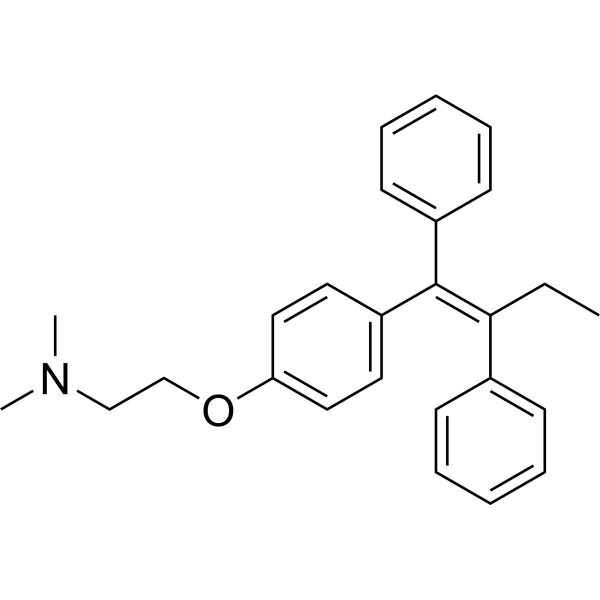
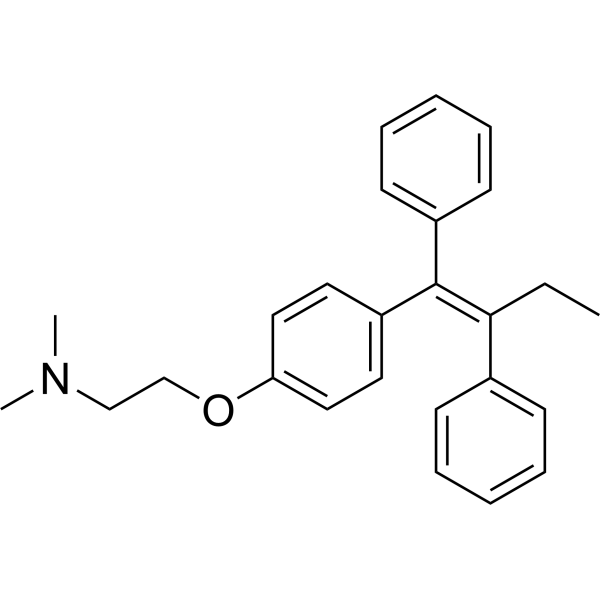
Tamoxifen (ICI 47699) is an orally active, selective estrogen receptor modulator (SERM) which blocks estrogen action in breast cells and can activate estrogen activity in other cells, such as bone, liver, and uterine cells. Tamoxifen is a potent Hsp90 activator and enhances the Hsp90 molecular chaperone ATPase activity. Tamoxifen also potent inhibits infectious EBOV Zaire and Marburg (MARV) with IC50 of 0.1 μM and 1.8 μM, respectively. Tamoxifen activates autophagy and induces apoptosis. Tamoxifen can also be dissolved in corn oil (HY-Y1888) for use in inducing gene knockout in CreER transgenic mice. Tamoxifen has better solubility in corn oil compared to Tamoxifen Citrate (HY-13757) .
loading...
    loading...
282
282 Publications Verification
Cat. No.: HY-13757
CAS No.: 54965-24-1
Purity:  99.93%
Synonyms: ICI 46474; (Z)-Tamoxifen Citrate; trans-Tamoxifen Citrate
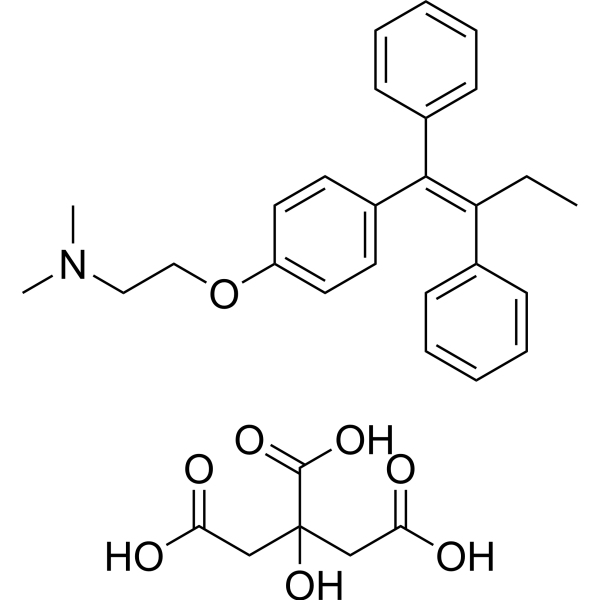
Tamoxifen Citrate (ICI 46474) is an orally active, selective estrogen receptor modulator (SERM) which blocks estrogen action in breast cells and can activate estrogen activity in other cells, such as bone, liver, and uterine cells.Tamoxifen Citrate is a potent Hsp90 activator and enhances the Hsp90 molecular chaperone ATPase activity. Tamoxifen Citrate also potent inhibits infectious EBOV Zaire and Marburg (MARV) with IC50 of 0.1 μM and 1.8 μM, respectively. Tamoxifen Citrate activates autophagy and induces apoptosis. Tamoxifen Citrate can also be used to induce gene knockout in CreER transgenic mice .
loading...
    loading...
62
62 Cited Publications
Cat. No.: HY-16950
CAS No.: 68047-06-3
Synonyms: (Z)-4-Hydroxytamoxifen; trans-4-Hydroxytamoxifen; (Z)-Afimoxifene
Target:  

Estrogen Receptor/ERR

Research Areas:  

Cancer

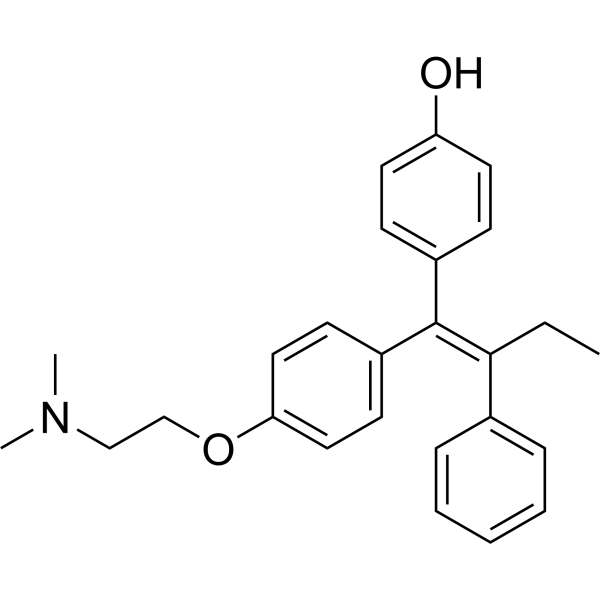
4-Hydroxytamoxifen ((Z)-4-Hydroxytamoxifen) is an orally active, selective estrogen receptor modulator (SERM). 4-Hydroxytamoxifen ((Z)-4-Hydroxytamoxifen) is also the active metabolic form of Tamoxifen (HY-13757A) in vivo and can be used to induce gene knockout in transgenic mice expressing CreER .
loading...
    loading...
37
37 Cited Publications
Cat. No.: HY-136057
CAS No.: 150651-39-1
Purity:  99.96%
Research Areas:  

Cancer

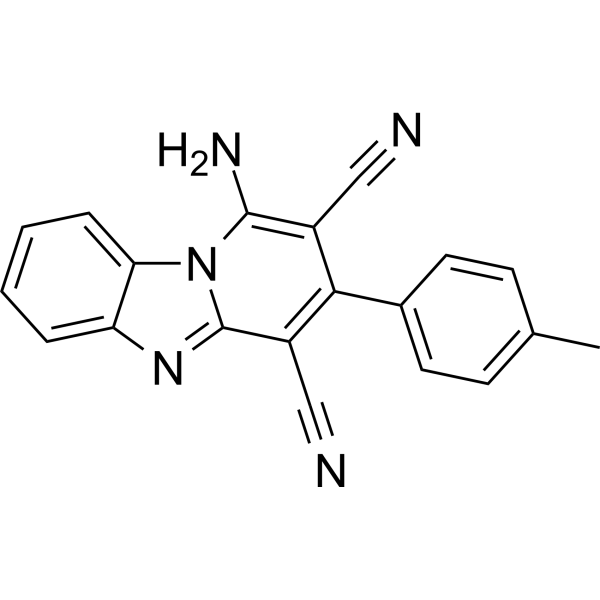
iFSP1 is a potent, selective and glutathione-independent inhibitor of ferroptosis suppressor protein 1 (FSP1) (AIFM2) with an EC50 of 103 nM. iFSP1 selectively induces ferroptosis in GPX4-knockout cells which overexpressed FSP1. iFSP1 is able to sensitize a variety of human cancer cell lines to the ferroptosis inducer, such as (1S,3R)-RSL3 (HY-100218A) .
loading...
    loading...
6
6 Cited Publications
Cat. No.: HY-18601
CAS No.: 1416258-16-6
Target:  

HIV HIV Integrase

Research Areas:  

Infection

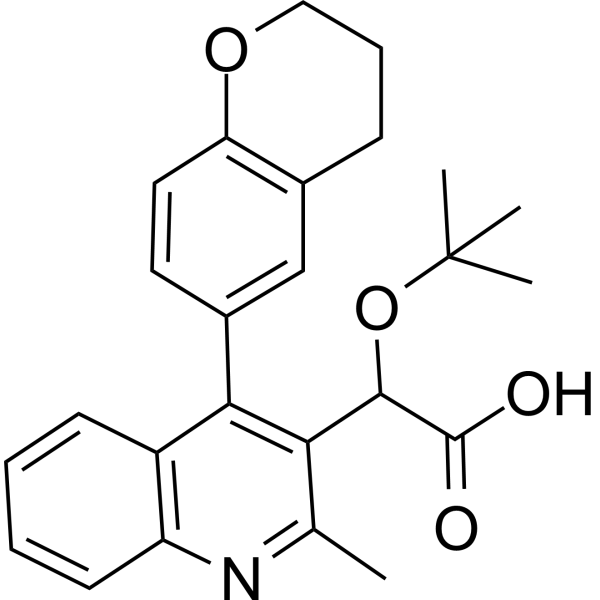
(±)-BI-D is a potent ALLINI (allosteric integrase inhibitor). (±)-BI-D binds integrase at the LEDGF/p75 binding site. (±)-BI-D inhibits HIV-Luc infection in cells (IC50: 0.16 μM in Psip1 knockout E9 mouse embryonic fibroblasts, 2.9 μM in wild-type E9 mouse embryonic fibroblasts) .
loading...
    loading...
5
5 Cited Publications
Cat. No.: HY-117771
CAS No.: 1848233-58-8
Purity:  99.30%
Target:  

DAGL

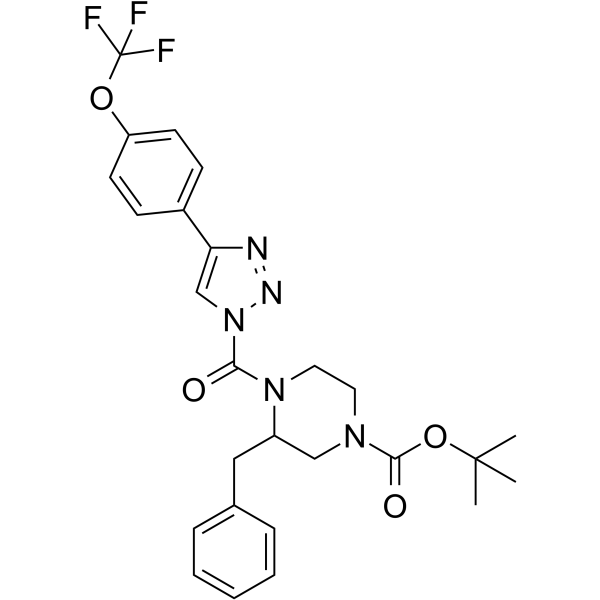
DO34 is a selective DAGL inhibitor, with an IC50 of 6 nM for DAGLα conversion of SAG to 2-AG. DO34 blocks de novo 2-AG synthesis, and suppresses tonic CB1 receptor activation. DO34 blocks depolarization-induced suppression of excitation and inhibition in the cerebellum and hippocampus. DO34 regulates feeding behavior and locomotor activity in mice. DO34 abolishes AM251-mediated enhancement of parallel fiber-evoked excitatory postsynaptic currents in cerebellar slices from MAGL global knockout mice. DO34 can be used for the research of energy balance disorder and neuroinflammation .
loading...
    loading...
2
2 Cited Publications
Cat. No.: HY-107818
CAS No.: 20426-12-4
Purity:  98.64%
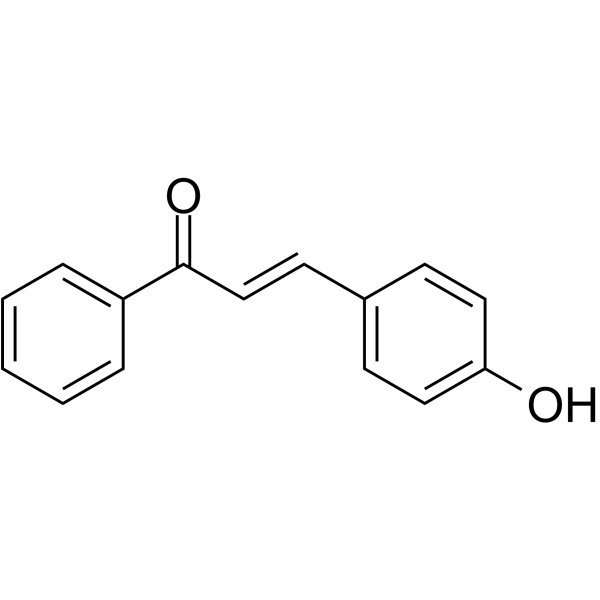
4-Hydroxychalcone is an orally active flavonoid precursor. 4-Hydroxychalcone inhibits VEGF- and bFGF-induced phosphorylation of ERK1/2 and Akt. 4-Hydroxychalcone suppresses resistant hypertension by alleviating hyperaldosteronism, inflammation and renal injury in cryptochrome gene knockout mice. 4-Hydroxychalcone possesses anti-angiogenic activity .
loading...
    loading...
2
2 Cited Publications
Cat. No.: HY-142035
CAS No.: 58160-95-5
Purity:  99.70%
N-Propargylglycine is a brain-penetrant and orally active PRODH inhibitor. N-Propargylglycine covalently modifies enzyme-bound FAD and active site lysine, causing enzyme structural distortion, protein decay, and irreversible inhibition of proline and 4-hydroxyproline catabolism. N-Propargylglycine induces UPRmt, upregulates mitochondrial chaperones and YME1L1, enhances mitochondrial proteostasis, blocks astrocytic L-proline consumption, and abolishes L-proline’s ATP-maintaining and viability-protective effects. N-Propargylglycine stimulates neural processes, increases brain proline, hydroxyproline, and sarcosine levels, partially normalizes Huntington’s disease whole brain transcriptomes. N-Propargylglycine reduces hyperoxaluria, prevents calcium oxalate stone formation, reduces kidney tubular damage, and restores weight and survival in Grhpr knockout mice. N-Propargylglycine can be used for the research of breast cancer, neurodegenerative disorders, Huntington’s disease, and primary hyperoxaluria type 2 .
loading...
    loading...
1
1 Cited Publications
Cat. No.: HY-148764
CAS No.: 890808-56-7
Purity:  99.90%
Research Areas:  

Cancer

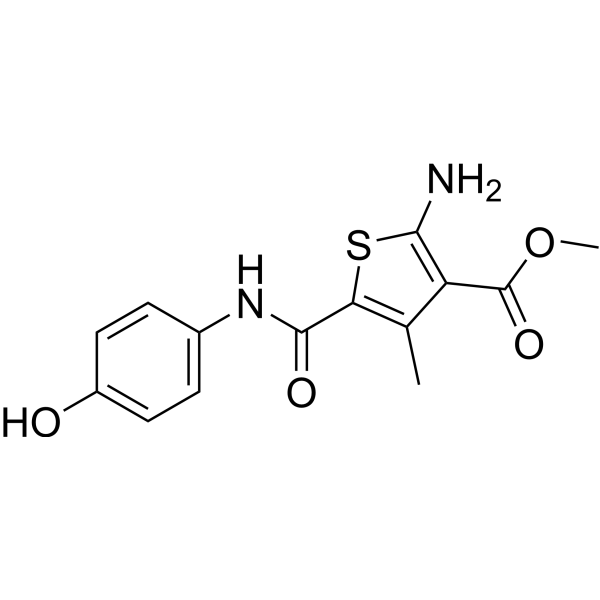
M47 is a molecular glue that selectively destabilizes Cryptochrome 1 (CRY1) and increases degradation of the CRY1 in the nucleus. M47 enhances apoptosis in Ras-transformed P53-deficient mouse skin fibroblast lines and enhances life span in p53 knockout mice. M47 can be used in research of cancer .
loading...
    loading...
1
1 Cited Publications
Cat. No.: HY-W016887
CAS No.: 704-15-4
Synonyms: H-Gly-Pro-OH; Gly-Pro
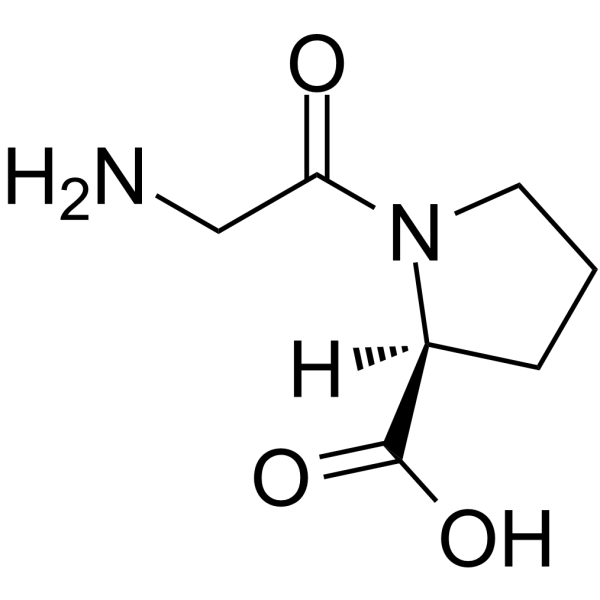
Glycyl-L-proline (H-Gly-Pro-OH) is a dipeptide. Glycyl-L-proline can induce MCF-7 cells apoptosis. Glycyl-L-proline can enhance the inhibitory effect of the PRODH/POX knockout on collagen and DNA biosynthesis. Glycyl-L-proline can inhibit Gly-Sar and L-proline transport. Glycyl-L-proline can be used for the researches of cancer and metabolic disease, such as breast cancer .
loading...
    loading...
1
1 Cited Publications
Cat. No.: HY-W747072
CAS No.: 71781-33-4
Synonyms: 3-Sulfocholyl Taurine; TCA3S
Target:  

Drug Metabolite

3-Sulfo-taurocholic Acid Disodium Salt (3-Sulfocholyl Taurine; TCA3S) is a metabolite of the conjugated bile acid taurocholic acid. Plasma levels of 3-Sulfo-taurocholic Acid Disodium Salt are elevated in wild-type and Sortilin 1 (Sort1) knockout mice at 6 hours following bile duct ligation (BDL) and are further elevated in Sort1 knockout mice at 24 hours post-BDL.
loading...
    loading...
1
1 Cited Publications
Cat. No.: HY-155539
CAS No.: 2916371-59-8
Purity:  99.17%
Research Areas:  

Inflammation/Immunology

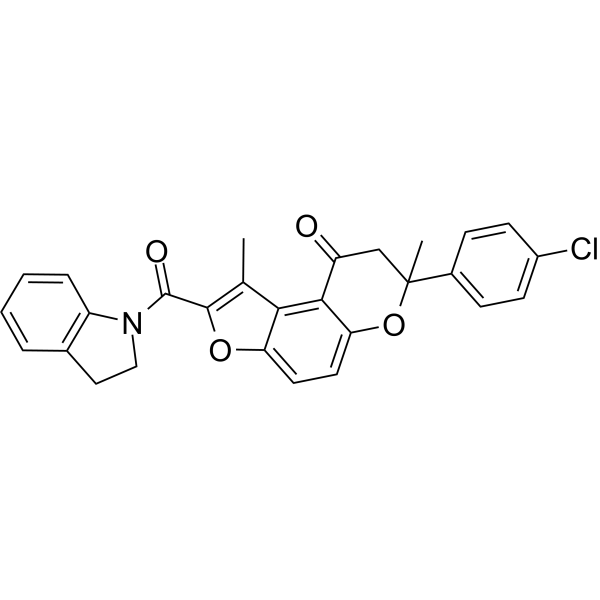
Cisd2 agonist 2 (compound 6) is a Cisd2 activator (EC50=191 nM), and Cisd2 levels are associated with non-alcoholic fatty liver disease (NAFLD). Cisd2 agonist 2 has no significant in vivo toxicity in Cisd2hKO-het mice (heterozygous hepatocyte-specific Cisd2 knockout). Cisd2 (CDGSH iron sulfur domain 2) is a zinc finger protein that is mainly localized in the endoplasmic reticulum or mitochondrial membrane. Cisd2 participates in mitochondrial function by forming homodimers containing two redox-active 2Fe-2S clusters .
loading...
    loading...
Cat. No.: HY-108786
CAS No.: 1174277-80-5
Purity:  97.88%
Synonyms: ENB-0040

Target:  

Phosphatase

Research Areas:  

Metabolic Disease

Asfotase alfa (ENB-0040) is a bone-targeted genetically engineered glycoprotein. Asfotase alfa increases the survival rate, bone mineralization and bone length and prevents mineralization defects of the feet, rib cage, lower limbs, jaw bones in Akp2 / knockout mice. Asfotase alfa can be used for the research of perinatal, infantile, and juvenile-onset hypophosphatasia (HPP) .
loading...
    loading...
Cat. No.: HY-13757AR
CAS No.: 10540-29-1
Purity:  99.76%
Synonyms: ICI 47699(Standard); (Z)-Tamoxifen(Standard); trans-Tamoxifen (Standard)
Tamoxifen (Standard) is the analytical standard of Tamoxifen (HY-13757A). This product is intended for research and analytical applications. Tamoxifen (ICI 47699) is an orally active, selective estrogen receptor modulator (SERM) which blocks estrogen action in breast cells and can activate estrogen activity in other cells, such as bone, liver, and uterine cells . Tamoxifen is a potent Hsp90 activator and enhances the Hsp90 molecular chaperone ATPase activity. Tamoxifen also potent inhibits infectious EBOV Zaire and Marburg (MARV) with IC50 of 0.1 μM and 1.8 μM, respectively . Tamoxifen activates autophagy and induces apoptosis . Tamoxifen also can induce gene knockout of CreER(T2) transgenic mouse .
loading...
    loading...
Cat. No.: HY-117778
CAS No.: 107729-45-3
Purity:  ≥95.0%
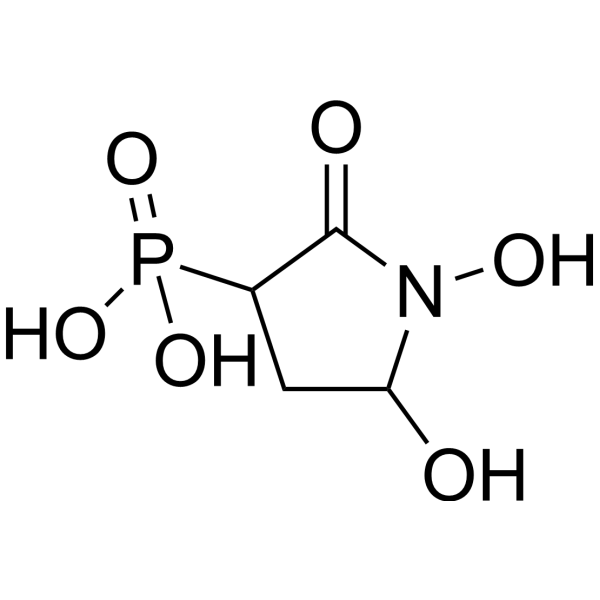
SF2312 is a phosphonate Antibiotic and Enolase inhibitor, with an IC50 of 18.4 nM against E. coli enolase. SF2312 reduces intracellular ATP levels and inhibits glycolytic flux. SF2312 exhibits activity against both Gram-positive and Gram-negative bacteria, and exerts synergistic effects against E. coli when combined with Fosfomycin (HY-B1075A). SF2312 shows selective toxicity toward gliomas with ENO1 gene knockout. SF2312 can be used in research related to bacterial infections and gliomas .
loading...
    loading...
Cat. No.: HY-162353
CAS No.: 3056570-19-2
Research Areas:  

Cancer

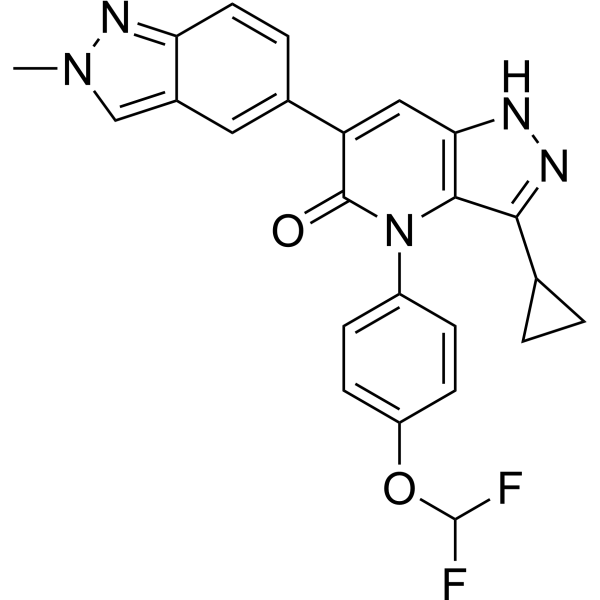
AZ'9567 is an orally active MAT2a inhibitor with a pIC50 of 9.1. AZ'9567 binds to MAT2a allosterically, reduces the synthesis of SAM, decreases SDMA levels, and exerts antiproliferative effects on MTAP-knockout cells. AZ'9567 depletes SAM, causes methionine accumulation in plasma and tissues, triggers adaptive disorders in one-carbon metabolism, transsulfuration metabolism and lipid metabolism, and induces oxidative stress, hepatic steatosis and lipid homeostasis imbalance. AZ'9567 can be used in studies related to MTAP-deficient/deleted cancers .
loading...
    loading...
Cat. No.: HY-16639
CAS No.: 1448895-09-7
ML314 is a potent, BBB-penetrant and β-arrestin biased molecule agonist of NTR1 (EC50 = 1.9 μM). ML314 shows good selectivity against NTR2 and GPR35, but does not stimulate Ca2+ mobilization. ML314 can attenuate amphetamine-like hyperlocomotion in dopamine transporter knockout mice. ML314 attenuates methamphetamine-associated hyperlocomotion and potentiates the psychostimulant inhibitory effects of a ghrelin antagonist in wild type mouse model. ML314 also acts as an allosteric enhancer of endogenous neurotensin. ML314 antagonizes G protein signaling. ML314 can be studied in research for methamphetamine abuse conditions .
loading...
    loading...
Cat. No.: HY-159190
CAS No.: 2409140-12-9
Research Areas:  

Cancer

HRX-0233 is an orally potent MAP2K4 inhibitor. HRX-0233 inhibits the MAP2K4-JNK-JUN signaling pathway, blocks the feedback activation of receptor tyrosine kinases, and sustains the inhibitory effect on KRAS signaling. HRX-0233 exerts synergistic inhibition on the mTORC1 and MAPK pathways. When combined with Ipatasertib (HY-15186) or Sotorasib (HY-114277), it produces synergistic antiproliferative, pro-apoptotic (apoptosis) and antitumor effects, and shows good tolerability in mouse models. HRX-0233 can be used in CRISPR knockout screens to identify vulnerability-related genes. HRX-0233 is applicable to research related to prostate cancer, non-small cell lung cancer and colorectal cancer .
loading...
    loading...
Cat. No.: HY-115701
CAS No.: 154436-49-4
Synonyms: 1-Stearoyl-2-15(S)-HpETE-sn-glycero-3-phosphoethanolamine; 15(S)-HpETE-SAPE; 15(S)-hydroperoxyeicostetraenoic acid-SAPE
Target:  

Ferroptosis

Research Areas:  

Inflammation/Immunology

1-Stearoyl-2-15(S)-HpETE-sn-glycero-3-Pe is a phospholipid that contains stearic acid (HY-B2219) at the sn-1 position and 15(S)-HpETE at the sn-2 position. It is produced via oxidation of 1-stearoyl-2-arachidonoyl-sn-glycero-3-Pe (SAPE) by 15-lipoxygenase (15-LO). 1-Stearoyl-2-15(S)-HpETE-sn-glycero-3-Pe (0.6 and 0.9 μM) increases ferroptotic cell death in wild-type and Acsl4 knockout Pfa1 mouse embryonic fibroblasts (MEFs) treated with the GPX4 inhibitor RSL3.
loading...
    loading...
Cat. No.: HY-126400
CAS No.: 1406-66-2
Purity:  98.6%
Tocopherols are orally effective antioxidants and ferroptosis inhibitors. Tocopherols scavenge ROS/RNS, alleviate DNA damage, downregulate cyclin D1/c-Myc/TFF/pS2/PGR in an ER-dependent manner, and inhibit ferroptosis mediated by lipid peroxidation. Tocopherols block the occurrence of ferroptosis in Gpx4-knockout Pfa1 cells, with an EC50 value of 1.0-2.3 μM. Tocopherols inhibit tumor growth. Tocopherols can be used in studies related to estrogen-mediated ER + breast cancer, oxidative stress-induced carcinogenesis, and ferroptosis regulation .
loading...
    loading...

