8 Results for "

labile iron

" in MedChemExpress (MCE) Product Catalog:
Products (8)

8 Results for "labile iron" in MCE Product Catalog:

1
1 Cited Publications
Cat. No.: HY-N9362
CAS No.: 491-60-1
Synonyms: EmodAN
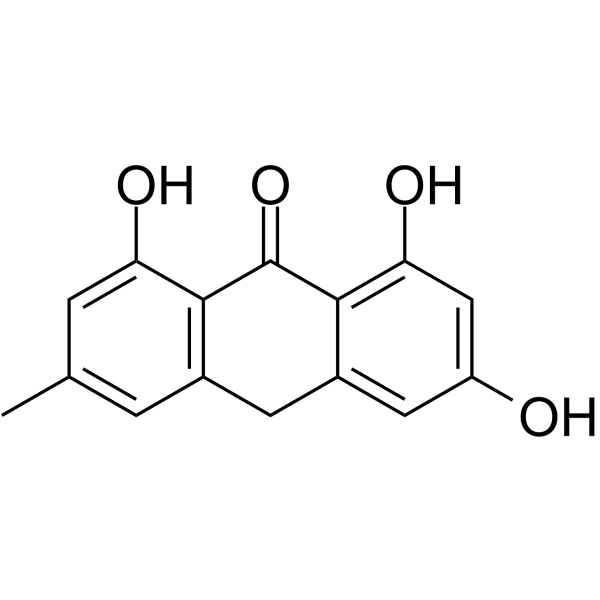
Emodinanthrone (EmodAn) is a MARCH7 stabilizer that inhibits ferroptosis (EC50=70 nM). Emodinanthrone is also a precursor to Emodin (HY-14393) and possesses antibiotic activity. Emodinanthrone directly binds to MARCH7 and blocks its ubiquitination-mediated degradation at the K608 site; this action enhances MARCH7-mediated K48 ubiquitination and degradation of NCOA4, as well as its regulation of the intracellular localization of TFR1 via K63 ubiquitination, thereby reducing the intracellular labile iron pool and blocking ferroptosis. Emodinanthrone demonstrates in vivo cardioprotective effects and exhibits a favorable safety profile. Emodinanthrone is applicable to research on ferroptosis-related cardiovascular diseases, including Doxorubicin (HY-15142A)-induced cardiomyopathy and myocardial ischemia-reperfusion injury .
loading...
    loading...
Cat. No.: HY-170814
Target:  

G-quadruplex

Research Areas:  

Cancer

G-quadruplex ligand 3 (Compound 16) is a G-quadruplex ligand with anticancer effects that chelate iron. G-quadruplex ligand 3 stabilizes G-quadruplexes in human leukemia Jurkat cells. G-quadruplex ligand 3 localizes in the cell nucleus, serving as a fluorescent nuclear tracer for the labile iron pool .
loading...
    loading...
Cat. No.: HY-N9362R
CAS No.: 491-60-1
Synonyms: EmodAN (Standard)
Emodinanthrone (Standard) is the analytical standard of Emodinanthrone (HY-N9362). This product is intended for research and analytical applications. Emodinanthrone (EmodAn) is a MARCH7 stabilizer that inhibits ferroptosis (EC50=70 nM). Emodinanthrone is also a precursor to Emodin (HY-14393) and possesses antibiotic activity. Emodinanthrone directly binds to MARCH7 and blocks its ubiquitination-mediated degradation at the K608 site; this action enhances MARCH7-mediated K48 ubiquitination and degradation of NCOA4, as well as its regulation of the intracellular localization of TFR1 via K63 ubiquitination, thereby reducing the intracellular labile iron pool and blocking ferroptosis. Emodinanthrone demonstrates in vivo cardioprotective effects and exhibits a favorable safety profile. Emodinanthrone is applicable to research on ferroptosis-related cardiovascular diseases, including Doxorubicin (HY-15142A)-induced cardiomyopathy and myocardial ischemia-reperfusion injury .
loading...
    loading...
Cat. No.: HY-P11637
Target:  

Fluorescent Dye

Research Areas:  

Neurological Disease

Mitochondrial-targeted peptide BP19 is a fluorescent probe for the selective measurement of labile iron in the mitochondriairon. Mitochondrial-targeted peptide BP19 exhibits iron-selective sensing activity with mitochondrial accumulation, reduced fluorescence in iron-loaded cells, and fluorescence reinstatement upon iron chelation. Mitochondrial-targeted peptide BP19 evaluates mitochondrial labile iron levels in cultured fibroblasts with Friedreich's ataxia .
loading...
    loading...
Cat. No.: HY-D3116
CAS No.: 2711762-70-6
Research Areas:  

Others

RhoNox-4 is a ferroptosis inhibitor and a fluorescence activation indicator specific to Fe 2+. RhoNox-4 selectively reacts with labile Fe 2+ and oxidizes it to Fe 3+, depleting labile Fe 2+ involved in lipid peroxidation and inhibiting ferroptosis induced by ferroptosis inducers. RhoNox-4 is cell-permeable, accumulates in the endoplasmic reticulum and/or Golgi apparatus, can be used for live-cell imaging and high-throughput screening of subcellular iron status regulators, and is applicable to iron biology research .
loading...
    loading...
Cat. No.: HY-183683
CAS No.: 2803611-81-4
Target:  

Proteasome Apoptosis

Research Areas:  

Cancer

DQ-9 is a selective immunoproteasome β5i inhibitor (IC50=0.0019 μM). DQ-9 generates additional inhibitory substances via iron-mediated intracellular activation, and induces oxidative stress, carbon-centered free radicals and macromolecular damage through its artemisinin domain. DQ-9 induces apoptosis in leukemia and multiple myeloma cells. DQ-9 exhibits selective cytotoxicity against leukemia and multiple myeloma cells by elevating the labile iron pool. DQ-9 can be used in the research of hematological malignancies (leukemia, multiple myeloma, mantle cell lymphoma, acute myeloid leukemia) .
loading...
    loading...
Cat. No.: HY-D3377
CAS No.: 1616953-95-7
Synonyms: LysoRhoNox
Target:  

Fluorescent Dye

Research Areas:  

Others

HMRhoNox-M (LysoRhoNox) is a selective fluorescent probe for detecting Fe 2+ (ferrous iron ions), with excitation/emission wavelengths of Ex/Em = 550/575 nm. HMRhoNox-M exists in a non-fluorescent spirocyclic closed conformation under physiological pH conditions. Fe 2+ triggers the deoxidation of its N-oxide group, shifting the equilibrium toward the fluorescent quinone-type (TMHMR) open conformation. HMRhoNox-M shows selectivity for Fe 2+ over other metal ions, as well as biologically relevant reactive oxygen species, reactive sulfur species, reactive nitrogen species and reducing agents. HMRhoNox-M can penetrate cell membranes and localize to lysosomes, enabling the imaging of intracellular Fe 2+ fluctuations, transferrin-mediated labile iron accumulation, and lysosomal Fe 2+ changes associated with ferroptosis .
loading...
    loading...
Cat. No.: HY-D3122
Target:  

Fluorescent Dye

Research Areas:  

Others

Mem-RhoNox is a fluorescent probe used to detect labile Fe (II) on the plasma membrane surface and inside endosomes during iron uptake in live cells. Mem-RhoNox can anchor to the extracellular surface of the plasma membrane; upon contact with Fe (II), its N-oxide group undergoes a deoxygenation reaction, converting weakly fluorescent Mem-RhoNox into strongly fluorescent Mem-Rhodamine. During transferrin-mediated endocytosis, Mem-RhoNox enters endosomes together with the transferrin-transferrin receptor complex, and reacts with Fe (II) released by transferrin to enable detection of endosomal Fe (II) .
loading...
    loading...

