12 Results for "

larval development

" in MedChemExpress (MCE) Product Catalog:
Products (12)

12 Results for "larval development" in MCE Product Catalog:

2
2 Cited Publications
Cat. No.: HY-B1120
CAS No.: 3383-96-8
Synonyms: Temefos
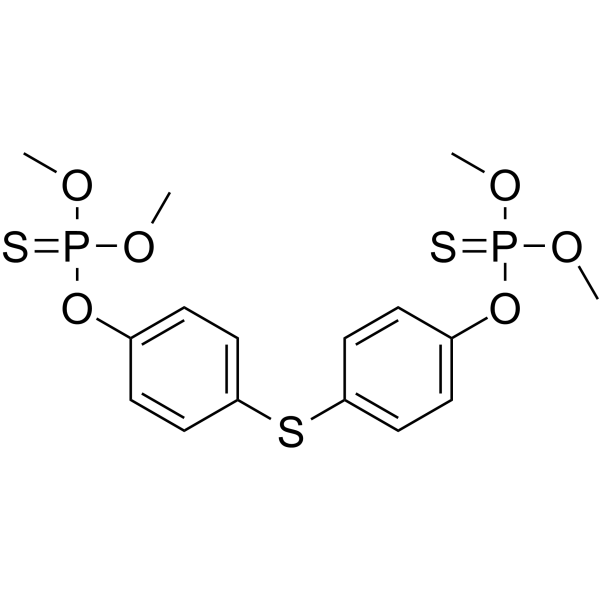
Temephos (Temefos) is an orally active, blood-brain barrier-permeable organophosphate insecticide and AChE inhibitor. By irreversibly inhibiting AChE to induce cholinergic overactivation, Temephos effectively blocks larval development of Aedes aegypti (yellow fever mosquito) and Aedes albopictus (Asian tiger mosquito), and is commonly used in studies related to Dengue Virus, Zika Virus and other relevant pathogens. Temephos exhibits genotoxicity and neurodevelopmental toxicity, and may also cause liver injury, reproductive system abnormalities and cholinergic poisoning symptoms in mammals. Temephos tends to accumulate in adipose tissues and aquatic organisms, and is excreted via feces after metabolism through oxidation and hydrolysis. Note that CYP-mediated metabolic detoxification may reduce the actual larvicidal efficacy of Temephos against some mosquito species. Temephos can be used in research related to dengue fever, Zika virus disease, chikungunya and dracunculiasis .
loading...
    loading...
Cat. No.: HY-N9599
CAS No.: 14729-29-4
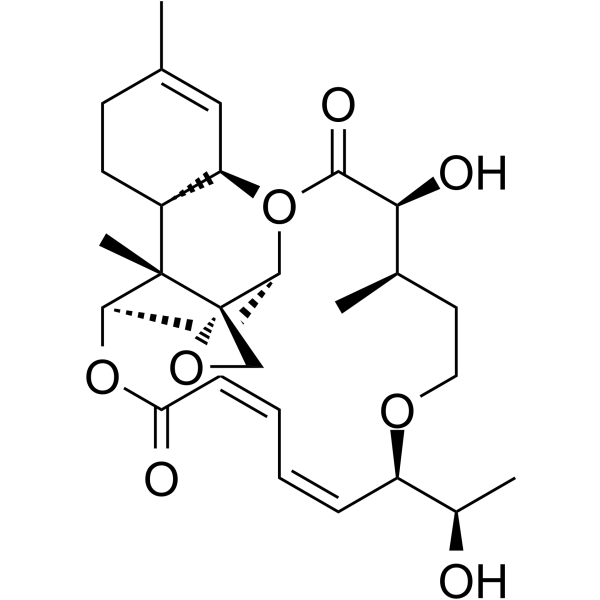
Roridin A acts as an inhibitor of pollen development in Arabidopsis thaliana and nematicide. Roridin A is isolated from the fungus Cylindrocarpon sp. Roridin A delays the flowering time of Arabidopsis thaliana, inhibits pollen development and stem elongation, and blocks plant growth. Roridin A induces larval death of the southern root-knot nematode (Meloidogyne incognita) .
loading...
    loading...
Cat. No.: HY-B2063
CAS No.: 57160-47-1
Target:  

Insecticide

Research Areas:  

Infection

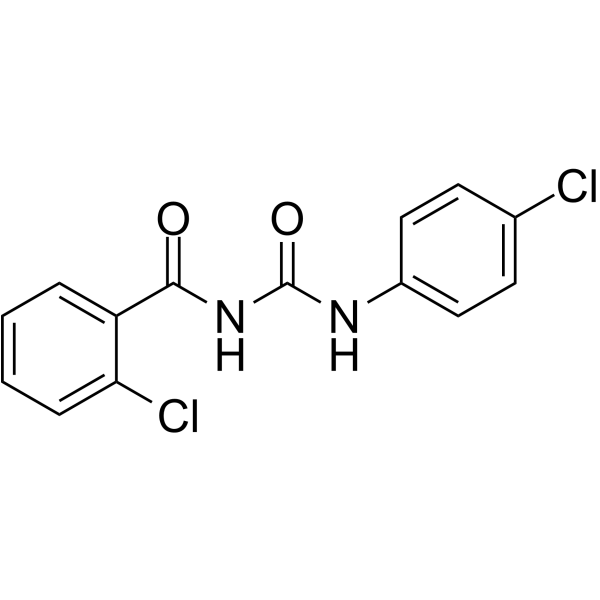
Chlorobenzuron is a chitin synthetase inhibitor and insecticide. Chlorobenzuron inhibits larval development and pupation. Chlorobenzuron controls Prodenia liturd Fabricius and Prodenia liturd Fabricius .
loading...
    loading...
Cat. No.: HY-137252
CAS No.: 73162-95-5
Synonyms: Ivermectin Impurity G
Target:  

Parasite

Research Areas:  

Infection

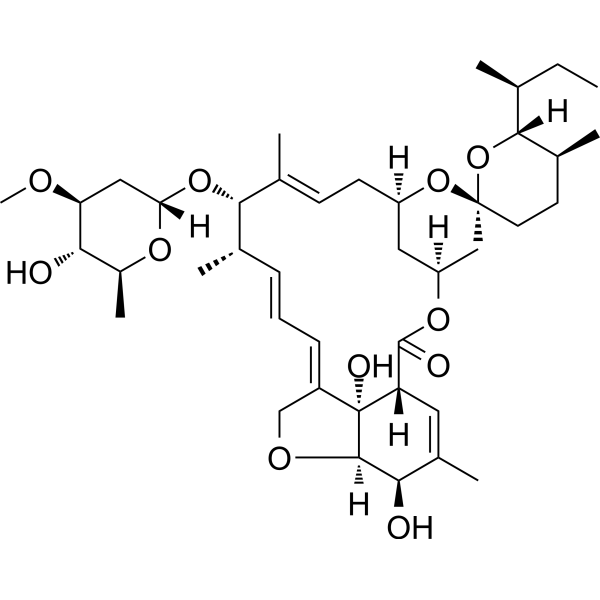
22,23-Dihydroavermectin B1a aglycon is an acid degradation product produced by hydrolysis of the disaccharide unit of ivermectin. It can inhibit nematode larval development, but does not cause paralytic activity.
loading...
    loading...
Cat. No.: HY-123686
CAS No.: 71837-27-9
Target:  

Parasite

Ivermectin B1a monosaccharide is a modified Ivermectin B1a (HY-126937). Ivermectin B1a monosaccharide is an antiparasite agent with a minimum concentration for full activity in Haemonchus contortus larval development of 0.001 μg/mL .
loading...
    loading...
Cat. No.: HY-W098556
CAS No.: 4252-82-8
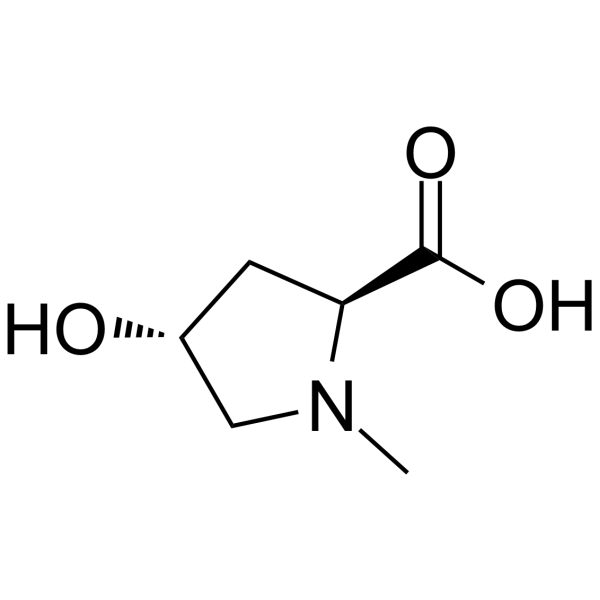
4-Hydroxyhygric acid is a compound isolated from leaves of five species of the leguminous tropical tree Copuiferq. 4-Hydroxyhygric acid is the inhibitor of larval development of the seed-feeding bruchid beetle Callosobruchus maculatus and to have significant feeding deterrence of the leaf-feeding lepidopteran Spodoprera littoralis .
loading...
    loading...
Cat. No.: HY-B2063R
CAS No.: 57160-47-1
Research Areas:  

Infection

Chlorobenzuron (Standard) is the analytical standard of Chlorobenzuron (HY-B2063). This product is intended for research and analytical applications. Chlorobenzuron is a chitin synthetase inhibitor and insecticide. Chlorobenzuron inhibits larval development and pupation. Chlorobenzuron controls Prodenia liturd Fabricius and Prodenia liturd Fabricius .
loading...
    loading...
Cat. No.: HY-N9503
CAS No.: 6380-28-5
Carvacryl acetate is an orally active and brain-penetrant TRPA1 receptor activator and Na +/K +-ATPase activator. Carvacryl acetate modulates GABAergic signaling, alters hippocampal GABA and glutamine levels, reduces lipid peroxidation and nitrite formation, scavenges hydroxyl radicals, and boosts glutathione and antioxidant enzyme activity. Carvacryl acetate inhibits Haemonchus contortus larval hatching, development, adult motility, and fecal egg counts, and induces adult worm structural damage. Carvacryl acetate can be used for the research of intestinal mucositis, gastrointestinal nematode infection, epilepsy, and neurodegenerative diseases .
loading...
    loading...
Cat. No.: HY-B1120R
CAS No.: 3383-96-8
Synonyms: Temefos (Standard)
Temephos (Standard) is the analytical standard of Temephos. This product is intended for research and analytical applications. Temephos (Temefos) is an orally active, blood-brain barrier-permeable organophosphate insecticide and AChE inhibitor. By irreversibly inhibiting AChE to induce cholinergic overactivation, Temephos effectively blocks larval development of Aedes aegypti (yellow fever mosquito) and Aedes albopictus (Asian tiger mosquito), and is commonly used in studies related to Dengue Virus, Zika Virus and other relevant pathogens. Temephos exhibits genotoxicity and neurodevelopmental toxicity, and may also cause liver injury, reproductive system abnormalities and cholinergic poisoning symptoms in mammals. Temephos tends to accumulate in adipose tissues and aquatic organisms, and is excreted via feces after metabolism through oxidation and hydrolysis. Note that CYP-mediated metabolic detoxification may reduce the actual larvicidal efficacy of Temephos against some mosquito species. Temephos can be used in research related to dengue fever, Zika virus disease, chikungunya and dracunculiasis .
loading...
    loading...
Cat. No.: HY-B1120S
CAS No.: 1219795-39-7
Synonyms: Temefos-d12
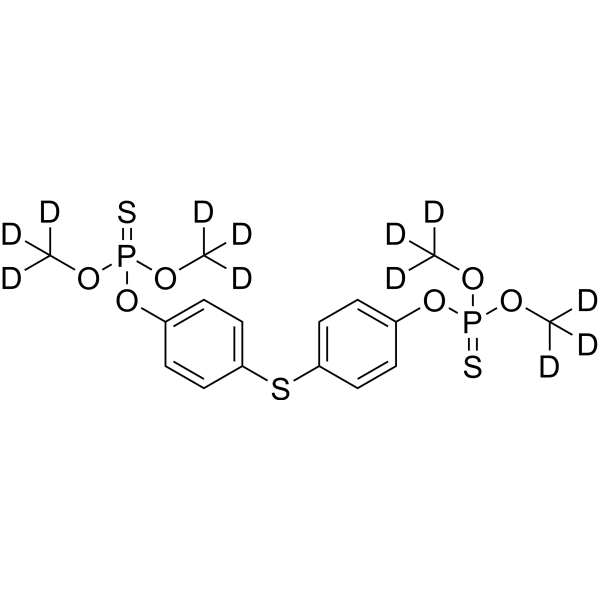
Temephos-d12 is the deuterium labeled Temephos. Temephos (Temefos) is an orally active, blood-brain barrier-permeable organophosphate insecticide and AChE inhibitor. By irreversibly inhibiting AChE to induce cholinergic overactivation, Temephos effectively blocks larval development of Aedes aegypti (yellow fever mosquito) and Aedes albopictus (Asian tiger mosquito), and is commonly used in studies related to Dengue Virus, Zika Virus and other relevant pathogens. Temephos exhibits genotoxicity and neurodevelopmental toxicity, and may also cause liver injury, reproductive system abnormalities and cholinergic poisoning symptoms in mammals. Temephos tends to accumulate in adipose tissues and aquatic organisms, and is excreted via feces after metabolism through oxidation and hydrolysis. Note that CYP-mediated metabolic detoxification may reduce the actual larvicidal efficacy of Temephos against some mosquito species. Temephos can be used in research related to dengue fever, Zika virus disease, chikungunya and dracunculiasis .
loading...
    loading...
Cat. No.: HY-W587961
CAS No.: 65733-18-8
Target:  

Insecticide

Research Areas:  

Infection

S-Hydroprene is an insecticide. S-Hydroprene prolongs larval and pupa durations, disrupts larval development, suppresses pupation, and exhibits larvicidal activity against Culex quinquefasciatus and Blatta orientalis .
loading...
    loading...
Cat. No.: HY-183675
CAS No.: 3118855-92-5
Target:  

Insecticide

Research Areas:  

Infection

SfUAP-IN-1 is an inhibitor of SfUAP (UDP-N-acetylglucosamine pyrophosphorylase from Spodoptera frugiperda) with an IC50 value of 108 nM. As a growth and development inhibitor, SfUAP-IN-1 impairs larval growth and development of Plutella xylostella (diamondback moth), Spodoptera frugiperda (fall armyworm) and Spodoptera litura (tobacco cutworm). SfUAP-IN-1 can be used in research on green pesticides targeting insect UAP .
loading...
    loading...
  • 1

