
8 Results for "

macrophage reprogramming

" in MedChemExpress (MCE) Product Catalog:
Products (8)

8 Results for "macrophage reprogramming" in MCE Product Catalog:

2
2 Cited Publications
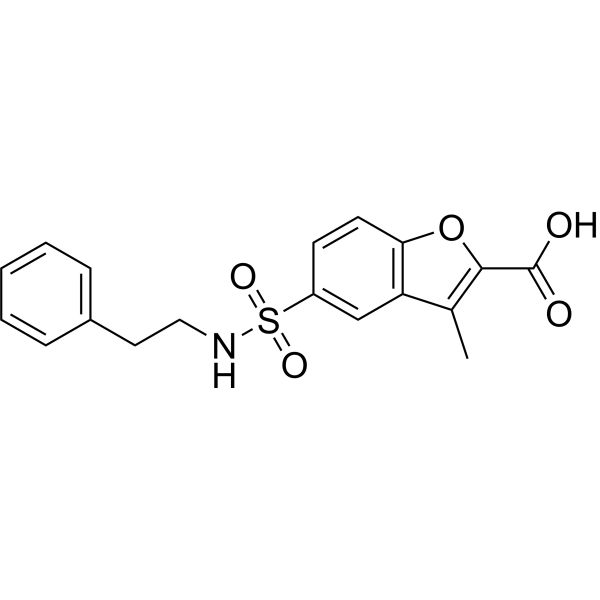
Cat. No.: HY-157189
CAS No.: 898211-21-7
Purity:  99.72%
Synonyms: GPR132 antagonist 1
Target:  

G2A (GPR132)

Research Areas:  

Metabolic Disease

NOX-6-18 (GPR132 antagonist 1) is a GPR132 antagonist with an IC50 of 15.17 nM against the human target. NOX-6-18 inhibits GPR132 activation via interaction with non-conserved residues, blocks activities induced by endogenous agonists and 9 (S)-HODE, and exhibits selectivity for other fatty acid-binding GPCRs. NOX-6-18 regulates macrophage reprogramming, alleviates inflammatory responses, downregulates inflammatory markers and signaling pathways, and reduces the degree of hepatic steatosis and hepatic triglyceride levels. NOX-6-18 regulates metabolic homeostasis, reduces weight gain, enhances glucose metabolism, improves glucose tolerance, decreases fasting blood glucose and insulin levels, and partially reverses reductions in energy expenditure and respiratory quotient. NOX-6-18 can be used in the research of type 2 diabetes .
loading...
    loading...
1
1 Cited Publications
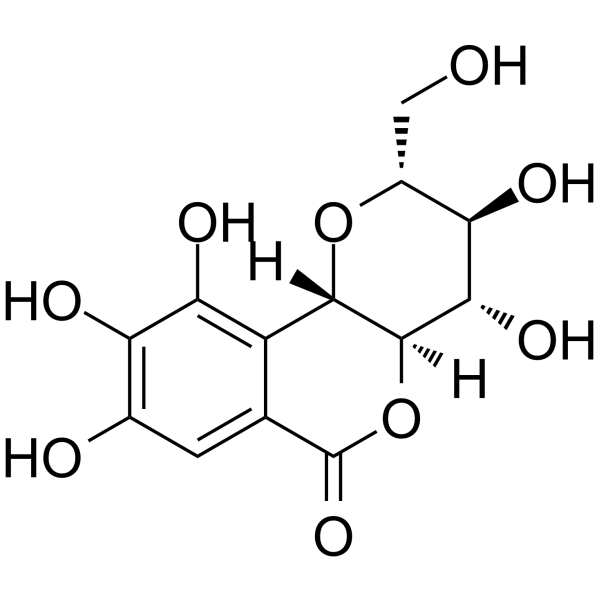
Cat. No.: HY-N9447
CAS No.: 79595-97-4
Norbergenin is a polyphenolic isocoumarin derivative. Norbergenin acts as a non-competitive inhibitor of bovine adrenal tyrosine hydroxylase (TH) with a Ki value of 69.6 μM. Norbergenin inhibits lipopolysaccharide-induced inflammatory responses in macrophages by suppressing the activation of NF-κB, MAPK and STAT3, as well as blocking metabolic reprogramming . Norbergenin inhibits aluminum chloride-induced oxidative stress and apoptosis and restores neurocognitive parameters. Norbergenin scavenges ROS through multiple mechanisms and protects cell membranes from lipid peroxidation damage. Norbergenin can be used in research related to Alzheimer's disease, peptic ulcer and arthritis .
loading...
    loading...
Cat. No.: HY-178159
CAS No.: 2244341-81-7
Target:  

RNA MTase

Research Areas:  

Inflammation/Immunology

SA91-0178 is a METTL1 inhibitor. SA91-0178 inhibits m 7G methylation of RNA, reduces SARM1 stability, mitigates NAD + depletion and metabolic reprogramming in macrophages. SA91-0178 demonstrates excellent protective efficacy against multiple organ injury in cecal ligation and puncture (CLP)-induced and ischemia/reperfusion (I/R)-induced mice. SA91-0178 can be used for the study of systemic inflammatory diseases .
loading...
    loading...
Cat. No.: HY-P99746
CAS No.: 2058047-65-5
Synonyms: 3C23K; GM102

Target:  

TGF-β Receptor

Research Areas:  

Inflammation/Immunology Cancer

Murlentamab (3C23K; GM102) is a humanized anti-AMHRII antibody. AMHRII is the anti-Müllerian hormone receptor. Murlentama significantly promotes macrophage-mediated antibody-dependent cell-mediated cytotoxicity (ADCC). Murlentama stimulates pro-inflammatory and anti-tumor internal environment, recruits and activates T cells. Murlentama suppresses tumors growth by inducing naïve macrophage orientation and promoting tumor-associated macrophage (TAM) reprogramming .
loading...
    loading...
Cat. No.: HY-174976
CAS No.: 3076057-63-8
FHND5032 is an orally active miR-124 inducer. FHND5032 significantly upregulates miR-124 expression in macrophages. FHND5032 disrupts inflammatory signaling, promotes macrophage reprogramming, and restores the epithelial barrier function by inhibiting the PIK3R2/PI3K/Akt axis. FHND5032 alleviates colitis and reduces inflammatory burden in ulcerative colitis mice. FHND5032 can be used for the study of ulcerative colitis .
loading...
    loading...
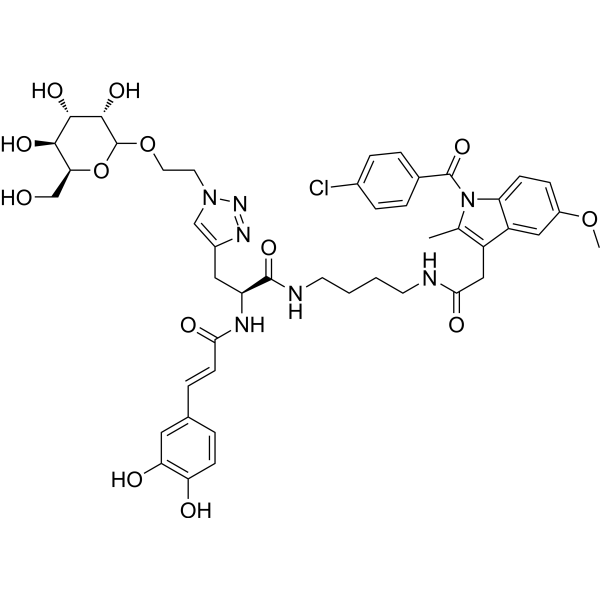
Cat. No.: HY-155031
MCI alleviates inflammation by macrophage reprogramming via targeting ROS scavenging and COX-2 downregulation. MCI inhibits COX-2 with an IC50 value of 1.23 μM. MCI has significant anti-inflammatory effects in collagen-induced arthritis (CIA) models. MCI can be used in research for rheumatoid arthritis (RA) .
loading...
    loading...
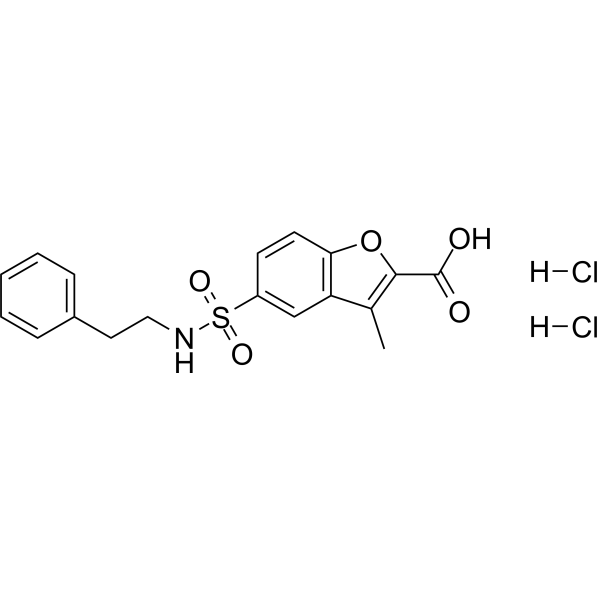
Cat. No.: HY-157189A
Synonyms: GPR132 antagonist 1 (dihydrocholide)
Target:  

G2A (GPR132)

Research Areas:  

Metabolic Disease

NOX-6-18 (dihydrocholide) (GPR132 antagonist 1 (diHYdrocholide)) is a GPR132 antagonist with an IC50 of 15.17 nM against the human target. NOX-6-18 (dihydrocholide) inhibits GPR132 activation via interaction with non-conserved residues, blocks activities induced by endogenous agonists and 9 (S)-HODE, and exhibits selectivity for other fatty acid-binding GPCRs. NOX-6-18 (dihydrocholide) regulates macrophage reprogramming, alleviates inflammatory responses, downregulates inflammatory markers and signaling pathways, and reduces the degree of hepatic steatosis and hepatic triglyceride levels. NOX-6-18 (dihydrocholide) regulates metabolic homeostasis, reduces weight gain, enhances glucose metabolism, improves glucose tolerance, decreases fasting blood glucose and insulin levels, and partially reverses reductions in energy expenditure and respiratory quotient. NOX-6-18 (dihydrocholide) can be used in the research of type 2 diabetes .
loading...
    loading...
Cat. No.: HY-P992433
Target:  

LILRB

Research Areas:  

Cancer

OR502 is a humanized IgG1 monoclonal antibody targeting LILRB2 (ILT4/CD85d), with a Kd value of 1.18 nM. OR502 binds to LILRB2 with high affinity and blocks its interaction with HLA class I ligands, relieving myeloid cell-mediated immunosuppression, restoring CD8 + T cell function, and reprogramming the immunosuppressive macrophage phenotype, thereby simultaneously enhancing both innate and adaptive antitumor immune responses. OR502 can be used in the research of cancers and advanced cancers (including melanoma, non-small cell lung cancer, sarcoma/soft tissue cancer, and urothelial carcinoma) .
loading...
    loading...

