4 Results for "

microviscosity

" in MedChemExpress (MCE) Product Catalog:
Products (4)

4 Results for "microviscosity" in MCE Product Catalog:

3
3 Cited Publications
Cat. No.: HY-W040258
CAS No.: 905-96-4
Synonyms: DiOC2(3)
Target:  

Fluorescent Dye

Research Areas:  

Others

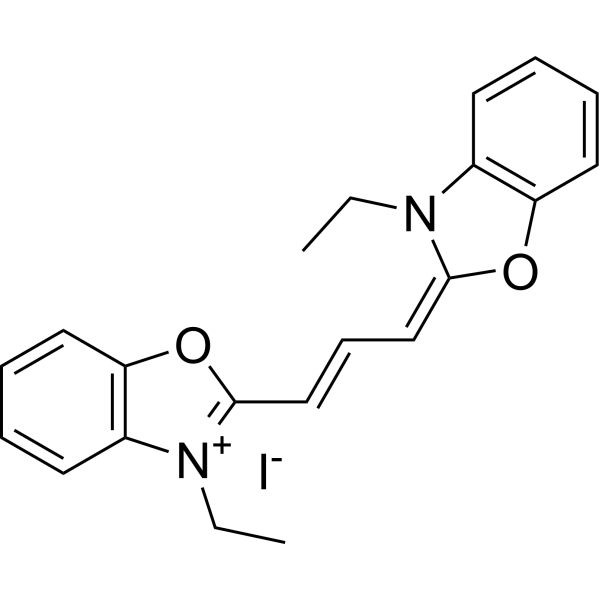
3,3'-Diethyloxacarbocyanine iodide (DiOC2 (3)) is a Fluorescent probe used for microviscosity detection, micelle and microemulsion probing, critical micelle concentration determination, photophysical property research, and bacterial membrane potential assessment. The excitation wavelength of 3,3'-Diethyloxacarbocyanine iodide is 355 nm .
loading...
    loading...
1
1 Cited Publications
Cat. No.: HY-W089353
CAS No.: 194235-40-0
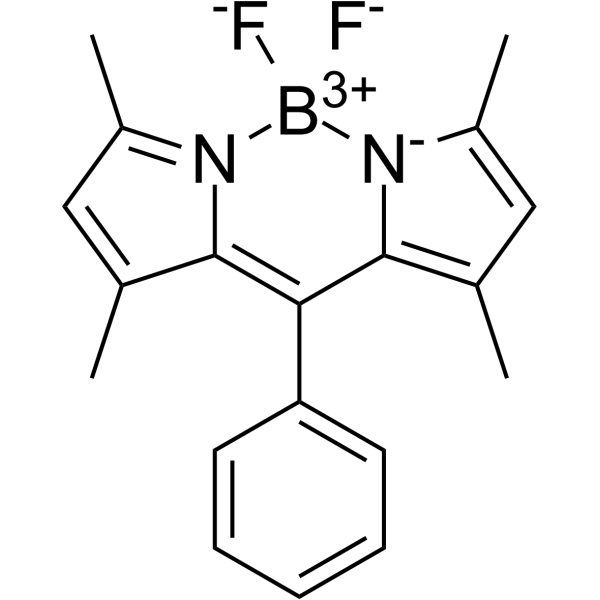
8-Phenyl-BODIPY 505/515 is a molecular rotor based on the BODIPY scaffold, specifically used as a microviscosity probe. The working principle of 8-Phenyl-BODIPY 505/515 is based on the restriction of molecular motion by viscosity: in a high-viscosity environment, the rotational freedom of its chemical bonds is inhibited, which leads to a significant extension of fluorescence lifetime. This property makes 8-Phenyl-BODIPY 505/515 an effective tool for monitoring changes in the viscosity of intracellular microenvironments via fluorescence lifetime imaging (FLIM) technology .
loading...
    loading...
Cat. No.: HY-115731
CAS No.: 119-98-2
Synonyms: Desmethyltocopherol; DL-Tocol; rac-Tocol
Target:  

Endogenous Metabolite

Research Areas:  

Metabolic Disease

Tocol (Desmethyltocopherol) is a synthetic vitamin E derivative. Unlike (±)-α-tocopherol, (±)-tocol does not suppress retinol-induced erythrocyte hemolysis or increase microviscosity of rat liver phosphatidylcholine (PC) liposomes.
loading...
    loading...
Cat. No.: HY-D3145
CAS No.: 1680195-45-2
Target:  

Fluorescent Dye

Research Areas:  

Others

BODIPY-1 is a lysosome-targeted temperature probe. BODIPY-1 relies on temperature-driven changes in microviscosity and hydrophobicity, as well as its own lysosome-targeting morpholine group; at room temperature, its fluorescence is quenched by intramolecular rotation, but upon heating, the oligo (ethylene glycol) groups undergo thermal dehydration, increasing the microviscosity and hydrophobicity around the fluorophore, which disfavors photoinduced electron transfer (PET) and progressively enhances fluorescence, while aggregates formed above its phase transition temperature also produce fluorescence. In neutral aqueous solution, its detection wavelengths are Ex/Em = 490/542 nm at 25°C and Ex/Em = 490/557 nm at 55°C, and the emission maximum at ~557 nm at high temperature shows more than a 3-fold enhancement .
loading...
    loading...

