24 Results for "

molecular-docking

" in MedChemExpress (MCE) Product Catalog:
Products (24)

24 Results for "molecular-docking" in MCE Product Catalog:

Cat. No.: HY-136177
CAS No.: 95906-11-9
Purity:  99.81%
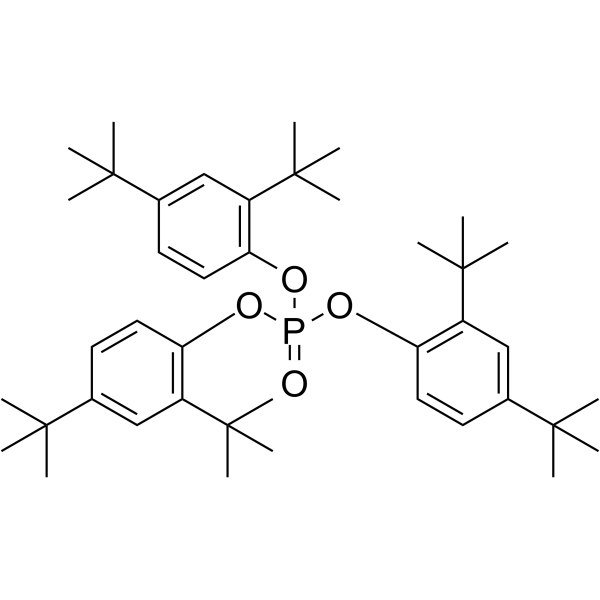
Tris(2,4-di-tert-butylphenyl)phosphate is an active compound from the leaves of Vitex negundo L. shows anti-inflammatory activity with evidence of inhibition for secretory Phospholipase A2 (sPLA2) through molecular docking .
loading...
    loading...
Cat. No.: HY-N16395
CAS No.: 96573-43-2
Jensenone is an acylphloroglucinol derivative. Jensenone binds to COVID-19 proteinase in molecular docking studies. Jensenone can be used as a COVID-19 Mpro inhibitor .
loading...
    loading...
Cat. No.: HY-Y0260
CAS No.: 13790-39-1
Target:  

Cholinesterase (ChE)

Research Areas:  

Neurological Disease

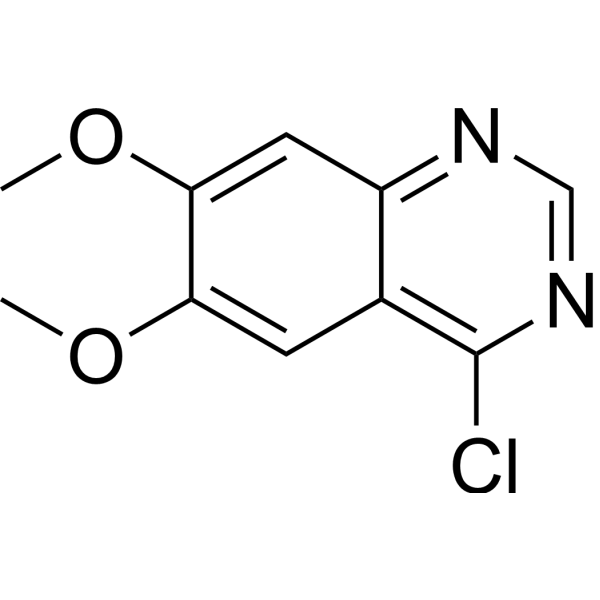
4-Chloro-6,7-dimethoxyquinazoline is a quinazoline derivative. 4-Chloro-6,7-dimethoxyquinazoline exhibits a significant interaction with the AChE protein (as demonstrated by molecular docking analysis). 4-Chloro-6,7-dimethoxyquinazoline is applicable to research related to Alzheimer's disease .
loading...
    loading...
Cat. No.: HY-N10336
CAS No.: 87741-77-3
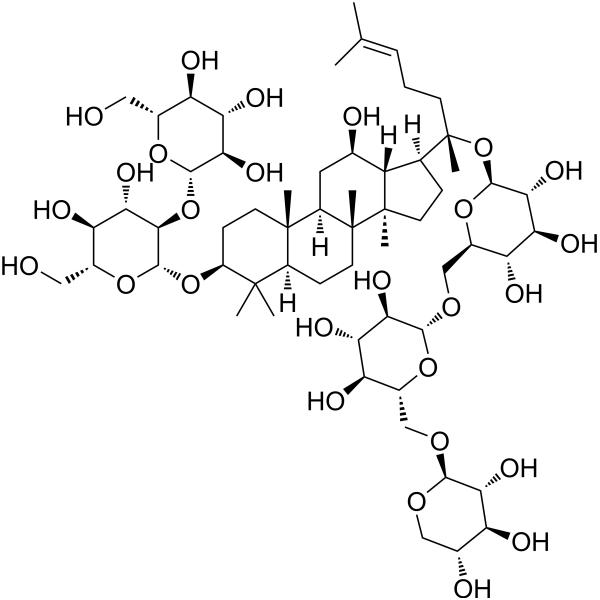
Notoginsenoside R4 is a ginsenoside that can be isolated from ginseng roots. In the molecular docking results, Notoginsenoside R4 can target STAT3, AKT1, HRAS, VEGFA and CASP3 .
loading...
    loading...
Cat. No.: HY-W017194
CAS No.: 90-27-7
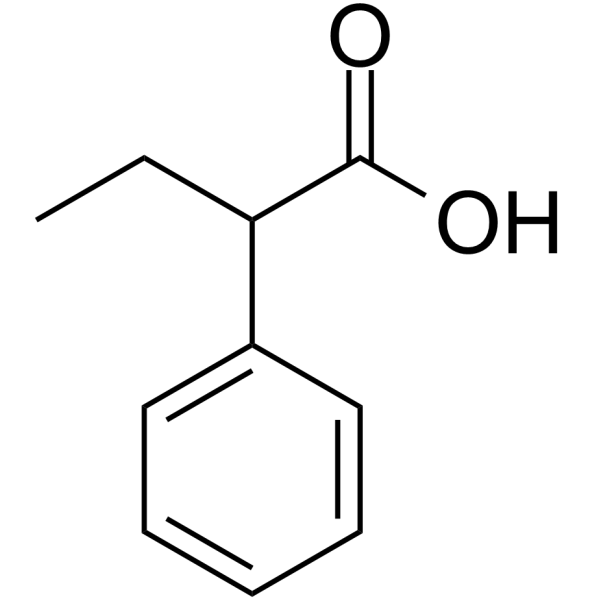
2-Phenylbutanoic acid is a sterically hindered carboxylic acid. 2-Phenylbutanoic acid exhibits anticancer activity through molecular docking interactions with cytochrome P450 proteins. 2-Phenylbutanoic acid can be used in research on malignant lymphoma .
loading...
    loading...
Cat. No.: HY-P10424
CAS No.: 2378606-21-2
Target:  

PD-1/PD-L1

Research Areas:  

Cancer

OPBP-1 is a D-peptide obtained by phage display screening, molecular docking and molecular dynamics simulation. OPBP-1 has high stability and strong antitumor and oral activity. OPBP-1 can selectively bind PD-L1 protein, significantly block the interaction between PD-1 and PD-L1, and this blocking effect helps to restore and improve the function of T lymphocytes and reduce the proportion of bone marrow derived suppressor cells (MDSCs) to combat tumor-induced immune escape. OPBP-1 can be used in cancer immunotherapy research .
loading...
    loading...
Cat. No.: HY-19371
CAS No.: 917393-39-6
Target:  

GABA Receptor

Research Areas:  

Neurological Disease

Lorediplon is a binder predicted via molecular docking to bind SYT1 and SYN2, with affinity for both targets, and it forms stable complexes to regulate protein function. Lorediplon is also a non-benzodiazepine compound that modulates the GABA receptor and exhibits differential activity toward the α1 subunit. Lorediplon can be used in Alzheimer's disease research .
loading...
    loading...
Cat. No.: HY-W087019
CAS No.: 23680-84-4
Synonyms: 4-Amino-2-chloro-6,7-dimethoxyquinazoline
Target:  

Drug Intermediate

Research Areas:  

Neurological Disease

ACDQ (4-Amino-2-chloro-6,7-dimethoxyquinazoline) is a pharmaceutical intermediate that can be used for the synthesis of quinazoline-based antibacterial agents. Molecular docking results of ACDQ indicate that it possesses potential acetylcholinesterase inhibitory activity, and it can be applied to Alzheimer's disease-related research .
loading...
    loading...
Cat. No.: HY-136177R
CAS No.: 95906-11-9
Tris(2,4-di-tert-butylphenyl)phosphate (Standard) is the analytical standard of Tris(2,4-di-tert-butylphenyl)phosphate. This product is intended for research and analytical applications. Tris(2,4-di-tert-butylphenyl)phosphate is an active compound from the leaves of Vitex negundo L. shows anti-inflammatory activity with evidence of inhibition for secretory Phospholipase A2 (sPLA2) through molecular docking .
loading...
    loading...
Cat. No.: HY-120465
CAS No.: 1174905-91-9
Target:  

HIV

Research Areas:  

Infection

ZINC36617540 is a novel Nef protein inhibitor with anti-HIV activity. ZINC36617540 exhibits superior binding affinity by binding to Nef protein. ZINC36617540 shows a similar binding mode to the prototype molecule B9 in molecular docking. The mechanism of action of ZINC36617540 mainly depends on its hydrophobic and electrostatic interactions with Nef protein .
loading...
    loading...
Cat. No.: HY-159081
CAS No.: 3052008-10-0
Target:  

Cholinesterase (ChE)

Research Areas:  

Neurological Disease

AChE/BChE-IN-20 (compound 3m) is an acetylcholinesterase (AChE, IC50=34.81 μM) and butylcholinesterase (BChE, IC50=20.66 μM) inhibitor, which has been demonstrated to have affinity for key enzyme pockets and favorable interaction profiles by molecular docking and kinetic simulations, and can be used in the study of Alzheimer's disease .
loading...
    loading...
Cat. No.: HY-W017194S
CAS No.: 1189708-92-6
2-Phenylbutyric acid-d5 is the deuterated-labeled 2-Phenylbutanoic acid (HY-W017194). 2-Phenylbutanoic acid is a sterically hindered carboxylic acid. 2-Phenylbutanoic acid exhibits anticancer activity through molecular docking interactions with cytochrome P450 proteins. 2-Phenylbutanoic acid can be used in research on malignant lymphoma .
loading...
    loading...
Cat. No.: HY-W017194R
CAS No.: 90-27-7
2-Phenylbutanoic acid (Standard) is the analytical standard of 2-Phenylbutanoic acid (HY-W017194). This product is intended for research and analytical applications. 2-Phenylbutanoic acid is a sterically hindered carboxylic acid. 2-Phenylbutanoic acid exhibits anticancer activity through molecular docking interactions with cytochrome P450 proteins. 2-Phenylbutanoic acid can be used in research on malignant lymphoma .
loading...
    loading...
Cat. No.: HY-173283
Target:  

Fungal

Research Areas:  

Infection

Antifungal agent 129 (Compound 4g) is an inhibitor targeting Rhizoctonia solani, with an EC50 value of 4.27 mg/L. It has a good control effect against rice sheath blight in in vitro and in vivo experiments. Preliminary exploration through scanning electron microscopy, molecular docking, enzyme activity determination, and cytotoxicity experiments has revealed that Antifungal agent 129 may exert its inhibitory activity by affecting the cell structure or physiological processes of Rhizoctonia solani. Antifungal agent 129 can be used in the research of plant diseases in the agricultural field, such as rice sheath blight, which are caused by Rhizoctonia solani .
loading...
    loading...
Cat. No.: HY-123702
CAS No.: 660817-08-3
Research Areas:  

Cancer

CAP-53194 is a selective Plk1 inhibitor with potential anticancer activity. CAP-53194 was identified by a high-throughput virtual screening approach using molecular docking, showing 100-fold selectivity for Plk1 over Plk2-4 and other cell cycle kinases. CAP-53194 is able to effectively exploit subtle differences between the binding sites of Plk1 and other Ser/Thr kinases, thereby enhancing their inhibitory effects. CAP-53194 meets the Lipinski compound analog criteria and passes other ADMET filters, indicating good compound compatibility. CAP-53194 belongs to a new class of potential Plk1 inhibitors suitable for subsequent compound development and testing .
loading...
    loading...
Cat. No.: HY-117093
CAS No.: 423731-10-6
Target:  

HDAC

Research Areas:  

Cancer

H8-A5 is a novel human histone deacetylase 8 (HDAC8) inhibitor. A highly specific ZBG-based pharmacophore model was developed by incorporating a custom zinc-binding group (ZBG) feature. Pharmacophore-based virtual screening identified three novel HDAC8 inhibitors with low micromolar IC50 values (1.8-1.9 μM). Further studies showed that H8-A5 was more selective for HDAC8 than HDAC1/4 and exhibited antiproliferative activity in MDA-MB-231 cancer cells. Molecular docking and molecular dynamics studies showed that H8-A5 could bind to HDAC8, providing a good starting point for the development of HDAC8 inhibitors for cancer treatment.
loading...
    loading...
Cat. No.: HY-L918
317 compounds

Targeted Protein Degradation (TPD) is a novel and promising approach to drug development. It shows great potential for targeting proteins traditionally considered "undruggable" due to the lack of enzymatic function and absence of binding sites by tagging them for degradation or recruiting natural degradation mechanisms.

Molecular glues are a type of small-molecule degraders that primarily induce novel interactions between E3 ubiquitin ligases and target proteins, forming ternary complexes that lead to protein ubiquitination and subsequent proteasomal degradation. Compared with PROTACs, molecular glues generally have lower molecular weights, higher cell permeability, and better drug-like properties. Additionally, the design of molecular glues is relatively simple, without the requirements for complex linkers and ligand optimization. As a result, molecular glues have gradually emerged as a promising therapeutic approach for various diseases.

Multiple types of molecular glues have been reported previously. Analysis of co-crystal complex structures reveals that CRBN-related molecular glues are more versatile. Therefore, MCE researchers select active molecules related to these targets as probes for artificial intelligence (AI) screening.Subsequently, molecular docking technology was used to verify whether the screened molecules retained the key pharmacophore features. Ultimately, we obtained 317 molecular glue analogs, and these compounds serve as powerful tools for the research of molecular glues.

Cat. No.: HY-179121
Target:  

Cholinesterase (ChE)

Research Areas:  

Neurological Disease

AChE-IN-97 (compound 7e) is a cholinesterase inhibitor. AChE-IN-97 exhibits AChE and BChE inhibitory activity through molecular docking. AChE-IN-97 can be used for research on neurological conditions .
loading...
    loading...
Cat. No.: HY-W017194S2
2-Phenylbutanoic acid-d3 is the deuterated-labeled 2-Phenylbutanoic acid (HY-W017194). 2-Phenylbutanoic acid is a sterically hindered carboxylic acid. 2-Phenylbutanoic acid exhibits anticancer activity through molecular docking interactions with cytochrome P450 proteins. 2-Phenylbutanoic acid can be used in research on malignant lymphoma .
loading...
    loading...
Cat. No.: HY-181176
DEMAMP is an antioxidant. DEMAMP exhibits scavenging effects on DPPH and H2O2 free radicals, with IC50 values of 0.60 and 0.48 mg/mL, respectively. Molecular docking simulations show that DEMAMP potently inhibits NADPH oxidase and the Mpro and RdRp proteins of SARS-CoV-2, and ADMET analysis confirms that it has favorable oral bioavailability. DEMAMP can be used in studies related to COVID-19 .
loading...
    loading...

