
35 Results for "

mouse bone marrow cell

" in MedChemExpress (MCE) Product Catalog:
Products (35)

35 Results for "mouse bone marrow cell" in MCE Product Catalog:

2
2 Cited Publications
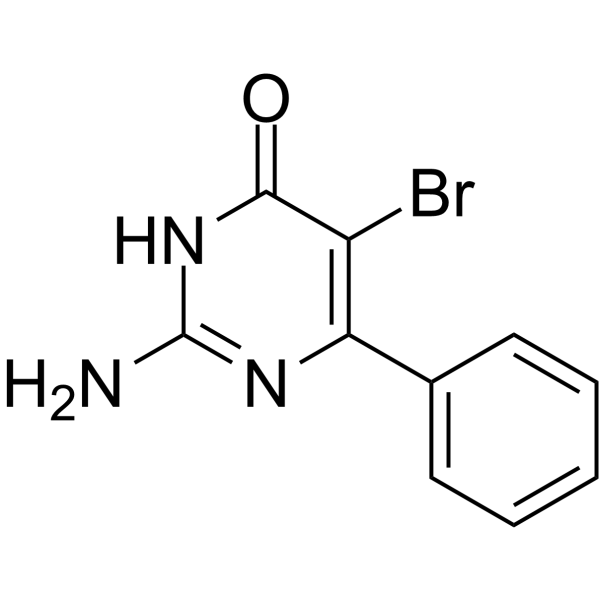
Cat. No.: HY-W008634
CAS No.: 56741-95-8
Synonyms: U-54461; U-54461S; PNU-54461
Research Areas:  

Cancer

Bropirimine (U-54461; U-54461S; PNU-54461) is an orally active TLR7 agonist. Bropirimine inhibits RANKL-induced osteoclast differentiation of mouse bone marrow-derived macrophages (BMMs). Bropirimine exhibits dose-dependent direct inhibitory effects on colony formation of cultured KK-47 and 724 cells. Bropirimine can be used for the study of cancers and bone metabolic disorders such as osteoporosis .
loading...
    loading...
1
1 Cited Publications
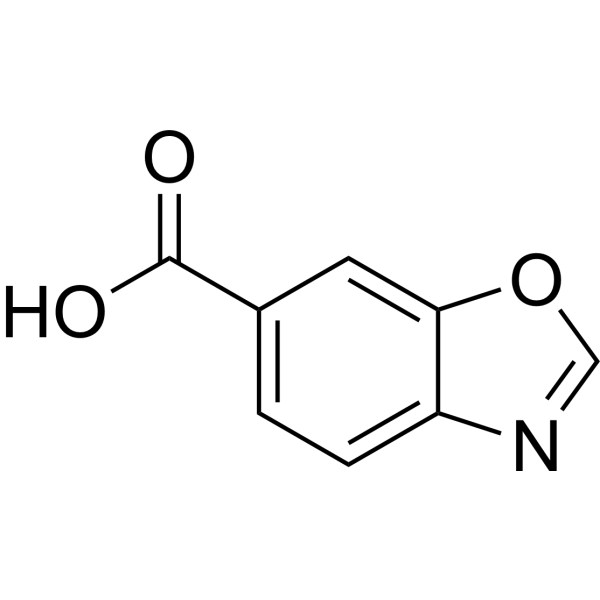
Cat. No.: HY-33299
CAS No.: 154235-77-5
Synonyms: BTCA
Research Areas:  

Cancer

Serpin B9-IN-1 (BTCA) is an inhibitor that specifically targets Serpin B9 (SB9); SB9 is a natural inhibitor of granzyme B (GrB) , but may promote the metastasis of lung cancer cells into the bone marrow. SB9-overexpressing cancer cells promote proliferation and metastasis in an immune cell-dependent manner by binding to GrB. Inhibition of SB9 by Serpin B9-IN-1 significantly inhibits immunotherapy of lung cancer bone metastases in the caudal artery (CA) mouse model (LCBM) .
loading...
    loading...
1
1 Cited Publications
Cat. No.: HY-K0350

MCE Mouse Neutrophil Negative Selection Kit can isolate neutrophils from single-cell suspensions of mouse bone marrow or other tissue samples.

loading...
    loading...
Cat. No.: HY-P99152
CAS No.: 140608-64-6
Synonyms: Muromanab-CD3

Research Areas:  

Inflammation/Immunology Cancer

Muromonab (Muromonab-CD3; OKT3) is a mouse monoclonal antibody targeting the CD3 antigen. Muromonab specifically binds to the CD3 antigen on the surface of human and higher primate T cells. Muromonab blocks the function of T cell receptors to recognize foreign antigens and inhibits T cell-mediated immune responses, including cell-mediated lymphocyte lysis and T cell proliferation responses. Muromonab can be used to study acute kidney, liver, heart and combined kidney-pancreas transplant rejection, and can also be used to study graft-versus-host disease in bone marrow transplant patients .
loading...
    loading...
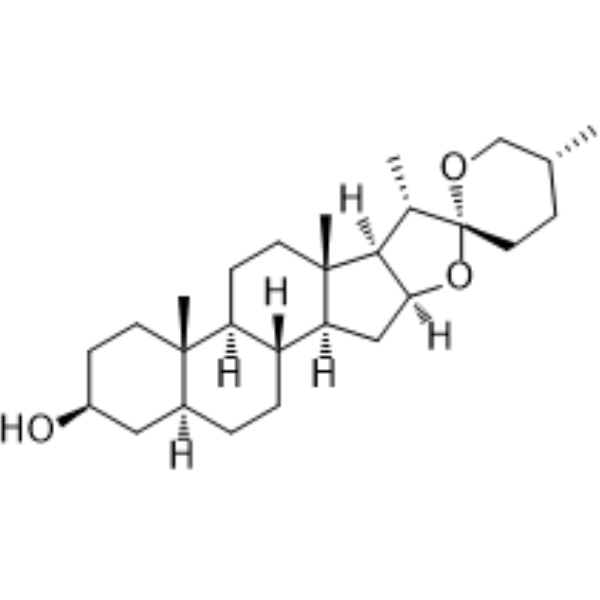
Cat. No.: HY-N1403
CAS No.: 77-60-1
Tigogenin is a steroidal sapogenins. Tigogenin can inhibit adipocytic differentiation and induce osteoblastic differentiation in mouse bone marrow stromal cells. Tigogenin can inhibit cells proliferation and induce apoptosis. Tigogenin can be used for the researches of cancer, inflammation, immunology, metabolic and cardiovascular disease, such as mammary gland carcinoma, rheumatoid arthritis, osteoporosis and atherosclerosis .
loading...
    loading...
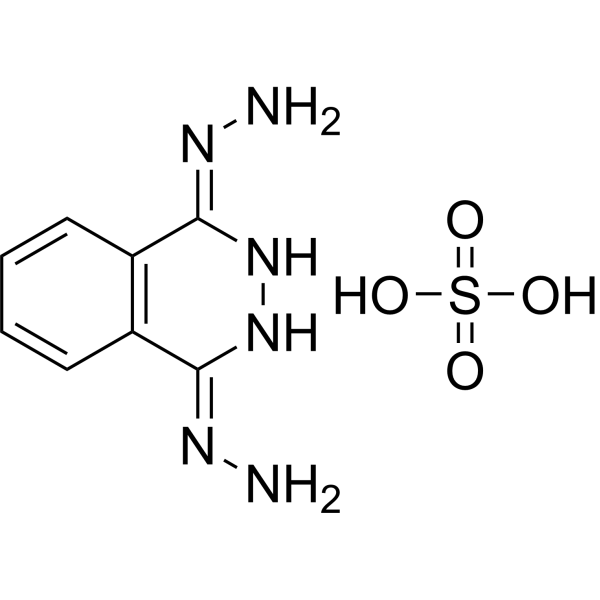
Cat. No.: HY-N7065
CAS No.: 7327-87-9
Dihydralazine sulfate is an antihypertensive hydrazine derivative and also a low-potency genotoxic agent. Dihydralazine sulfate is a direct-acting mutagen with a mixed gene mutation mechanism, which induces DNA fragmentation in the lung, kidney and spleen of mice, and induces sister chromatid exchange in mouse bone marrow cells. Dihydralazine sulfate specifically kills DNA repair-deficient bacteria. Dihydralazine sulfate is a vasodilator and antihypertensive agent that reduces systemic vascular resistance, increases cardiac output and heart rate, thereby lowering blood pressure. Dihydralazine sulfate can be used in research related to hypertension and severe early-onset preeclampsia .
loading...
    loading...
Cat. No.: HY-161853
CAS No.: 2446767-14-0
Research Areas:  

Others

TX-2552 is an orally active tyrosine DNA phosphodiesterase 1 (TDP1) inhibitor with an IC50 value of 0.62 μM. TX-2552 can enhance the clastogenic activity of Topotecan (HY-13768) in mouse bone marrow cells, as well as the anti-tumor effect of Topotecan (HY-13768) in Krebs-2 ascites tumor mice .
loading...
    loading...
Cat. No.: HY-117948
CAS No.: 1560968-49-1
Research Areas:  

Cancer

ML399 is a Menin-MLL1 protein-protein interaction inhibitor with an IC50 of 90 nM. ML399 inhibits the proliferation of transformed mouse bone marrow cells. ML399 binds to the hERG potassium channel, exhibits superior in vitro physicochemical, drug metabolism and pharmacokinetic (DMPK) parameters, and has an extended half-life in rodents. ML399 can be used for research on acute myeloid leukemia and acute lymphoblastic leukemia .
loading...
    loading...
Cat. No.: HY-P990144

Target:  

Integrin

Research Areas:  

Inflammation/Immunology Cancer

Anti-Mouse/Human VLA-4/CD49d Antibody (PS/2) is an anti-mouse/human VLA-4/CD49d IgG2b monoclonal antibody. Anti-Mouse/Human VLA-4/CD49d Antibody (PS/2) can reduce VLA-4 positive cells. Anti-Mouse/Human VLA-4/CD49d Antibody (PS/2) can inhibit the migration of Tc1 cells to tumors. Anti-Mouse/Human VLA-4/CD49d Antibody (PS/2) inhibits the retention of leukemia cells in the spleen and bone marrow by blocking VLA-4. Anti-Mouse/Human VLA-4/CD49d Antibody (PS/2) can be used for research on inflammation conditions and cancer such as experimental autoimmune encephalomyelitis (EAE), melanoma and leukemia .
loading...
    loading...
Cat. No.: HY-P990157

Research Areas:  

Others

Anti-Mouse Thy1/CD90 Antibody (M5/49.4.1) is an anti-mouse Thy1/CD90 IgG2a monoclonal antibody. Anti-Mouse Thy1/CD90 Antibody (M5/49.4.1) can clear T cells from the spleen and bone marrow. Anti-Mouse Thy1/CD90 Antibody (M5/49.4.1) can be used for researches on immunology and inflammation conditions such as colitis .
loading...
    loading...
Cat. No.: HY-173070
CAS No.: 2275612-76-3
TLR7 agonist 29 (Compound 1) is the agonist for TLR7 with an EC50 of 5.2 nM for human TLR7 (EC50 for mouse TLR7 is 48.2 nM). TLR7 agonist 29 activates bone marrow-derived macrophages (BMDMs), stimulates myeloid cells in the tumor microenvironment, promotes the expression of PD-L1, CD86 and IFN-α. TLR7 agonist 29 can be used as payload for synthesis of ADC .
loading...
    loading...
Cat. No.: HY-169819
CAS No.: 882291-37-4
Research Areas:  

Inflammation/Immunology

Calcium influx inducer compound 634 is a calcium influx inducer. Calcium influx inducer compound 634 (10 µM) enhances the release of extracellular vesicles (EVs) from mouse bone marrow-derived dendritic cells (mBMDCs). Calcium influx inducer compound 634 (10 µM) also increases the levels of CD86 and CD80 on the surface of mBMDCs, an effect that can be blocked by the calcium release-activated calcium channel inhibitor YM-58483 (HY-100831) .
loading...
    loading...
Cat. No.: HY-121282B
CAS No.: 24360-97-2
Synonyms: Pecazine acetate
Target:  

Apoptosis MALT1

Research Areas:  

Others

Mepazine acetate (Pecazine acetate) is a drug that has the activity to inhibit the protease activity of MALT1. Mepazine acetate is often used to study the role of MALT1 in biology. Treatment of mouse bone marrow precursor cells with mepazine acetate strongly inhibited RANK ligand (RANKL)-induced osteoclast formation. Mepazine acetate also inhibited the expression of multiple osteoclast markers such as TRAP, feline hepsin K, and calcitonin. The protective effect of mepazine acetate was not affected by MALT1 deficiency. The mechanism of action of mepazine acetate may involve MALT1-independent mechanisms, and this aspect needs to be considered in future studies .
loading...
    loading...
Cat. No.: HY-P991461
Synonyms: XmAb968

Target:  

CD38

Research Areas:  

Cancer

AMG-424 (XmAb968) is a human bispecific antibody (bsAb) targeting CD38 & CD3E. AMG-424 kills CD38-expressing cancer cells, triggers T-cell proliferation and attenuates cytokine release. AMG 424 has antitumor activity in a bone marrow-invasive mouse cancer model and induces peripheral B-cell depletion in cynomolgus monkeys. AMG-424 can be used in multiple myeloma research. Recommended isotype control: half-IG G1-kappa/(scFv-heavy-lambda)-h-CH2-CH3 .
loading...
    loading...
Cat. No.: HY-W615446
CAS No.: 158890-32-5
GSTO1-IN-3 is a potent GSTO1-1 inhibitor with an IC50 of 0.11 μM, and shows selectivity over GSTO2-2, GSTA1-1 and GSTP1-1 (IC50 > 100 μM). GSTO1-IN-3 enhances the cytotoxicity of Cisplatin (HY-17394) against human breast cancer cells. GSTO1-IN-3 inhibits IL-1β release in mouse bone marrow-derived macrophage (BMDM) cells. GSTO1-IN-3 attenuates inflammation in mice. GSTO1-IN-3 can be used for breast cancer and inflammation research .
loading...
    loading...
Cat. No.: HY-168137
Research Areas:  

Inflammation/Immunology

NOD2 agonist 2 (compound 23) enhanced the antigen presentation of mouse bone marrow-derived dendritic cells (BMDCs), highlighting its potential as a vaccine adjuvant.
loading...
    loading...
Cat. No.: HY-P5208
CAS No.: 1039381-80-0
Target:  

Inhibitory Antibodies

Research Areas:  

Cancer

CBLB 612 is an anti-radiation agent. CBLB 612 can be used in the propagation of mouse and monkey moderate stimulation hematopoietic stem cell (HSC), and lure that they are passed to peripheral blood from bone marrow into. CBLB 612 is an important auxiliary agent for cancer .
loading...
    loading...
Cat. No.: HY-N1403R
CAS No.: 77-60-1
Tigogenin (Standard) is a steroidal sapogenins. Tigogenin (Standard) can inhibit adipocytic differentiation and induce osteoblastic differentiation in mouse bone marrow stromal cells. Tigogenin (Standard) can inhibit cells proliferation and induce apoptosis. Tigogenin (Standard) can be used for the researches of cancer, inflammation, immunology, metabolic and cardiovascular disease, such as mammary gland carcinoma, rheumatoid arthritis, osteoporosis and atherosclerosis .
loading...
    loading...
Cat. No.: HY-W848341
CAS No.: 88343-72-0
Synonyms: NSC 338947; CIEtSoSo
Research Areas:  

Cancer

Clomesone (NSC 338947) is a compound with antitumor activity. Clomesone induces the formation of cross-links between DNA strands in cell lines. Clomesone is inactive against most human colorectal cancer solid tumor cell lines in vitro, has no significant activity against mouse tumors in vivo, and is accompanied by bone marrow suppression. Its pharmacokinetic behavior indicates that it cannot reach effective concentrations at the tumor site.
loading...
    loading...
Cat. No.: HY-105578A
CAS No.: 21791-39-9
Synonyms: MA 1143 hydrochloride
Target:  

Endogenous Metabolite

Research Areas:  

Inflammation/Immunology

Letimide hydrochloride (MA 1143 hydrochloride) is an analgesic with potent analgesic activity. Letimide hydrochloride has shown cytogenetic effects on human lymphocytes in in vitro experiments. Letimide hydrochloride did not exhibit significant chromosomal aberrations or sister chromatid exchanges in in vivo studies in mouse bone marrow cells. Teratogenic studies conducted on mice with Letimide hydrochloride also did not show obvious effects on inducing congenital malformations .
loading...
    loading...

