377 Results for "

multi-dimensional NMR analyses

" in MedChemExpress (MCE) Product Catalog:
Products (377)

377 Results for "multi-dimensional NMR analyses" in MCE Product Catalog:

4
4 Cited Publications
Cat. No.: HY-D0155
CAS No.: 288574-78-7
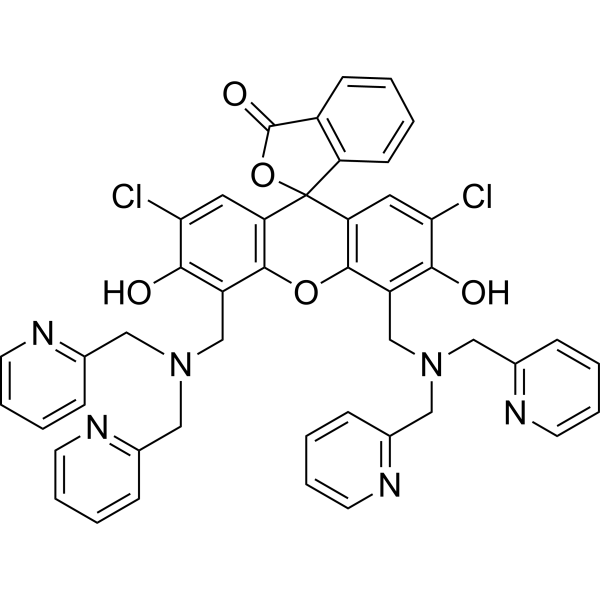
Zinpyr-1 is a zinc-responsive fluorescent indicator and a membrane-permeable metal-binding probe. Zinpyr-1 forms a complex with Mn 2+ ions and generates a fluorescence turn-on signal. Zinpyr-1 binds to free zinc ions in serum, enabling quantitative detection of free zinc concentration. Zinpyr-1 produces fluorescence signals reflecting the relative zinc concentration in plant root cells, localizes to specific layers of plant root cells, and can be used to support analyses related to plant zinc transporter mutations and homeostasis .
loading...
    loading...
1
1 Cited Publications
Cat. No.: HY-W035091
CAS No.: 16903-35-8
Tetrachloroauric acid is an Au (III) compound and bilayer disruptor that can be used to damage red blood cells. Tetrachloroauric acid specifically disrupts the bilayer structure of representative phospholipids (dimyristoylphosphatidylcholine and dimyristoylphosphatidylethanolamine) in human red blood cell membranes, and induces morphological changes in intact human red blood cells. Tetrachloroauric acid causes downregulation of MT I-II and GFAP expression in the mouse brain following chronic treatment. Tetrachloroauric acid is being used in studies related to neurotoxicity and hematotoxicity, including analyses of human red blood cells and molecular models of red blood cell membranes, as well as immunohistochemical evaluation of the mouse brain .
loading...
    loading...
1
1 Cited Publications
Cat. No.: HY-K0607

MCE Modified Safranin O–Fast Green Cartilage Staining Kit through an optimized staining system, cartilage matrix and bone tissue in histological sections can be clearly distinguished. This method provides high staining contrast, good sensitivity, simple operation, and good reproducibility, and is widely used for cartilage morphology observation, studies of cartilage injury and degeneration, osteochondral tissue development research, and related histological analyses.

loading...
    loading...
Cat. No.: HY-E70289
Synonyms: Bovin B4GALT1 (Y289L)
Target:  

Glycosyltransferase

Research Areas:  

Cancer

Bovin beta-1,4-galactosyltransferase 1 (Y289L) (Bovin B4GALT1 (Y289L)) is a mutated form of bovine-derived galactosyltransferase with a mutation at the Y289L genetic site. Bovin beta-1,4-galactosyltransferase 1 can label O-GlcNAcylated proteins with an N-azidoacetylgalactosamine (GalNAz) group. This labeling method allows for the specific, unbiased, and global labeling of O-GlcNAcylated proteins. After labeling, the appended azide group can react with a wide variety of alkyne-modified chemical probes, facilitating multiple downstream analyses .
loading...
    loading...
Cat. No.: HY-116013
CAS No.: 29557-51-5
Purity:  99.91%
Research Areas:  

Others

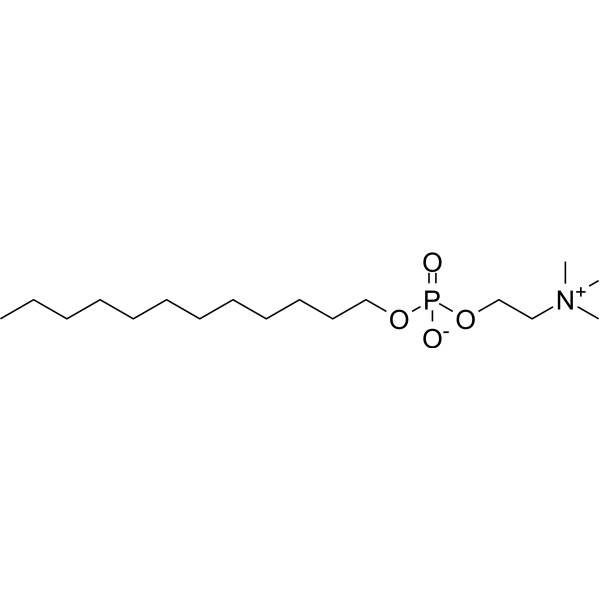
Dodecylphosphocholine is a detergent widely utilized in NMR studies of membrane proteins .
loading...
    loading...
Cat. No.: HY-12489A
CAS No.: 6226-79-5
Synonyms: Acid Red 112, BS
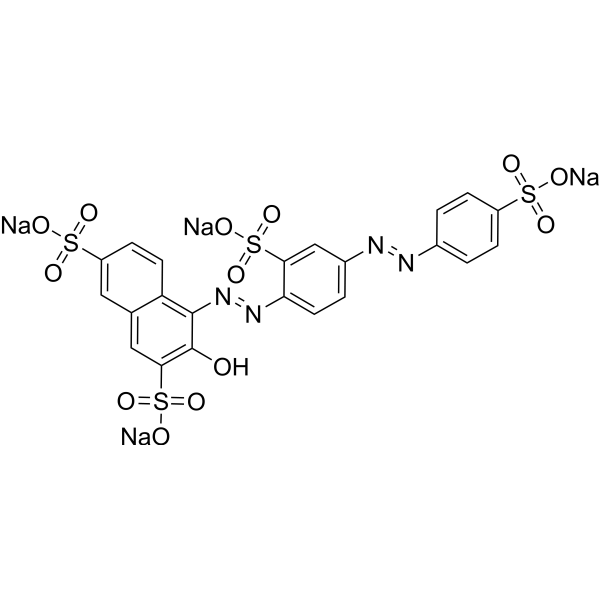
Both Ponceau S and Ponceau BS are synthetic dyes commonly used in biological research. They are commonly used as protein stains to visualize proteins in western blots and other protein detection analyses. Ponceau S is a red dye, while Ponceau BS is a blue shade of the same dye. Both dyes bind to positively charged amino acid residues in proteins for easy visualization. However, Ponceau S is more commonly used due to its higher sensitivity.
loading...
    loading...
Cat. No.: HY-169798
CAS No.: 23481-50-7
Target:  

Fluorescent Dye VSV

Research Areas:  

Infection

1,9-Dimethylmethylene blue is a photosensitizer, virus inactivator and hemoglobin oxidant derived from methylene blue. When activated, 1,9-Dimethylmethylene blue generates reactive oxygen species including singlet oxygen, and acts as a metachromatic dye. When activated in monomeric or dimeric form, 1,9-Dimethylmethylene blue induces photoinactivation of R17 phage and vesicular stomatitis virus and oxidizes hemoglobin via non-singlet oxygen reactive oxygen species or singlet oxygen-mediated pathways, respectively. The monomeric form, with higher nucleic acid affinity, achieves virus inactivation under specific conditions without forming methemoglobin. 1,9-Dimethylmethylene blue binds to substances such as glycosaminoglycans to produce color changes. Although it is susceptible to interference from non-glycosaminoglycan components in urine, it is still applicable to spectrophotometric analysis for glycosaminoglycan quantification. With these unique photochemical and binding properties, 1,9-Dimethylmethylene blue is widely used in studies of viral infections and related biochemical analyses .
loading...
    loading...
Cat. No.: HY-45609
CAS No.: 150465-29-5
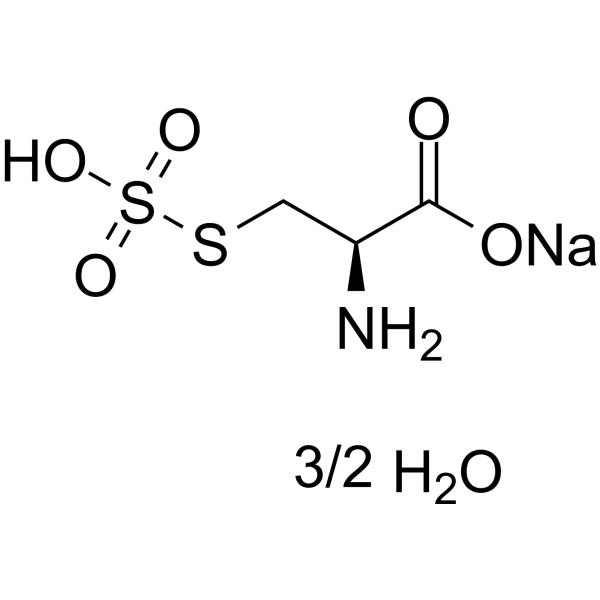
L-Cysteine S-sulfate sodium hydrate is an S-sulfated derivative of L-cysteine (HY-Y0337). L-Cysteine S-sulfate sodium hydrate is the substrate for cystine lyase, it can be used in mass spectrometry and chromatography analyses .
loading...
    loading...
Cat. No.: HY-137042
CAS No.: 1223357-57-0
Purity:  98.15%
Synonyms: Alkyne-Cy5
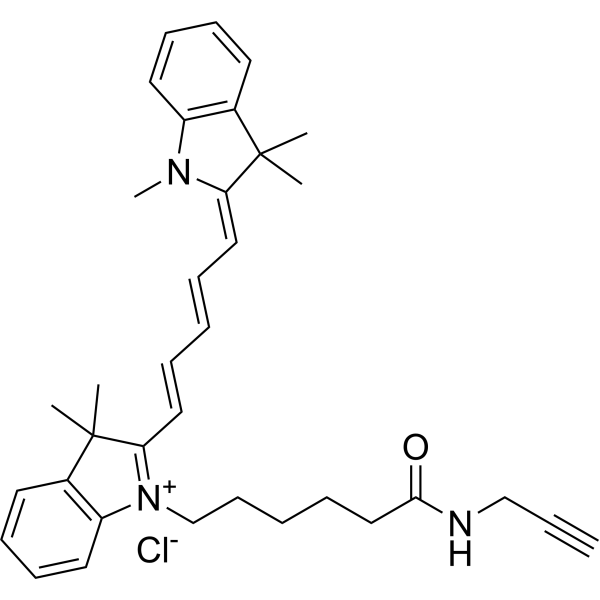
Cyanine5 alkyne (Alkyne-Cy5) is a fluorescent dye used to label azide proteins and can be used to analyse post-translational modifications of proteins, glycosylation etc. Cyanine5 alkyne can also be used as a mitochondrial OXPHOS inhibitor to inhibit the growth of cancer stem cells (CSC) . Cyanine5 alkyne is a click chemistry reagent, it contains an Alkyne group and can undergo copper-catalyzed azide-alkyne cycloaddition (CuAAc) with molecules containing Azide groups.
loading...
    loading...
Cat. No.: HY-126061
CAS No.: 33868-03-0
Purity:  99.82%
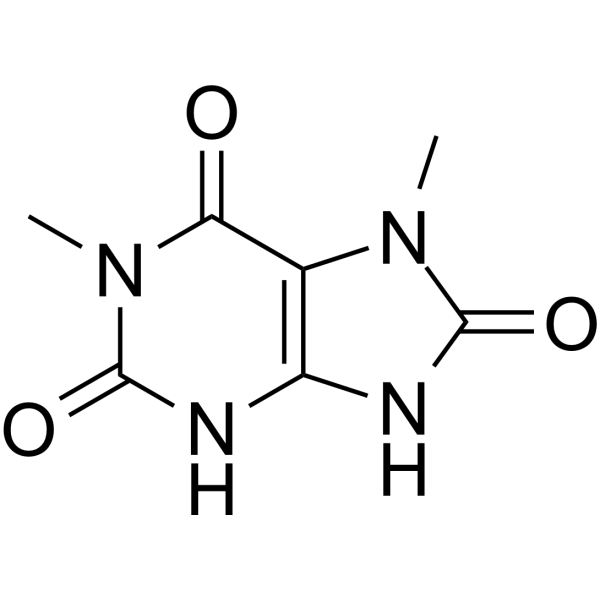
1,7-Dimethyluric acid is an N-methylated uric acid and purine derivative, as well as a caffeine metabolite. When 1,7-Dimethyluric acid is acted upon by peroxidase in the presence of H2O2, it follows the same oxidation pathway to generate a UV-absorbing intermediate, which decays via first-order kinetics. 1,7-Dimethyluric acid can adsorb onto pyrolytic graphite electrodes, but not onto glassy carbon electrodes or platinum electrodes. The N-methylation modification of its pyrimidine ring prevents ring contraction of the diol intermediate, and no NMR evidence of O-alkylation is observed during propylation under the test conditions .
loading...
    loading...
Cat. No.: HY-116013S
CAS No.: 130890-78-7
Purity:  ≥98.0%
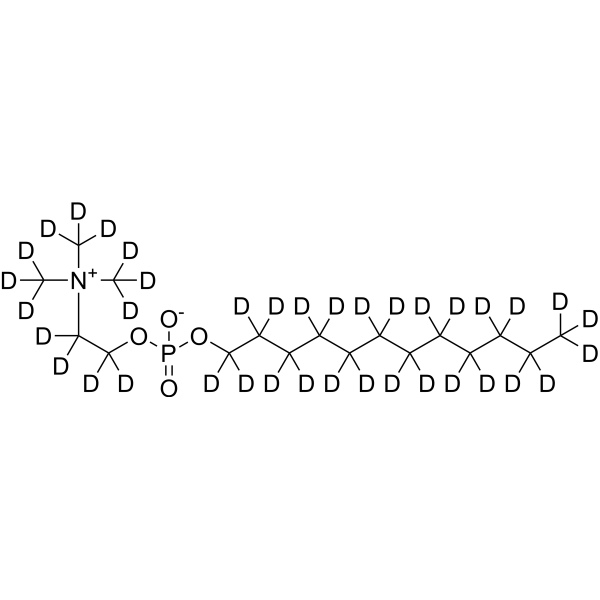
Dodecylphosphocholine-d388 is the deuterium labeled Dodecylphosphocholine. Dodecylphosphocholine is a detergent widely utilized in NMR studies of membrane proteins .
loading...
    loading...
Cat. No.: HY-113084
CAS No.: 1637-71-4
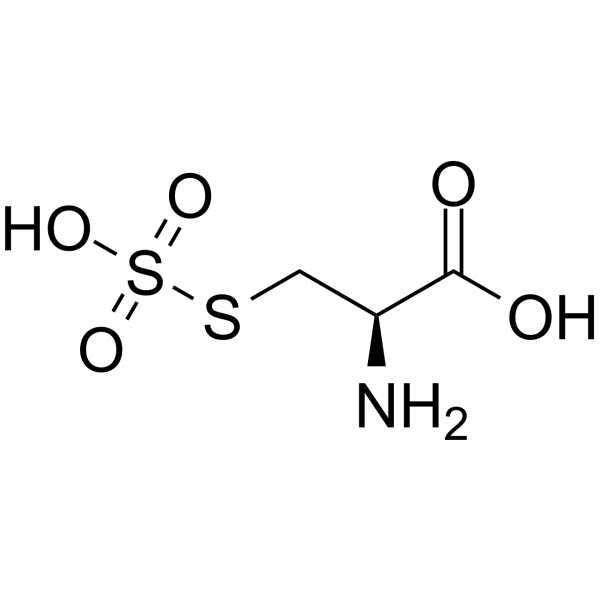
L-Cysteine S-sulfate is an S-sulfated derivative of L-cysteine (HY-Y0337). L-Cysteine S-sulfate is the substrate for cystine lyase, it can be used in mass spectrometry and chromatography analyses .
loading...
    loading...
Cat. No.: HY-139038
CAS No.: 292065-64-6
Purity:  99.6%
Target:  

DNA/RNA Synthesis

Research Areas:  

Cancer

TDRL-X80 is a potent inhibitor of xeroderma pigmentosum group A (XPA) protein. TDRL-X80 inhibits XPA’s DNA binding activity. TDRL-X80 exhibits activity against single, double, and Cisplatin-damaged DNA with IC50s of 18, 20, and 29 μM in fluorescence polarization (FP) analyses , and with IC50s of 21, 39, and 28 in ELISA Analysis .
loading...
    loading...
Cat. No.: HY-162422
Research Areas:  

Cancer

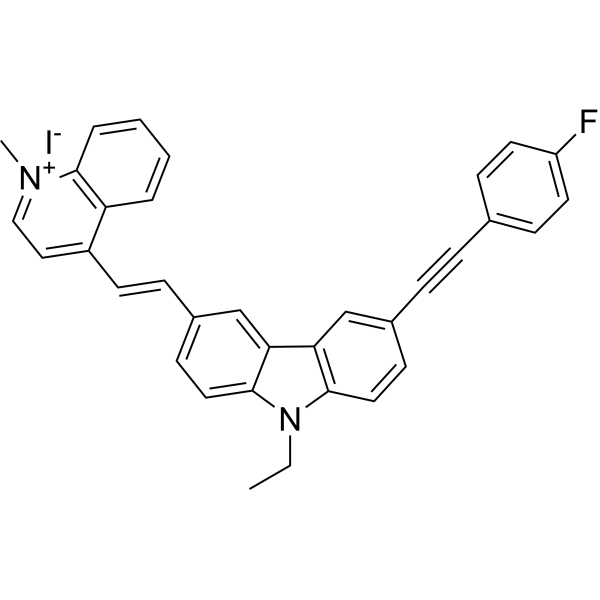
Mito-DK is a small-molecule fluorescent dye with the capability of crosstalk-free response to polarity and mtDNA as well as mitochondrial morphology. Mito-DK has high photostability, low cytotoxicity, and good mitochondria-targeting properties. Mito-DK can be used for real-time tracking and multidimensional assessing of mitochondria-related pyroptosis in cancer cells .
loading...
    loading...
Cat. No.: HY-W416297
CAS No.: 102814-06-2
Research Areas:  

Others

dUDP disodium is a nucleotide that plays a crucial role in the synthesis of DNA. dUDP disodium consists of a uracil base, a ribose, and two phosphate groups. dUDP disodium is also a substrate for the deoxyuridine triphosphate nucleotide hydrolase, which catalyzes the conversion of dUDP to dUMP, which is the precursor for dTTP synthesis. dUDP disodium is involved in various biochemical processes and can be used for various biochemical analyses and applications .
loading...
    loading...
Cat. No.: HY-P3566
CAS No.: 494750-52-6
Research Areas:  

Others

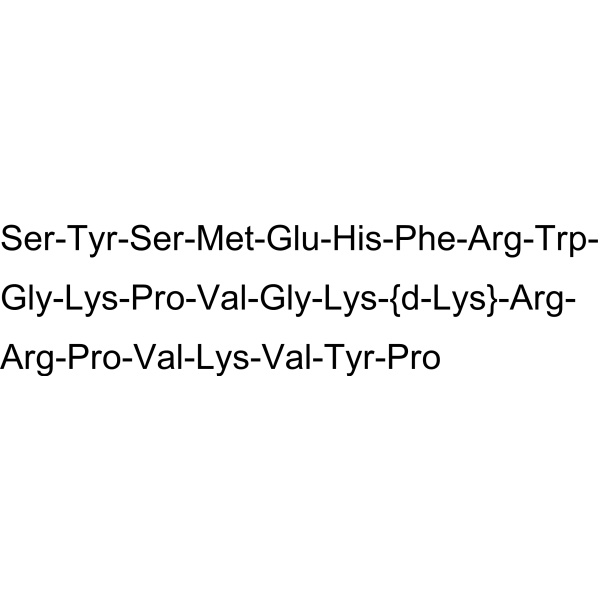
(D-Lys16)-ACTH (1-24) (human, bovine, mouse, ovine, porcine, rabbit, rat) is the reaction product with gadolinium tetraazacyclododecanetriacetate derivative. (D-Lys16)-ACTH (1-24) (human, bovine, mouse, ovine, porcine, rabbit, rat) involves in preparation of tetraazacyclododecane macrocycle metal complexes for production of conjugates with biomolecules and for use as NMR contrast agents, radiodiagnostic agents and for radioresearch .
loading...
    loading...
Cat. No.: HY-Y0661
CAS No.: 2947-61-7
Research Areas:  

Others

4-Methylbenzyl cyanide is an organic chemical probe used to study intramolecular rotation properties. 4-Methylbenzyl cyanide is promising for research of NMR spectroscopy and physical chemistry research on molecular dynamics .
loading...
    loading...
Cat. No.: HY-W002068
CAS No.: 1583-58-0
Research Areas:  

Others

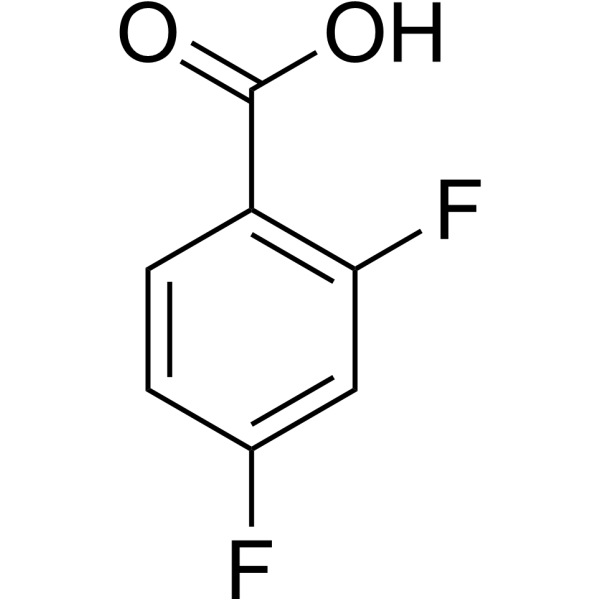
2,4-Difluorobenzoic acid is a difluorinated aromatic carboxylic acid. 2,4-Difluorobenzoic acid can serve as a crystalline molecular ruler for fluorine-fluorine distance measurements by 19F MAS NMR, as well as a non-radioactive passive water tracer for oilfield applications .
loading...
    loading...
Cat. No.: HY-D1640
CAS No.: 152290-47-6
Research Areas:  

Others

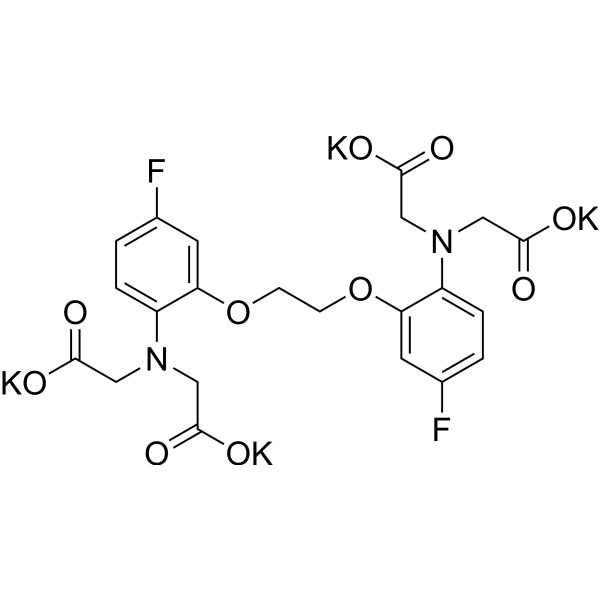
5,5'-Difluoro BAPTA tetrapotassium is a difluoro-derivative of BAPTA (HY-100168). 5,5'-Difluoro BAPTA tetrapotassium shows large 19F NMR chemical shifts upon chelating divalent cations. 5,5'-Difluoro BAPTA tetrapotassium has high selectivity for Ca 2+. 5,5'-Difluoro BAPTA tetrapotassium can inhibit the growth of pollen tube .
loading...
    loading...
Cat. No.: HY-W002068S
CAS No.: 1219804-63-3
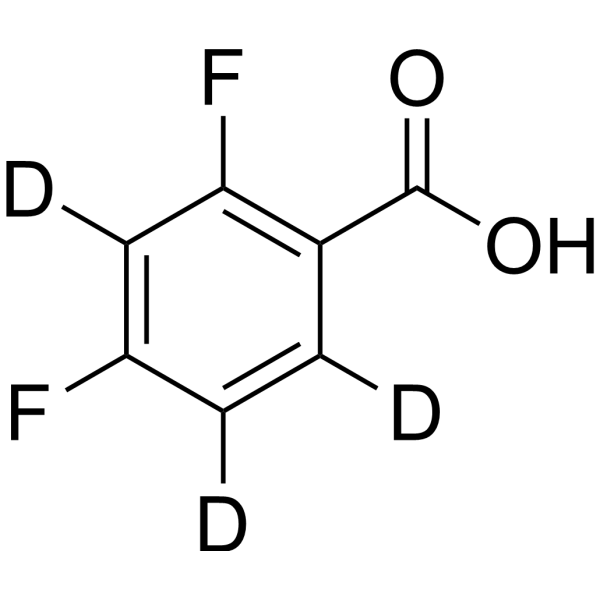
2,4-Difluorobenzoic acid-d3 is the deuterated-labeled 2,4-Difluorobenzoic acid (HY-W002068). 2,4-Difluorobenzoic acid is a difluorinated aromatic carboxylic acid. 2,4-Difluorobenzoic acid can serve as a crystalline molecular ruler for fluorine-fluorine distance measurements by 19F MAS NMR, as well as a non-radioactive passive water tracer for oilfield applications .
loading...
    loading...

