12 Results for "

nanocomposites

" in MedChemExpress (MCE) Product Catalog:
Products (12)

12 Results for "nanocomposites" in MCE Product Catalog:

2
2 Cited Publications
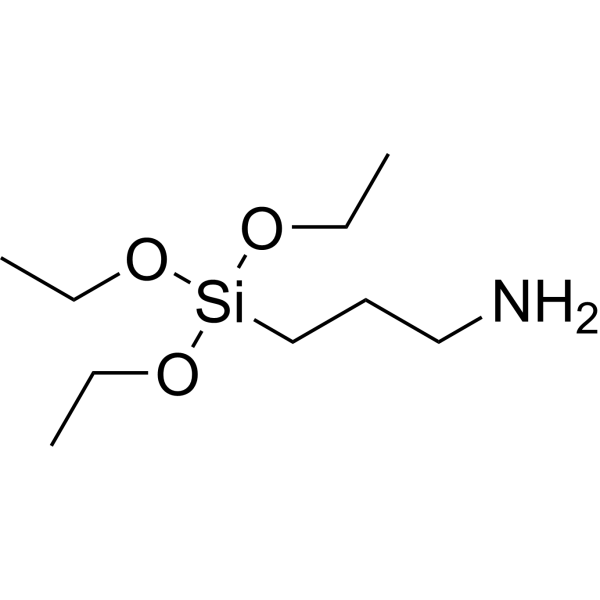
Cat. No.: HY-D0175
CAS No.: 919-30-2
Synonyms: γ-Aminopropyltriethoxysilane; APTES
3-Aminopropyltriethoxysilane (APTES) acts as a strong glue to immobilize biomolecules such as antibodies and enzymes to silicon and silicon derivatives such as silicon nitride (Si3N4 )) on. 3-Aminopropyltriethoxysilane also acts as a spacer, providing biomolecules with more spatial freedom during immobilization for higher specific activity. 3-Aminopropyltriethoxysilane can form a more stable, sensitive, and highly biocompatible bioanalytical platform by immobilizing biomolecules onto some solid materials, electrode materials, nanomaterials, and nanocomposites .
loading...
    loading...
1
1 Cited Publications
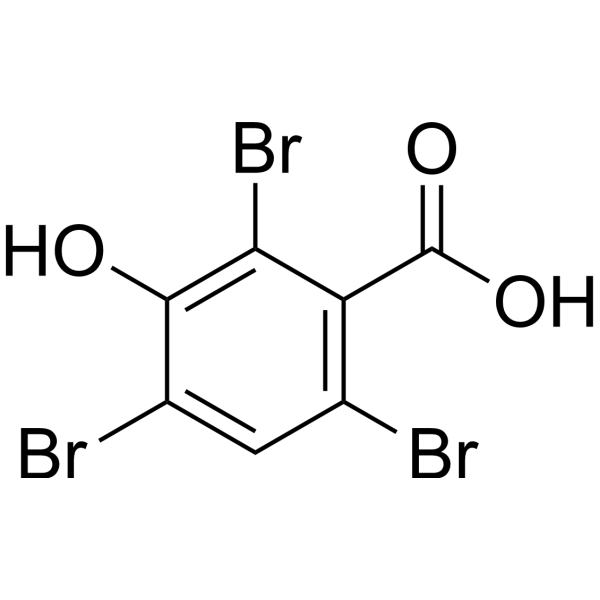
Cat. No.: HY-15929
CAS No.: 14348-40-4
Synonyms: 2,4,6-Tribromo-3-hydroxybenzoic acid
TBHBA (2,4,6-Tribromo-3-hydroxybenzoic acid) is a chemical colorimetric agent and nanomaterial surface modifier. TBHBA can react with some oxidants (such as H2O2) to generate high-absorbance quinoneimine dyes, which enhance the sensitivity of HDL cholesterol enzymatic determination. TBHBA can be used as a bromine-containing coupling agent to modify the surface of silica nanoparticles through esterification reaction. Thereby, organic flame retardant groups are introduced to improve the thermal stability and flame retardant properties of nanocomposites. TBHBA can be used in clinical biochemical testing (such as serum lipoprotein analysis) and the preparation of flame-retardant polymer nanocomposites .
loading...
    loading...
Cat. No.: HY-W751238
CAS No.: 931418-92-7
Synonyms: DMMB
Dimethyl methylene blue zinc chloride double salt (DMMB) is a cationic dye. Dimethyl methylene blue zinc chloride double salt competitively binds to the active site of the PANI-Benz-Ag nanocomposite with endotoxin, releasing DMMB and increasing the fluorescence intensity. Dimethyl methylene blue zinc chloride double salt can be used as a fluorescent probe for the detection of bacteria (such as E. Coli) endotoxin . Dimethyl methylene blue zinc chloride double salt can be used for the quantification of sulfated glycosaminoglycans .
loading...
    loading...
Cat. No.: HY-P11070
CAS No.: 1927877-75-5
Target:  

Inhibitory Antibodies

Research Areas:  

Others

SDSSD is an osteoblast-targeting peptide. SDSSD selectively binds to periostin on osteoblasts and mediates targeted delivery to these cells. SDSSD can endow calcium phosphate nanocomposites with bone-targeting properties, and these materials exhibit osteointegrative capacity in both in vitro and in vivo models. When conjugated with polyurethane nanomicelles, SDSSD enables targeted delivery of siRNA/microRNA to osteoblasts .
loading...
    loading...
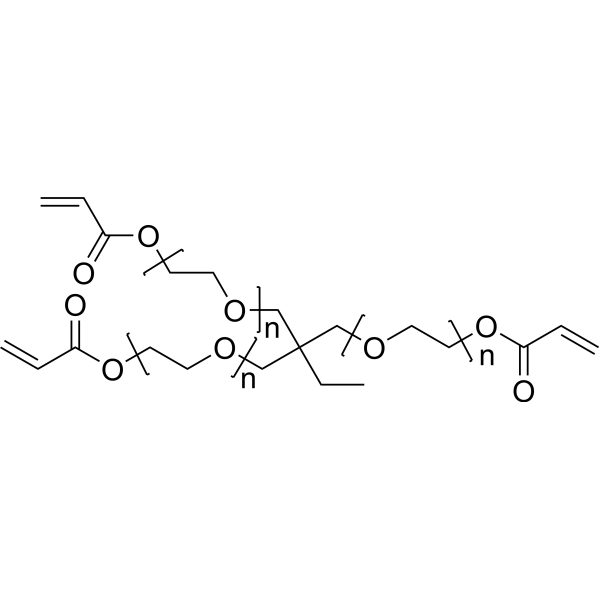
Cat. No.: HY-139446
CAS No.: 28961-43-5
Synonyms: ETPTA (MW 428); TMPETA (MW 428)
Trimethylolpropane ethoxylate triacrylate (ETPTA) (ETPTA (MW 428); TMPETA (MW 428)) is a plasticizer that can be used synthesize nanocomposites .
loading...
    loading...
Cat. No.: HY-136779
CAS No.: 36443-68-2
Synonyms: AO-245
Antioxidant 245 (AO-245) is a hindered phenol antioxidant. Antioxidant 245 can be used in the research of nanocomposites .
loading...
    loading...
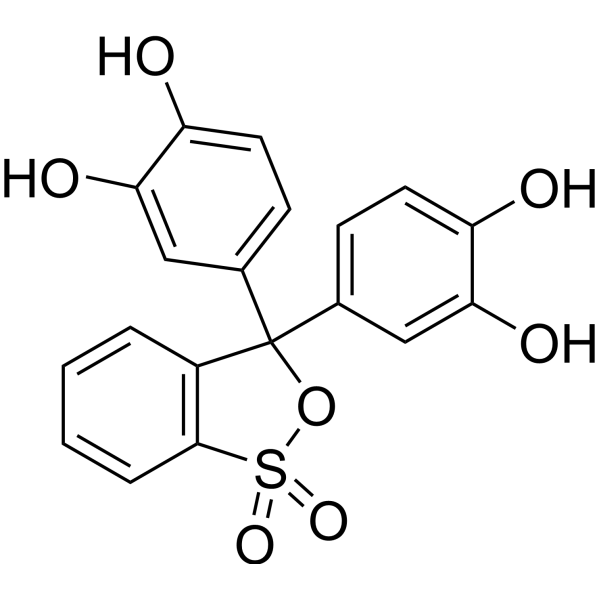
Cat. No.: HY-D0798
CAS No.: 115-41-3
Research Areas:  

Others

Catechol violet is an iron ion chelating agent and colorimetric complexing reagent. Catechol violet can be used as a chromogenic, absorption spectroscopic, and spectrophotometric reagent for the determination of aluminum, forming a ternary complex with aluminum and cetyltrimethylammonium bromide, and quantifying the release of iron ions from nanocarriers by colorimetry. Catechol violet is a phenolic model aqueous pollutant and can be photocatalytically degraded under visible light by a molybdenum disulfide-bacterial cellulose nanocomposite with hydrogen peroxide .
loading...
    loading...
Cat. No.: HY-P10675
Research Areas:  

Metabolic Disease

Peptide K is a self-assembling peptide fiber that can be used to prepare fibrous nanocomposite hydrogels. The fibrous nanocomposite hydrogels have a dynamic network that adapts to cells and enhances cell-matrix and cell-cell interactions, thus significantly promoting the mechanotransduction, metabolic energy, and osteogenesis of encapsulated stem cells .
loading...
    loading...
Cat. No.: HY-B2143
CAS No.: 1318-93-0
Research Areas:  

Infection

Montmorillonite is a calcium-based 2:1 layered silicate clay mineral with excellent adsorption capacity, which can adsorb and immobilize a variety of substances, such as organic compounds, metal ions, and bacteria. Montmorillonite can serve as a nanoparticle carrier for research on functional nanocomposites for multiple scenarios, such as biomedical applications and food additives. Montmorillonite is also applicable to research related to wastewater treatment .
loading...
    loading...
Cat. No.: HY-W123053
CAS No.: 91722-14-4
Synonyms: Acrylated epoxidized soybean oil
Target:  

Others

Research Areas:  

Others

Soybean oil, epoxidized acrylate (acrylated epoxidized soybean oil) can be used as plasticizers and food packaging materials. Soybean oil, epoxidized acrylate can also be used to prepare novel nanocomposite biomaterials for bone tissue repair.
loading...
    loading...
Cat. No.: HY-136779S
Synonyms: AO-245-d12
Antioxidant 245-d12 (AO-245-d12) is the deuterium labeled Antioxidant 245 (HY-136779). Antioxidant 245 (AO-245) is a hindered phenol antioxidant. Antioxidant 245 can be used in the research of nanocomposites .
loading...
    loading...
Cat. No.: HY-184856
CAS No.: 25232-41-1
Research Areas:  

Others

Poly(4-vinylpyridine) is a pyridine-functionalized polymer with pH responsiveness. Poly(4-vinylpyridine) is widely used in fields such as catalysis, water treatment and surface modification. Poly(4-vinylpyridine) serves as a pH-sensitive polymer shell in Au@p4VP core@shell nanocomposites, endowing them with biocompatibility .
loading...
    loading...
  • 1

