18 Results for "

nanoscale

" in MedChemExpress (MCE) Product Catalog:
Products (18)

18 Results for "nanoscale" in MCE Product Catalog:

Cat. No.: HY-140696E
CAS No.: 9004-74-4
Purity:  ≥98.0%
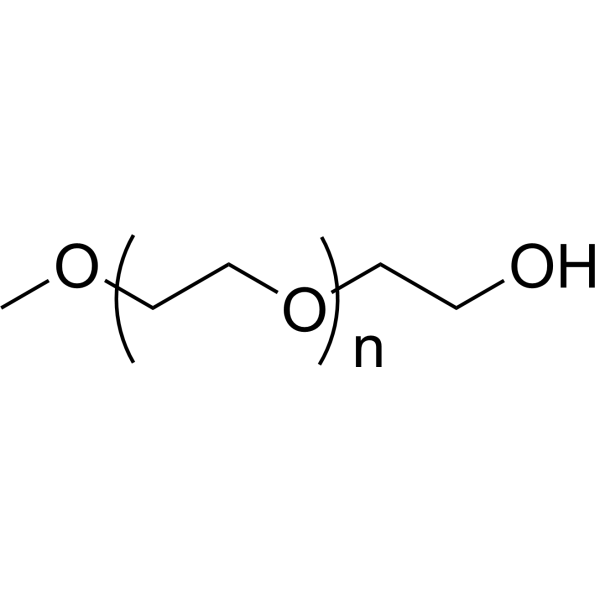
Synonyms: mPEG1000-Hydroxy; Polyethylene glycol monomethyl ether 1000
m-PEG1000-OH (mPEG1000-Hydroxy) is a monomethoxypolyethylene glycol and also a macroinitiator for organocatalytic ring-opening polymerization of aliphatic cyclic carbonate monomers. m-PEG1000-OH can participate in the synthesis of amphiphilic block copolymers. Amphiphilic block copolymers can be used to prepare nanoscale micelles for active drug delivery .
loading...
    loading...
Cat. No.: HY-140697
CAS No.: 9004-74-4
Purity:  ≥98.0%
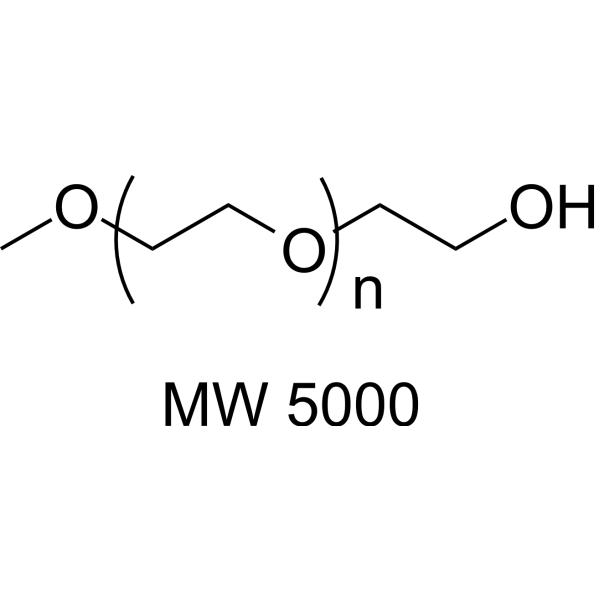
Synonyms: mPEG5000-Hydroxy; Polyethylene glycol monomethyl ether 5000
m-PEG5000-OH (mPEG5000-Hydroxy) is a monomethoxypolyethylene glycol and also a macroinitiator for organocatalytic ring-opening polymerization of aliphatic cyclic carbonate monomers. m-PEG1000-OH can participate in the synthesis of amphiphilic block copolymers. Amphiphilic block copolymers can be used to prepare nanoscale micelles for active drug delivery .
loading...
    loading...
Cat. No.: HY-112624F1
CY5-Dextran (MW 4000) is a fluorescent dye CY5 (HY-D0821)-labeled Dextran (HY-112624). Dextran-CY5 (MW 4000) can be used to visualize the specific subcellular distribution of dextran at the nanoscale .
loading...
    loading...
Cat. No.: HY-172445
CAS No.: 438545-06-3
Synonyms: SS-DNA
Deoxyribonucleic acid sodium salt from salmon testes (SS-DNA) is a double-stranded deoxyribonucleic acid sodium salt extracted from salmon testes, which serves as an anti-adhesion agent and surface passivating agent for the surface of gold plasmonic sensors. Deoxyribonucleic acid sodium salt from salmon testes forms a nanoscale-thick film on the surface of gold plasmonic sensors, preventing non-specific adsorption of subsequent DNA analyte layers .
loading...
    loading...
Cat. No.: HY-140696B
CAS No.: 9004-74-4
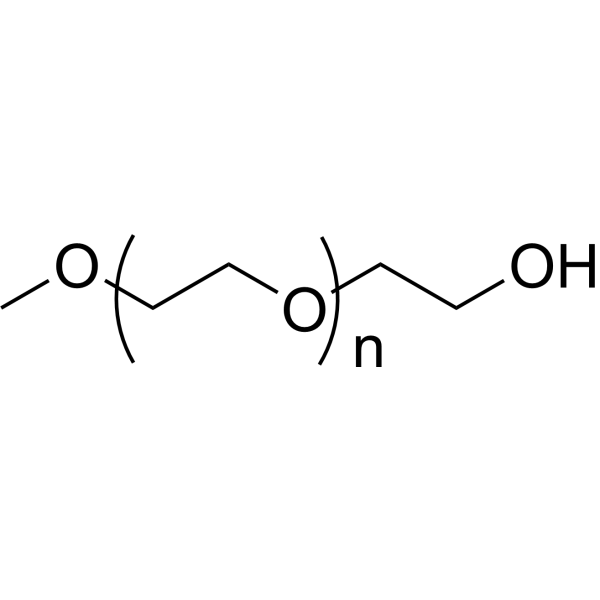
Synonyms: mPEG550-Hydroxy; Polyethylene glycol monomethyl ether 550
m-PEG550-OH (mPEG550-Hydroxy) is a monomethoxypolyethylene glycol and also a macroinitiator for organocatalytic ring-opening polymerization of aliphatic cyclic carbonate monomers. m-PEG550-OH can participate in the synthesis of amphiphilic block copolymers. Amphiphilic block copolymers can be used to prepare nanoscale micelles for active drug delivery .
loading...
    loading...
Cat. No.: HY-140696H
CAS No.: 9004-74-4
Synonyms: mPEG750-Hydroxy; Polyethylene glycol monomethyl ether 750
m-PEG750-OH (mPEG750-Hydroxy) is a monomethoxypolyethylene glycol and also a macroinitiator for organocatalytic ring-opening polymerization of aliphatic cyclic carbonate monomers. m-PEG750-OH can participate in the synthesis of amphiphilic block copolymers. Amphiphilic block copolymers can be used to prepare nanoscale micelles for active drug delivery .
loading...
    loading...
Cat. No.: HY-140696C
CAS No.: 9004-74-4
Synonyms: mPEG20000-Hydroxy; Polyethylene glycol monomethyl ether 20000
m-PEG20000-OH (mPEG20000-Hydroxy; Polyethylene glycol monomethyl ether 20000) can be used as a macroinitiator to participate in the synthesis of amphiphilic block copolymers. Nanoscale micelles can be prepared by using amphiphilic block copolymers to deliver active drugs. Paclitaxel (HY-B0015), a hydrophobic anticancer agent encapsulated in micelles, has stronger activity in killing cancer cells than free Paclitaxel. And it preferentially accumulates in tumor tissue with only limited distribution in healthy organs .
loading...
    loading...
Cat. No.: HY-152901
CAS No.: 2106868-12-4
Target:  

Fluorescent Dye

Research Areas:  

Others

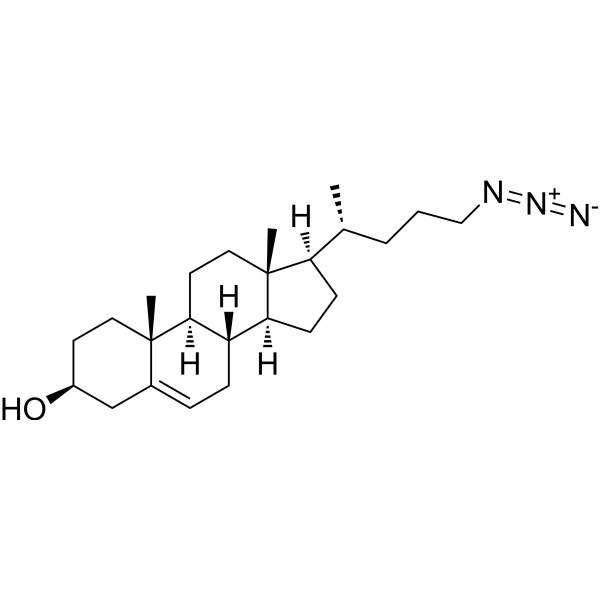
Chol-N3 is a bioorthogonal-based chol probe. Chol-N3 can combine with super-resolution fluorescence microscopy (SRM), providing direct visualization of nanoscale lipid heterogeneity in the cell surface of resting living cells . Chol-N3 is a click chemistry reagent, it contains an Azide group and can undergo copper-catalyzed azide-alkyne cycloaddition reaction (CuAAc) with molecules containing Alkyne groups. It can also undergo strain-promoted alkyne-azide cycloaddition (SPAAC) reactions with molecules containing DBCO or BCN groups.
loading...
    loading...
Cat. No.: HY-W1113135
CAS No.: 2828447-14-7
Research Areas:  

Others

Carboxymethyl-β-cyclodextrin sodium salt is a negatively charged β-cyclodextrin derivative, as well as a metal ion chelator and solubilizing reagent. Carboxymethyl-β-cyclodextrin sodium salt forms stable aqueous complexes with Ba 2+, Ca 2+, Cd 2+, Ni 2+, Pb 2+, Sr 2+, and Zn 2+ ions. Carboxymethyl-β-cyclodextrin sodium salt derived hydrogel carriers support oral insulin delivery via paracellular permeation across Caco-2 monolayers and produce sustained hypoglycemic effects in diabetic mice. Carboxymethyl-β-cyclodextrin sodium salt can be conjugated onto folate-modified BSA nanoparticles to boost folate receptor-mediated endocytosis, elevate intracellular anticancer drug uptake and trigger cell apoptosis. Carboxymethyl-β-cyclodextrin sodium salt can be utilized for chiral separation in capillary electrophoresis, development of nanoscale drug carriers and nucleic acid transfection research .
loading...
    loading...
Cat. No.: HY-D1173
CAS No.: 3351-05-1
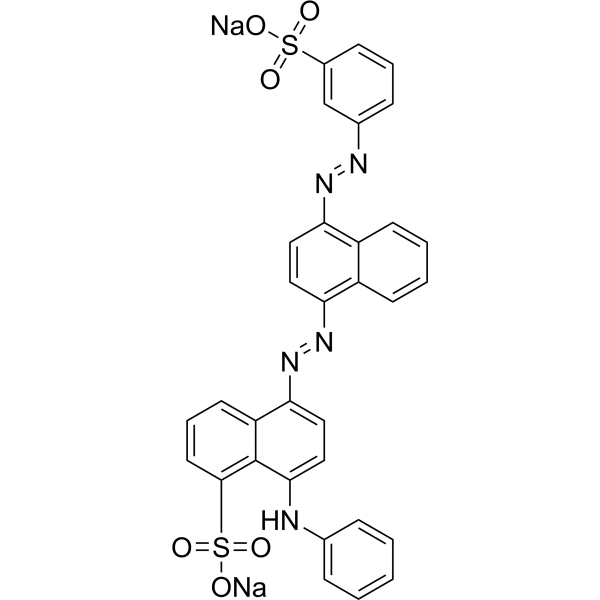
Acid blue 113 is an azo dye whose staining effect is effectively removed by nanoscale zero-valent iron (NZVI) particles.
loading...
    loading...
Cat. No.: HY-D1121
CAS No.: 3071-73-6
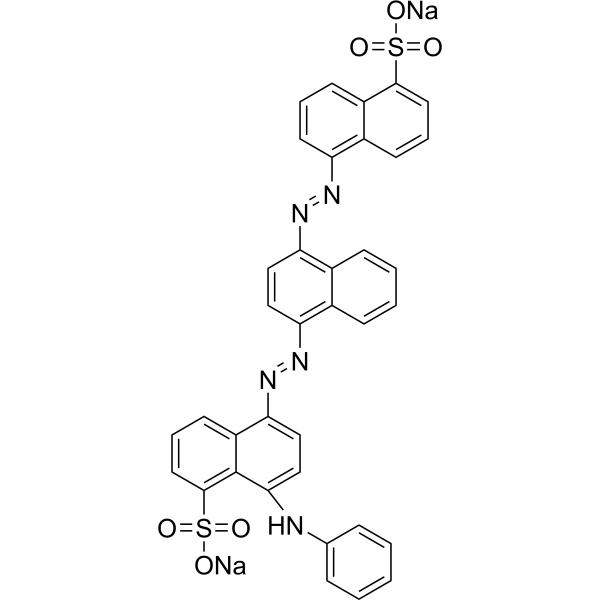
Acid black 24 is a black agent whose staining effect is effectively removed by nanoscale zero-valent iron (NZVI) particles. The maximum unit removal capacity is 609.4 mg of dye per gram of NZVI.
loading...
    loading...
Cat. No.: HY-134939
CAS No.: 943022-11-5
Target:  

Drug Derivative

Research Areas:  

Others

thio-Miltefosine is a modulator of rafts in membrane tissue. Rafts are nanoscale aggregates of different lipids and proteins that profoundly affect cellular function. Thio-Miltefosine modulates membrane phase behavior on cell-derived giant plasma membrane vesicles .
loading...
    loading...
Cat. No.: HY-162828
Target:  

STAT HDAC

Research Areas:  

Cancer

STAT3/HDAC-IN-2 (compound 18) is a dual inhibitor of STAT3 and HDAC, inducing autophagy and apoptosis. STAT3/HDAC-IN-2 is an amphiphilic hydroxamic acid hybrid based on the natural product isopropanol lactone (IAL) and is a nanoscale anticancer agent. STAT3/HDAC-IN-2 can self-assemble in water to form nanoparticles, which have higher tumor tissue accumulation, cellular uptake and anticancer properties compared to the free state .
loading...
    loading...
Cat. No.: HY-184613
Polydopamine nanoparticles (PDA NPs) are nanoscale materials formed by the self-polymerization of dopamine monomers under specific conditions. Their structural characteristics include a polyphenolic structure and a surface rich in functional groups such as amino and phenolic hydroxyl groups, which provide abundant chemical modification sites.
loading...
    loading...
Cat. No.: HY-P12358
CAS No.: 1245010-44-9
SPG-178 is a synthetic neutral Self-assembling peptide. In neutral aqueous solution, SPG-178 spontaneously assembles into an antiparallel β-sheet nanoscale three-dimensional hydrogel (SPG-178-Gel) through electrostatic and hydrophobic interactions, and biologically mimics the natural extracellular matrix (ECM) to provide a microenvironment that promotes cell proliferation and angiogenesis .
loading...
    loading...
Cat. No.: HY-D3382
Target:  

Fluorescent Dye

Research Areas:  

Others

SGC3 is a fluorescent dye with lipophilic properties. SGC3 can be used to study synaptic vesicle recycling and "kiss-and-run" exocytosis by monitoring dye efflux through nanoscale fusion pores, and its detection mechanism relies on its own lipophilic properties. SGC3 generates fluorescence when bound to lipid membranes, and a decrease in fluorescence intensity can be detected when SGC3 leaves vesicles and exists in a free state in solution .
loading...
    loading...
Cat. No.: HY-P12350
CAS No.: 1261043-80-4
Research Areas:  

Others

Ac-I3K-NH2 is a surfactant-like peptide. Ac-I3K-NH2 self-assembles into β-sheet nanofibers through β-sheet hydrogen bonding, hydrophobic interactions, and electrostatic repulsion. Ac-I3K-NH2 forms ribbon-like nanofibers with nanoscale widths, adopting a β-sheet conformation, with lateral stacking driven by isoleucine side-chain contacts. Ac-I3K-NH2 templates the sol-gel condensation of tetraethoxysilane, producing silica nanotubes. Ac-I3K-NH2 templates the synthesis of one-dimensional Pt nanostructures with P7A as a capping agent .
loading...
    loading...
Cat. No.: HY-W1113135A
CAS No.: 2828447-14-7
Research Areas:  

Others

Carboxymethyl-β-cyclodextrin sodium salt, for capillary electrophoresis is a negatively charged β-cyclodextrin derivative, as well as a metal ion chelator and solubilizing reagent. Carboxymethyl-β-cyclodextrin sodium salt, for capillary electrophoresis forms stable aqueous complexes with Ba 2+, Ca 2+, Cd 2+, Ni 2+, Pb 2+, Sr 2+, and Zn 2+ ions. Carboxymethyl-β-cyclodextrin sodium salt derived hydrogel carriers support oral insulin delivery via paracellular permeation across Caco-2 monolayers and produce sustained hypoglycemic effects in diabetic mice. Carboxymethyl-β-cyclodextrin sodium salt can be conjugated onto folate-modified BSA nanoparticles to boost folate receptor-mediated endocytosis, elevate intracellular anticancer drug uptake and trigger cell apoptosis. Carboxymethyl-β-cyclodextrin sodium salt can be utilized for chiral separation in capillary electrophoresis, development of nanoscale drug carriers and nucleic acid transfection research .
loading...
    loading...
  • 1

