
16 Results for "

neuron depolarization

" in MedChemExpress (MCE) Product Catalog:
Products (16)

16 Results for "neuron depolarization" in MCE Product Catalog:

1
1 Cited Publications
Cat. No.: HY-Y0537E
CAS No.: 7447-40-7
Potassium chloride, for cell culture is potassium chloride that can be used for cell culture. Potassium chloride, for cell culture increases extracellular potassium ion concentration to induce cellular depolarization, thereby activating voltage-gated calcium channels and regulating intracellular calcium signaling. Potassium chloride, for cell culture upregulates Brn-5. Potassium chloride, for cell culture inhibits the proliferation of neurons and some plant cells .
loading...
    loading...
Cat. No.: HY-120751
CAS No.: 1309601-26-0
Target:  

Calcium Channel

Research Areas:  

Neurological Disease

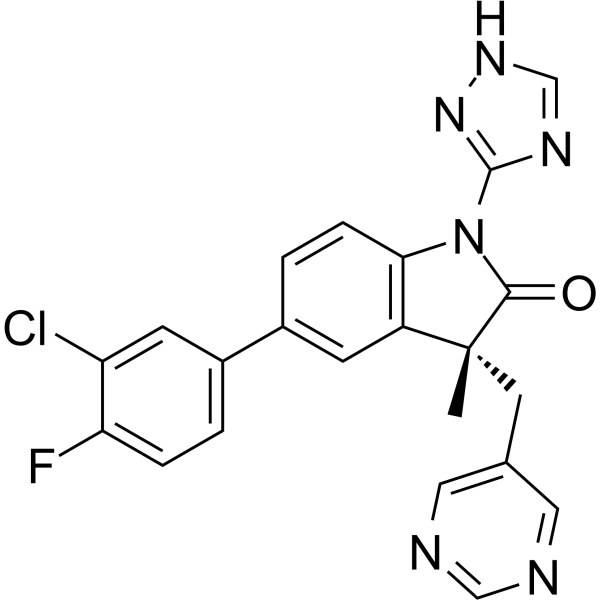
TROX-1 is a selective, orally active and brain-penetrant N-type calcium channel (Cav2.2) inhibitor with an IC50 value of 0.11 μM. TROX-1 exerts state-dependent and use-dependent inhibition, preferentially targets open/inactivated channels, blocks depolarization-associated calcium influx, and fully blocks calcium influx in rat dorsal root ganglion neurons. TROX-1 reverses inflammatory-induced hyperalgesia, nerve injury-induced allodynia. TROX-1 can be used for the research of pain .
loading...
    loading...
Cat. No.: HY-136980
CAS No.: 6157-06-8
Purity:  99.79%
Synonyms: Asp-Glu
Target:  

Endogenous Metabolite

Research Areas:  

Neurological Disease

Aspartylglutamate (Asp-Glu) is a dipeptide that exhibits excitatory activity, as it has been shown to depolarize CA1 pyramidal neurons and increase conductance in response to stimulation. Aspartylglutamate selectively binds to certain glutamate receptors and demonstrates potent effects in specific regions of the hippocampus, particularly in the stratum radiatum where it enhances excitatory neurotransmission.
loading...
    loading...
Cat. No.: HY-168758
CAS No.: 567-72-6
Target:  

GABA Receptor

Research Areas:  

Neurological Disease

Delta3,5-cholestadien-7-one is an oxysterol and a negative allosteric modulator of GABAA receptors. Delta3,5-cholestadien-7-one reduces GABA-induced currents in HEK cells expressing α1β1γ2 or α4β3γ2 subunit-containing GABAA receptors with IC50 values of 1.5 and 1 µM, respectively. Delta3,5-cholestadien-7-one reduces GABA-induced depolarization of peptidergic and non-peptidergic nociceptors, C-LTMRs, and cold thermosensors in isolated mouse dorsal root ganglion (DRG) neurons .
loading...
    loading...
Cat. No.: HY-P3775
CAS No.: 87549-54-0
Target:  

Inhibitory Antibodies

Research Areas:  

Neurological Disease

a-Bag Cell Peptide (1-7) is a NH2-terminal fragment α-bag cell peptide. α-bag cell peptide can inhibit the left upper quadrant (LUQ) neurons and the depolarization of the bag cells . α-Bag Cell Peptide Fragment
loading...
    loading...
Cat. No.: HY-115606
CAS No.: 1135304-61-8
Research Areas:  

Neurological Disease

ML007 is a selective antagonist targeting the neuron-specific potassium-chloride co-transporter 2 (KCC2) with an IC50 for KCC2 is 537 nM, while its inhibitory activity on KCC1 is extremely weak (IC50 > 50 μM). ML077 inhibits the chloride ion excretion function of KCC2, increasing the intracellular chloride ion concentration, thereby enhancing the depolarization mediated by chloride ion channels. ML007 can promote glucose-stimulated insulin secretion (GSIS) without relying on KATP channels. ML007 can be used to study the functions related to pain, epilepsy, and insulin secretion .
loading...
    loading...
Cat. No.: HY-100841A
CAS No.: 71301-82-1
Synonyms: (S)-3HPG
Target:  

mGluR iGluR

Research Areas:  

Neurological Disease

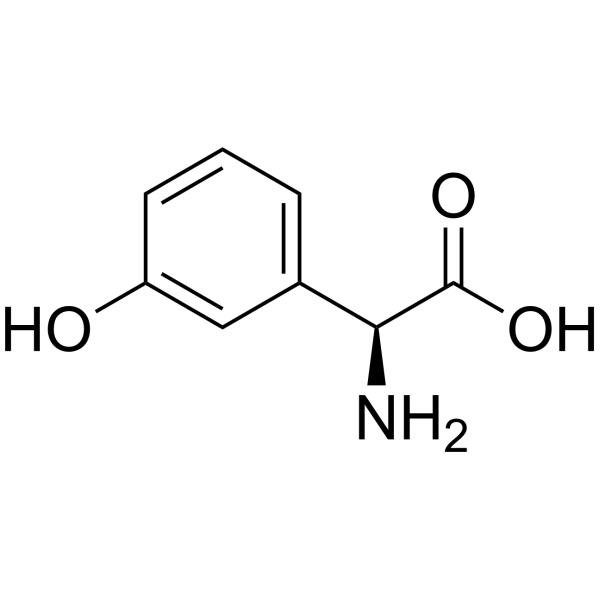
(S)-3-Hydroxyphenylglycine ((S)-3HPG) is a metabotropic glutamate receptor (mGluR) agonist with an EC50 of 98 μM in rats. (S)-3-Hydroxyphenylglycine stimulates phosphoinositide hydrolysis, inhibits ACPD-induced depolarization, and exerts weak agonistic and inhibitory effects on mGluR1-mediated signal transduction. (S)-3-Hydroxyphenylglycine selectively activates mGluR1/5, downregulates NMDA receptor channels, reduces NMDA whole-cell currents and intracellular Ca 2+ accumulation, and induces rapid intracellular Ca 2+ oscillations in cortical neurons .
loading...
    loading...
Cat. No.: HY-P5868
Target:  

Sodium Channel

Research Areas:  

Neurological Disease

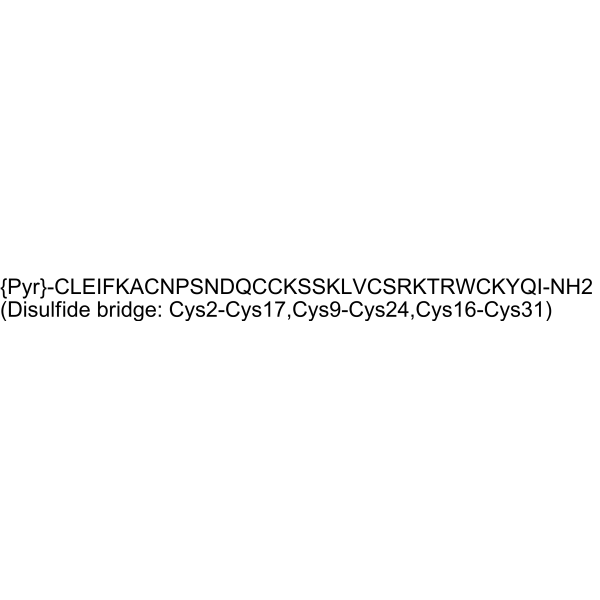
mHuwentoxin-IV is a naturally modified Huwentoxin-IV (HY-P1220). mHuwentoxin-IV inhibits tetrodotoxin-sensitive (TTX-S) voltage-gated sodium channels of dorsal root ganglion neurons with an IC50 of 54.16 nM. mHuwentoxin-IV inhibition of tetrodotoxin-sensitive sodium channels is not reversed by strong depolarization voltages .
loading...
    loading...
Cat. No.: HY-135131
CAS No.: 301-15-5
Target:  

iGluR

Research Areas:  

Neurological Disease

Synthalin hydrochloride is a K+ channel blocker with neuronal excitability modulating activity. Synthalin hydrochloride has an effect on NMDA-mediated depolarization, possibly through receptor-mediated modulation of L-glutamate and serotonin (5-HT). The use of Synthalin hydrochloride can enhance the understanding of changes in membrane potential of different neurons and help study the role of polyamines in neuronal excitability .
loading...
    loading...
Cat. No.: HY-169845
CAS No.: 687568-35-0
Target:  

Calcium Channel

Research Areas:  

Neurological Disease

Calcium Channel antagonist 6 (Compound 328) is a highly selective antagonist of voltage-gated calcium channel CaV2.2 with an IC50 value of 0.37 μM. Calcium Channel antagonist 6 inhibits of neuron depolarization-induced Ca 2+ influx. Calcium Channel antagonist 6 is promising for research of neuropathic pain .
loading...
    loading...
Cat. No.: HY-107518
CAS No.: 176796-64-8
Synonyms: (R,S)-3,4-DCPG
Target:  

iGluR

Research Areas:  

Neurological Disease

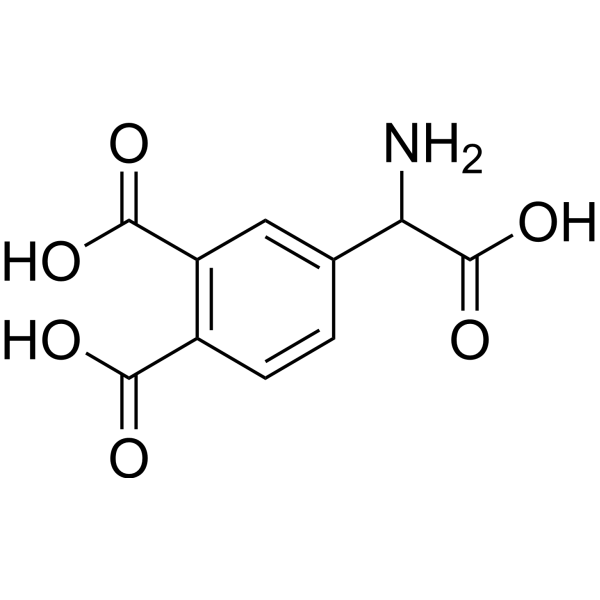
(R,S)-3,4-Dicarboxyphenylglycine ((RS)-3,4-DCPG) is an AMPA receptor antagonist. (R,S)-3,4-Dicarboxyphenylglycine antagonizes AMPA-mediated depolarization of motor neurons in neonatal rats. (R,S)-3,4-Dicarboxyphenylglycine can be used in the study of neurological diseases .
loading...
    loading...
Cat. No.: HY-120059
CAS No.: 273930-52-2
Target:  

Potassium Channel

Research Areas:  

Neurological Disease

NS4591 is a modulator of calcium-activated potassium channels with activity that enhances small (SK) and intermediate (IK) conductivity. NS4591 doubled IK-mediated currents in whole-cell patch-clamp experiments at a concentration of 45 +/- 6 nM, and doubled SK3-mediated currents at a concentration of 530 +/- 100 nM. NS4591 inhibits the number of action potentials generated by suprathreshold depolarizing pulses in acutely isolated bladder primary afferent neurons. NS4591 also reduced carbakol-induced detrusor ring contraction in the rat bladder, demonstrating sensitivity to apamin .
loading...
    loading...
Cat. No.: HY-123320S
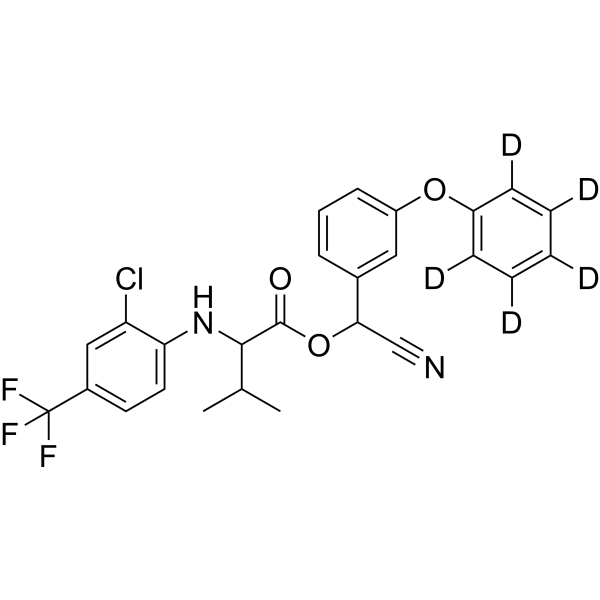
Fluvalinate-d5 is the deuterated-labeled Fluvalinate (HY-123320). Fluvalinate is an orally active acaricide classified as a sodium channel inhibitor. Fluvalinate delays sodium channel closure, prolongs cell membrane depolarization, inhibits the excitability of honeybee brain neurons, and exerts a central nervous system inhibitory effect. Fluvalinate negatively affects the learning ability, memory ability, sucrose responsiveness, and survival of honeybees. Fluvalinate potentiates pentobarbital-induced hypnosis, reduces spontaneous activity in mice, and decreases the total white blood cell count and absolute lymphocyte count in mice. Fluvalinate induces acute toxic symptoms in rats, acts as a cholinergic stimulant, and induces the production of hepatic enzymes in rats. Fluvalinate causes the death of Varroa jacobsoni sensitive to τ-Fluvalinate (HY-B2021). Fluvalinate can be used in studies related to mite pest control .
loading...
    loading...
Cat. No.: HY-P3776
CAS No.: 87549-53-9
Target:  

Inhibitory Antibodies

Research Areas:  

Neurological Disease

a-Bag Cell Peptide (1-8) is a NH2-terminal fragment α-bag cell peptide. α-bag cell peptide can inhibit the left upper quadrant (LUQ) neurons and the depolarization of the bag cells .
loading...
    loading...
Cat. No.: HY-120751A
CAS No.: 2751591-42-9
Research Areas:  

Neurological Disease

(S)-TROX-1 is the S-enantiomer of TROX-1 (HY-120751). TROX-1 is a selective, orally active and brain-penetrant N-type calcium channel (Cav2.2) inhibitor with an IC50 value of 0.11 μM. TROX-1 exerts state-dependent and use-dependent inhibition, preferentially targets open/inactivated channels, blocks depolarization-associated calcium influx, and fully blocks calcium influx in rat dorsal root ganglion neurons. TROX-1 reverses inflammatory-induced hyperalgesia, nerve injury-induced allodynia. TROX-1 can be used for the research of pain .
loading...
    loading...
Cat. No.: HY-123320
CAS No.: 69409-94-5
Research Areas:  

Infection Neurological Disease

Fluvalinate is an orally active acaricide classified as a sodium channel inhibitor. Fluvalinate delays sodium channel closure, prolongs cell membrane depolarization, inhibits the excitability of honeybee brain neurons, and exerts a central nervous system inhibitory effect. Fluvalinate negatively affects the learning ability, memory ability, sucrose responsiveness, and survival of honeybees. Fluvalinate potentiates pentobarbital-induced hypnosis, reduces spontaneous activity in mice, and decreases the total white blood cell count and absolute lymphocyte count in mice. Fluvalinate induces acute toxic symptoms in rats, acts as a cholinergic stimulant, and induces the production of hepatic enzymes in rats. Fluvalinate causes the death of Varroa jacobsoni sensitive to τ-Fluvalinate (HY-B2021). Fluvalinate can be used in studies related to mite pest control .
loading...
    loading...
  • 1

