46 Results for "

nitrophenol

" in MedChemExpress (MCE) Product Catalog:
Products (46)

46 Results for "nitrophenol" in MCE Product Catalog:

3
3 Cited Publications
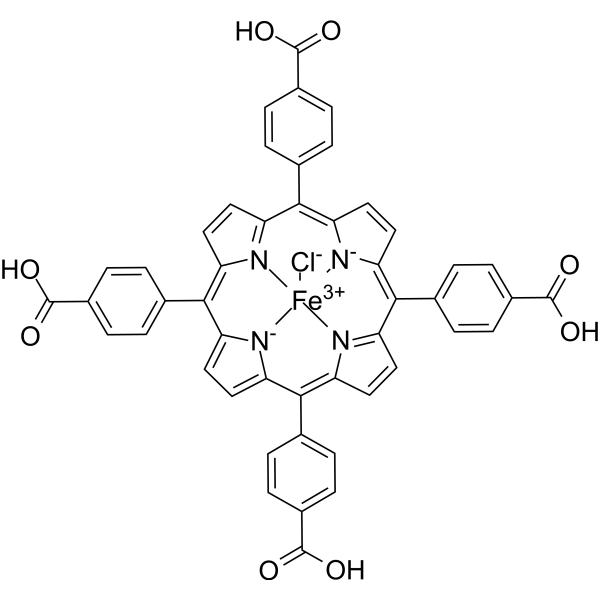
Cat. No.: HY-W075707
CAS No.: 55266-17-6
Synonyms: Iron(III) meso-Tetra(4-carboxyphenyl)porphine chloride
FeTCPP chloride (Iron(III) meso-Tetra(4-carboxyphenyl)porphine chloride) is a metallic porphyrin compound formed by the coordination of a central iron ion (Fe 3+) with four 4-carboxyphenylporphyrins (TCPP). FeTCPP chloride can be used as a catalyst for catalytic, electrochemical, photochemical and biomedical research. FeTCPP chloride has high photocatalytic performance for p-nitrophenol under visible light. FeTCPP chloride also has peroxisase-like activity, which is used in bionic catalysis research .
loading...
    loading...
1
1 Cited Publications
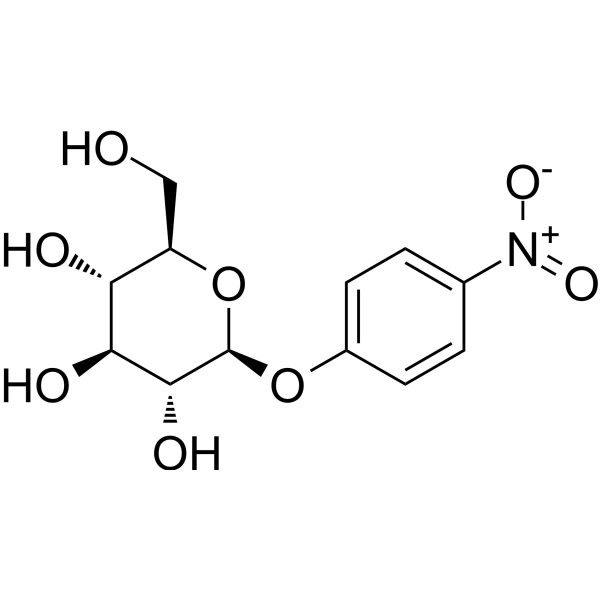
Cat. No.: HY-15927
CAS No.: 2492-87-7
4-Nitrophenyl β-D-glucopyranoside is a chromogenic substrate for β-glucosidase. 4-Nitrophenyl β-D-glucopyranoside is converted to a colored product, p-nitrophenol that is easily detected spectrophotometrically at 405 nm when used in a β-glycosidase assay. 4-Nitrophenyl β-D-glucopyranoside is hydrolysed through intramolecular nucleophilic catalysis by the phosphate group in the 2-position. 4-Nitrophenyl β-D-glucopyranoside is promising for research of postmenopausal osteoporosis .
loading...
    loading...
1
1 Cited Publications
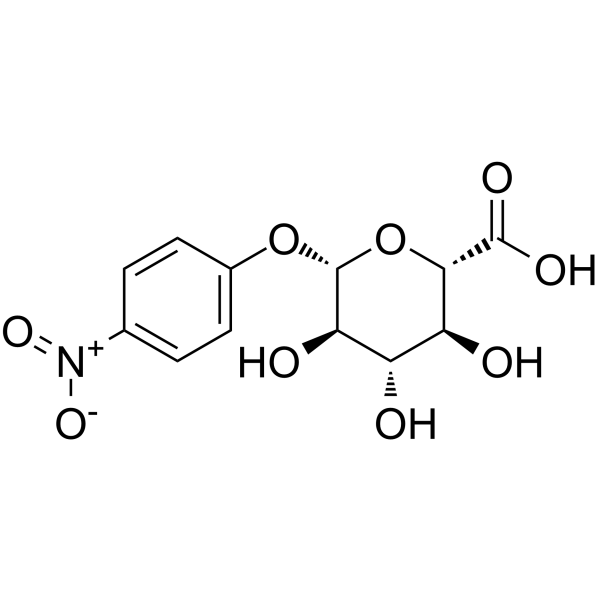
Cat. No.: HY-W039892
CAS No.: 10344-94-2
Synonyms: pNPG_1
Target:  

β-glucuronidase

Research Areas:  

Others

4-Nitrophenyl β-D-glucuronide (pNPG_1) is aderivative of 4-Nitrophenol. 4-Nitrophenyl β-D-glucuronide is the chromogenic substrate for β-glucuronidase .
loading...
    loading...
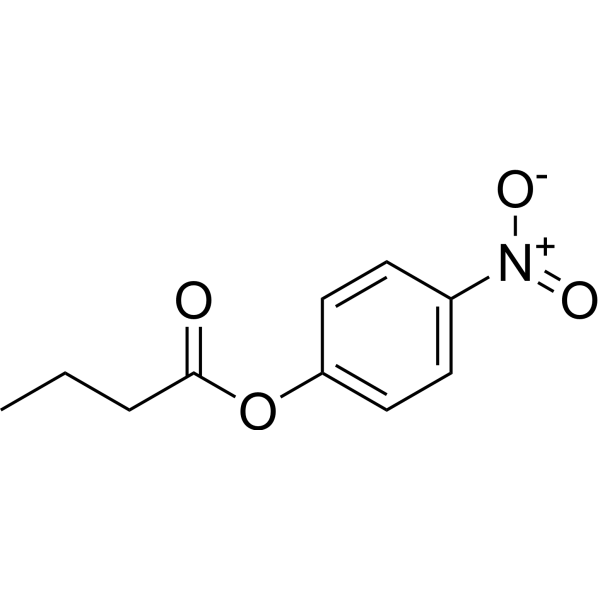
Cat. No.: HY-W014449
CAS No.: 2635-84-9
4-Nitrophenyl butyrate consists of butyric acid chains esterified with 4-nitrophenol groups, thus giving it a yellow color. This compound is commonly used as a substrate in enzyme assays to measure esterase and lipase activity. When these enzymes cleave the ester bond, the nitrophenol group is released and the color changes from yellow to orange. Thus, the rate of color change can be used to determine enzyme activity. In addition, 4-Nitrophenyl butyrate can also be used as organic synthesis reagent and dye intermediate.
loading...
    loading...
Cat. No.: HY-153102
CAS No.: 118291-90-0
Purity:  99.62%
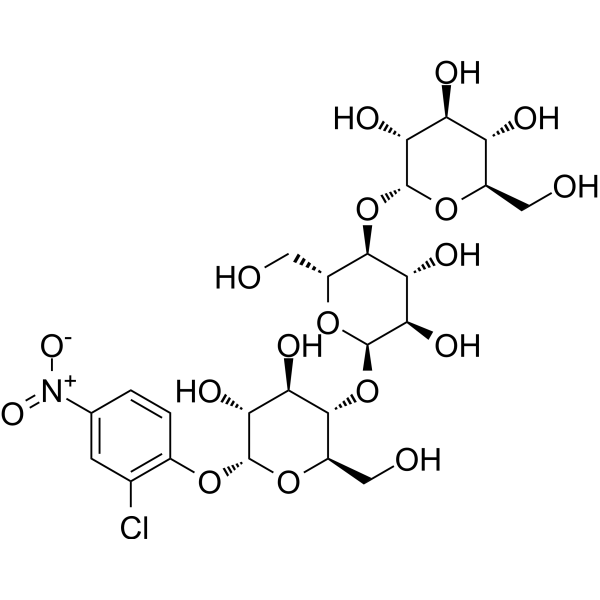
G3-CNP is an α-amylase substrate. The absorbance of G3-CNP cleavage product 2-chloro-4-nitrophenol is measured at 405 nm, which can be used to detect enzyme activity .
loading...
    loading...
Cat. No.: HY-W013168
CAS No.: 1492-30-4
Synonyms: 4-Nitrophenyl hexadecanoate; p-Nitrophenyl Palmitate; pNpp
Target:  

Lipase

Research Areas:  

Others

4-Nitrophenyl palmitate (4-Nitrophenyl hexadecanoate) is a chromogenic substrate for lipases and esterases. Upon enzymatic hydrolysis, 4-Nitrophenyl palmitate releases p-nitrophenol, which can be quantified by colorimetric detection at 410 nm as a measure of enzymatic activity. 4-Nitrophenyl palmitate is used to characterize the activity of various bacterial and mammalian enzymes, including those from Burkholderia and porcine pancreatic lipase .
loading...
    loading...
Cat. No.: HY-137822
CAS No.: 10357-27-4
Purity:  99.68%
Synonyms: 4-Nitrophenyl a-D-mannopyranoside
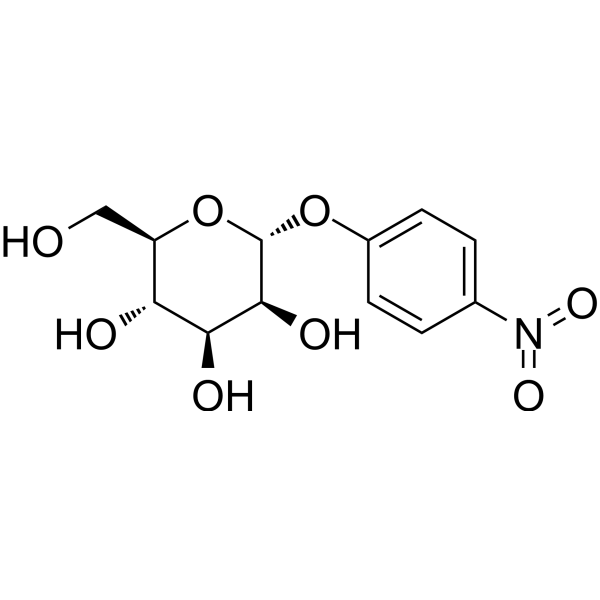
p-Nitrophenyl α-D-mannopyranoside (4-Nitrophenyl α-D-mannopyranoside) is a chromogenic glycosidic ligand. p-Nitrophenyl α-D-mannopyranoside features a sugar moiety (α-D-mannopyranose) with the mannose-characteristic axial hydroxyl group at the C2 position and a ligand portion (p-nitrophenol) that provides ultraviolet-visible light absorption properties. p-Nitrophenyl α-D-mannopyranoside can be used to determine glycosidase activity and characterize the sugar recognition properties of lectins (such as Concanavalin A (HY-P2149)) .
loading...
    loading...
Cat. No.: HY-137878
CAS No.: 26112-88-9
Synonyms: PNP-α-NeuNAc
2-O-(p-Nitrophenyl)-α-D-N-acetylneuraminic acid (PNP-α-NeuNAc) is a classic chromogenic substrate for neuraminidase. 2-O-(p-Nitrophenyl)-α-D-N-acetylneuraminic acid releases p-nitrophenol upon enzymatic hydrolysis, allowing quantification of enzyme activity and inhibitory effects via spectrophotometry. 2-O-(p-Nitrophenyl)-α-D-N-acetylneuraminic acid (PNP-α-NeuNAc) acts as a sialyl donor in the process of enzyme-catalyzed trans-sialylation .
loading...
    loading...
Cat. No.: HY-137827
CAS No.: 3482-57-3
Purity:  99.48%
Synonyms: p-Nitrophenyl β-D-Cellobioside
Target:  

Glycosidase

Research Areas:  

Others

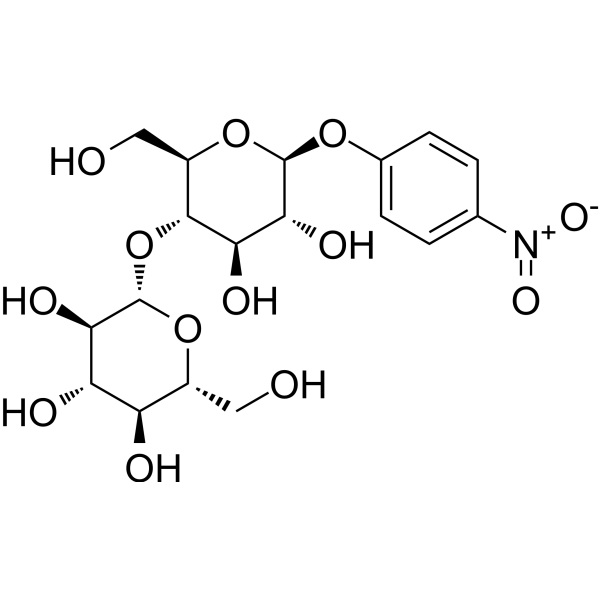
4-Nitrophenyl β-D-Cellobioside (p-Nitrophenyl β-D-cellobioside) is a cellotriose analog. 4-Nitrophenyl β-D-Cellobioside is hydrolyzed by β-glucosidases such as TxGH116 and ThCel7B. 4-Nitrophenyl β-D-Cellobioside can also be hydrolyzed by exoglucanases and endoglucanases to produce p-nitrophenol (PNP). 4-Nitrophenyl β-D-Cellobioside can be used to detect cellulase activity .
loading...
    loading...
Cat. No.: HY-W014566
CAS No.: 88-30-2
Synonyms: 3-(Trifluoromethyl)-4-nitrophenol; TFM
4-Nitro-3-(trifluoromethyl)phenol (TFM) is a piscicide that is toxic to lampreys (P. marinus) (LC50 values are 1.97-2.11 for cysts, 2.05-2.21 for fry, 1.6-2.45 for juveniles, and 1.6-1.63 for adults, respectively). 4-Nitro-3-(trifluoromethyl)phenol is also toxic to juvenile lake sturgeons (A. fulvescens) less than 100 mm, but is nontoxic to a variety of other fish species. 4-Nitro-3-(trifluoromethyl)phenol (50 μM) dissociates oxidative phosphorylation by 22% and 28% in isolated livers of lampreys and rainbow trout (O. mykiss), respectively. 4-Nitro-3-(trifluoromethyl)phenol can be used to control lamprey larval populations.
loading...
    loading...
Cat. No.: HY-100045
CAS No.: 21064-69-7
Synonyms: 4-Nitrophenylphosphorylcholine; 4-Nitrophenylphosphorylcholine; O-(4-Nitrophenylphosphoryl)choline
p-Nitrophenyl phosphorylcholine (4-Nitrophenylphosphorylcholine) is a chromogenic Phospholipase C substrate. Phospholipase C hydrolyzes p-Nitrophenyl phosphorylcholine to release p-nitrophenol, a yellow chromophore. p-Nitrophenyl phosphorylcholine is used to determine the phospholipase C production of Pseudomonas aeruginosa. It also applies to studies related to Pseudomonas aeruginosa infection .
loading...
    loading...
Cat. No.: HY-W009454
CAS No.: 6217-68-1
Synonyms: 4-Nitopheyl Sulfate potassium
Target:  

Fluorescent Dye

Research Areas:  

Others

Potassium p-nitrophenyl sulfate (4-Nitophenyl Sulfate potassium) serves as a chromogenic substrate for arylsulfatases. Potassium p-nitrophenyl sulfate releases nitrophenol under the cleavage action of arylsulfatases, and the activity of arylsulfatases can be quantitatively determined via colorimetric detection at 400 nm. Potassium p-nitrophenyl sulfate is commonly used in enzyme inhibition assays and metabolite analog-related studies .
loading...
    loading...
Cat. No.: HY-W042337
CAS No.: 2581-34-2
Research Areas:  

Others

3-Methyl-4-nitrophenol, an environmental contaminant, is a well-known constituent of diesel exhaust particles and degradation products of insecticide fenitrothion. 3-Methyl-4-nitrophenol can induce nasal epithelial cell apoptosis and increase the permeability of the nasal epithelial barrier. 3-Methyl-4-nitrophenol is also toxic to the female reproductive system.
loading...
    loading...
Cat. No.: HY-134420
CAS No.: 10231-84-2
Synonyms: PNP α-L-Fuc
p-Nitrophenyl α-L-fucoside (PNP α-L-Fuc) is a specific substrate of Pecten maximus α-L-fucosidase, with a Km value of 650 µM. p-Nitrophenyl α-L-fucoside serves as a substrate for ClAgl29A and ClAgl29B. Enzymatic hydrolysis of p-Nitrophenyl α-L-fucoside releases p-nitrophenol and α-L-fucose, where the latter undergoes mutarotation over time to form β-L-fucose. p-Nitrophenyl α-L-fucoside is not the preferred substrate for ClAgl29A and ClAgl29B .
loading...
    loading...
Cat. No.: HY-Y0510
CAS No.: 619-08-9
Synonyms: 2-Chloro-4-nitrophenol
Target:  

Fungal

Research Areas:  

Infection

Nitrofungin (2-Chloro-4-nitrophenol) is an antifungal agent, and can also be degraded by some bacteria .
loading...
    loading...
Cat. No.: HY-P4545
CAS No.: 67482-93-3
Target:  

Angiotensin Receptor

Research Areas:  

Others

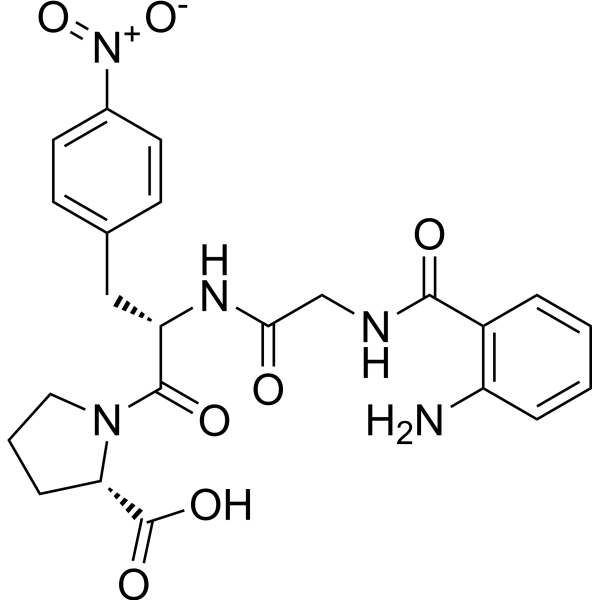
Abz-Gly-p-nitro-Phe-Pro-OH is the fluorescent substrate angiotensin I converting enzyme (ACE-I) with 355 nm excitation and 405 nm emission wavelengths .
loading...
    loading...
Cat. No.: HY-P4561
CAS No.: 90331-82-1
Target:  

Cathepsin

Research Areas:  

Others

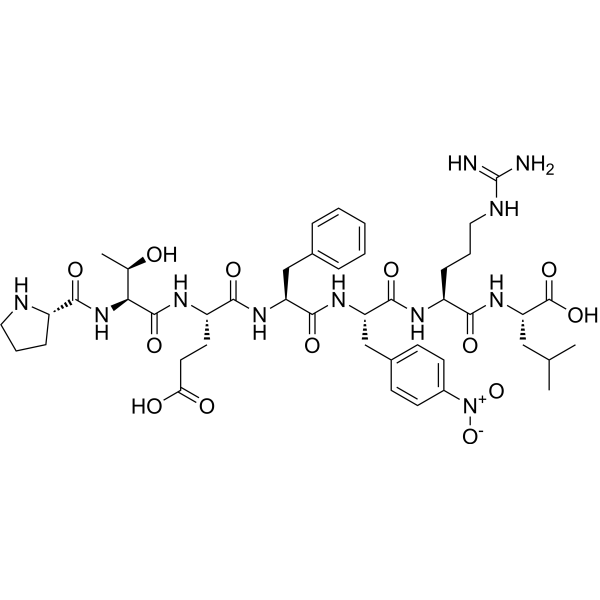
H-Pro-Thr-Glu-Phe-p-nitro-Phe-Arg-Leu-OH is a water-soluble polypeptide that can serve as a substrate for cathepsin D, pepsin and pepsinogen. H-Pro-Thr-Glu-Phe-p-nitro-Phe-Arg-Leu-OH has potential applications in biochemical analysis .
loading...
    loading...
Cat. No.: HY-P4725
CAS No.: 133233-38-2
Target:  

Fluorescent Dye

Research Areas:  

Others

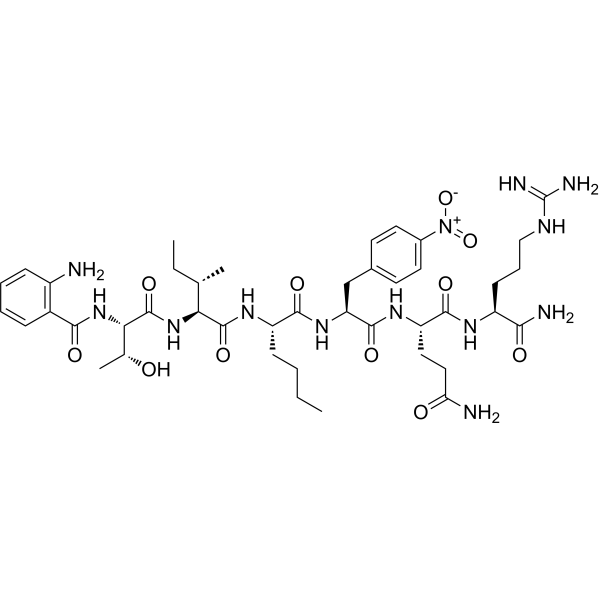
Abz-Thr-Ile-Nle-p-nitro-Phe-Gln-Arg-NH2 is a fluorogenic substrate, that can be used for the fluorescence screening assay .
loading...
    loading...
Cat. No.: HY-137815
CAS No.: 18918-31-5
Purity:  98.44%
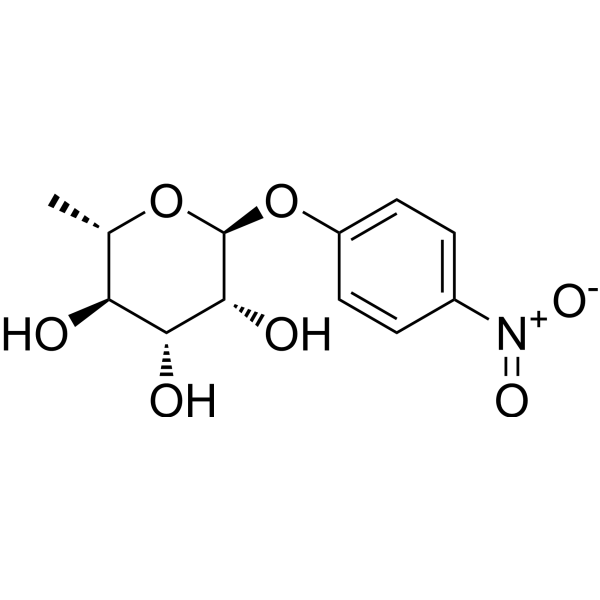
4-Nitrophenyl α-L-rhamnopyranoside is a commonly used substrate in various biochemical assays to measure the activity of enzymes that hydrolyze rhamnose, such as α-L-rhamnosidase. 4-Nitrophenyl α-L-rhamnopyranoside has unique chemical properties that allow it to be hydrolyzed by these enzymes to form a yellow product called p-nitrophenol. This makes it a useful tool for detecting and quantifying rhamnohydrolase activity in biological samples or microbial cultures.
loading...
    loading...
Cat. No.: HY-79572
CAS No.: 2042-14-0
Target:  

Parasite

Research Areas:  

Infection

4-Methyl-3-nitrophenol is a phenolic compound classified as a soft electrophile. 4-Methyl-3-nitrophenol is toxic to ciliates, with a log IC50 value of -3.740 against T. pyriformis .
loading...
    loading...

