9 Results for "

nuclear fragmentation

" in MedChemExpress (MCE) Product Catalog:
Products (9)

9 Results for "nuclear fragmentation" in MCE Product Catalog:

Cat. No.: HY-N12503
CAS No.: 519-96-0
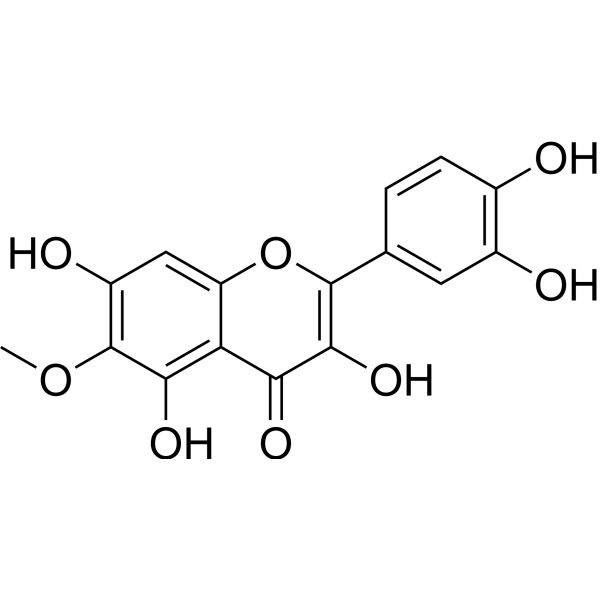
Patuletin is a flavonol, that can be isolated from the flowers of Tagetes patula. Patuletin shows anti-proliferative activity against cancer cells. Patuletin causes significant nuclear fragmentation and has a great capacity to induce caspase-3 activation .
loading...
    loading...
Cat. No.: HY-P1380A
Research Areas:  

Cancer

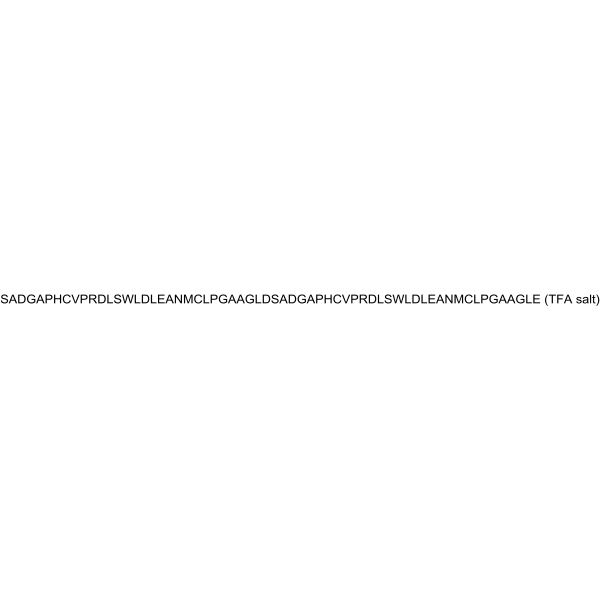
Difopein TFA is a 14-3-3 protein inhibitor. Difopein TFA acts as an apoptosis inducer, regulates apoptosis-related proteins, downregulates Bcl-2, upregulates Bax, activates caspase-9 and caspase-3, and induces nuclear fragmentation, membrane-enclosed apoptotic bodies and DNA ladder formation. Difopein TFA serves as a tumor growth inhibitor, which inhibits the proliferation of glioma cells and induces their apoptosis in in vivo nude mouse models. Difopein TFA is applicable to glioma-related research .
loading...
    loading...
Cat. No.: HY-117249
CAS No.: 104958-90-9
Synonyms: AK-2123
Target:  

Apoptosis Caspase

Research Areas:  

Cancer

Sanazole (AK-2123) is a hypoxic cell radiosensitizer. Sanazole enhances radiation-induced DNA strand breaks. In mouse fibroblast tumors, Sanazole increases nuclear condensation and fragmentation, as well as elevates caspase-3 activity, thereby enhancing radiation-induced apoptosis .
loading...
    loading...
Cat. No.: HY-169253
Research Areas:  

Cancer

ROS inducer 5 (compound 6e) can induce intracellular ROS accumulation and subsequent nuclear fragmentation. ROS inducer 5 can induce apoptosis in MCF-7 cells, with an IC50 value of 3.85 μM. ROS inducer 5 can be used in anticancer research .
loading...
    loading...
Cat. No.: HY-168720
Target:  

Apoptosis

Research Areas:  

Cancer

Apoptosis inducer 32 (Compound 7g) is an apoptosis inducer with a KD of 42 μM, showing anti-tumor activity. Apoptosis inducer 32 caused significant cellular morphological changes in MDA-MB-231 cells, including membrane bubbling, nuclear fragmentation, and apoptotic body formation. The IC50 of Apoptosis inducer 32 in MCF-7, MDA-MB-231, and HEK cells is 4.77, 6.56 and 337.8 μM respectively .
loading...
    loading...
Cat. No.: HY-149523
Research Areas:  

Inflammation/Immunology Cancer

Anticancer agent 157 (compound 15) is a NO inhibitor (IC50=0.62 μg/mL) with anti-inflammatory and anticancer activities. Anticancer agent 157 can bind to iNOS (inducible NO synthase) and caspase 8, causing nuclear fragmentation and chromatin condensation, inducing apoptosis. Anticancer agent 157 inhibits HT29 colon cancer cells (IC50=2.45 μg/mL), Hep-G2 liver cancer cells (IC50=3.25 μg/mL), and B16-F10 murine melanoma cells (IC50=3.84 μg/mL) .
loading...
    loading...
Cat. No.: HY-W714212
CAS No.: 33245-39-5
Fluchloralin is a dinitroaniline herbicide that effectively controls annual gramineous and broadleaf weeds primarily by inhibiting tubulin synthesis and cell division . Fluchloralin exhibits cytotoxicity and genotoxicity, and promotes cell apoptosis by activating apoptotic signaling proteins, forming DNA ladder bands, inducing cell shrinkage and nuclear fragmentation .
loading...
    loading...
Cat. No.: HY-N21831
CAS No.: 489-21-4
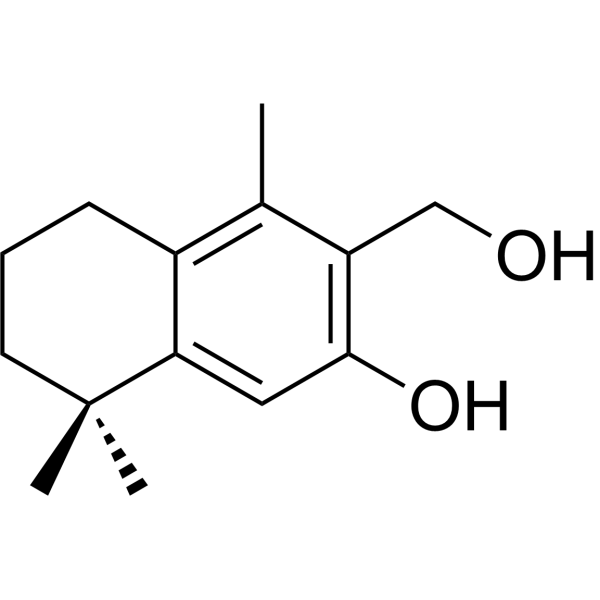
Sarkomycin is a glutathione-targeting cytotoxic agent and antibacterial agent. Sarkomycin forms an addition product with glutathione, thereby reducing intracellular glutathione levels. Sarkomycin can induce cytoplasmic vacuolation, mitochondrial damage, cytoplasmic deformation, metaphase arrest, chromosomal abnormalities, nuclear degeneration, and nuclear fragmentation; it also modulates amino acid metabolism. Sarkomycin also inhibits anaerobic fermentation in affected cells in mice and inhibits cell growth in tissue culture, leading to the disappearance of mitotic cells, cell degeneration, and cell detachment from the glass surface. Sarkomycin can be used in research related to Yoshida ascites tumor, Ehrlich ascites tumor, Ehrlich carcinoma, and Yoshida rat sarcoma .
loading...
    loading...
Cat. No.: HY-P1380
CAS No.: 396834-58-5
Research Areas:  

Cancer

Difopein is a 14-3-3 protein inhibitor. Difopein acts as an apoptosis inducer, regulates apoptosis-related proteins, downregulates Bcl-2, upregulates Bax, activates caspase-9 and caspase-3, and induces nuclear fragmentation, membrane-enclosed apoptotic bodies and DNA ladder formation. Difopein serves as a tumor growth inhibitor, which inhibits the proliferation of glioma cells and induces their apoptosis in in vivo nude mouse models. Difopein is applicable to glioma-related research .
loading...
    loading...

