14 Results for "

orchid

" in MedChemExpress (MCE) Product Catalog:
Products (14)

14 Results for "orchid" in MCE Product Catalog:

1
1 Cited Publications
Cat. No.: HY-N7928
CAS No.: 629-92-5
Nonadecane is a herbicide that can be used for the control of weeds in Dendrobium orchids .
loading...
    loading...
Cat. No.: HY-W141858
CAS No.: 57105-39-2
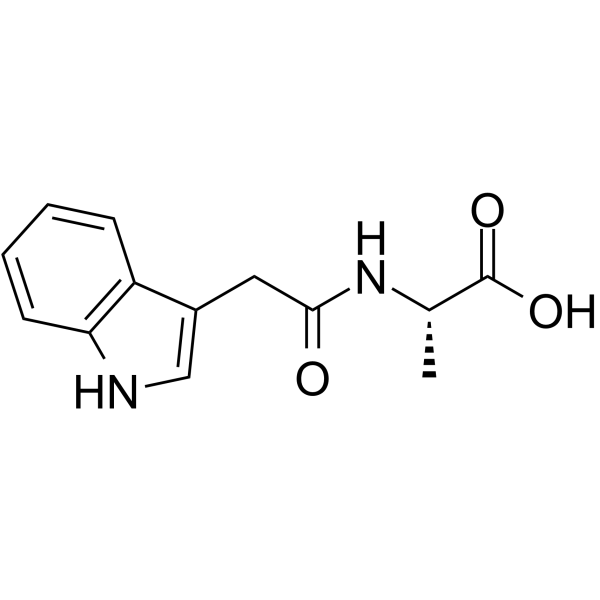
Synonyms: Indoleacetylalanine; IAA-ala
Research Areas:  

Others

N-(3-Indolylacetyl)-L-alanine (Indoleacetylalanine) is an indoleacetylamino acid. N-(3-Indolylacetyl)-L-alanine appears to increase callus growth and reduces the ability of growths to differentiate into shoots of Phalaenopsis orchids .
loading...
    loading...
Cat. No.: HY-N7928R
CAS No.: 629-92-5
Nonadecane (Standard) is the analytical standard of Nonadecane. This product is intended for research and analytical applications. Nonadecane is a herbicide that can be used for the control of weeds in Dendrobium orchids .
loading...
    loading...
Cat. No.: HY-N12020
CAS No.: 130217-31-1
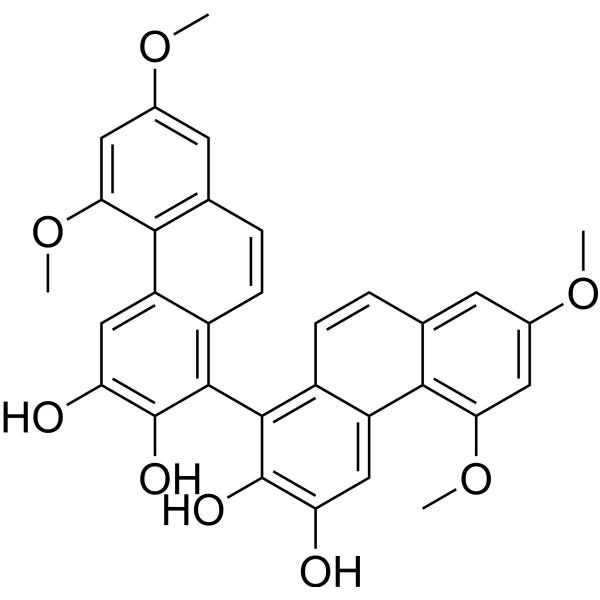
Volucrin is a dimeric phenanthrene derivative that can be isolated from the orchid lusia volucris .
loading...
    loading...
Cat. No.: HY-167873
CAS No.: 216752-89-5
Target:  

LDLR

Research Areas:  

Inflammation/Immunology

Habenariol is a substantial phenolic antioxidant activity that can be isolated from the freshwater orchid, Habenaria repens .
loading...
    loading...
Cat. No.: HY-N12308
CAS No.: 138711-55-4
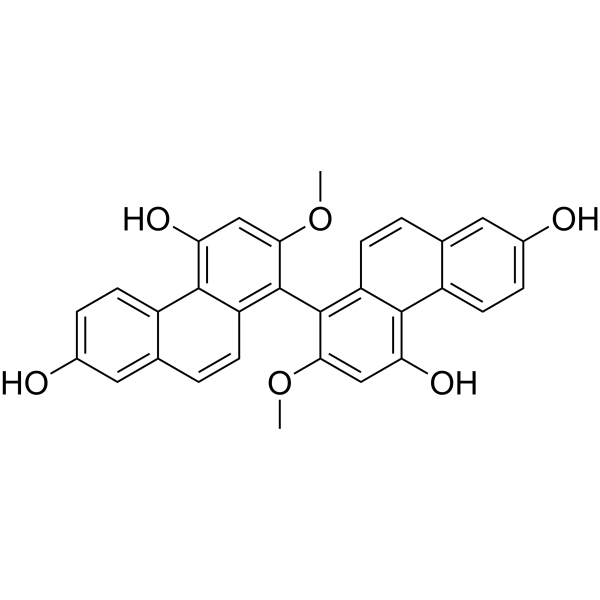
Monbarbatain A (compound 1) is a dimeric phenanthrene. Monbarbatain A can be isolated from the orchids Monomeria barbata .
loading...
    loading...
Cat. No.: HY-W140227
CAS No.: 104188-11-6
(Z,Z)-4,7-Decadienol is a volatile component of acorus oil essential oil and an uncommon fragrance in orchids .
loading...
    loading...
Cat. No.: HY-N19342
CAS No.: 22318-83-8
Callosumin is a stilbenoid that can be found in the orchid Agrostophyllum callosum .
loading...
    loading...
Cat. No.: HY-N13818
CAS No.: 233759-30-3
Methoxyimbricatin is a stilbenoid that can be isolated from the orchid Agrostophyllum callosum .
loading...
    loading...
Cat. No.: HY-N21547
CAS No.: 143572-66-1
Cronupapine is a glucosyloxybenzyl derivative that can be found in the pseudobulbs of the orchid Pleione bulbocodioides. The structure of Cronupapine is identified via HR-ESI-MS, NMR spectroscopy and comparison with known compounds, and its molecular formula is C24H28O11. Cronupapine can be used for chemical component identification of natural products and research on active components of orchid plants .
loading...
    loading...
Cat. No.: HY-N17772
CAS No.: 899430-06-9
Gymnoside VI is a glucosyloxybenzyl 2-isobutylmalate compound that regulates allergy-related pathways. Gymnoside VI can be used in the study of diseases such as asthma, neurasthenia, and chronic hepatitis. Gymnoside VI can be isolated from the tubers of the orchid Gymnadenia conopsea R. Br.
loading...
    loading...
Cat. No.: HY-W141858S
Synonyms: Indoleacetylalanine-d4; IAA-ala-d4
N-(3-Indolylacetyl)-L-alanine-d4 (Indoleacetylalanine-d4) is the deuterium labeled N-(3-Indolylacetyl)-L-alanine (HY-W141858). N-(3-Indolylacetyl)-L-alanine is an indoleacetylamino acid. N-(3-Indolylacetyl)-L-alanine appears to increase callus growth and reduces the ability of growths to differentiate into shoots of Phalaenopsis orchids .
loading...
    loading...
Cat. No.: HY-N9799
CAS No.: 1013909-91-5
Pholidotol C is a stilbene compound with nitric oxide (NO) production inhibitory activity and DPPH free radical scavenging activity (IC50 values ??of 28.6 μM and 21.9 μM, respectively). Pholidotol C exerts its anti-inflammatory and antioxidant activities through mechanisms involving the inhibition of NO production in activated macrophages and free radical scavenging, and can be used in research on inflammation-related diseases. Pholidotol C can be extracted from the dried whole plant of Pholidota chinensis (an orchid of the genus Pholidota) .
loading...
    loading...
Cat. No.: HY-N21789
CAS No.: 152543-09-4
Dihydroconiferyl dihydro-p-coumarate is a mesophenolic acetylcholinesterase (AChE) inhibitor discovered in orchids such as Vanda roxburghii and Dendrobium nobile, with an IC50 of 118.17 μg/mL against mouse AChE. Dihydroconiferyl dihydro-p-coumarate reduces the hydrolytic activity of AChE, scavenges DPPH and hydroxyl radicals, exhibits potassium ferricyanide reducing power, reduces Mo (VI) to Mo (V), and inhibits lipid peroxidation in mouse brain homogenates. Dihydroconiferyl dihydro-p-coumarate is a key hypoglycemic compound and shows no significant cytotoxicity to human cancer cells. Dihydroconiferyl dihydro-p-coumarate can be used in research related to Alzheimer's disease and type 2 diabetes .
loading...
    loading...
  • 1

