20 Results for "

osteolysis

" in MedChemExpress (MCE) Product Catalog:
Products (20)

20 Results for "osteolysis" in MCE Product Catalog:

5
5 Cited Publications
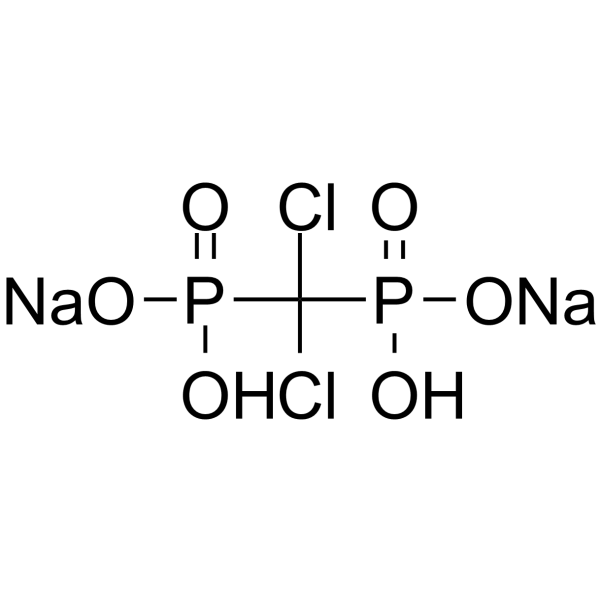
Cat. No.: HY-B0657A
CAS No.: 22560-50-5
Synonyms: Clodronate disodium salt
Target:  

Apoptosis

Research Areas:  

Metabolic Disease Cancer

Clodronic acid (Clodronate) disodium salt is an orally active bisphosphonate. Clodronic acid disodium salt inhibits osteoclast-mediated bone resorption. Clodronic acid disodium salt reduces skeletal event risk in malignant bone disease, impairs malignant osteolysis, blocks bone matrix growth-factor release, induces apoptosis in osteoclasts and macrophages. Clodronic acid disodium salt is effective in the maintenance or improvement of bone mineral density. Clodronic acid disodium salt can be used for the research of multiple myeloma and postmenopausal osteoporosis .
loading...
    loading...
5
5 Cited Publications
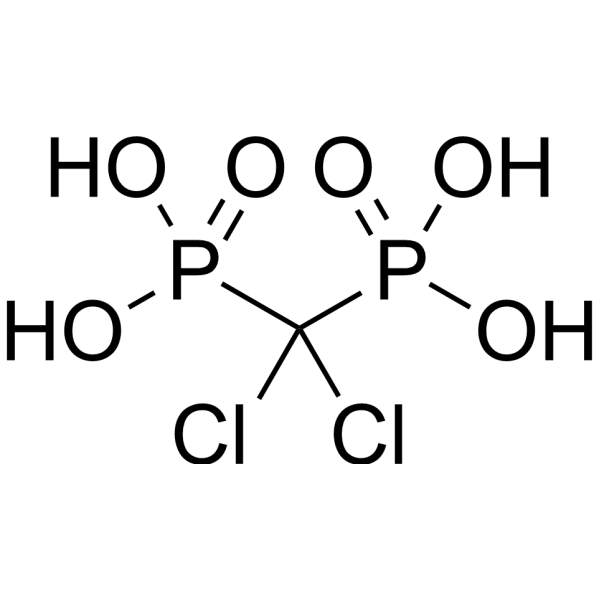
Cat. No.: HY-B0657
CAS No.: 10596-23-3
Synonyms: Clodronate
Target:  

Apoptosis

Research Areas:  

Metabolic Disease Cancer

Clodronic acid (Clodronate) is an orally active bisphosphonate. Clodronic acid inhibits osteoclast-mediated bone resorption. Clodronic acid reduces skeletal event risk in malignant bone disease, impairs malignant osteolysis, blocks bone matrix growth-factor release, induces apoptosis in osteoclasts and macrophages. Clodronic acid is effective in the maintenance or improvement of bone mineral density. Clodronic acid can be used for the research of multiple myeloma and postmenopausal osteoporosis .
loading...
    loading...
2
2 Cited Publications
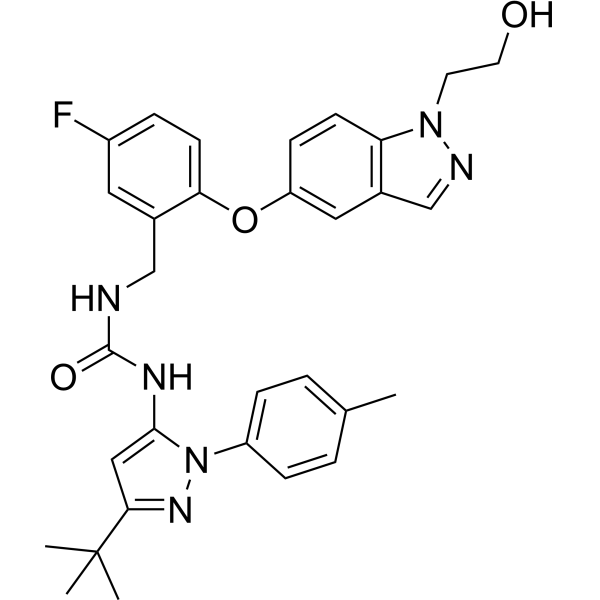
Cat. No.: HY-16782
CAS No.: 945614-12-0
Synonyms: ARRY-614
Pexmetinib (ARRY-614) is an orally active dual Tie-2 and p38 MAPK inhibitor. Pexmetinib binds to Tie-2 and p38 MAPK in a "DFG-out" conformation, attenuates the phosphorylation of p38, inhibits STAT3 activation, reduces the promoter-binding activity of NFATc1, and decreases the expression of MMPs. Pexmetinib inhibits leukemia cell proliferation, abrogates TNF-α-mediated myelosuppression of healthy hematopoietic stem cells, stimulates hematopoiesis in primary myelodysplastic syndrome (MDS) samples, inhibits RANKL-induced osteoclast formation and bone resorption, and suppresses migration, invasion and induced osteolysis of breast cancer cells. Pexmetinib can be used in research related to myelodysplastic syndrome, acute myeloid leukemia and breast cancer-induced osteolysis .
loading...
    loading...
1
1 Cited Publications
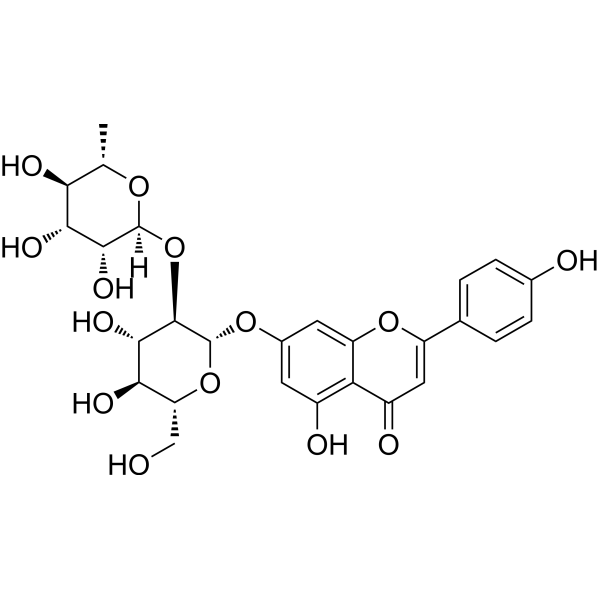
Cat. No.: HY-N0755
CAS No.: 17306-46-6
Rhoifolin is a flavone glycoside can be isolated from Rhus succedanea. Rhoifolin has anti-diabetic effect acting through enhanced adiponectin secretion, tyrosine phosphorylation of insulin receptor-β and glucose transporter 4 (GLUT 4) translocation. Rhoifolin has an anti-inflammatory action via multi-level regulation of inflammatory mediators. Rhoifolin ameliorates titanium particle-stimulated osteolysis and attenuates osteoclastogenesis via RANKL-induced NF-κB and MAPK pathways. Rhoifolin also has cytotoxic activity against different cancer cell lines .
loading...
    loading...
1
1 Cited Publications
Cat. No.: HY-N0819
CAS No.: 89412-79-3
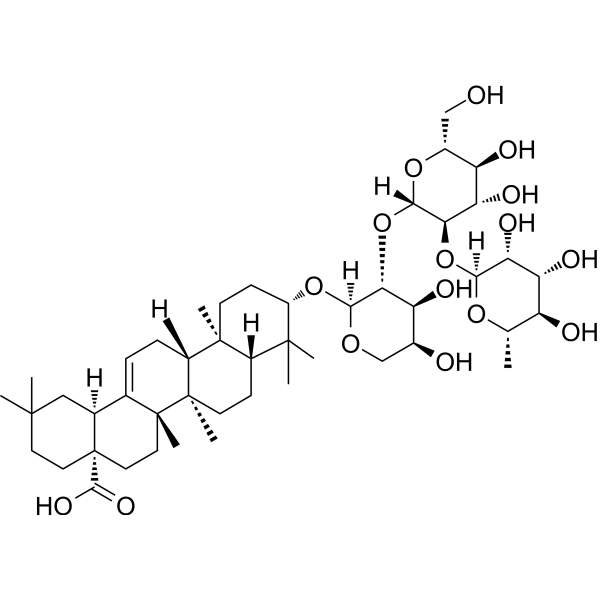
Raddeanin A is an oleanane-type triterpenoid saponin with oral activity. Raddeanin A inhibits SRC, mTOR, JNK, VEGFR2, NLRP3 inflammasome, Wnt/β-catenin, Wee1, PI3K/AKT signaling pathway, MAPK/ERK signaling pathway, AR-FL, AR-Vs, and downregulates the expression of p-PI3K and p-AKT. Raddeanin A inhibits osteoclast formation, bone resorption, osteolysis, cancer cell invasion, migration, proliferation, angiogenesis and epithelial-mesenchymal transition, while induces apoptosis, cell cycle arrest, ROS production, immunogenic cell death and dendritic cell maturation. Raddeanin A improves blood-retinal barrier function, alleviates inflammation, regulates the tumor microenvironment, and enhances the activity of anti-PD-1 antibody. Raddeanin A is applicable to the research of breast cancer-associated osteolysis, human osteosarcoma, colorectal cancer, glioblastoma, Alzheimer's disease, cholangiocarcinoma, melanoma, non-small cell lung cancer, castration-resistant prostate cancer and multiple myeloma .
loading...
    loading...
1
1 Cited Publications
Cat. No.: HY-N0899
CAS No.: 11088-09-8
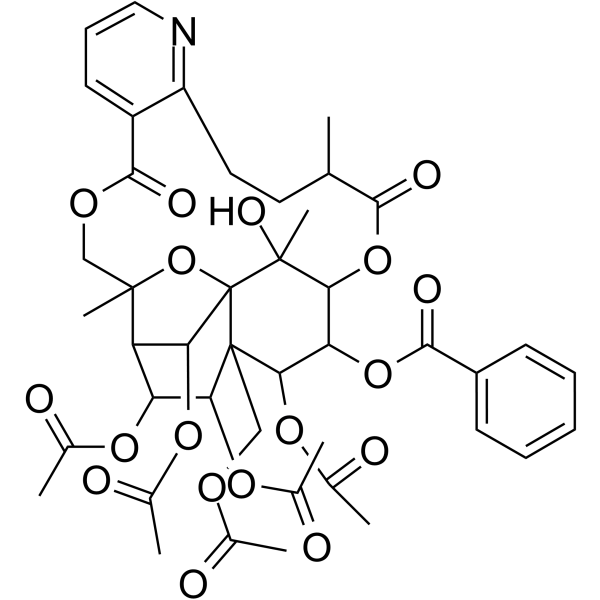
Wilforine is an orally active JAK-STAT pathway inhibitor with immunomodulatory effects and the ability to inhibit osteoclast fusion. Wilforine disrupts lipid raft integrity, reprograms cholesterol and glycosphingolipid metabolic pathways, regulates NF-κB and the complement system, and modulates the expression of various interleukins. Wilforine also inhibits the Wnt11/β-catenin signaling pathway and suppresses the proliferation of fibroblast-like synoviocytes. Wilforine can serve as a quality and pharmacokinetic marker for Tripterygium glycoside tablets, and can be applied to research on related diseases such as rheumatoid arthritis, inflammatory osteolysis, and SAPHO syndrome .
loading...
    loading...
Cat. No.: HY-169857
CAS No.: 1393999-78-4
Target:  

RANKL/RANK

Research Areas:  

Others

AS2690168 freebase is an orally active RANKL signal transduction inhibitor which suppresses RANKL-induced osteoclastogenesis of RAW264 cells. AS2690168 can be utilized in research related to pathological osteolysis .
loading...
    loading...
Cat. No.: HY-N0755R
CAS No.: 17306-46-6
Rhoifolin (Standard) is the analytical standard of Rhoifolin. This product is intended for research and analytical applications. Rhoifolin is a flavone glycoside can be isolated from Rhus succedanea. Rhoifolin has anti-diabetic effect acting through enhanced adiponectin secretion, tyrosine phosphorylation of insulin receptor-β and glucose transporter 4 (GLUT 4) translocation. Rhoifolin has an anti-inflammatory action via multi-level regulation of inflammatory mediators. Rhoifolin ameliorates titanium particle-stimulated osteolysis and attenuates osteoclastogenesis via RANKL-induced NF-κB and MAPK pathways. Rhoifolin also has cytotoxic activity against different cancer cell lines .
loading...
    loading...
Cat. No.: HY-169857A
CAS No.: 1393899-47-2
Target:  

RANKL/RANK

Research Areas:  

Others

AS2690168 hydrochloride is an orally active RANKL signal transduction inhibitor which suppresses RANKL-induced osteoclastogenesis of RAW264 cells. AS2690168 can be utilized in research related to pathological osteolysis .
loading...
    loading...
Cat. No.: HY-16782R
CAS No.: 945614-12-0
Synonyms: ARRY-614 (Standard)
Pexmetinib (Standard) (ARRY-614 (Standard)) is the analytical standard of Pexmetinib (HY-16782). This product is intended for research and analytical applications. Pexmetinib (ARRY-614) is an orally active dual Tie-2 and p38 MAPK inhibitor. Pexmetinib binds to Tie-2 and p38 MAPK in a "DFG-out" conformation, attenuates the phosphorylation of p38, inhibits STAT3 activation, reduces the promoter-binding activity of NFATc1, and decreases the expression of MMPs. Pexmetinib inhibits leukemia cell proliferation, abrogates TNF-α-mediated myelosuppression of healthy hematopoietic stem cells, stimulates hematopoiesis in primary myelodysplastic syndrome (MDS) samples, inhibits RANKL-induced osteoclast formation and bone resorption, and suppresses migration, invasion and induced osteolysis of breast cancer cells. Pexmetinib can be used in research related to myelodysplastic syndrome, acute myeloid leukemia and breast cancer-induced osteolysis .
loading...
    loading...
Cat. No.: HY-N0819R
CAS No.: 89412-79-3
Raddeanin A (Standard) is the analytical standard of Raddeanin A (HY-N0819). This product is intended for research and analytical applications. Raddeanin A is an oleanane-type triterpenoid saponin with oral activity. Raddeanin A inhibits SRC, mTOR, JNK, VEGFR2, NLRP3 inflammasome, Wnt/β-catenin, Wee1, PI3K/AKT signaling pathway, MAPK/ERK signaling pathway, AR-FL, AR-Vs, and downregulates the expression of p-PI3K and p-AKT. Raddeanin A inhibits osteoclast formation, bone resorption, osteolysis, cancer cell invasion, migration, proliferation, angiogenesis and epithelial-mesenchymal transition, while induces apoptosis, cell cycle arrest, ROS production, immunogenic cell death and dendritic cell maturation. Raddeanin A improves blood-retinal barrier function, alleviates inflammation, regulates the tumor microenvironment, and enhances the activity of anti-PD-1 antibody. Raddeanin A is applicable to the research of breast cancer-associated osteolysis, human osteosarcoma, colorectal cancer, glioblastoma, Alzheimer's disease, cholangiocarcinoma, melanoma, non-small cell lung cancer, castration-resistant prostate cancer and multiple myeloma.
loading...
    loading...
Cat. No.: HY-16782A
CAS No.: 1416216-01-7
Synonyms: ARRY-614 hydrochloride
Pexmetinib hydrochloride (ARRY-614 hydrochloride) is an orally active dual Tie-2 and p38 MAPK inhibitor. Pexmetinib hydrochloride binds to Tie-2 and p38 MAPK in a "DFG-out" conformation, attenuates the phosphorylation of p38, inhibits STAT3 activation, reduces the promoter-binding activity of NFATc1, and decreases the expression of MMPs. Pexmetinib hydrochloride inhibits leukemia cell proliferation, abrogates TNF-α-mediated myelosuppression of healthy hematopoietic stem cells, stimulates hematopoiesis in primary myelodysplastic syndrome (MDS) samples, inhibits RANKL-induced osteoclast formation and bone resorption, and suppresses migration, invasion and induced osteolysis of breast cancer cells. Pexmetinib hydrochloride can be used in research related to myelodysplastic syndrome, acute myeloid leukemia and breast cancer-induced osteolysis .
loading...
    loading...
Cat. No.: HY-N15205
CAS No.: 159278-74-7
Rhinacanthin C is an orally active naphthoquinone ester and P-gp inhibitor (IC50 = 5.20 μM). Rhinacanthin C exerts effects in ameliorating hepatic steatosis, insulin resistance, and inflammation by inhibiting P-gp, BCRP, OATP1B1/1B3, and multiple CYP enzymes, downregulating lipid synthesis-related factors such as ACC and FAS, and upregulating AMPKα phosphorylation and SIRT1. Rhinacanthin C can be used in research on non-alcoholic fatty liver disease, diabetes, abnormal osteolysis, Alzheimer's disease, and inflammation .
loading...
    loading...
Cat. No.: HY-P71687
Purity:  ≥ 95%, as determined by reducing SDS-PAGE.
Synonyms: TNFRSF11A; Familial Expansile osteolysis; Prev. LOH18CR1; Paget Disease Of Bone 2; Prev. PDB2; TRANCE Receptor; RANK; Tumor Necrosis Factor Receptor Superfamily, Member 11a, Activator Of NFKB; ODFR; Receptor Activator Of Nuclear Factor Kappa B; Osteoclast
Species:  
Human
Source:  
E. coli
loading...
    loading...
Cat. No.: HY-P71912
Purity:  ≥ 95%, as determined by reducing SDS-PAGE.
Synonyms: TNFRSF11A; Familial Expansile osteolysis; Prev. LOH18CR1; Paget Disease Of Bone 2; Prev. PDB2; TRANCE Receptor; RANK; Tumor Necrosis Factor Receptor Superfamily, Member 11a, Activator Of NFKB; ODFR; Receptor Activator Of Nuclear Factor Kappa B; Osteoclast
Species:  
Human
Source:  
E. coli
loading...
    loading...
Cat. No.: HY-P72483
Purity:  ≥ 95%, as determined by reducing SDS-PAGE.
Synonyms: TNFRSF11A; Familial Expansile osteolysis; Prev. LOH18CR1; Paget Disease Of Bone 2; Prev. PDB2; TRANCE Receptor; RANK; Tumor Necrosis Factor Receptor Superfamily, Member 11a, Activator Of NFKB; ODFR; Receptor Activator Of Nuclear Factor Kappa B; Osteoclast
Species:  
Mouse
Source:  
HEK293
loading...
    loading...
Cat. No.: HY-P76562
Purity:  ≥ 80%, as determined by reducing SDS-PAGE.
Synonyms: TNFRSF11A; Familial Expansile osteolysis; Prev. LOH18CR1; Paget Disease Of Bone 2; Prev. PDB2; TRANCE Receptor; RANK; Tumor Necrosis Factor Receptor Superfamily, Member 11a, Activator Of NFKB; ODFR; Receptor Activator Of Nuclear Factor Kappa B; Osteoclast
Species:  
Rat
Source:  
HEK293
loading...
    loading...
Cat. No.: HY-P76563
Purity:  ≥ 95%, as determined by reducing SDS-PAGE.
Synonyms: TNFRSF11A; Familial Expansile osteolysis; Prev. LOH18CR1; Paget Disease Of Bone 2; Prev. PDB2; TRANCE Receptor; RANK; Tumor Necrosis Factor Receptor Superfamily, Member 11a, Activator Of NFKB; ODFR; Receptor Activator Of Nuclear Factor Kappa B; Osteoclast
Species:  
Rat
Source:  
HEK293
loading...
    loading...
Cat. No.: HY-P72484
Purity:  ≥ 95%, as determined by reducing SDS-PAGE.
Synonyms: TNFRSF11A; Familial Expansile osteolysis; Prev. LOH18CR1; Paget Disease Of Bone 2; Prev. PDB2; TRANCE Receptor; RANK; Tumor Necrosis Factor Receptor Superfamily, Member 11a, Activator Of NFKB; ODFR; Receptor Activator Of Nuclear Factor Kappa B; Osteoclast
Species:  
Human
Source:  
HEK293
loading...
    loading...
Cat. No.: HY-P71912U
Purity:  ≥ 95%, as determined by reducing SDS-PAGE.; ≥ 90%, as determined by MALS.
Synonyms: TNFRSF11A; Familial Expansile osteolysis; Prev. LOH18CR1; Paget Disease Of Bone 2; Prev. PDB2; TRANCE Receptor; RANK; Tumor Necrosis Factor Receptor Superfamily, Member 11a, Activator Of NFKB; ODFR; Receptor Activator Of Nuclear Factor Kappa B; Osteoclast
Species:  
Human
Source:  
HEK293
loading...
    loading...
  • 1

