87 Results for "

oxygen dependent

" in MedChemExpress (MCE) Product Catalog:
Products (87)

87 Results for "oxygen dependent" in MCE Product Catalog:
935
935 Publications Verification
Cat. No.: HY-15763
CAS No.: 571203-78-6
Purity:  99.62%
Research Areas:  

Cancer

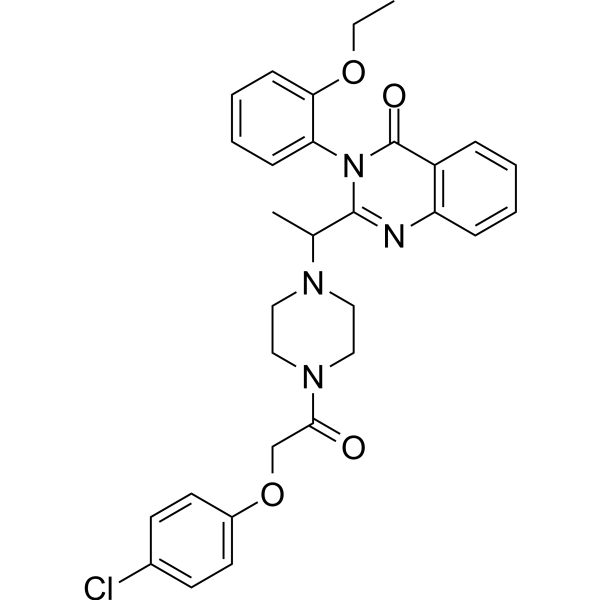
Erastin is a ferroptosis inducer. Erastin exhibits the mechanism of ferroptosis induction related to ROS and iron-dependent signaling. Erastin inhibits voltage-dependent anion channels (VDAC2/VDAC3) and accelerates oxidation, leading to the accumulation of endogenous reactive oxygen species. Erastin also disrupts mitochondrial permeability transition pore (mPTP) with anti-tumor activity. Furthermore, Erastin can block the uptake of cystine mediated by SLC7A11 and also spares UMRC6-EV and -C91A cells from disulfidptosis under glucose starvation .
loading...
    loading...
134
134 Cited Publications
Cat. No.: HY-12040
CAS No.: 488832-69-5
Purity:  99.80%
Synonyms: STA-4783
Research Areas:  

Cancer

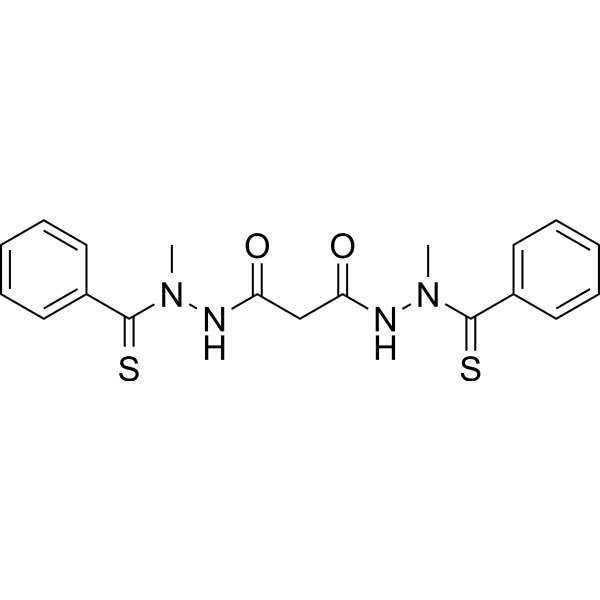
Elesclomol (STA-4783) is a potent copper ionophore and promotes copper-dependent cell death (cuproptosis). Elesclomol specifically binds ferredoxin 1 (FDX1) α2/α3 helices and β5 strand. Elesclomol inhibits FDX1-mediated Fe-S cluster biosynthesis. Elesclomol is an oxidative stress inducer that induces cancer cell apoptosis. Elesclomol is a reactive oxygen species (ROS) inducer. Elesclomol can be used for Menkes and associated disorders of hereditary copper deficiency research .
loading...
    loading...
11
11 Cited Publications
Cat. No.: HY-W010737
CAS No.: 56001-37-7
Synonyms: GTP disodium
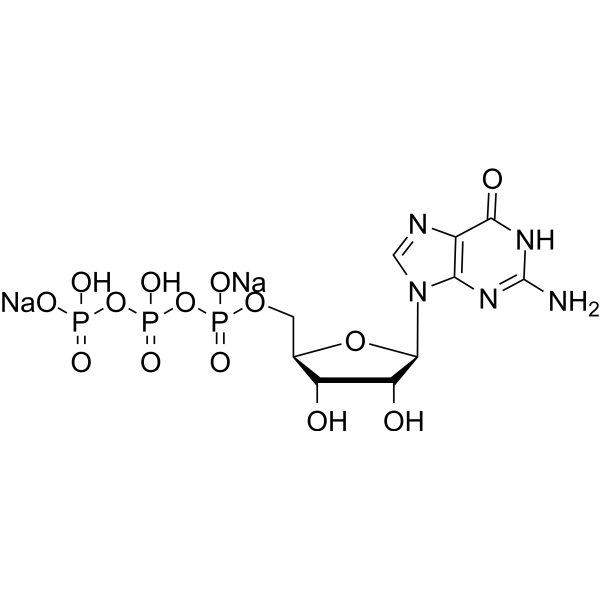
Guanosine triphosphate (GTP) disodium is a critical nucleotide and regulator of cellular metabolism. Guanosine triphosphate disodium promotes ribosomal DNA localization, pre-rRNA transcription and ribosome biogenesis by binding to RNA polymerase I and GPN proteins (GPN1/3). Guanosine triphosphate disodium links MYC-dependent ribosome biogenesis to nucleotide sufficiency, acts as a metabolic gatekeeper supporting protein synthesis, DNA/RNA synthesis and cellular signal transduction, while also participating in the physiological activities of pancreatic β-cells and serving as an oxidative substrate for reactive oxygen species. In small cell lung cancer with high MYC expression, Guanosine triphosphate disodium accumulates through the IMPDH-driven synthetic pathway, thereby affecting apoptosis and mitotic processes. Guanosine triphosphate disodium is used in the research of small cell lung cancer, hepatoblastoma and cellular metabolism .
loading...
    loading...
11
11 Cited Publications
Cat. No.: HY-12695B
CAS No.: 207300-85-4
Purity:  ≥95.0%
Synonyms: GTP trisodium salt hydrate
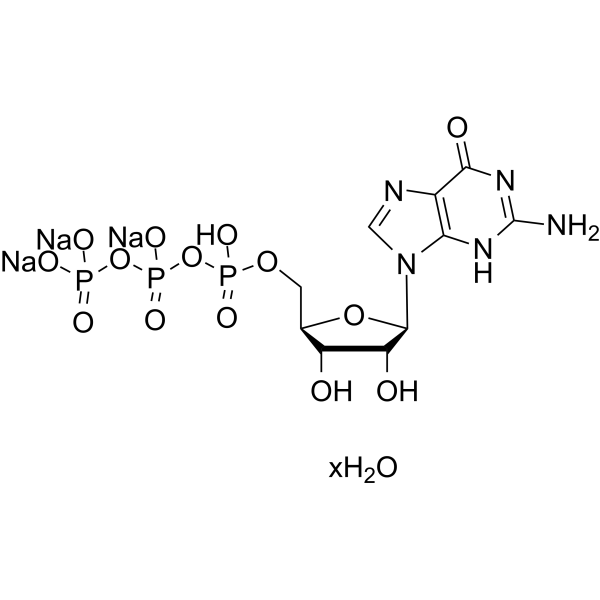
Guanosine triphosphate (GTP) trisodium salt hydrate is a critical nucleotide and regulator of cellular metabolism. Guanosine triphosphate trisodium salt hydrate promotes ribosomal DNA localization, pre-rRNA transcription and ribosome biogenesis by binding to RNA polymerase I and GPN proteins (GPN1/3). Guanosine triphosphate trisodium salt hydrate links MYC-dependent ribosome biogenesis to nucleotide sufficiency, acts as a metabolic gatekeeper supporting protein synthesis, DNA/RNA synthesis and cellular signal transduction, while also participating in the physiological activities of pancreatic β-cells and serving as an oxidative substrate for reactive oxygen species. In small cell lung cancer with high MYC expression, Guanosine triphosphate trisodium salt hydrate accumulates through the IMPDH-driven synthetic pathway, thereby affecting apoptosis and mitotic processes. Guanosine triphosphate trisodium salt hydrate is used in the research of small cell lung cancer, hepatoblastoma and cellular metabolism .
loading...
    loading...
8
8 Cited Publications
Cat. No.: HY-12695
CAS No.: 36051-31-7
Purity:  ≥95.0%
Synonyms: GTP trisodium
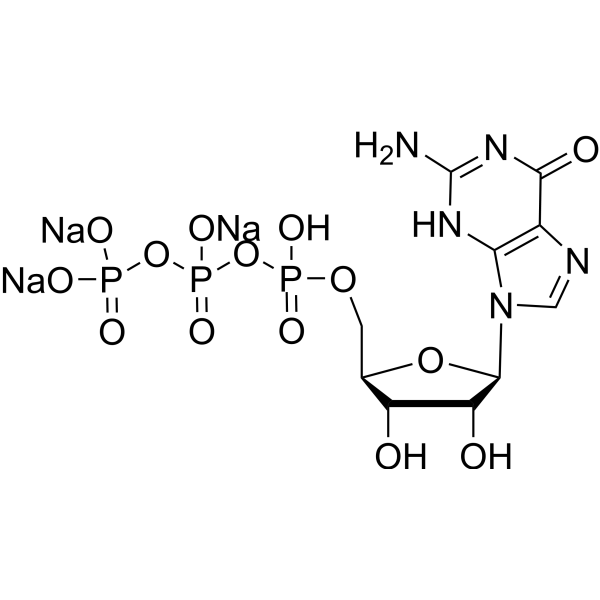
Guanosine triphosphate (GTP) trisodium is a critical nucleotide and regulator of cellular metabolism. Guanosine triphosphate trisodium promotes ribosomal DNA localization, pre-rRNA transcription and ribosome biogenesis by binding to RNA polymerase I and GPN proteins (GPN1/3). Guanosine triphosphate trisodium links MYC-dependent ribosome biogenesis to nucleotide sufficiency, acts as a metabolic gatekeeper supporting protein synthesis, DNA/RNA synthesis and cellular signal transduction, while also participating in the physiological activities of pancreatic β-cells and serving as an oxidative substrate for reactive oxygen species. In small cell lung cancer with high MYC expression, Guanosine triphosphate trisodium accumulates through the IMPDH-driven synthetic pathway, thereby affecting apoptosis and mitotic processes. Guanosine triphosphate trisodium is used in the research of small cell lung cancer, hepatoblastoma and cellular metabolism .
loading...
    loading...
7
7 Cited Publications
Cat. No.: HY-D1063
CAS No.: 207399-07-3
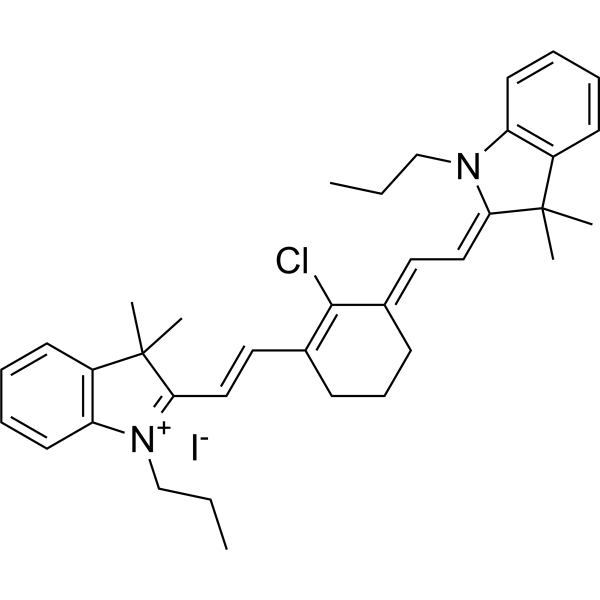
IR-780 is a near-infrared fluorescent probe for in vivo imaging of tumor cells. IR-780 is transported into tumor cells via OATPs and ABCB10, with uptake dependent on glycolytic activity and plasma membrane potential. IR-780 preferentially accumulates in tumor cell mitochondria, including those of drug-resistant cancer cells, without chemical conjugation. IR-780 generates reactive oxygen species (ROS), induces hyperthermia and apoptosis, inhibits tumor growth and recurrence, and modulates HSP70 expression upon ultrasound or 808 nm laser exposure. IR-780 acts as a sonosensitizer, photodynamic and photothermal agent, and drug delivery carrier, with low acute imaging-dose toxicity and rapid vital organ clearance. IR-780 can be used for the research of cancer, such as breast cancer, lung cancer, and non-small cell lung cancer (NSCLC) .
loading...
    loading...
6
6 Cited Publications
Cat. No.: HY-113224
CAS No.: 313-04-2
Purity:  ≥98.0%
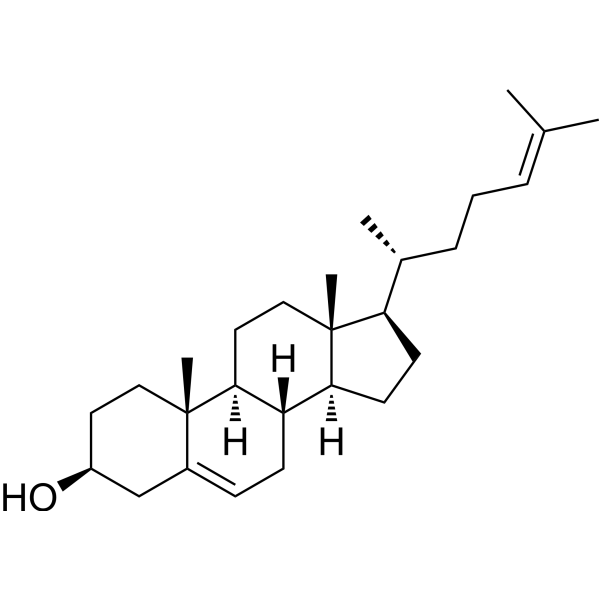
Desmosterol is a cholesterol-like molecule. In the Bloch pathway of cholesterol biosynthesis, Desmosterol is a direct precursor of cholesterol. As an endogenous metabolite, Desmosterol is used to study cholesterol metabolism . Desmosterol is an LXR activator and SREBP inhibitor, which can suppress macrophage inflammasome activation and prevent vascular inflammation and atherosclerosis. A reduction in Desmosterol promotes the production of mitochondrial reactive oxygen species (ROS) in macrophages and pyrin domain-dependent inflammasome activation of NLRP3. Desmosterol holds potential for research in inflammation, metabolism, and cardiovascular diseases .
loading...
    loading...
5
5 Cited Publications
Cat. No.: HY-N2593
CAS No.: 32507-66-7
Category:  

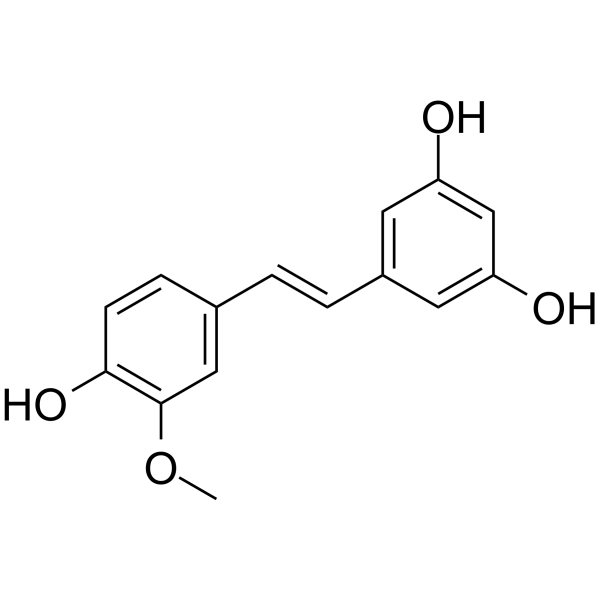
Gnetaceae Extract Stilbenes 500 - Internal Server Error | MedChemExpress

Oops!

Sorry, Something went wrong on our server.
Our team has been notified and is working to fix the issue.