46 Results for "

p53 stabilization

" in MedChemExpress (MCE) Product Catalog:
Products (46)

46 Results for "p53 stabilization" in MCE Product Catalog:

81
81 Publications Verification
Cat. No.: HY-10029
CAS No.: 675576-98-4
Purity:  99.00%
Synonyms: Rebemadlin
Research Areas:  

Cancer

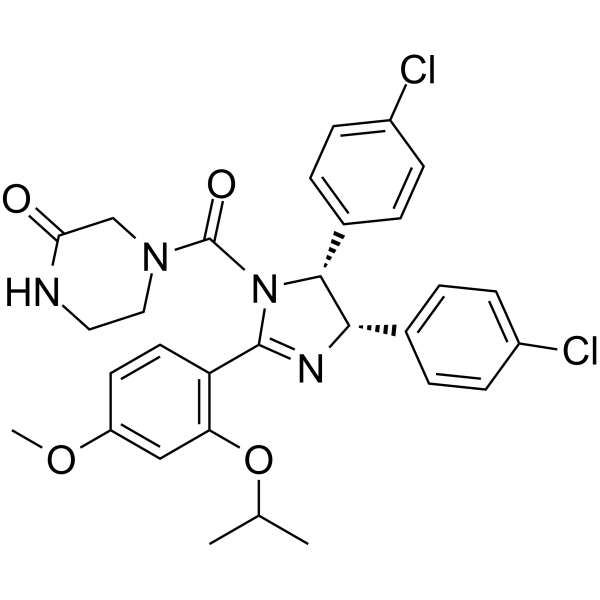
Nutlin-3a (Rebemadlin), an active enantiomer of Nutlin-3, is a potent murine double minute (MDM2) inhibitor (IC50=90 nM). Nutlin-3a inhibits MDM2-p53 interactions and stabilizes the p53 protein, and induces cell autophagy and apoptosis. Nutlin-3a has the potential for the study of TP53 wild-type ovarian carcinomas .
loading...
    loading...
52
52 Cited Publications
Cat. No.: HY-15676
CAS No.: 1229705-06-9
Purity:  99.93%
Synonyms: RG7388
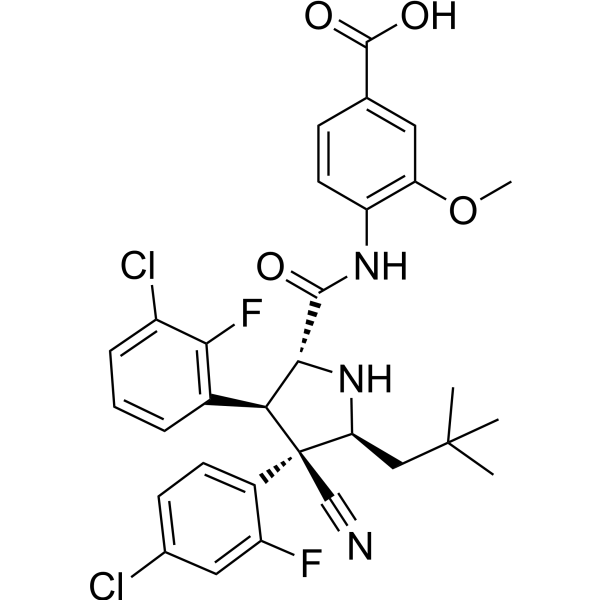
Idasanutlin (RG7388) is an orally bioavailable MDM2 inhibitor with an IC50 of 6 nM. Idasanutlin disrupts MDM2-p53 binding, stabilizes and activates p53, triggering cell cycle arrest, apoptosis, and reduced cancer cell viability. Idasanutlin reduces EGFR protein expression and phosphorylation, suppresses downstream SHP2, MEK1/2, ERK1/2, AKT, mTOR, p70(S6K1), and S6 signaling. Idasanutlin induces mitochondrial ROS production, drives p38 MAPK phosphorylation, upregulates NOXA, and mediates caspase-3-dependent apoptosis and gasdermin E-mediated pyroptosis. Idasanutlin can be used for the research of TP53-mutant non-small cell lung cancer, T-cell acute lymphoblastic leukemia, colorectal carcinoma, melanoma, diffuse large B-cell lymphoma, mantle cell lymphoma, non-Hodgkin lymphoma, severe fever with thrombocytopenia syndrome, neuroblastoma, acute lymphoblastic leukemia, relapsed or refractory acute myeloid leukemia, osteosarcoma, solid tumors, and hematological tumors .
loading...
    loading...
8
8 Cited Publications
Cat. No.: HY-B0413
CAS No.: 43210-67-9
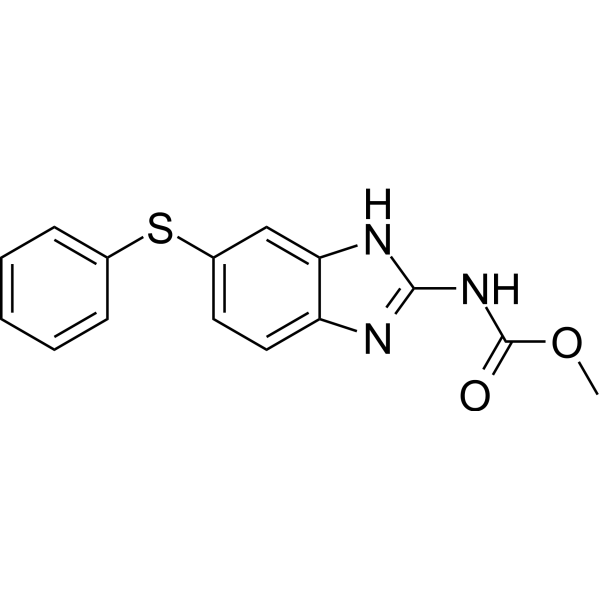
Fenbendazole is an orally active benzimidazole anthelmintic agent, with a broad antiparasitic range. Fenbendazole is a microtubule destabilizing agent and acts on helminthes primarily by binding to tubulin and disrupting the tubulin microtubule equilibrium. Fenbendazole stabilizes the transcriptional activator HIF-1α. Fenbendazole possesses an efficient anti-proliferative activity and induces apoptosis. Fenbendazole causes cell-cycle arrest and mitotic cell death, and has antitumor activity in mice xenografted with wild-type p53 .
loading...
    loading...
4
4 Cited Publications
Cat. No.: HY-156633
CAS No.: 2636846-41-6
Purity:  99.78%
Synonyms: PC14586
Target:  

MDM-2/p53

Research Areas:  

Cancer

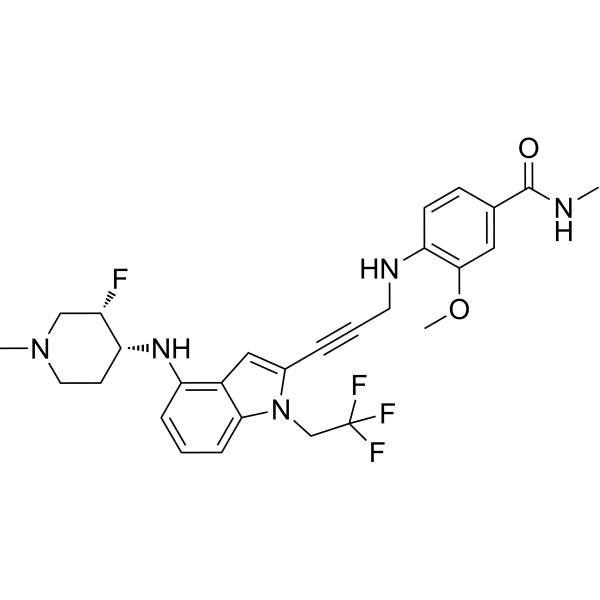
Rezatapopt (PC14586) is an orally active antineoplastic agent. Rezatapopt binds to a pocket created by the TP53 Y220C mutation. Rezatapopt restores p53 tumor suppressor functions by stabilization of the p53 protein structure. Rezatapopt demonstrates tumor inhibition and regression in mouse models with established human tumor xenografts harboring the TP53 Y220C mutation .
loading...
    loading...
4
4 Cited Publications
Cat. No.: HY-101666
CAS No.: 924296-39-9
Purity:  98.91%
Research Areas:  

Metabolic Disease Cancer

HBX 41108 is an inhibitor of ubiquitin-specific protease 7 (USP7) with an IC50 of 424 nM. HBX 41108 inhibits USP7-mediated p53 deubiquitination to stabilize p53 and inhibits cancer cell growth. BX 41108 can be used in cancer and diabetes research .
loading...
    loading...
3
3 Cited Publications
Cat. No.: HY-114305
CAS No.: 2064292-12-0
Purity:  99.70%
Research Areas:  

Cancer

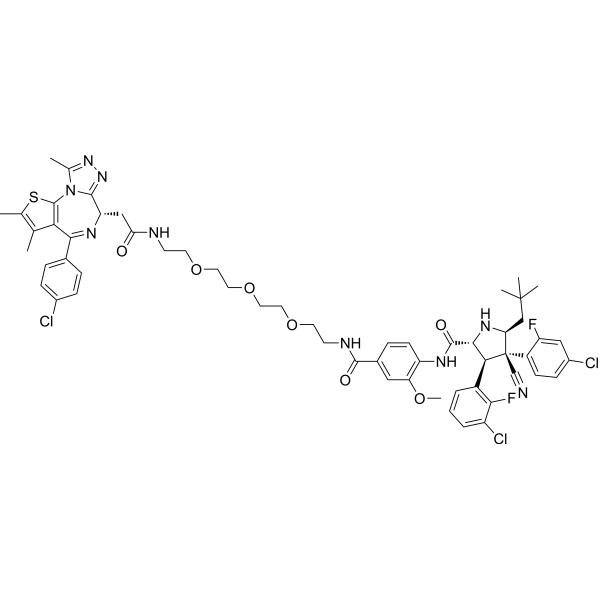
A1874 is an orally active BRD4 PROTAC degrader with a DC50 of 32 nM. A1874 degrades BRD4 via the ubiquitin-proteasome system by recruiting the MDM2 E3 ligase, while disrupting the MDM2-p53 interaction to stabilize p53 and upregulate p21, thereby inducing cell cycle arrest and apoptosis. A1874 exhibits selectivity for wild-type p53 cells and MDM2-amplified tumors, and it can be used in research on breast cancer, colorectal cancer, melanoma, lung cancer, lymphoma, myeloid leukemia, osteosarcoma, and glioblastoma .
loading...
    loading...
3
3 Cited Publications
Cat. No.: HY-13721
CAS No.: 81267-65-4
Purity:  99.89%
Synonyms: Idronoxil; Dehydroequol; Haginin E
Research Areas:  

Cancer

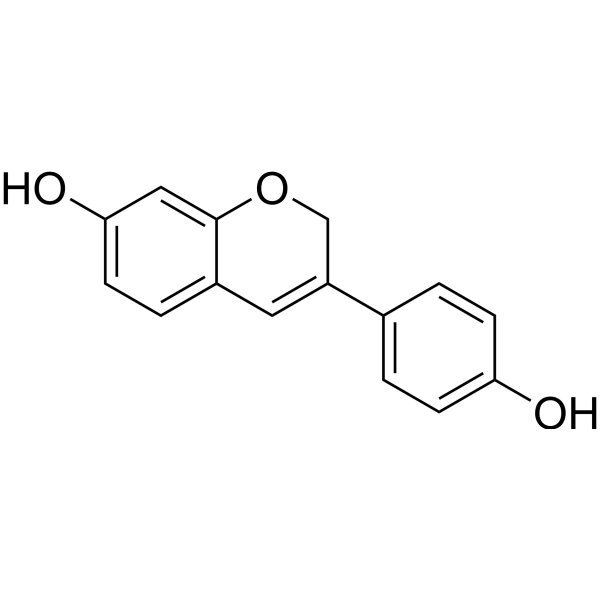
Phenoxodiol (Idronoxil), a synthetic analog of Genestein, activates the mitochondrial caspase system, inhibits XIAP (an apoptosis inhibitor), and sensitizes the cancer cells to Fas-mediated apoptosis. Phenoxodiol also inhibits DNA topoisomerase II by stabilizing the cleavable complex. Phenoxodiol induces cell cycle arrest in the G1/S phase of the cell cycle and upregulates p21 WAF1 via a p53 independent manner .
loading...
    loading...
3
3 Cited Publications
Cat. No.: HY-108637
CAS No.: 880813-36-5
Purity:  98.93%
Target:  

MDM-2/p53

Research Areas:  

Cancer

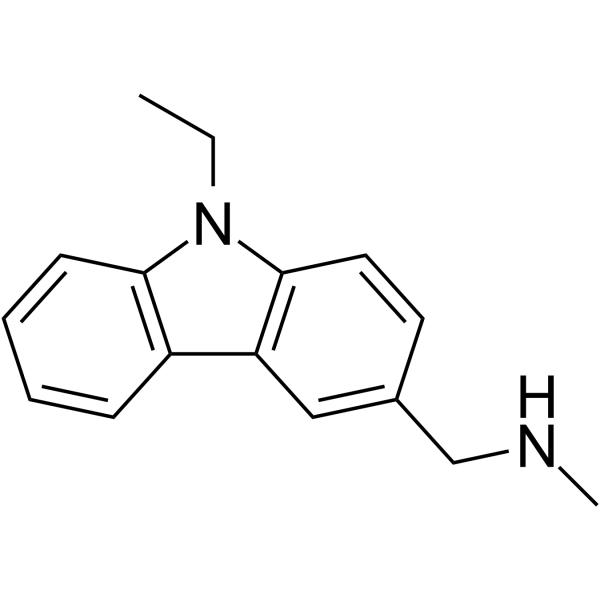
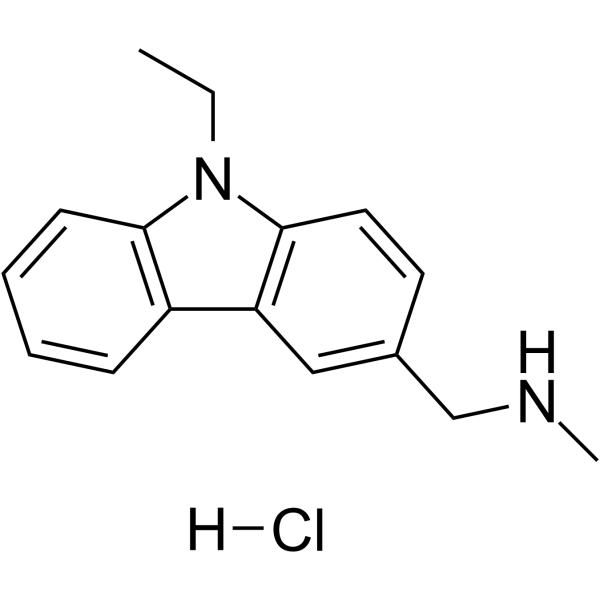
PhiKan 083 is a carbazole derivative, which binds to the surface cavity and stabilizes Y220C (a p53 mutant), with a Kd of 167 μM. PhiKan 083 can be used for cancer research .
loading...
    loading...
3
3 Cited Publications
Cat. No.: HY-108637A
CAS No.: 1050480-30-2
Purity:  99.01%
Target:  

MDM-2/p53

Research Areas:  

Cancer

PhiKan 083 hydrochloride is a carbazole derivative, which binds to the surface cavity and stabilizes Y220C (a p53 mutant), with a Kd of 167 μM , and a relative binding affinity (Kd) of 150 μM in Ln229 cells .
loading...
    loading...
2
2 Cited Publications
Cat. No.: HY-108638
CAS No.: 59474-01-0
Purity:  99.60%
Synonyms: XI-011 hydrochloride
Target:  

MDM-2/p53 Apoptosis PARP

Research Areas:  

Cancer

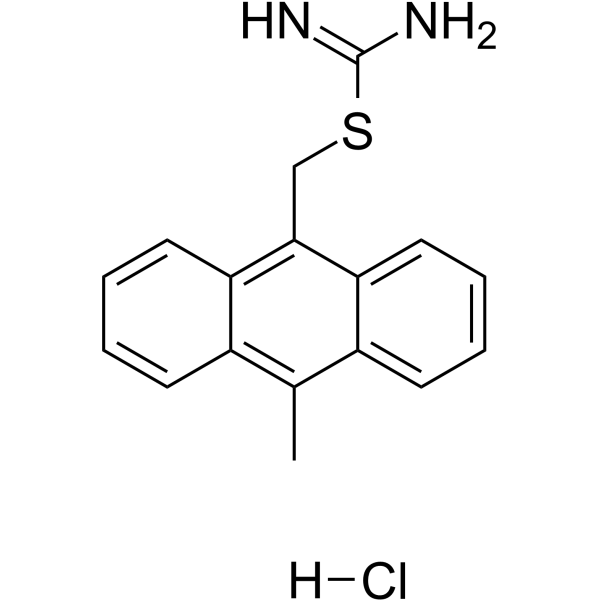
NSC 146109 hydrochloride (XI-011 hydrochloride) is a p53 activator and MDMX inhibitor. NSC 146109 hydrochloride inhibits MDMX gene transcription, downregulates MDMX mRNA and protein levels, stabilizes p53 and activates the transcriptional activity of p53. NSC 146109 hydrochloride induces cancer cell apoptosis (apoptosis) and inhibits the growth of transformed cells. NSC 146109 hydrochloride inhibits the growth of xenograft tumors. NSC 146109 hydrochloride can be used in research related to breast cancer and cervical cancer .
loading...
    loading...
1
1 Cited Publications
Cat. No.: HY-122815
CAS No.: 20108-30-9
Synonyms: Fusicoccin A
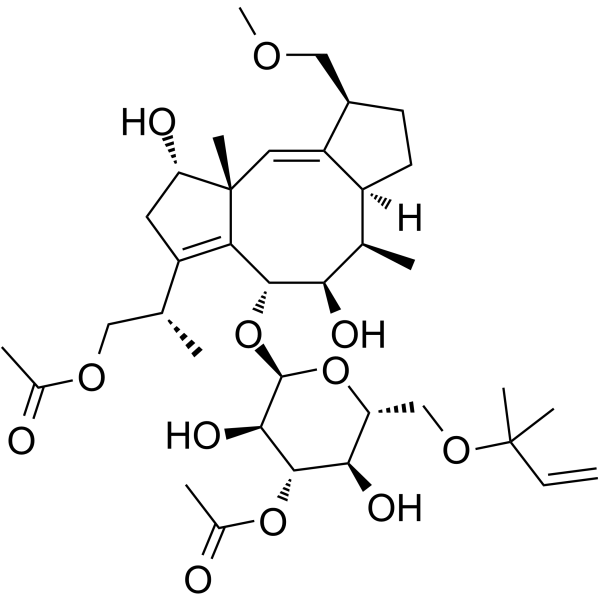
Fusicoccin (Fusicoccin A), a fungal pytotoxin, is a stabilizer of specific 14-3-3 protein-protein interactions. Fusicoccin sabilizes H +-ATPase/14-3-3 cmplex in pants, maintaining the enzyme in activated state. Fusicoccin also stabilizes 14-3-3 protein interactions with binding partners containing a C-terminal 14-3-3 recognition motif (a mode 3 motif), such as ERα, GPIbα, TASK3, CTFR, and p53. Fusicoccin induces apoptosis in cancer cells and has anticancer activity .
loading...
    loading...
1
1 Cited Publications
Cat. No.: HY-120373
CAS No.: 2230044-57-0
Purity:  98.76%
Target:  

MDM-2/p53

Research Areas:  

Cancer

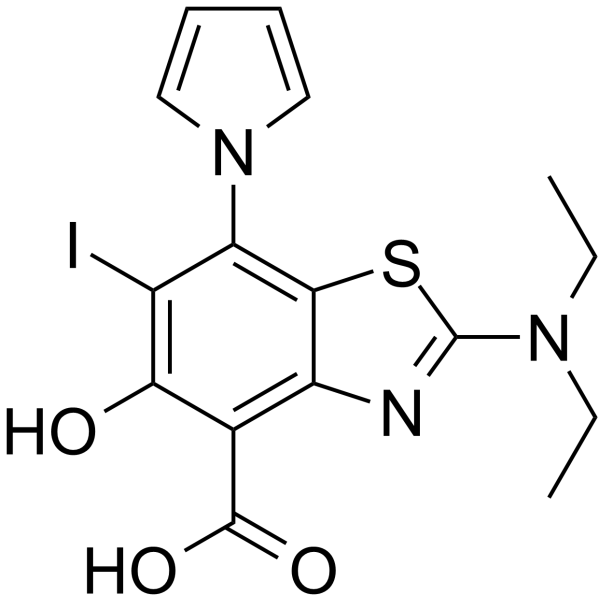
MB710, an aminobenzothiazole derivative, is a stabilizer of oncogenic p53 mutation Y220C. MB710 binds tightly to the Y220C pocket and stabilizes p53-Y220C, with a Kd of 4.1 μM. MB710 shows anticancer activity in p53-Y220C cell lines .
loading...
    loading...
1
1 Cited Publications
Cat. No.: HY-155974
CAS No.: 2308548-54-9
Purity:  99.84%
Target:  

MDM-2/p53

Research Areas:  

Cancer

MeOIstPyrd is an anti-skin cancer agent. MeOIstPyrd inhibits cell proliferation, migration, and spheroid formation by activating the mitochondrial intrinsic apoptotic pathway. MeOIstPyrd induces DNA damage. MeOIstPyrd activates p53, and increases the half-life of p53 and stabilizes p53 by phosphorylating it at ser15. MeOIstPyrd binds to MDM2 in the p53 sub-pocket and blocks p53-MDM2 interaction .
loading...
    loading...
Cat. No.: HY-18343A
CAS No.: 1217195-61-3
Target:  

MDM-2/p53

Research Areas:  

Cancer

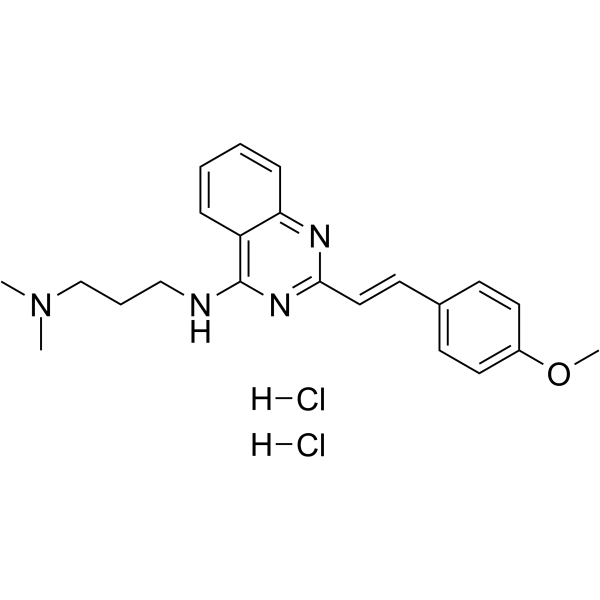
CP-31398 dihydrochloride stabilizes the active conformation of p53 and promotes p53 activity in cancer cell lines with mutant or wild-type p53 .
loading...
    loading...
Cat. No.: HY-128784
CAS No.: 874146-69-7
Purity:  98.73%
Research Areas:  

Cancer

PK11007 is a mild thiol alkylator with anticancer activity. PK11007 stabilizes p53 via selective alkylation of two surface-exposed cysteines without compromising its DNA binding activity. PK11007 induces mutant p53 cancer cell death by increasing reactive oxygen species (ROS) levels .
loading...
    loading...
Cat. No.: HY-U00447
CAS No.: 38275-34-2
Research Areas:  

Cancer

PK11000 is an alkylating agent, and stabilizes the DNA-binding domain of both WT and mutant p53 proteins by covalent cysteine modification without compromising DNA binding. PK11000 has anti-tumor activities .
loading...
    loading...
Cat. No.: HY-156135
CAS No.: 5358-76-9
Purity:  ≥98.0%
NSC194598 is a p53 DNA-binding inhibitor with an IC50 value of 180 nM. NSC194598 inhibits p53 DNA binding and induction of target genesn when p53 is stabilized and activated by irradiation or chemotherapy. NSC194598 can interfere with transcriptional activation of mutated rearranged during transfection (RET) gene, induce apoptosis and G0/G1 phase arrest. NSC194598 can be used for the researches of acute radiation toxicity and medullary thyroid carcinoma .
loading...
    loading...
Cat. No.: HY-160922
CAS No.: 696628-24-7
Target:  

MDM-2/p53 Bacterial

Research Areas:  

Infection Cancer

BAY 249716 stabilizes all three p53 protein variants. BAY 249716 also has antitubercular activity (IC90: <0.10 μg/mL for Tuberculosis) .
loading...
    loading...
Cat. No.: HY-B0413R
CAS No.: 43210-67-9
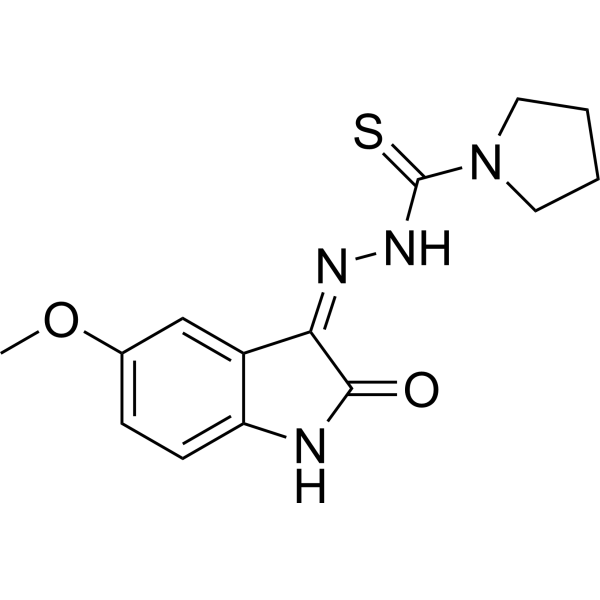
Fenbendazole (Standard) is the analytical standard of Fenbendazole. This product is intended for research and analytical applications. Fenbendazole is an orally active benzimidazole anthelmintic agent, with a broad antiparasitic range. Fenbendazole is a microtubule destabilizing agent and acts on helminthes primarily by binding to tubulin and disrupting the tubulin microtubule equilibrium. Fenbendazole stabilizes the transcriptional activator HIF-1α. Fenbendazole possesses an efficient anti-proliferative activity and induces apoptosis. Fenbendazole causes cell-cycle arrest and mitotic cell death, and has antitumor activity in mice xenografted with wild-type p53 .
loading...
    loading...
Cat. No.: HY-148106
CAS No.: 642072-49-9
Target:  

Ligands for E3 Ligase

Research Areas:  

Cancer

MEL23 is a MDM2 E3 ligase inhibitor that blocks the E3 ligase activity of the MDM2-MDMX complex. MEL23 inhibits Mdm2 and p53 ubiquitination in cells, reduce viability of cells with wild-type p53. MEL23 stabilizes MDM2 via a mechanism independent of p53 transcription .
loading...
    loading...

