23 Results for "

peripherally restricted

" in MedChemExpress (MCE) Product Catalog:
Products (23)

23 Results for "peripherally restricted" in MCE Product Catalog:

4
4 Cited Publications
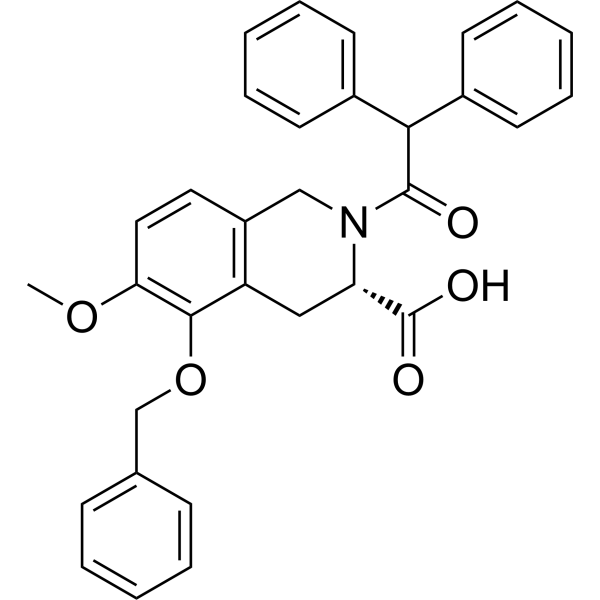
Cat. No.: HY-13106
CAS No.: 1316755-16-4
Purity:  98.89%
Synonyms: EMA401; PD-126055; (S)-EMA400
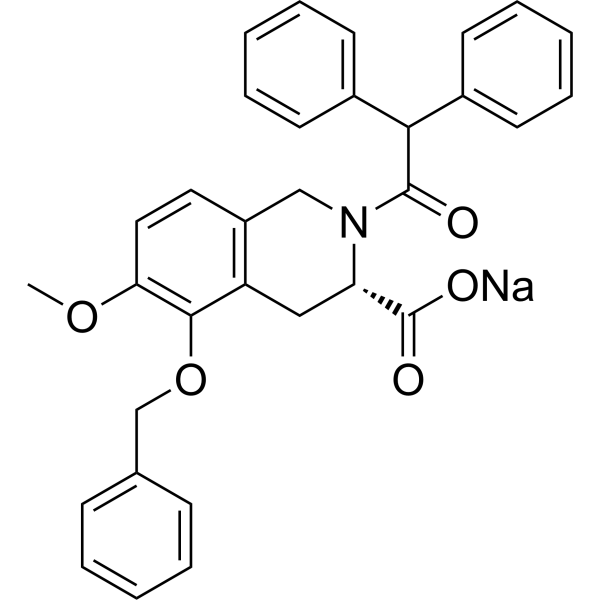
Olodanrigan (EMA401) is a highly selective, orally active, peripherally restricted angiotensin II type 2 receptor (AT2R) antagonist. It is under development as a neuropathic pain therapeutic agent. Olodanrigan (EMA401) analgesic action appears to involve inhibition of augmented AngII/AT2R induced p38 and p42/p44 MAPK activation, and hence inhibition of DRG neuron hyperexcitability and sprouting of DRG neurons .
loading...
    loading...
1
1 Cited Publications
Cat. No.: HY-137279
CAS No.: 93302-47-7
Purity:  99.7%
Target:  

Opioid Receptor

Research Areas:  

Inflammation/Immunology

Naloxone methiodide is a peripherally restricted, nonselective, and competitive opioid receptor antagonist. Naloxone methiodide does not penetrate the blood-brain barrier .
loading...
    loading...
Cat. No.: HY-116477
CAS No.: 1357160-72-5
Purity:  99.85%
Target:  

FAAH

URB937 is an orally active and peripherally restricted FAAH inhibitor (IC50=26.8 nM) and increases anandamide levels. URB937 fails to affect FAAH activity in the brain (not penetrate the blood-brain barrier) .
loading...
    loading...
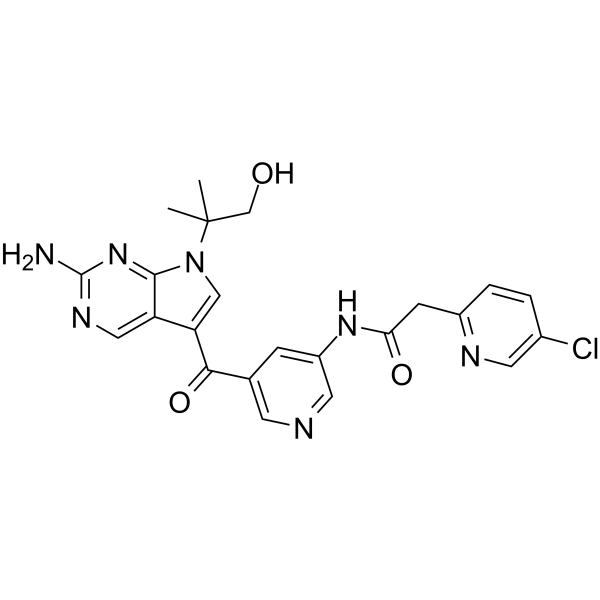
Cat. No.: HY-122616
CAS No.: 1402438-74-7
Purity:  98.8%
Target:  

Trk Receptor

Research Areas:  

Neurological Disease

PF-06273340 is a peripherally restricted pan-Trk inhibitor with IC50 values of 6, 4, 3 nM for TrkA, TrkB, and TrkC receptors. PF-06273340 binds in a DFG-out conformation, targeting less conserved kinase ligand binding domain regions outside the ATP binding pocket. PF-06273340 exhibits anti-hyperalgesic and analgesic effects. PF-06273340 can be used for the research of pain .
loading...
    loading...
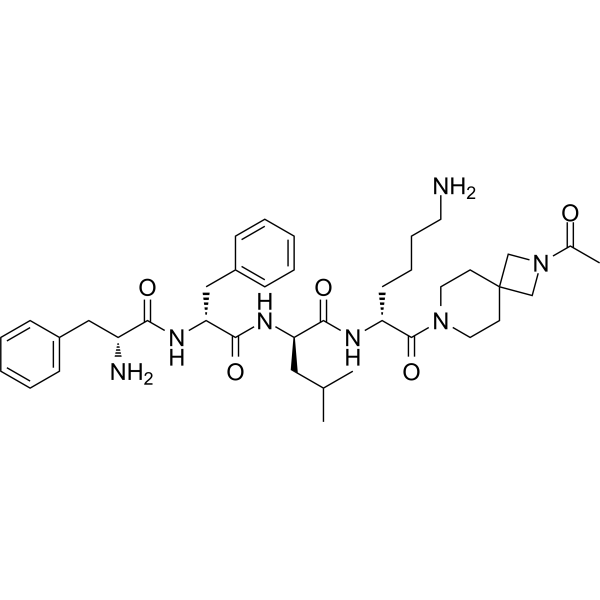
Cat. No.: HY-P3445
CAS No.: 2269511-95-5
Synonyms: HSK21542
Target:  

Opioid Receptor

Research Areas:  

Neurological Disease

Anrikefon is a peripherally restricted kappa opioid receptor (KOR) agonist, with an IC50 of 0.54 nM, an EC50 of 2.41 pM, and a Ka of 0.068 nM against human KOR, and it exhibits high selectivity over μ and δ opioid receptors. Anrikefon exerts analgesic effects by inhibiting behaviors associated with inflammatory, postoperative and neuropathic pain, and also exerts antipruritic effects by reducing itch-related behaviors. Anrikefon can be used in research on pain, pruritus, and pruritus associated with chronic kidney disease .
loading...
    loading...
Cat. No.: HY-141411A
CAS No.: 1998760-00-1
Purity:  99.62%
Synonyms: (S)-MRI-1867
Research Areas:  

Metabolic Disease

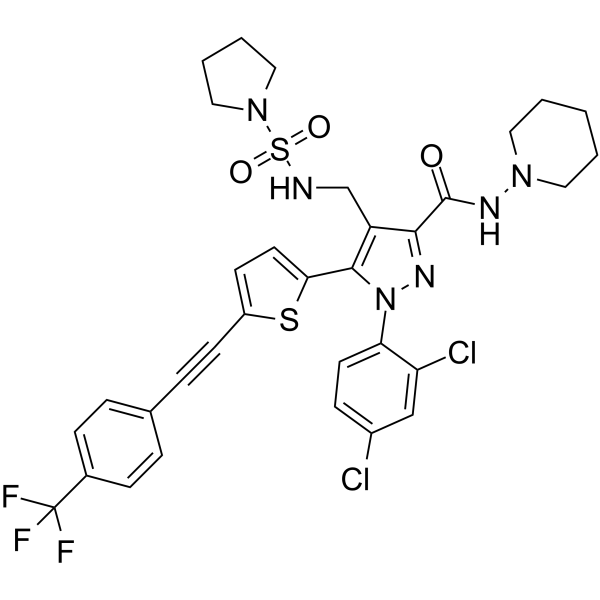
Zevaquenabant ((S)-MRI-1867) is a peripherally restricted, orally bioavailable dual cannabinoid CB1 receptor and inducible NOS antagonist. Zevaquenabant ameliorates obesity-induced chronic kidney disease (CKD) .
loading...
    loading...
Cat. No.: HY-122964
CAS No.: 1132922-57-6
Purity:  99.5%
Target:  

Cannabinoid Receptor

Research Areas:  

Metabolic Disease

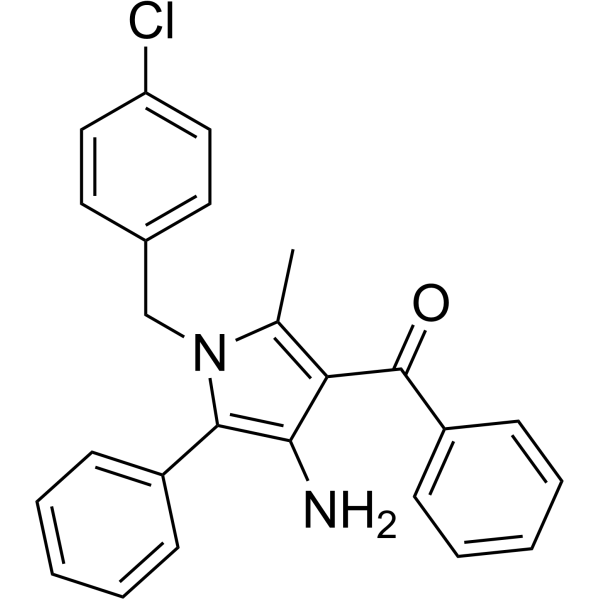
URB447 is a peripherally restricted CB1 cannabinoid antagonist (IC50: 313 nM and 41 nM for rat CB1 and human CB2 receptor respectively ). URB447 lowers food intake and body-weight gain in mice without entering the brain or antagonizing central CB1-dependent responses. URB447 can be used for research of obesity .
loading...
    loading...
Cat. No.: HY-12790
CAS No.: 1429239-98-4
Purity:  99.83%
Synonyms: CB1-IN-1
Target:  

Cannabinoid Receptor

Research Areas:  

Metabolic Disease

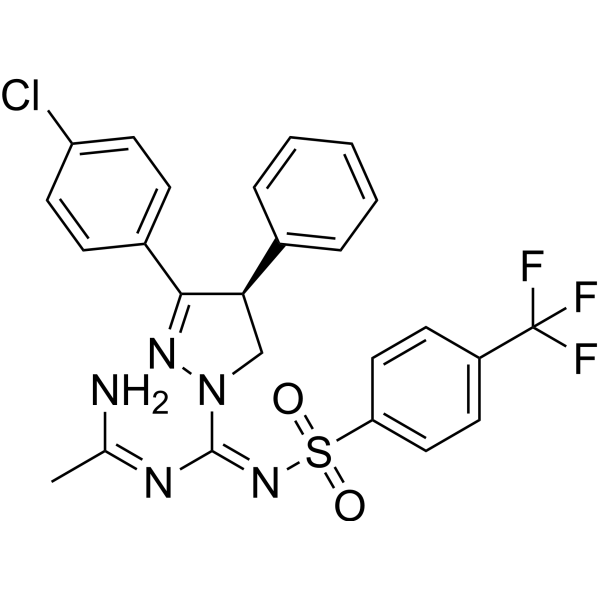
BPRCB1184 is a peripherally restricted 1-type cannabinoid receptor (CB1) antagonist, whose activity is associated with the regulation of obesity-related endocannabinoid system. BPRCB1184 regulates the activity of the endocannabinoid system, promotes lipid mobilization, reduces triglyceride storage, improves glucose metabolism, decreases food intake and body weight, while enhances insulin resistance and improves blood lipid levels. BPRCB1184 can be used in obesity-related research .
loading...
    loading...
Cat. No.: HY-14370
CAS No.: 948840-25-3
Purity:  98.31%
Target:  

LPL Receptor

Research Areas:  

Others Inflammation/Immunology

LX2931 is an inhibitor of Sphingosine 1-Phosphate Lyase (S1PL). LX2931 works by increasing levels of S1P inside and outside the cell. The decrease in S1PL activity leads to a significant increase in S1P content in tissues, especially in lymphoid tissues which may lead to a restricted exodus of lymphocytes from secondary immune tissues, resulting in lymphocytopenic and immunosuppressive effects in the peripheral circulation. LX2931 can be used in research for the study of autoimmune diseases, especially rheumatoid arthritis .
loading...
    loading...
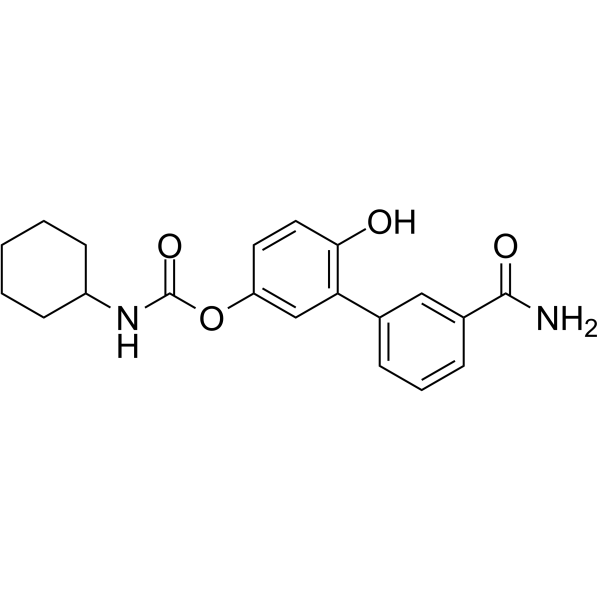
Cat. No.: HY-126031
CAS No.: 2055172-60-4
Target:  

DAGL

Research Areas:  

Inflammation/Immunology

(R)-KT109 is a peripherally restricted serine hydrolase inhibitor that cannot cross the blood-brain barrier. (R)-KT109 irreversibly inhibits ABHD6, DAGLα and DAGLβ via carbamoylation of the active-site serine. (R)-KT109 exerts selective inhibitory effects on serine hydrolases in mouse brains, with pIC50 values of 8.6, 9.1 and 8.2 against human ABHD6, DAGLα and DAGLβ, respectively. (R)-KT109 effectively reduces the levels of 2-arachidonoylglycerol, arachidonic acid, eicosanoids and TNF-α. (R)-KT109 is widely used in studies of metabolic syndrome-related diseases and neuroinflammation .
loading...
    loading...
Cat. No.: HY-149933
CAS No.: 871978-21-1
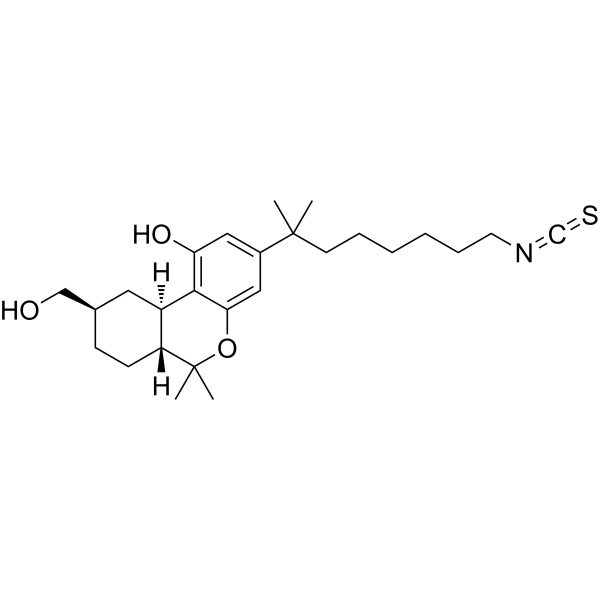
AM841 is a cannabinoid superagonist and a covalent, irreversible full agonist of CB1. AM841 can activate peripheral CB1 receptors to reduce excitatory neurotransmission and GI smooth muscle contractility, and inhibit synaptic transmission. AM841 is peripherally restricted at low doses in mice, with extremely low brain penetration, potently inhibits gastrointestinal motility, and can reverse acute stress-induced hyperaccelerated gastrointestinal transit; at high doses, it can produce the classic tetrad of central cannabinoid phenotypes (analgesia, catalepsy, hypothermia, decreased spontaneous activity). AM841 can improve intestinal inflammation in mouse colitis models. AM841 induces transient stress-induced hyperthermia. AM841 can be used for research on gastrointestinal motility disorders and colitis .
loading...
    loading...
Cat. No.: HY-13106A
CAS No.: 1316755-17-5
Synonyms: EMA401 sodium; PD-126055 sodium
Target:  

Angiotensin Receptor

Research Areas:  

Neurological Disease Endocrinology

Olodanrigan (EMA401) sodium is a highly selective, orally active, peripherally restricted angiotensin II type 2 receptor (AT2R) antagonist. Olodanrigan sodium is under development as a neuropathic pain therapeutic agent. Olodanrigan sodium analgesic action appears to involve inhibition of augmented AngII/AT2R induced p38 and p42/p44 MAPK activation, and hence inhibition of DRG neuron hyperexcitability and sprouting of DRG neurons .
loading...
    loading...
Cat. No.: HY-120927A
CAS No.: 170098-43-8
Target:  

Opioid Receptor

Research Areas:  

Neurological Disease

Alvimopan metabolite hydrochloride is a peripherally restricted Opioid Receptor antagonist that inhibits the amplitude of electrically evoked contractions and spontaneous mechanical activity in guinea pig ileum .
loading...
    loading...
Cat. No.: HY-122331
CAS No.: 991-42-4
Purity:  98.91%
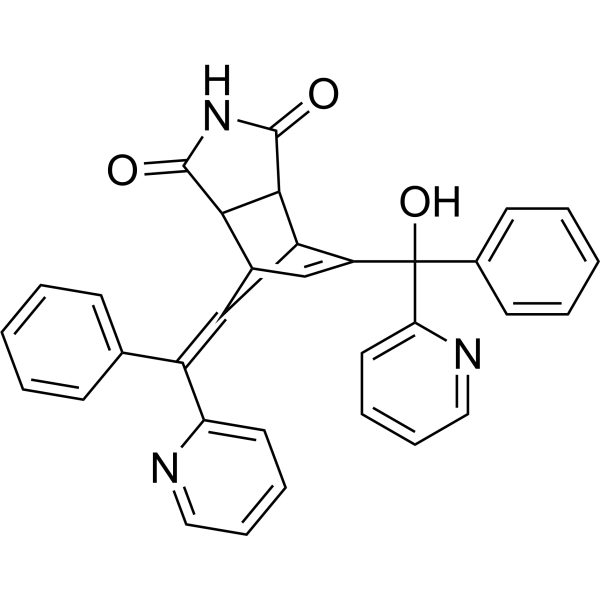
Norbormide, a rodenticide, is a calcium entry blocker with a selective vasoconstrictor activity. Norbormide shows species- and tissue-specific, endothelium independent, and is restricted to the peripheral arteries of rat .
loading...
    loading...
Cat. No.: HY-146662
CAS No.: 2255311-93-2
Target:  

PGE synthase

Research Areas:  

Inflammation/Immunology

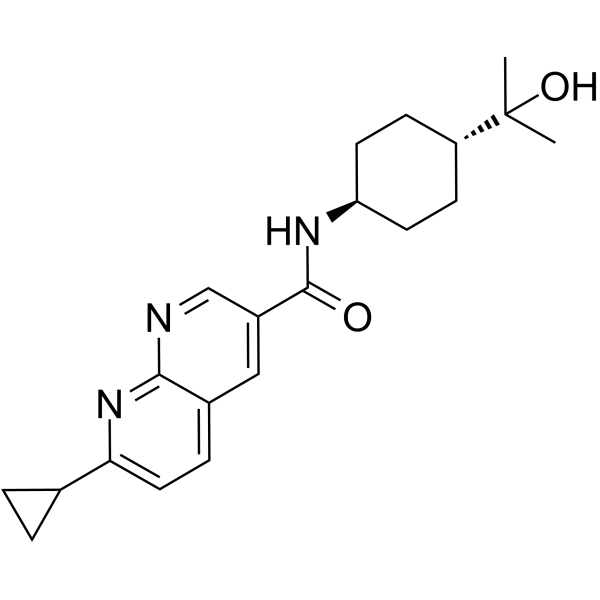
HPGDS inhibitor 3 is an orally active and highly potent peripherally restricted hematopoietic prostaglandin D synthase (H-PGDS) inhibitor with IC50 value of 9.4 nM and EC50 of 42 nM, respectively. HPGDS inhibitor 3 exhibits good selectivity, good pharmacokinetic parameters in mouse, rat, and dog, and no CNS toxicity. HPGDS inhibitor 3 has anti-inflammatory activity .
loading...
    loading...
Cat. No.: HY-175813
CAS No.: 3113770-74-1
NPSR1 antagonist-1 is a potent and peripherally restricted neuropeptide S receptor 1 (NPSR1) antagonist. NPSR1 antagonist-1 can inhibit IL-6, PTGS2, IL-20, and CXCL8 expression. NPSR1 antagonist-1 can reduce TNF-α cytokine levels. NPSR1 antagonist-1 can be used for the research of inflammation, such as peritonitis .
loading...
    loading...
Cat. No.: HY-154832
CAS No.: 1416984-93-4
Target:  

Calcium Channel

Research Areas:  

Cardiovascular Disease

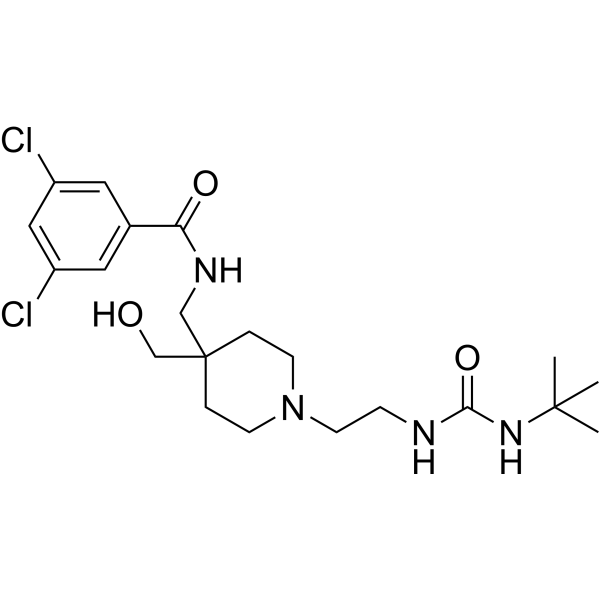
Cav 3.2 inhibitor 4 (compound 21) is a potent, peripherally restricted, selective T-type calcium channel (Cav3.2) inhibitor, with an IC50 of 0.6 μM. Cav 3.2 inhibitor 4 can be used for the research of atrial fibrillation .
loading...
    loading...
Cat. No.: HY-141411B
Synonyms: (R)-MRI-1867
Research Areas:  

Others

(R)-Zevaquenabant ((R)-MRI-1867) is the enantiomer of Zevaquenabant (HY-141411A). Zevaquenabant ((S)-MRI-1867) is a peripherally restricted, orally bioavailable dual cannabinoid CB1 receptor and inducible NOS antagonist. Zevaquenabant ameliorates obesity-induced chronic kidney disease (CKD) .
loading...
    loading...
Cat. No.: HY-P992012

Target:  

Opioid Receptor

Research Areas:  

Neurological Disease Cancer

CA1001 is a small-molecule ZNF74 inhibitor and a peripherally restricted κ/δ dual opioid receptor agonist. CA1001 exhibits potent antitumor activity both in vitro and in vivo. CA1001, in combination with immune checkpoint inhibitors, significantly enhances tumor regression. CA1001 activates peripherally restricted κ/δ dual opioid receptors and exerts analgesic effects under conditions of inflammatory pain, neuropathic pain, and mechanical hyperalgesia. CA1001 can be used in research related to melanoma, mechanical hyperalgesia, neuropathic pain, and inflammatory arthritis pain.
loading...
    loading...
Cat. No.: HY-181482
Target:  

DAGL

Research Areas:  

Neurological Disease

A1480LS is a peripherally restricted, orally active covalent and irreversible inhibitor of DAGLα and DAGLβ, with IC50 values of 6 nM and 4 nM against human targets, respectively, and IC50 values ≤15 nM across mouse, rat, dog, monkey and human systems. A1480LS reduces the levels of 2-arachidonoylglycerol, arachidonic acid, and cyclooxygenase- and lipoxygenase-derived eicosanoids. A1480LS inhibits injury-induced production of 2-arachidonoylglycerol and arachidonic acid in the peripheral sciatic nerve, and suppresses the responses of high-threshold and wide-dynamic-range-like dorsal horn neurons to mechanical stimulation. A1480LS alleviates pain behaviors in rat models of inflammatory pain, neuropathic pain and chemotherapy-induced peripheral neuropathy .
loading...
    loading...

