26 Results for "

phenolic acids

" in MedChemExpress (MCE) Product Catalog:
Products (26)

26 Results for "phenolic acids" in MCE Product Catalog:

1
1 Cited Publications
Cat. No.: HY-W016729
CAS No.: 6203-18-5
4-(Dimethylamino) cinnamaldehyde is a staining agent that reacts with flavan-3-ols and Proanthocyanidins (HY-N0794) bearing meta-dihydroxyl or trihydroxyl phenol structures to form a green chromophore. In acidic media, 4-(Dimethylamino) cinnamaldehyde undergoes a condensation reaction with aromatic primary amines to produce colored and stable quinoid protonated Schiff base salts. 4-(Dimethylamino) cinnamaldehyde can be used to determine indole products of apotryptophanase and tryptophanase, as well as for the detection and analysis of Proanthocyanidins, with the absorbance detection wavelength of the calibration curve set at 640 nm .
loading...
    loading...
Cat. No.: HY-E70529
Research Areas:  

Infection

Ribonucleoside vanadyl complexes are a class of potent RNase and Taq polymerase inhibitors. Ribonucleoside vanadyl complexes protect RNA during RNA isolation by inhibiting ribonucleases, and also reduce the viability of bacteria and eukaryotic cells by interfering with ribosomal subunit assembly. Ribonucleoside vanadyl complexes block PCR and reverse transcription reactions templated by viral nucleic acids and enhance the effects of antibiotics against Staphylococcus aureus, but do not directly inhibit protein synthesis. Ribonucleoside vanadyl complexes can be effectively removed by phenol-chloroform extraction, thus enabling subsequent PCR analysis. Ribonucleoside vanadyl complexes can be applied in research related to chronic hepatitis C (HCV) and Staphylococcus aureus infection .
loading...
    loading...
Cat. No.: HY-118693
CAS No.: 115610-36-1
Synonyms: Dianthramide P
Avenanthramide D is a phenolic acids found in the Avena sativa L.. Avenanthramide D is promising for research of inflammation .
loading...
    loading...
Cat. No.: HY-107965
CAS No.: 8001-23-8
Synonyms: Safflower seed oil (from Carthamus tinctorius seed)
Safflower oil (from Carthamus tinctorius seed) is rich in unsaturated fatty acids such as linoleic acid and oleic acid, as well as tocopherols and phenolic compounds, and exhibits antioxidant, anti-aging and blood lipid-regulating effects. Safflower oil (from Carthamus tinctorius seed) inhibits the activities of collagenase and elastase, and exerts antioxidant activity by scavenging free radicals. Linoleic acid in safflower oil (from Carthamus tinctorius seed) reduces blood cholesterol levels. Safflower oil (from Carthamus tinctorius seed) can be applied to research in fields such as skin aging, atherosclerosis, edible oil processing and industrial raw material development .
loading...
    loading...
Cat. No.: HY-N5057
CAS No.: 136112-75-9
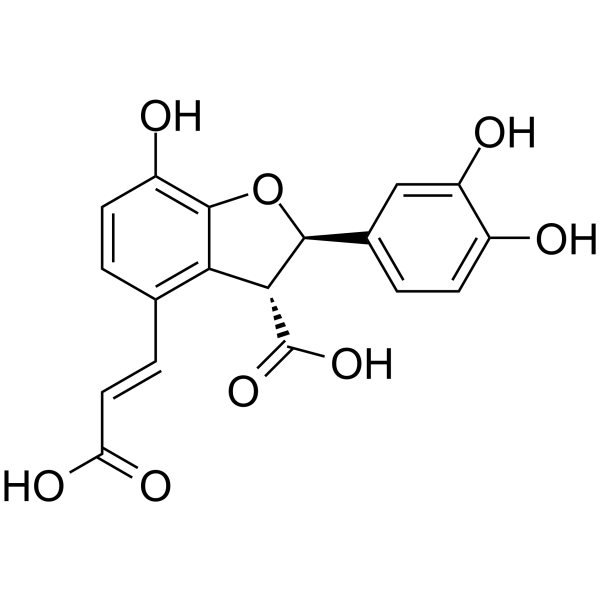
Przewalskinic acid A is a phenolic acid found in the Salvia przewalskii Maxim herb. Phenolic acids show potent antioxidant activities and potential effects in protecting against brain and heart damage caused by ischemia reperfusion .
loading...
    loading...
Cat. No.: HY-N18698
CAS No.: 84082-54-2
Ivy, hedera helix extract is extracted from the hedera helix and is rich in bioactive components such as saponins, flavonoids and phenolic acids, which give it beauty benefits.
loading...
    loading...
Cat. No.: HY-L021
5,154 compounds

Natural products are small molecules produced naturally by any organism including primary and secondary metabolites. Natural sources may lead to basic research on potential bioactive components for commercial development as lead compounds in drug discovery.

Nature has been a source of medicinal agents for thousands of years, and an impressive number of modern drugs have been isolated from natural sources, many based on their use in traditional medicine. With the development of new molecular targets, there is an increasing demand for novel molecular diversity for screening. Natural products will play a crucial role in meeting this demand through the continued investigation of world’s bio-diversity, much of which remains unexplored.

MCE provides a unique collection of 5,154 natural compounds that contain Saccharides and Glycosides, Phenylpropanoids, Quinones, Flavonoids, Terpenoids and Glycosides, Steroids, Alkaloid, Phenols, Acids and Aldehydes. Natural Product Library is a useful tool for drug discovery that can be used for high throughput screening (HTS) and high content screening (HCS).

Cat. No.: HY-N18770
CAS No.: 91771-32-3
Category:  

Extract

Target:  

Bacterial

Bambusa arundinacea extract is rich in various bioactive compounds, including flavonoids, phenolic acids, and lignans. Bambusa arundinacea extract possesses antioxidant, anti-inflammatory, and antibacterial properties.
loading...
    loading...
Cat. No.: HY-N19074
Category:  

Extract

Target:  

Bacterial

Psidium guajava extract is rich in flavonoids (such as quercetin and kaempferol), tannins, vitamin C, carotenoids, and phenolic acids, which give it antioxidant, anti-inflammatory, antibacterial, and antiviral properties.
loading...
    loading...
Cat. No.: HY-L021M
20,652 compounds

From the discovery of traditional Chinese medicine to modern antibiotics, natural products have played an important role in the drug development process. A review of all FDA-approved drugs shows that natural products and natural product-like compounds account for more than one-third of all approved drugs. Nearly half of that came from mammals, a quarter from microbes, and a quarter from plants. Over time, the proportion of microbial natural products and natural product derivatives in approved drugs has increased. Natural products have natural advantages in drug development and can be used as lead compounds in drug discovery for drug identification and mechanism research.

MCE provides a unique collection of 20,652 natural compounds and natural product-like compounds that contain saccharides and glycosides, phenylpropanoids, quinones, flavonoids, terpenoids and glycosides, steroids, alkaloid, phenols, acids and aldehydes. Natural product and natural product-like compounds library is a useful tool for drug discovery that can be used for high-throughput screening (HTS) and high-content screening (HCS).

Cat. No.: HY-L021P
6,445 compounds

Natural products are small molecules produced naturally by any organism including primary and secondary metabolites. Natural sources may lead to basic research on potential bioactive components for commercial development as lead compounds in drug discovery.

Nature has been a source of medicinal agents for thousands of years, and an impressive number of modern drugs have been isolated from natural sources, many based on their use in traditional medicine. With the development of new molecular targets, there is an increasing demand for novel molecular diversity for screening. Natural products will play a crucial role in meeting this demand through the continued investigation of world’s bio-diversity, much of which remains unexplored.

MCE provides a unique collection of 6,445 natural compounds that contains Saccharides and Glycosides, Phenylpropanoids, Quinones, Flavonoids, Terpenoids and Glycosides, Steroids, Alkaloid, Phenols, Acids and Aldehydes. Natural Product Library Plus, with more powerful screening capability, further complements Natural Product Library (HY-L021) by adding some compounds with low solubility or solution stability (Part B) to this library. All those supplementary are supplied in powder form.

Cat. No.: HY-N18765
CAS No.: 90028-12-9
Category:  

Extract

Target:  

Bacterial

Dragons blood extract contains a variety of bioactive compounds, including alkaloids, flavonoids, phenolic acids, and chalcone derivatives, which have antibacterial, anti-inflammatory, antioxidant, and wound-healing effects.
loading...
    loading...
Cat. No.: HY-N19072
Category:  

Extract

Target:  

Bacterial

Murraya koenigii extract is derived from the Murraya koenigii tree. Its active ingredients include alkaloids, flavonoids, terpenoids, and phenolic acids, which give it antioxidant, anti-inflammatory, and antibacterial properties.
loading...
    loading...
Cat. No.: HY-DY2033
Target:  

Fluorescent Dye

Research Areas:  

Others

Alexander Staining Solution is a staining solution for plant pollen, which can be used to evaluate pollen viability. Alexander Staining Solution mainly consists of malachite green, acid fuchsin, phenol, etc., and has an acidic pH value .
loading...
    loading...
Cat. No.: HY-N18777
CAS No.: 93165-54-9
Category:  

Extract

Target:  

Bacterial

Moringa oleifera extract contains a variety of active ingredients, including vitamins (A, C, E and various B vitamins), minerals (calcium, iron, potassium, magnesium), flavonoids, phenolic acids and alkaloids, which have antioxidant, anti-inflammatory, antibacterial and antiviral properties.
loading...
    loading...
Cat. No.: HY-N19066
Category:  

Extract

Target:  

Others

Cissus quadrangularis extract contains a variety of bioactive compounds, such as flavonoids, phenolic acids, carotenoids, triterpenoids, vitamins, 3-ketosteroids, minerals, and sterols. Cissus quadrangularis extract can promote fracture healing, reduce bone loss, and increase bone density.
loading...
    loading...
Cat. No.: HY-N18751
CAS No.: 92201-13-3
Category:  

Extract

Target:  

Bacterial

Aegle marmelos extract, derived from the Aegle marmelos plant, is rich in various bioactive compounds, such as coumarins (e.g., ligustin, ligustin, ligustin, psoralen, scopolamine, and umbelliferone), flavonoids, phenolic acids, and terpenoids. Aegle marmelos extract possesses anti-inflammatory, antibacterial, antioxidant, antiviral, antifungal, antitumor, and antidiabetic properties.
loading...
    loading...
Cat. No.: HY-N19063
Category:  

Extract

Target:  

Bacterial

Cassia alata extract contains anthraquinones (including hypericic acid), flavonoids, phenolic compounds, fatty acids, natural sterols, terpenoids, and saponins, among other bioactive compounds. Cassia alata extract possesses antifungal, antibacterial, and anti-inflammatory properties and can be used in research on skin diseases such as tinea, eczema, and fungal infections.
loading...
    loading...
Cat. No.: HY-E72116
Target:  

UGT

Human UGT2B4 is a UDP-glucuronosyltransferase. UGT2B4 catalyzes the glucuronidation of bile acids, Carvedilol (HY-B0006) and 6-hydroxylated bile acids to form glucuronide derivatives. UGT2B4 participates in the inactivation of endogenous and exogenous substances, including catechol estrogens, C19 steroids, phenols and monoterpenoids. Human UGT2B4 can be used in the research of hypertension, angina pectoris, chronic heart failure and intrahepatic cholestasis .
loading...
    loading...
Cat. No.: HY-116235
CAS No.: 140-95-4
Synonyms: Dimethylolurea
Research Areas:  

Others

Oxymethurea (Dimethylolurea) is a formaldehyde-releasing protein modification reagent. Under acidic conditions, Oxymethurea promotes nucleophilic substitution of tyrosine via protonation of its hydroxymethyl group, while under alkaline conditions, it promotes protein crosslinking by converting the phenolic hydroxyl group of tyrosine into a more nucleophilic phenoxide ion. Oxymethurea can be used in studies related to protein chemical modification, protein crosslinking, protein protection and genotoxicity .
loading...
    loading...

