19 Results for "

physiological solutions

" in MedChemExpress (MCE) Product Catalog:
Products (19)

19 Results for "physiological solutions" in MCE Product Catalog:

3
3 Cited Publications
Cat. No.: HY-113225B
CAS No.: 103192-46-7
Synonyms: GTP tritris solution (100 mM)
Guanosine triphosphate (GTP) tritris solution (100 mM) is a critical nucleotide and regulator of cellular metabolism. Guanosine triphosphate tritris solution (100 mM) promotes ribosomal DNA localization, pre-rRNA transcription and ribosome biogenesis by binding to RNA polymerase I and GPN proteins (GPN1/3). Guanosine triphosphate tritris solution (100 mM) links MYC-dependent ribosome biogenesis to nucleotide sufficiency, acts as a metabolic gatekeeper supporting protein synthesis, DNA/RNA synthesis and cellular signal transduction, while also participating in the physiological activities of pancreatic β-cells and serving as an oxidative substrate for reactive oxygen species. In small cell lung cancer with high MYC expression, Guanosine triphosphate tritris solution (100 mM) accumulates through the IMPDH-driven synthetic pathway, thereby affecting apoptosis and mitotic processes. Guanosine triphosphate tritris solution (100 mM) is used in the research of small cell lung cancer, hepatoblastoma and cellular metabolism .
loading...
    loading...
Cat. No.: HY-DY1004
CAS No.: 121207-31-6
BODIPY 493/503 (solution) is a BODIPY dye. BODIPY dye is a small molecule dye with strong ultraviolet absorption ability, its fluorescence peak is relatively sharp, and the quantum yield is high. They are relatively insensitive to the polarity and pH of the environment and are relatively stable under different physiological conditions. Due to its structural asymmetry, BODIPY derives a variety of structural products. BODIPY lipid droplet dyes can well pass through the cell membrane into the cell, and localize the neutral lipids in the cell to specifically stain the lipid droplets, which can be used for labeling of live cells and fixed cells . Maximum excitation/emission wavelength: 493/503 nm.
Solvent and concentration: DMSO: 5 mM.
loading...
    loading...
Cat. No.: HY-D0874
CAS No.: 68399-78-0
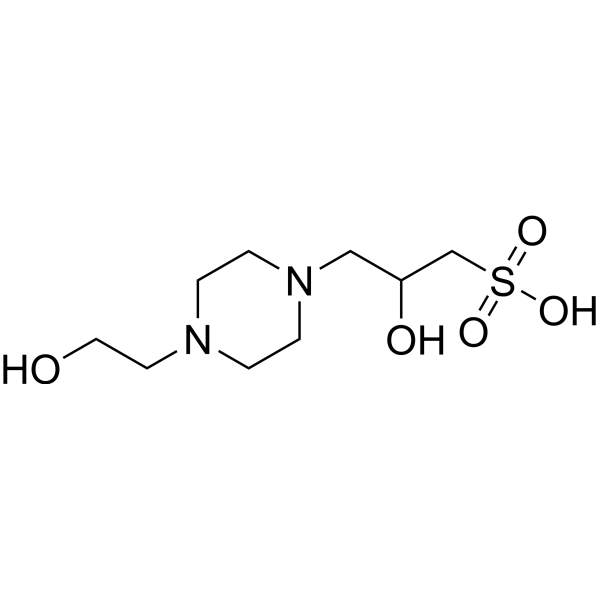
HEPPSO is a zwitterionic Good's buffer suitable for physiological pH conditions. HEPPSO forms high-order oligomers in aqueous solutions and can form a 1:1 complex with Cu 2+ via its hydroxyalkyl and tertiary amine groups. However, HEPPSO contains a structurally similar trace impurity lacking an alkanesulfonic acid side chain. The complex formed by this impurity and Cu 2+ has a very low Ka; therefore, HEPPSO may interfere with studies on copper speciation analysis in natural water bodies .
loading...
    loading...
Cat. No.: HY-DY1020
CAS No.: 145037-81-6
Rhod-2 (solution) is a high-affinity visible light excitation wavelength Ca 2+ fluorescent probe, Rhod-2, AM is an acetyl methyl ester derivative of Rhod-2, which has cell membrane permeability and can easily enter cells with simple culture. Once it enters the cell, it is sheared by its lactesterase to produce Rhod-2 without membrane permeability, which remains in the cell to perform the corresponding physiological functions. Maximum excitation/emission wavelength: 549/578 nm .
Solvent and concentration: DMSO: 1 mM
loading...
    loading...
Cat. No.: HY-DY1061
CAS No.: 158757-84-7
BODIPY 558/568 C12 (solution) is a BODIPY dye. BODIPY dye is a small molecule dye with strong ultraviolet absorption ability, its fluorescence peak is relatively sharp, and the quantum yield is high. They are relatively insensitive to the polarity and pH of the environment and are relatively stable under different physiological conditions. Due to its structural asymmetry, BODIPY derives a variety of structural products. BODIPY lipid droplet dyes can well pass through the cell membrane into the cell, and localize the neutral lipids in the cell to specifically stain the lipid droplets, which can be used for labeling of live cells and fixed cells . Maximum excitation/emission wavelength: 558/568 nm .
Solvent and concentration: DMSO: 2 mM
loading...
    loading...
Cat. No.: HY-DY1068
CAS No.: 2360411-64-7
Cyanine5 DBCO (DBCO-Cy5) hexafluorophosphate (solution) is a low-toxicity azide reactive probe (NIR fluorescent dye) , for imaging azide-labeled biomolecules via a copper-free "click-through" reaction. Cyanine5 DBCO hexafluorophosphate has no apparent cytotoxicity or animal toxicity and shows no damage to the physiological functions of cells other than the target cells (azide-labeled cells). Cyanine5 DBCO hexafluorophosphate can be used to label and track cells in vitro and in vivo (Ex=635 nm, Em=650-700 nm) .
Solvent and concentration: DMSO: 10 mM
loading...
    loading...
Cat. No.: HY-113225S1
Synonyms: GTP-13C10,15N5 tetraammonium
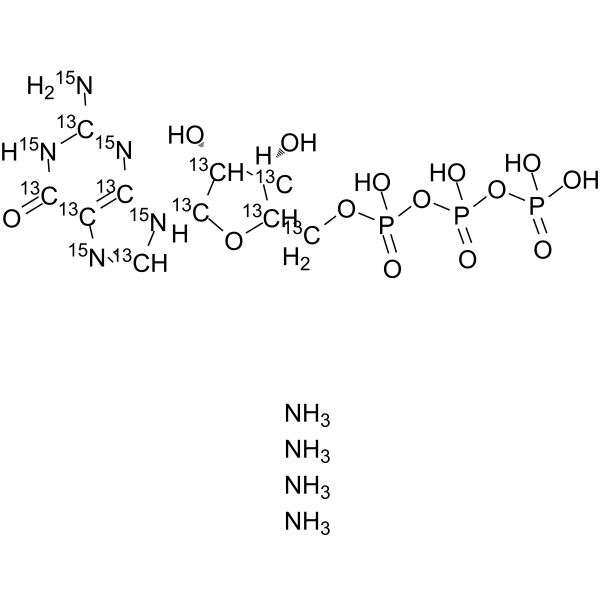
Guanosine triphosphate- 13C10, 15N5 tetraammonium solution (100 mM) (GTP- 13C10, 15N5 tetraammonium) is the 15N, 13C-labeled Guanosine triphosphate (HY-113225). Guanosine triphosphate (GTP) is a critical nucleotide and regulator of cellular metabolism. Guanosine triphosphate promotes ribosomal DNA localization, pre-rRNA transcription and ribosome biogenesis by binding to RNA polymerase I and GPN proteins (GPN1/3). Guanosine triphosphate links MYC-dependent ribosome biogenesis to nucleotide sufficiency, acts as a metabolic gatekeeper supporting protein synthesis, DNA/RNA synthesis and cellular signal transduction, while also participating in the physiological activities of pancreatic β-cells and serving as an oxidative substrate for reactive oxygen species. In small cell lung cancer with high MYC expression, Guanosine triphosphate accumulates through the IMPDH-driven synthetic pathway, thereby affecting apoptosis and mitotic processes. Guanosine triphosphate is used in the research of small cell lung cancer, hepatoblastoma and cellular metabolism .
loading...
    loading...
Cat. No.: HY-W579346
CAS No.: 108321-08-0
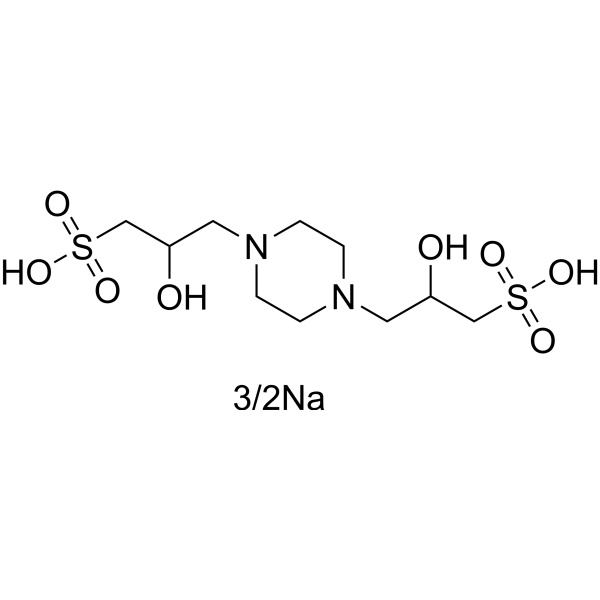
POPSO sesquisodium is a water-soluble zwitterionic buffer. POPSO sesquisodium is commonly used in biological and biochemical studies to maintain the acidity or alkalinity (pH value) of solutions, especially within the physiological pH range of 7.0 to 8.5 .
loading...
    loading...
Cat. No.: HY-172190A
MS Medium (Agar-Free, Sucrose-Free) is a culture medium with a high concentration of inorganic salts and ions, making it a relatively stable balanced solution. The quantity and ratio of nutrients in MS Medium (Agar-Free, Sucrose-Free) are suitable to meet the nutritional and physiological needs of plants.
loading...
    loading...
Cat. No.: HY-182733A
Yoshida Rice Nutrient Solution is a hydroponic nutrient solution for rice that can be used in rice physiology, genetic breeding, and nutritional research.
loading...
    loading...
Cat. No.: HY-182733K
Plant Acidic Salt Solution is an acidic salt solution used for plant physiology and can be used to study the selective absorption of ions by plant roots.
loading...
    loading...
Cat. No.: HY-182733M
Plant Control Salt Solution is a control reagent specifically designed for plant physiological research. It is primarily used to study the absorption and selectivity of salts in plants and to analyze the effects of salt solutions on plants.
loading...
    loading...
Cat. No.: HY-DY1098
CAS No.: 85138-49-4
Synonyms: 2′,7′-Bis(2-carboxyethyl)-5(6)-carboxyfluorescein (solution)
BCECF (solution) (2′,7′-Bis(2-carboxyethyl)-5(6)-carboxyfluorescein (solution)) is a cell-impermeant pH-sensitive fluorescent dye. BCECF allows measurements in the physiological pH range 6.0-8.0. Excitation ratio: 490/440 nm; Emission intensity: 535 nm.
Solvent and concentration: DMSO: 10 mM
loading...
    loading...
Cat. No.: HY-DY1104
CAS No.: 2365532-64-3
Synonyms: CF4 (solution)
Copper Fluor-4 (solution) (CF4 (solution)) is a Cu +-specific fluorescent probe based on a rhodol dye scaffold. Copper Fluor-4 solution has high copper selectivity with a Kd value of 2.9×10 ?13 M, particularly over zinc and iron, as well as abundant cellular alkali and alkaline earth metals. Copper Fluor-4 solution is stable in a physiologically relevant pH regime between 6 and 8 (wavelengths of 415 nm for excitation and 660 nm for emission) .
Solvent and concentration: DMSO: 5 mM
loading...
    loading...
Cat. No.: HY-172190B
MS Medium (Agar-Free) is a culture medium with a high concentration of inorganic salts and ions, making it a relatively stable balanced solution. The quantity and ratio of nutrients in MS Medium (Agar-Free) are suitable to meet the nutritional and physiological needs of plants.
loading...
    loading...
Cat. No.: HY-172190C
MS Medium (Calcium-Free) is a culture medium with a high concentration of inorganic salts and ions, making it a relatively stable balanced solution. The quantity and ratio of nutrients in MS Medium (Calcium-Free) are suitable to meet the nutritional and physiological needs of plants.
loading...
    loading...
Cat. No.: HY-K3038

MCE Sodium Bicarbonate Solution (7.5%) is designed to adjust the bicarbonate buffering system of cell culture media. Under appropriate CO2 culture conditions, sodium bicarbonate helps maintain physiological pH, neutralizes acidic metabolites produced by cellular metabolism, and provides a stable environment for cell growth. It also supplies bicarbonate ions required for certain cellular metabolic processes.

loading...
    loading...
Cat. No.: HY-DY1090
CAS No.: 216434-81-0
BODIPY 493/503 methyl bromide (solution) is a BODIPY dye. BODIPY dye is a small molecule dye with strong ultraviolet absorption ability, its fluorescence peak is relatively sharp, and the quantum yield is high. They are relatively insensitive to the polarity and pH of the environment and are relatively stable under different physiological conditions. Due to its structural asymmetry, BODIPY derives a variety of structural products. BODIPY lipid droplet dyes can well pass through the cell membrane into the cell, and localize the neutral lipids in the cell to specifically stain the lipid droplets, which can be used for labeling of live cells and fixed cells . Maximum excitation/emission wavelength: 493/503 nm .
Solvent and concentration: DMSO: 5 mM
loading...
    loading...
Cat. No.: HY-FLB0377
CAS No.: 76824-35-6
Synonyms: MK-208 solution
Famotidine solution is mainly composed of Famotidine (HY-B0377). Famotidine (MK-208) is an orally active and highly selective histamine H2 receptor antagonist. It inhibits gastric acid secretion by blocking the Gs signaling pathway, and regulates intracellular cAMP and ERK pathways. Famotidine inhibits TLR3-mediated inflammatory pathways, and reduces the expression of various inflammatory mediators and interferon-related genes. Famotidine scavenges DPPH and nitric oxide free radicals, alleviates oxidative stress damage in gastric tissue, inhibits proMMP-9, improves vascular endothelial permeability, and restores the normal physiological functions of neutrophils and eosinophils. Famotidine crosses intestinal epithelial cells via facilitated diffusion and passive diffusion, blocks paracellular cation transport, and increases intestinal transepithelial electrical resistance. Famotidine reduces serum levels of transaminases and alkaline phosphatase, exerts analgesic effects and gastric protective effects simultaneously. Famotidine can be used in studies related to COVID-19, liver injury and acute gastric ulcer .
loading...
    loading...
  • 1

