5 Results for "

potential dissipation

" in MedChemExpress (MCE) Product Catalog:
Products (5)

5 Results for "potential dissipation" in MCE Product Catalog:

6
6 Cited Publications
Cat. No.: HY-115576
CAS No.: 1809031-84-2
Purity:  99.54%
Research Areas:  

Neurological Disease Cancer

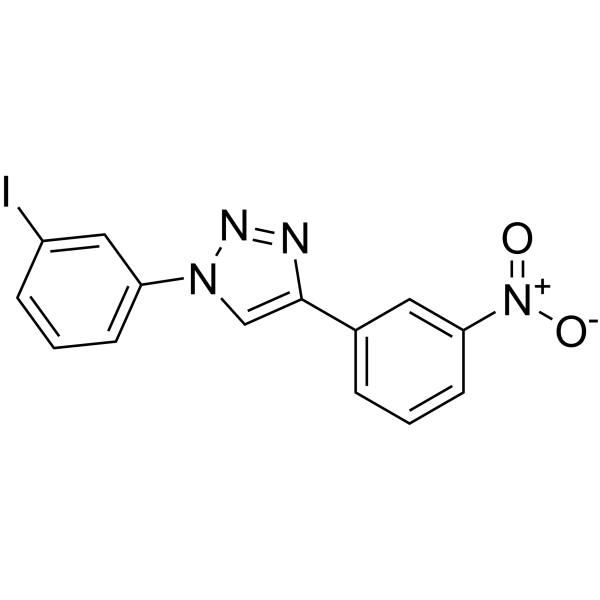
P62-mediated mitophagy inducer (PMI) is a P62-mediated mitophagy activator. P62-mediated mitophagy inducer activates mitochondrial autophagy without recruitment of Parkin or collapse of the mitochondrial membrane potential and remains active in cells lacking a fully functional PINK1/Parkin pathway. P62-mediated mitophagy inducer serves as a pharmacological tool to study the molecular mechanisms of mitosis, avoiding toxicity and some of the non-specific effects associated with the sudden dissipation of mitochondria lacking membrane potential .
loading...
    loading...
1
1 Cited Publications
Cat. No.: HY-16485
CAS No.: 560130-42-9
Synonyms: TD-6424 hydrochloride
Target:  

Antibiotic Bacterial

Research Areas:  

Infection

Telavancin hydrochloride (TD-6424 hydrochloride) is a bactericidal agent that exhibits inhibitory activity against Staphylococcus aureus. Telavancin hydrochloride inhibits bacterial cell wall synthesis by binding to the lipid-linked N-acetylglucosamine-N-muramyl pentapeptide (with a D-Ala-D-Ala terminus), a peptidoglycan precursor, and blocks the transglycosylation and transpeptidation steps. Telavancin hydrochloride disrupts bacterial membrane barrier function, induces dissipation of bacterial membrane potential, and causes leakage of cytoplasmic ATP and potassium ions, with its activity restricted exclusively to bacterial membranes. Telavancin hydrochloride can be used in research on bacterial infections, central venous catheter-related bloodstream infections, and Gram-positive bacterial pneumonia .
loading...
    loading...
Cat. No.: HY-172227
CAS No.: 148089-70-7
Research Areas:  

Cardiovascular Disease

S-15176 is an inhibitor of the mitochondrial permeability transition pore (PTP). S-15176 inhibits mitochondrial swelling induced by tert-butylhydroperoxide with an IC50 value of 45.7 μM. S-15176 inhibits PTP opening, prevents mitochondrial membrane potential dissipation and NAD(P)H oxidation, and increases mitochondrial calcium loading capacity. S-15176 is promising for research of ischemia-reperfusion injury .
loading...
    loading...
Cat. No.: HY-P10371
CAS No.: 1505523-99-8
Synonyms: txCD47
PKHB1 (txCD47) is a CD47 agonist and Thrombospondin-1 peptide mimetic. PKHB1 activates CD47 and triggers Caspase-independent, calcium-dependent cell death via mitochondrial alterations, ROS production, endoplasmic reticulum morphological changes, and dissipation of mitochondrial membrane potential. PKHB1 induces the exposure of Calreticulin, HSP70, and HSP90, thereby driving immunogenic cell death. PKHB1 promotes intratumoral CD8 + T cell infiltration and inhibits breast tumorigenesis. PKHB1 reduces HSV-1 levels and alleviates the severity of herpes simplex keratitis. PKHB1 can be used in research related to breast cancer, herpes simplex keratitis, and T-cell acute lymphoblastic leukemia .
loading...
    loading...
Cat. No.: HY-189069
Target:  

Fungal

Research Areas:  

Infection

Antifungal agent 176 is an antifungal agent. Antifungal agent 176 disrupts the cell wall and cell membrane integrity of Phomopsis sp., leading to electrolyte leakage and malondialdehyde accumulation. Antifungal agent 176 induces dissipation of mitochondrial membrane potential in Phomopsis sp., indicating impaired mitochondrial function. Antifungal agent 176 exhibits protective efficacy against kiwifruit soft rot caused by Phomopsis sp. Antifungal agent 176 can be used in studies related to Phomopsis sp. infections such as kiwifruit soft rot .
loading...
    loading...

