6 Results for "

pulpitis

" in MedChemExpress (MCE) Product Catalog:
Products (6)

6 Results for "pulpitis" in MCE Product Catalog:

1
1 Cited Publications
Cat. No.: HY-113440
CAS No.: 712-09-4
Purity:  99.95%
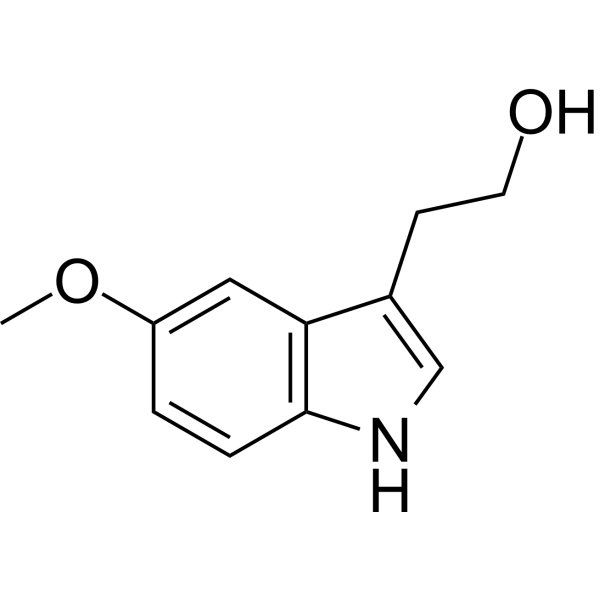
5-Methoxytryptophol is a 5-methoxyindole alcohol structurally homologous to Melatonin (HY-B0075). It is secreted by the mammalian pineal gland and exhibits an inverse circadian rhythm. 5-Methoxytryptophol regulates bone metabolism by activating the ERK1/2 pathway. It reduces the levels of pro-inflammatory cytokines TNF-α and IL-1β, as well as proteolytic enzymes MMP-1 and MMP-2, in serum and dental pulp tissues, thereby ameliorating acute pulpitis. 5-Methoxytryptophol induces rapid sleep in mice, while high doses cause respiratory depression and death. 5-Methoxytryptophol. 5-Methoxytryptophol can be used in studies related to acute pulpitis, hypnosis, and bone metabolism .
loading...
    loading...
1
1 Cited Publications
Cat. No.: HY-P5522A
Synonyms: L-Ala-γ-D-Glu-meso-diaminopimelic acid dihydrochloride
TriDAP dihydrochloride (L-Ala-γ-D-Glu-meso-diaminopimelic acid dihydrochloride) is a NOD1 agonist with a Kd value of 34.5 μM. TriDAP dihydrochloride enhances the binding of NOD1-RICK, promotes RICK phosphorylation, and activates the NF-κB, TAK1, MEK/ERK, p38 and interferon response pathways. TriDAP dihydrochloride downregulates Runx2 via increasing ubiquitination and reduces trabecular bone parameters. TriDAP dihydrochloride decreases IκBα levels and increases p65 levels. TriDAP dihydrochloride induces the secretion of proinflammatory mediators IL-8 and prostaglandins, triggers tissue inflammation and innate immune activation, and inhibits SARS-CoV-2 replication in lung epithelial cells. TriDAP dihydrochloride increases the RANKL/OPG ratio in mice, reduces bone mass and enhances osteoclast activity, and inhibits new bone formation by decreasing the mineralization deposition rate in mice. TriDAP dihydrochloride can be used in research related to pulpitis, chronic ulcerative colitis, Crohn's disease and SARS-CoV-2 infection .
loading...
    loading...
Cat. No.: HY-P5522
CAS No.: 877462-71-0
Synonyms: L-Ala-γ-D-Glu-meso-diaminopimelic acid
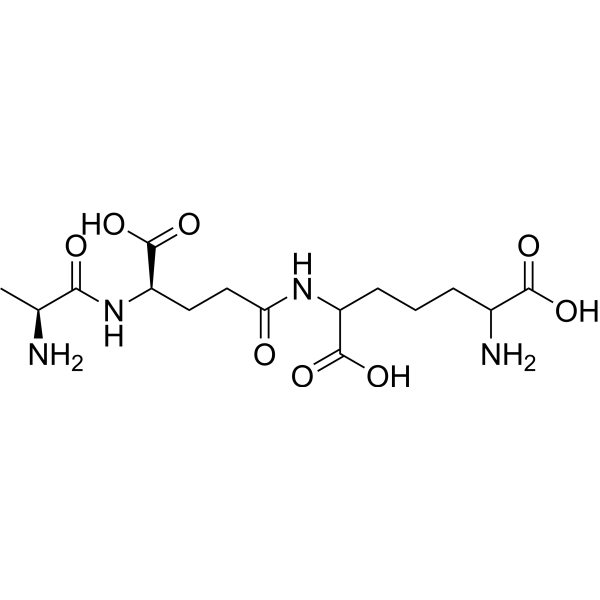
TriDAP (L-Ala-γ-D-Glu-meso-diaminopimelic acid) is a NOD1 agonist with a Kd value of 34.5 μM. TriDAP enhances the binding of NOD1-RICK, promotes RICK phosphorylation, and activates the NF-κB, TAK1, MEK/ERK, p38 and interferon response pathways. TriDAP downregulates Runx2 via increasing ubiquitination and reduces trabecular bone parameters. TriDAP decreases IκBα levels and increases p65 levels. TriDAP induces the secretion of proinflammatory mediators IL-8 and prostaglandins, triggers tissue inflammation and innate immune activation, and inhibits SARS-CoV-2 replication in lung epithelial cells. TriDAP increases the RANKL/OPG ratio in mice, reduces bone mass and enhances osteoclast activity, and inhibits new bone formation by decreasing the mineralization deposition rate in mice. TriDAP can be used in research related to pulpitis, chronic ulcerative colitis, Crohn's disease and SARS-CoV-2 infection .
loading...
    loading...
Cat. No.: HY-P10159
CAS No.: 1809102-71-3
Target:  

Antibiotic Bacterial

Research Areas:  

Infection

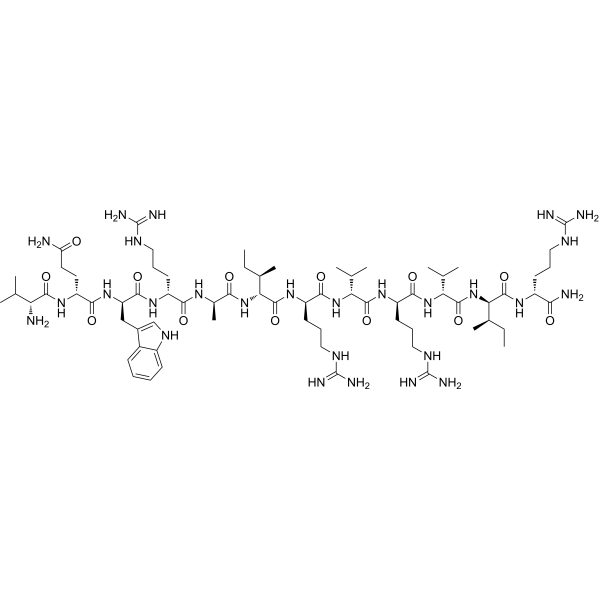
DJK-5 is an antimicrobial peptide that targets and degrades guanosine pentaphosphate and tetraphosphate (pppGpp and ppGpp). DJK-5 kills bacteria within dentinal tubules, dental plaque and preformed oral biofilms, delays biofilm recovery, reduces the abundance of extracellular polysaccharides and the structural integrity of biofilm matrices, and inhibits the formation and biomass accumulation of dental plaque biofilms. DJK-5 permeabilizes bacterial membranes, induces bacterial morphological changes, inhibits bacterial growth, and exerts a synergistic effect on bacterial biofilms when used in combination with traditional antibiotics and Colistin (HY-113678). DJK-5 exhibits protease resistance and broad-spectrum antibiofilm activity, though its activity decreases in fetal bovine serum. DJK-5 can be used in studies of pulpitis, mixed biofilm infections, skin abscesses, dental caries, infections associated with failed root canal therapy, and Pseudomonas aeruginosa biofilm-related respiratory tract infections .
loading...
    loading...
Cat. No.: HY-113440R
CAS No.: 712-09-4
5-Methoxytryptophol (Standard) is the analytical standard of 5-Methoxytryptophol. This product is intended for research and analytical applications. 5-Methoxytryptophol is a 5-methoxyindole alcohol structurally homologous to Melatonin (HY-B0075). It is secreted by the mammalian pineal gland and exhibits an inverse circadian rhythm. 5-Methoxytryptophol regulates bone metabolism by activating the ERK1/2 pathway. It reduces the levels of pro-inflammatory cytokines TNF-α and IL-1β, as well as proteolytic enzymes MMP-1 and MMP-2, in serum and dental pulp tissues, thereby ameliorating acute pulpitis. 5-Methoxytryptophol induces rapid sleep in mice, while high doses cause respiratory depression and death. 5-Methoxytryptophol. 5-Methoxytryptophol can be used in studies related to acute pulpitis, hypnosis, and bone metabolism.
loading...
    loading...
Cat. No.: HY-P5522AS
Synonyms: L-Ala-γ-D-Glu-meso-diaminopimelic acid-13C3,15N dihydrochloride
TriDAP- 13C3, 15N (L-Ala-γ-D-Glu-meso-diaminopimelic acid- 13C3, 15N) dihydrochloride is the 13C, 15N-labeled TriDAP dihydrochloride (HY-P5522A). TriDAP dihydrochloride (L-Ala-γ-D-Glu-meso-diaminopimelic acid dihydrochloride) is a NOD1 agonist with a Kd value of 34.5 μM. TriDAP dihydrochloride enhances the binding of NOD1-RICK, promotes RICK phosphorylation, and activates the NF-κB, TAK1, MEK/ERK, p38 and interferon response pathways. TriDAP dihydrochloride downregulates Runx2 via increasing ubiquitination and reduces trabecular bone parameters. TriDAP dihydrochloride decreases IκBα levels and increases p65 levels. TriDAP dihydrochloride induces the secretion of proinflammatory mediators IL-8 and prostaglandins, triggers tissue inflammation and innate immune activation, and inhibits SARS-CoV-2 replication in lung epithelial cells. TriDAP dihydrochloride increases the RANKL/OPG ratio in mice, reduces bone mass and enhances osteoclast activity, and inhibits new bone formation by decreasing the mineralization deposition rate in mice. TriDAP dihydrochloride can be used in research related to pulpitis, chronic ulcerative colitis, Crohn's disease and SARS-CoV-2 infection .
loading...
    loading...

