10 Results for "

pyramidal neurons

" in MedChemExpress (MCE) Product Catalog:
Products (10)

10 Results for "pyramidal neurons" in MCE Product Catalog:

Cat. No.: HY-136980
CAS No.: 6157-06-8
Purity:  99.79%
Synonyms: Asp-Glu
Target:  

Endogenous Metabolite

Research Areas:  

Neurological Disease

Aspartylglutamate (Asp-Glu) is a dipeptide that exhibits excitatory activity, as it has been shown to depolarize CA1 pyramidal neurons and increase conductance in response to stimulation. Aspartylglutamate selectively binds to certain glutamate receptors and demonstrates potent effects in specific regions of the hippocampus, particularly in the stratum radiatum where it enhances excitatory neurotransmission.
loading...
    loading...
Cat. No.: HY-P4397
CAS No.: 115499-13-3
Target:  

Oxytocin Receptor

Research Areas:  

Endocrinology

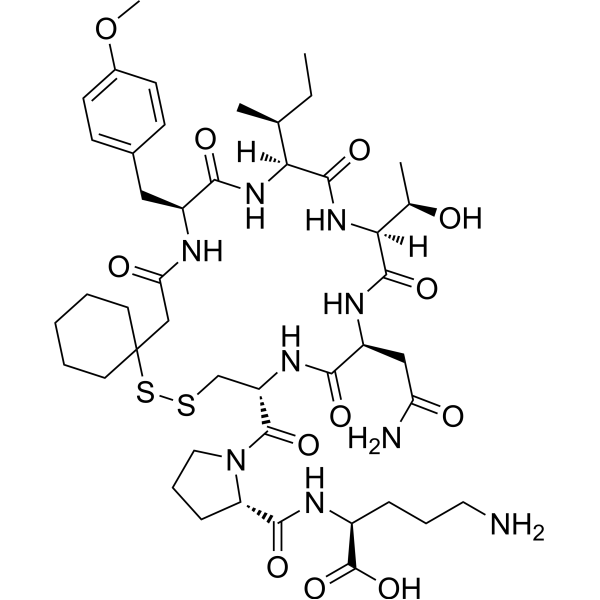
(d(CH2)51,Tyr(Me)2,Thr4,Orn8,des-Gly-NH29)-Vasotocin, an oxytocin receptor antagonist, abolishes oxytocin-enhanced inhibitory postsynaptic currents in CA1 pyramidal neurons .
loading...
    loading...
Cat. No.: HY-100843
CAS No.: 78944-89-5
Target:  

Others

Research Areas:  

Neurological Disease

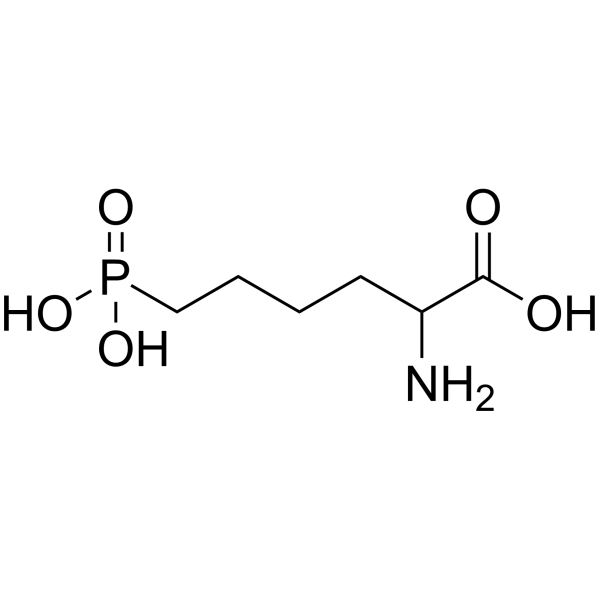
L-AP6 is a selective agonist for a quisqualate-sensitized site in hippocampal CA1 pyramidal neurons .
loading...
    loading...
Cat. No.: HY-P5154
Target:  

Potassium Channel

Research Areas:  

Neurological Disease

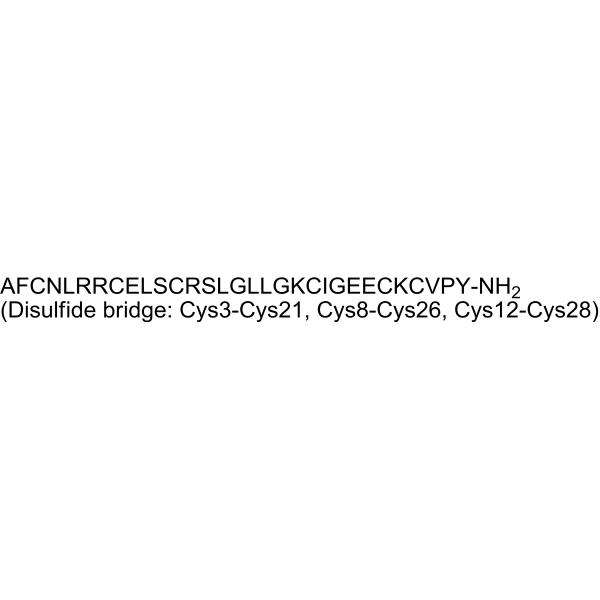
Tamapin is a venom peptide, targeting to small conductance Ca(2+)-activated K(+) (SK) channels. Tamapin is a selctive blocker of SK2 (Potassium Channel). Tamapin inhibits SK channel-mediated currents in pyramidal neurons of the hippocampus. Tamapin can be isolated from the Indian red scorpion (Mesobuthus tamulus) .
loading...
    loading...
Cat. No.: HY-P5154A
Target:  

Potassium Channel

Research Areas:  

Neurological Disease

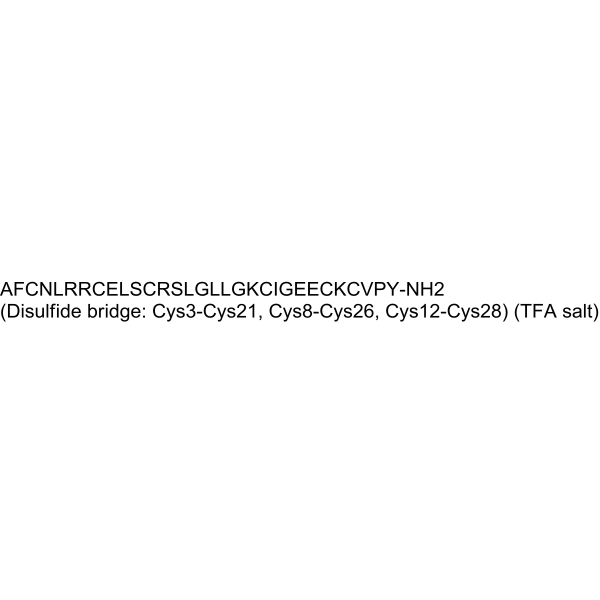
Tamapin TFA is a venom peptide, targeting to small conductance Ca(2+)-activated K(+) (SK) channels. Tamapin TFA is a selctive blocker of SK2 (Potassium Channel). Tamapin TFA inhibits SK channel-mediated currents in pyramidal neurons of the hippocampus. Tamapin TFA can be isolated from the Indian red scorpion (Mesobuthus tamulus) .
loading...
    loading...
Cat. No.: HY-131885
CAS No.: 2417096-44-5
Purity:  82.94%
Target:  

GABA Receptor

Research Areas:  

Neurological Disease

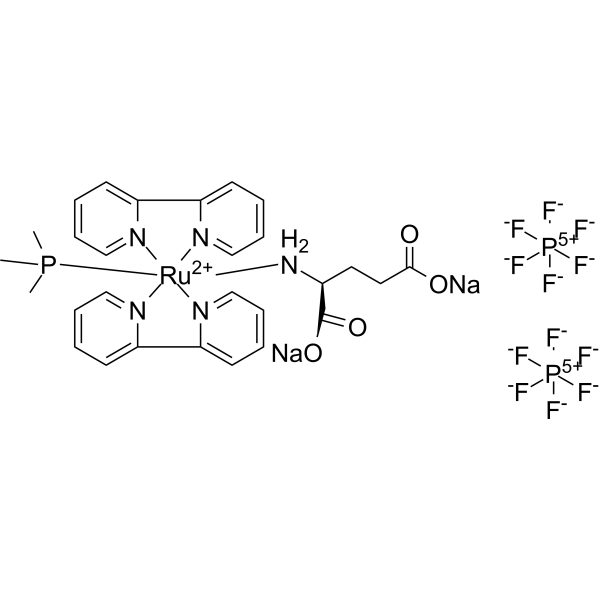
RuBi-Glutamate hexafluorophosphate sodium is a neuronal activator. RuBi-Glutamate hexafluorophosphate sodium photocleaves to release glutamate upon one- or two-photon excitation, activating glutamate receptors in cortical pyramidal neurons. RuBi-Glutamate hexafluorophosphate sodium reduces peak amplitude of evoked GABAergic inhibitory postsynaptic currents in its caged form. RuBi-Glutamate hexafluorophosphate sodium can be used for the research of Huntington's disease .
loading...
    loading...
Cat. No.: HY-129599
CAS No.: 684276-17-3
Target:  

PARP NF-κB

L-2286 is an orally active PARP-1 inhibitor. L-2286 alleviates carotid artery remodeling, oxidative stress and inflammation in spontaneously hypertensive rats, protects neurons in the dorsal hippocampus, and reduces pyramidal cell loss and gliosis without affecting blood pressure. L-2286 can be used in research related to hypertension .
loading...
    loading...
Cat. No.: HY-185978
CAS No.: 2133456-91-2
Target:  

GABA Receptor

Research Areas:  

Neurological Disease

GL-II-73 is a selective, orally active and blood-brain barrier permeable positive allosteric modulator of α5GABAA receptor, acting on the benzodiazepine-binding site of GABAA receptors. The binding selectivity of GL-II-73 for the α5 subtype is 6-, 11- and 12.5-fold higher than that for the α2, α1 and α3 subtypes, respectively . GL-II-73 reverses pilocarpine-induced hyperactivation of dopamine neurons in the ventral tegmental area, improves working memory and pyramidal neuron dendritic morphology in 5xFAD mice, but does not reduce β-amyloid load . GL-II-73 can be used in research related to Alzheimer's disease and temporal lobe epilepsy with comorbid psychosis .
loading...
    loading...
Cat. No.: HY-117578
CAS No.: 131916-69-3
Target:  

Endogenous Metabolite

Research Areas:  

Neurological Disease

KB 5666 is a benzoxazine derivative with lipid peroxidation inhibitory activity. KB 5666 showed protective effects against post-ischemic neuronal death. KB 5666 effectively protected CA1 neurons when injected 5 minutes before or immediately after ischemia. KB 5666 also showed a dose-dependent protective effect when injected within 1 hour after ischemia. KB 5666 effectively prevented the significant decrease in microtubule-associated protein 2 immunoreactivity within the dendritic field of CA1 pyramidal cells. KB 5666 prevented the decrease in [3H]PDBu binding activity in different layers of the CA1 region after ischemia. The application of KB 5666 showed the ability to improve the cellular and functional consequences of ischemia .
loading...
    loading...
Cat. No.: HY-181160
JNK3/Wnt/β-catenin modulator-1 is a brain-penetrant JNK3 inhibitor and Wnt/β-catenin activator. JNK3/Wnt/β-catenin modulator-1 decreases Aβ1-42 production and reduced ROS generation. JNK3/Wnt/β-catenin modulator-1 inhibits the activation of JNK and Puma, promotes Beclin-1 expression, reduces GSK-3β and BACE1 expression and activates Wnt/β-catenin signaling. JNK3/Wnt/β-catenin modulator-1 improves cognitive and memory performance, attenuates histopathological brain damage, preserves structure of hippocampal pyramidal cells and cerebral cortical neurons. JNK3/Wnt/β-catenin modulator-1 can be used for the research of Alzheimer's disease .
loading...
    loading...

