
169 Results for "

quenched

" in MedChemExpress (MCE) Product Catalog:
Products (169)

169 Results for "quenched" in MCE Product Catalog:

32
32 Publications Verification
Cat. No.: HY-K1042

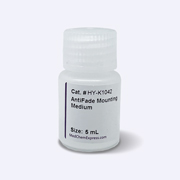
MCE AntiFade Mounting Medium can slow the fluorescence quenching of various common fluorescent dyes with simple operation and good anti-fluorescence quenching effect.

loading...
    loading...
18
18 Cited Publications
Cat. No.: HY-126823
CAS No.: 234075-45-7
Purity:  95.33%
Synonyms: PGSK diacetate (5/6-mixture)
Target:  

Fluorescent Dye

Research Areas:  

Others

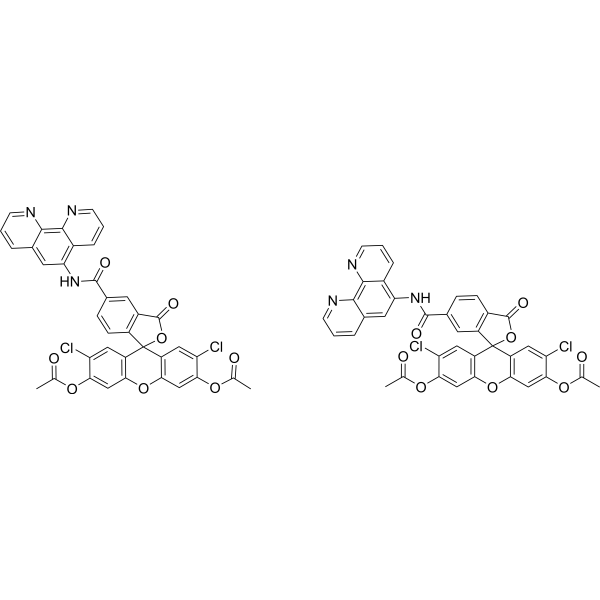
Phen green SK (PGSK) diacetate (PGSK diacetate (5/6-mixture)) is a metal ion-sensitive fluorescent probe that can penetrate cell membranes. Phen green SK (PGSK) diacetate can react with a variety of metal ions, including Fe 2+, Cd 2+, Co 2+, Ni 2+, Zn 2+, etc. Phen green SK (PGSK) diacetate chelates Fe 2+, resulting in fluorescence quenching, which can be restored when a membrane-permeable chelator is added, thereby reflecting the changes in the intracellular chelatable iron pool. The excitation/emission maxima of Phen green SK diacetate are 507/532 nm, respectively .
loading...
    loading...
15
15 Cited Publications
Cat. No.: HY-D0040
CAS No.: 1461-15-0
Synonyms: Fluorexon
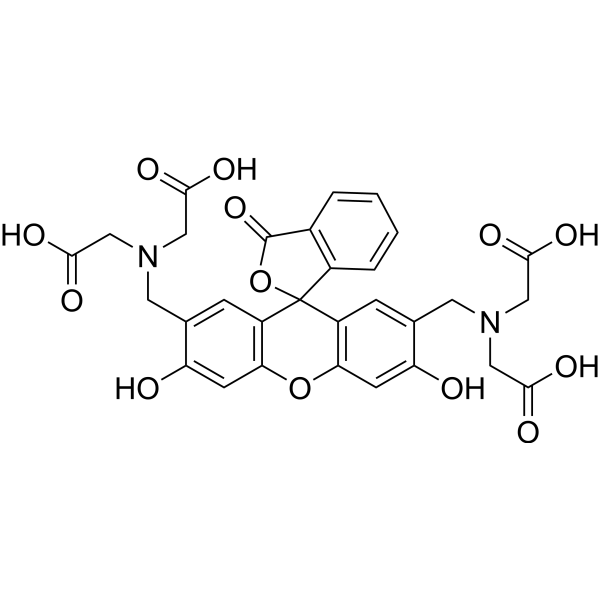
Calcein is a fluorescent dye and self-quenching probe, used as an indicator of lipid vesicle leakage, and also as a complexometric indicator for titration of calcium ions with EDTA, and for fluorometric determination of calcium. Calcein cannot directly cross the intact cell membrane of a living cell, unlike Calcein-AM (HY-D0041) which is cell-permeable. Calcein can also be used as a model drug for evaluating efficiency and bioavailability of drug delivery systems .
loading...
    loading...
11
11 Cited Publications
Cat. No.: HY-W074143
CAS No.: 36309-88-3
Synonyms: [Ru(DPP)3]Cl2
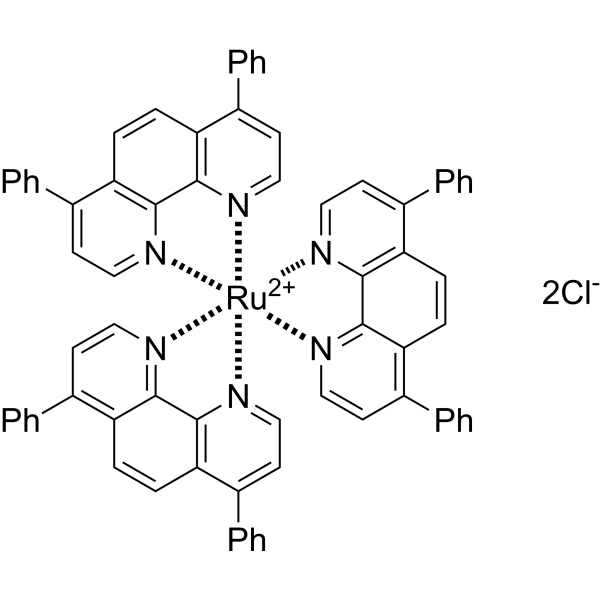
Tris(4,7-diphenyl-1,10-phenanthroline)ruthenium(II) dichloride ([Ru(dpp)3] 2+) is an electrochemiluminescent (ECL) probe and oxygen-sensitive sensor. Tris(4,7-diphenyl-1,10-phenanthroline)ruthenium(II) dichloride can be used to modify electrode surfaces for the detection of sulfates (S2O8 2-) and oxalates, based on electrochemical reactions that generate excited-state species, releasing photons through irreversible redox reactions. Tris(4,7-diphenyl-1,10-phenanthroline)ruthenium(II) dichloride utilizes the oxygen quenching of fluorescence mechanism, where fluorescence intensity reflects the metabolic rate of living microorganisms or oxygen levels within cells/tumors, allowing for real-time detection. Tris(4,7-diphenyl-1,10-phenanthroline)ruthenium(II) dichloride's main applications include microbial detection, antibacterial activity studies, and tumor microenvironment research .
loading...
    loading...
9
9 Cited Publications
Cat. No.: HY-K1048

AntiFade Reagent (with DAPI) is used to slow the fluorescence quenching. The 5 mL is defined as the base specification. All larger sizes correspond to incremental volumes of this base.

loading...
    loading...
8
8 Cited Publications
Cat. No.: HY-D0720
CAS No.: 2315-97-1
Synonyms: NSC-151912; L-6868
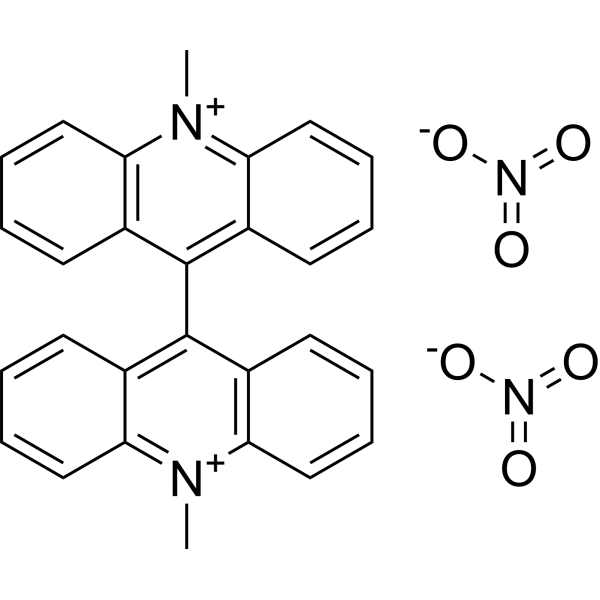
Lucigenin is a chemiluminescence probe. Lucigenin can be used to detect the production of endogenous superoxide anion radical (O 2-). Lucigenin is extremely sensitive to chloride ions, while it combined with chloride ions, the fluorescence will be quenched. Lucigenin also can be used as a chloride indicator. Ex/Em=455/505 nm .
loading...
    loading...
3
3 Cited Publications
Cat. No.: HY-D1080
CAS No.: 50402-56-7
Synonyms: 1,5-EDANS
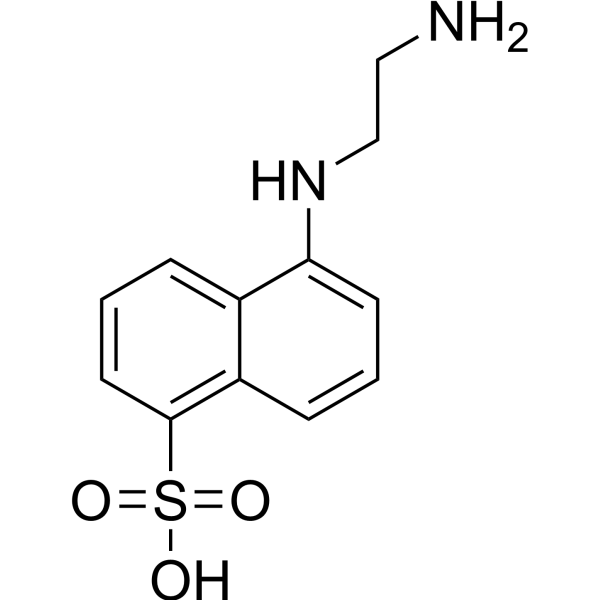
EDANS (1,5-EDANS) is a novel and quenched fluorogenic substrate for assaying retroviral protease by resonance energy transfer (RET) .
loading...
    loading...
3
3 Cited Publications
Cat. No.: HY-P4931
CAS No.: 720710-69-0
Target:  

MMP

Research Areas:  

Cancer

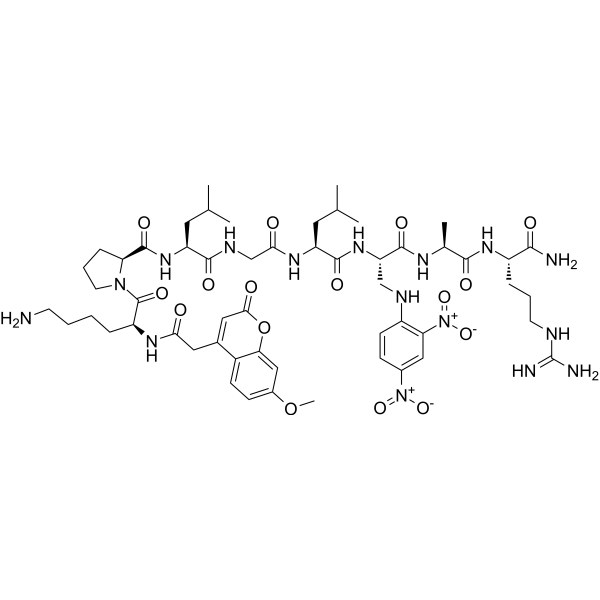
Mca-Lys-Pro-Leu-Gly-Leu-Dap(Dnp)-Ala-Arg-NH2 (FS-6) is a fluorescent peptide that is a quenched MMP peptide substrate. Mca-Lys-Pro-Leu-Gly-Leu-Dap(Dnp)-Ala-Arg-NH2 can be used for real-time quantification of MMP enzymatic activity. Mca-Lys-Pro-Leu-Gly-Leu-Dap(Dnp)-Ala-Arg-NH2 is an elongated peptide of MMP substrate (FS-1) and is active against collagenases (MMP-1, MMP-8, MMP-13 ) and MT1-MMP with higher specificity constants than FS-1 . (Ex/Em=325 nm/400 nm)
loading...
    loading...
3
3 Cited Publications
Cat. No.: HY-118155
CAS No.: 3548-09-2
Purity:  99.56%
Synonyms: ACMA
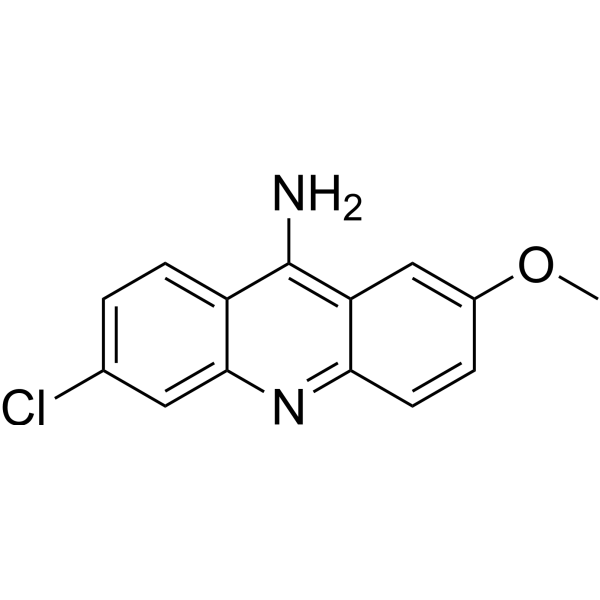
9-Amino-6-chloro-2-methoxyacridine (ACMA) is an acridine derivative and Fluorescent probe. 9-Amino-6-chloro-2-methoxyacridine inhibits viral replication, inhibits DNA synthesis and protein metabolism through cell cycle arrest, and induces lipid metabolism regulation, genotoxicity, mutagenicity, and cytotoxicity through DNA strand breaks. 9-Amino-6-chloro-2-methoxyacridine partially intercalates into DNA, forming three distinct complexes, stabilizes the DNA helix, and quenches fluorescence upon intercalation through electron transfer with guanine. 9-Amino-6-chloro-2-methoxyacridine monitors the generation and collapse of the proton motive force, H + pumping by F1F0-ATP synthase, and the collapse of pH gradients in inverted membrane vesicles. 9-Amino-6-chloro-2-methoxyacridine shows potent anti-BVDV activity. 9-Amino-6-chloro-2-methoxyacridine can be used for research on bovine viral diarrhea virus infection, leishmaniasis, and MRSA infection .
loading...
    loading...
2
2 Cited Publications
Cat. No.: HY-P2536
CAS No.: 305336-82-7
Research Areas:  

Others

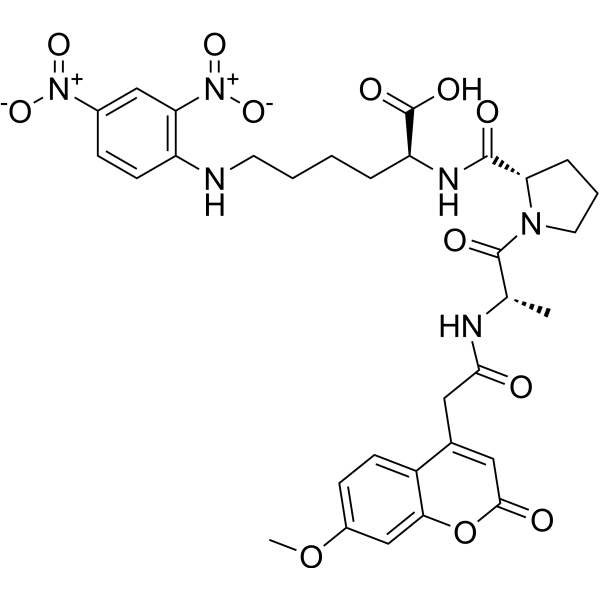
Mca-Ala-Pro-Lys(Dnp)-OH, a specific ACE2 quenched fluorogenic substrate, can be used to detect ACE2 activity, such as urinary, heart and lung .
loading...
    loading...
2
2 Cited Publications
Cat. No.: HY-154834
CAS No.: 916753-61-2
Purity:  95.44%
Target:  

Fluorescent Dye

Research Areas:  

Others

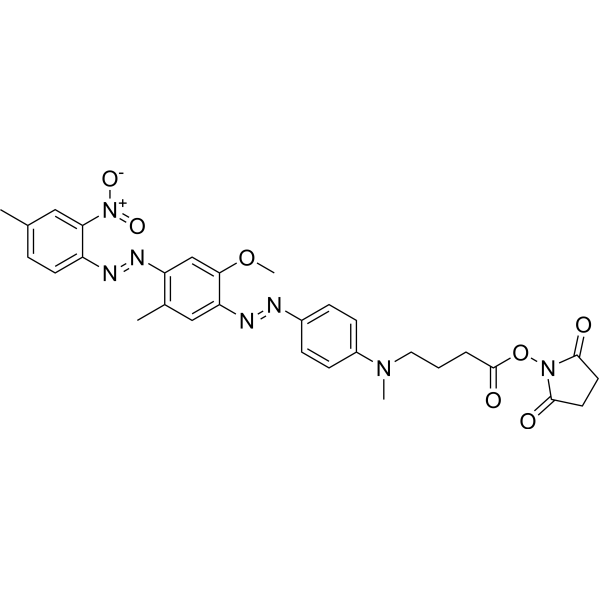
BHQ-1 NHS is a quencher and fluorescent dye. The NHS group activates the carboxyl group on the BHQ-1 molecule, enabling it to react with amino groups (primarily primary amines) on target biomolecules to form stable amide bonds, thereby labeling the biomacromolecules with BHQ-1 .
loading...
    loading...
2
2 Cited Publications
Cat. No.: HY-KD1006

MCE offers a variety of multiplex fluorescence detection kits, featuring high quenching resistance, low cross-contamination, and strong stability. The five-color multiplex fluorescence staining kit can stain four indicators. (MCE offers six VF series dyes: VF 480, VF 520, VF 570, VF 620, VF 690, and VF 780; you can flexibly select according to your actual needs.)

loading...
    loading...
1
1 Cited Publications
Cat. No.: HY-15943
CAS No.: 91809-67-5
Synonyms: 6-Carboxytetramethylrhodamine
Target:  

Fluorescent Dye

Research Areas:  

Others

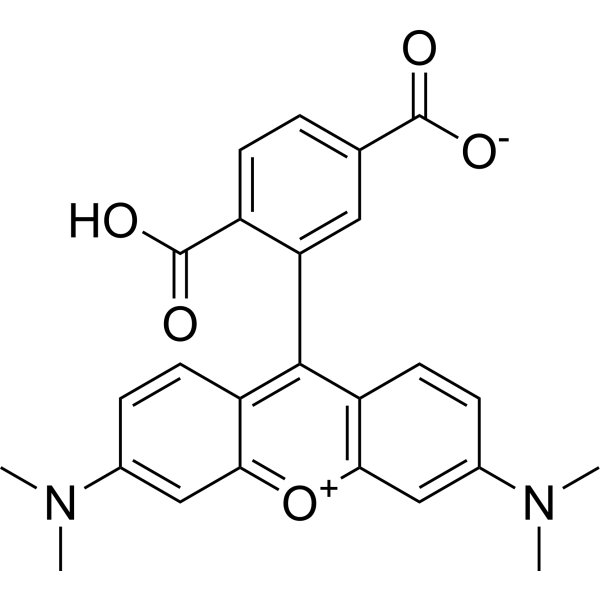
6-TAMRA (6-Carboxytetramethylrhodamine) is a fluorescent dye. 6-TAMRA is often used in combination with 6-FAM (HY-66021) as an acceptor or fluorescence quencher for fluorescence resonance energy transfer (FRET) in biochemical studies such as potassium ion detection and ribonuclease activity assays .
loading...
    loading...
1
1 Cited Publications
Cat. No.: HY-W127703
CAS No.: 65603-19-2
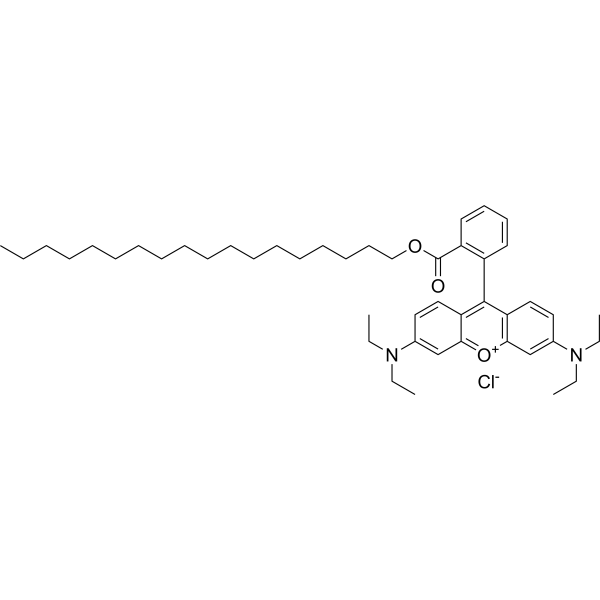
Octadecyl Rhodamine B chloride is an amphiphilic fluorescent probe with both membrane-binding ability and fluorescent properties, which easily forms aggregates in aqueous phase leading to self-quenching. Octadecyl Rhodamine B chloride can be used for cell membrane staining and further applied in membrane biology research. The maximum absorption/emission wavelengths of Octadecyl Rhodamine B chloride monomer in Triton X-100 are 565 nm/585 nm; the absorption peaks of aggregates in water are blue-shifted to 524 nm and 574 nm, with significantly quenched fluorescence .
loading...
    loading...
1
1 Cited Publications
Cat. No.: HY-W017604
CAS No.: 30418-59-8
Synonyms: m-Aminophenylboronic acid
Research Areas:  

Others

3-Aminophenylboronic acid (m-Aminophenylboronic acid) is a phenylboronic acid derivative. 3-Aminophenylboronic acid reacts covalently with cis-diol groups of glycoproteins, enabling selective capture and detection of glycoproteins through fluorescence quenching of APBA-functionalized copper nanoclusters .
loading...
    loading...
1
1 Cited Publications
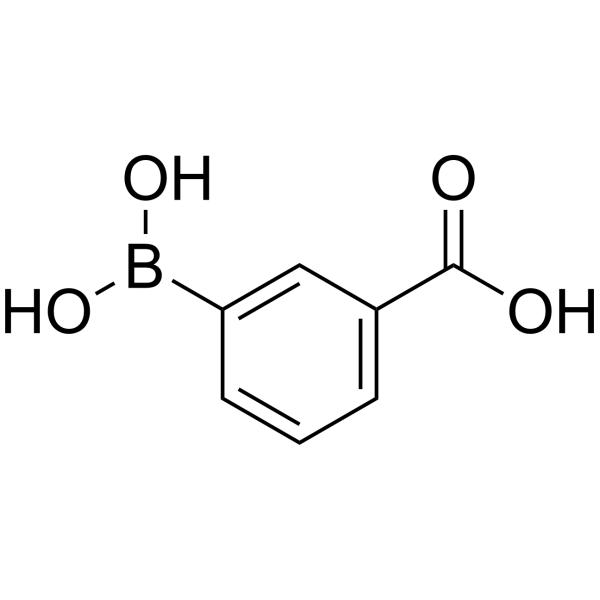
Cat. No.: HY-Y0395
CAS No.: 25487-66-5
3-Carboxyphenylboronic acid is a biochemical reagent with multiple functions including nanoparticle enhancement, perovskite passivation, fluorescence quenching, and adhesion. 3-Carboxyphenylboronic acid improves tumor penetration and pulmonary retention of nanoparticles, and serves as a tumor-targeting ligand for carboxymethyl chitosan nanoparticles. 3-Carboxyphenylboronic acid optimizes film crystallization via coordinate chelation of free lead/iodide ions in perovskites. 3-Carboxyphenylboronic acid acts as an additive for n-i-p perovskite solar cells. Conjugation of 3-Carboxyphenylboronic acid with PPEG8 quenches the near-infrared fluorescence of single-walled carbon nanotubes, enabling aqueous dispersion of carbon nanotubes through binding to the diol structure of saccharides .
loading...
    loading...
1
1 Cited Publications
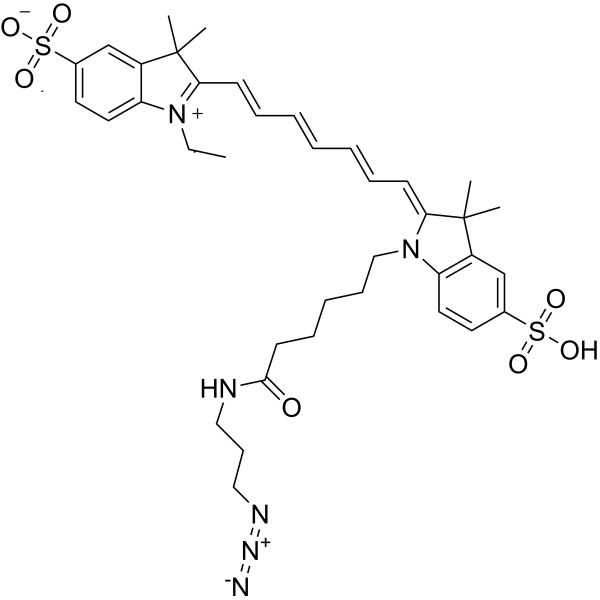
Cat. No.: HY-D1053
Synonyms: Sulfo-Cyanine7-N3
Target:  

Fluorescent Dye

Research Areas:  

Others

CY7-N3 (Sulfo-Cyanine7-N3) is a cyanine7 azide fluorescent dye and clickable quencher. CY7-N3 quenches the fluorescence of unreacted Cy5-DBCO, serves as a click chemistry quencher in the organelle-selective click labeling combined with flow cytometry (O-ClickFC) procedure for alkyne-labeled Palmitic acid (HY-N0830) in hematopoietic stem and progenitor cells, and can serve as a prodrug model loaded into DNAzyme-gated mesoporous Silicon dioxide (HY-W019831) nanoparticles. CY7-N3 can be used for click chemistry labeling and fluorescence imaging studies .
loading...
    loading...
1
1 Cited Publications
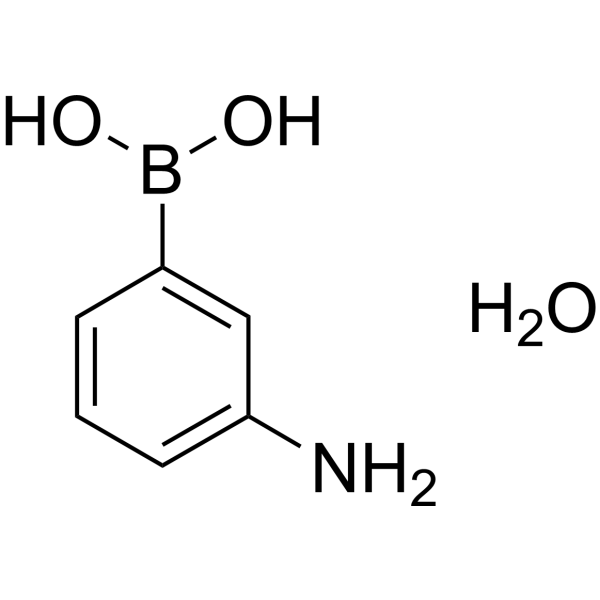
Cat. No.: HY-W000897
CAS No.: 206658-89-1
Research Areas:  

Others

3-Aminophenylboronic acid monohydrate is a phenylboronic acid derivative. 3-Aminophenylboronic acid monohydrate reacts covalently with cis-diol groups of glycoproteins, enabling selective capture and detection of glycoproteins through fluorescence quenching of APBA-functionalized copper nanoclusters .
loading...
    loading...
1
1 Cited Publications
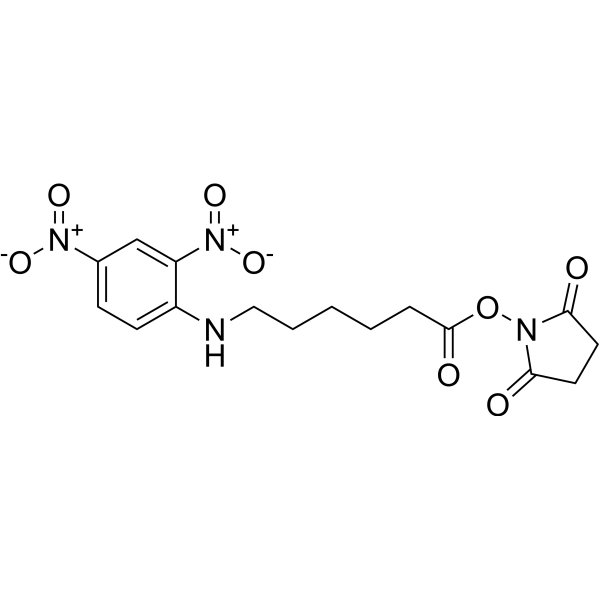
Cat. No.: HY-D1050
CAS No.: 82321-04-8
Synonyms: 6-(2,4-Dinitrophenyl)aminohexanoic acid, succinimidyl ester
DNP-X, SE (6-(2,4-Dinitrophenyl)aminohexanoic acid, succinimidyl ester), the DNP-X acid modified by succinimidyl ester, is an amine-reactive building block for developing a probe, which can be recognized by anti-DNP antibodies. DNP-X, SE (6-(2,4-Dinitrophenyl)aminohexanoic acid, succinimidyl ester) is also an excellent amine-reactive FRET quencher paired with Trp or Tyr.
loading...
    loading...
1
1 Cited Publications
Cat. No.: HY-W127832
CAS No.: 123148-15-2
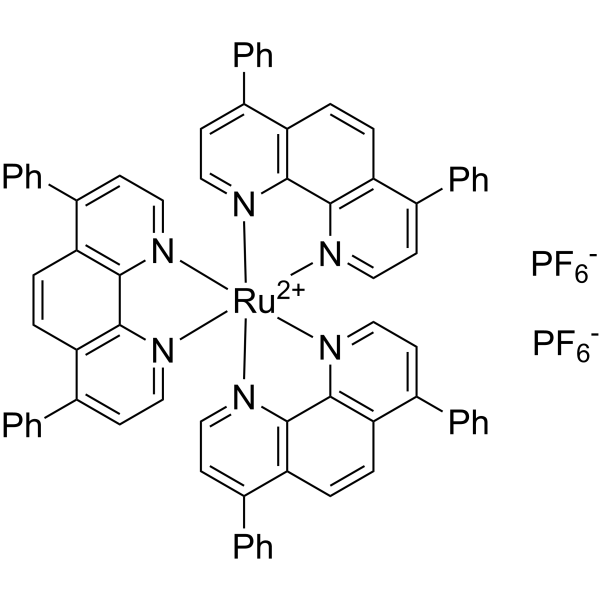
Ru(dpp)3(PF6)2 is a ruthenium (II) polypyridine complex and oxygen-sensing luminophore with excellent photostability and bright orange emission properties based on metal-to-ligand charge transfer (MLCT). Ru(dpp)3(PF6)2 undergoes oxygen-induced collisional luminescence quenching following the Stern-Volmer relationship, and can also engage in Förster-type resonance energy transfer with closed-form BTF6. Featuring excellent photophysical and electrochemical properties, Ru(dpp)3(PF6)2 is applied in studies on quenching-type oxygen sensors based on fluorinated ORMOSIL/xerogels and solid-state light-emitting devices .
loading...
    loading...

