8 Results for "

rabbit eye

" in MedChemExpress (MCE) Product Catalog:
Products (8)

8 Results for "rabbit eye" in MCE Product Catalog:

Cat. No.: HY-148785
CAS No.: 2740557-24-6
Purity:  99.27%
Target:  

JAK

Research Areas:  

Neurological Disease

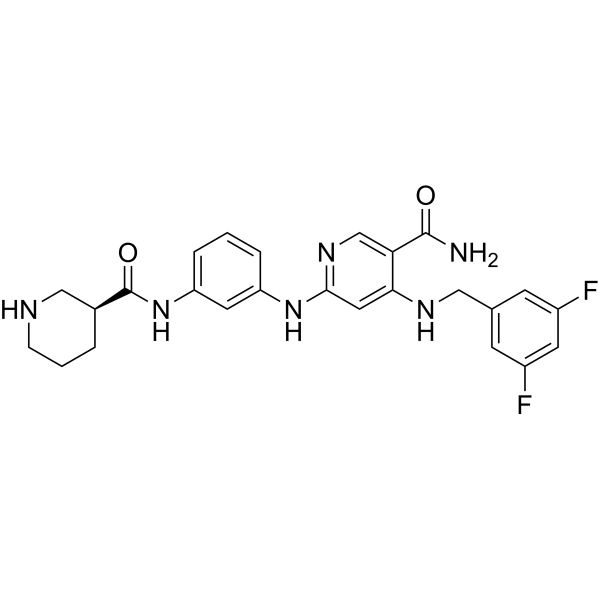
Nimucitinib is a selective JAK inhibitor with potent tear secretion-promoting activity. Nimucitinib downregulates relevant signal transduction pathways by inhibiting the catalytic activity of JAK family tyrosine kinases. Nimucitinib promotes tear secretion in rabbits and inhibits corneal injury in rats. Nimucitinib can be used in dry eye-related research .
loading...
    loading...
Cat. No.: HY-153903
CAS No.: 916056-81-0
Research Areas:  

Others

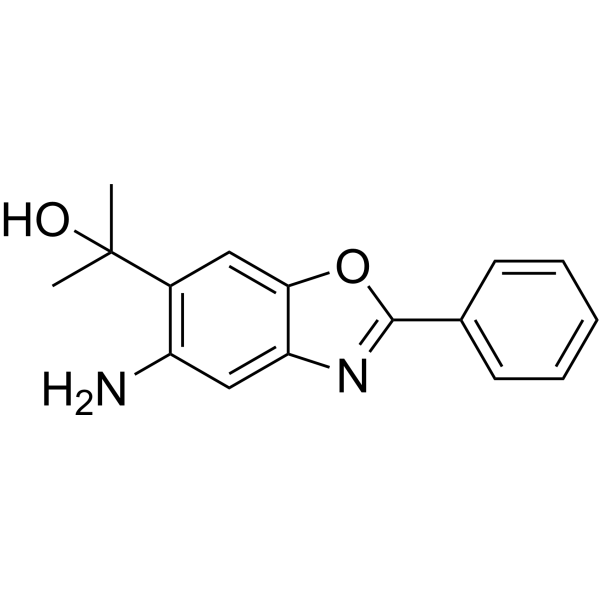
RASP-IN-1 (compound A) is a lipophili ccompound used for macular degeneration inhibition. RASP-IN-1 is biologically active in the retina of the rabbit's eye. Thirty minutes after IP treatment with 14C-RASP-IN-1 (10 mg/kg),the Cmax amount of 14C-RASP-IN-1 in the posterior eye cup is 14.36 μg/g in mice model .
loading...
    loading...
Cat. No.: HY-161282
Target:  

Carbonic Anhydrase

Research Areas:  

Neurological Disease Cancer

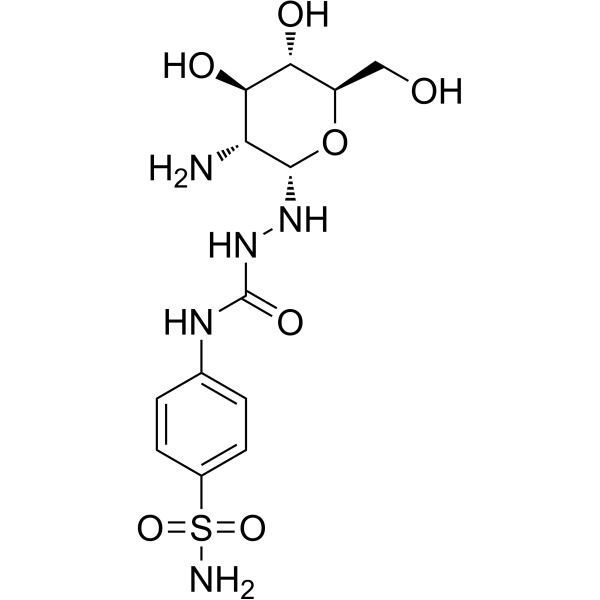
hCAII-IN-10 (compound 11d) is hCA II inhibitor with the IC50s of 14 nM and 29.2 μM for hCA II and hCA I, respectively. hCAII-IN-10 inhibits cell growth against HT-29 cells with the IC50 of 74 μM. hCAII-IN-10 shows strongly lowered intraocular pressure in the glaucomatous rabbit eye model .
loading...
    loading...
Cat. No.: HY-112352
CAS No.: 251356-32-8
Target:  

Endogenous Metabolite

Research Areas:  

Others

SU9518 is a tyrosine kinase inhibitor with specific activity against PDGFRα. SU9518 can inhibit the development of proliferative vitreoretinopathy (PVR) in fibroblast and Muller cell rabbit models. SU9518 showed effective inhibitory effects in these models without toxic effects. Therefore, SU9518 has the potential to be used to inhibit PVR in humans and other proliferative eye diseases involving fibrosis and gliosis .
loading...
    loading...
Cat. No.: HY-107009
CAS No.: 149754-11-0
Target:  

VZV HSV VSV

Research Areas:  

Infection

CTC 96 is an antiviral agent, showing inhibitory effects particularly on herpes viruses and adenoviruses. CTC 96 directly blocks the fusion process between the viral envelope and the cell membrane, preventing the entry of viral nucleic acids and proteins into the cells. CTC 96 can completely block the penetration and intercellular transmission of HSV-1, preventing the synthesis of viral proteins and mRNA. CTC 96 exhibits significant anti-adenovirus activity in rabbit eye models. CTC 96 is also effective against varicella-zoster virus (VZV) and vesicular stomatitis virus (VSV). CTC 96 can be used for broad-spectrum antiviral research .
loading...
    loading...
Cat. No.: HY-171925
CAS No.: 752237-69-7
Target:  

Cathepsin

Research Areas:  

Neurological Disease

BI-1124 is a cathepsin S inhibitor that exhibits simulated sufficient ocular pharmacokinetic-pharmacodynamic coverage in rabbit models via topical ocular administration. BI-1124 can be used for the research of age-related dry eye disease .
loading...
    loading...
Cat. No.: HY-W566406
CAS No.: 94641-11-9
Target:  

Carbonic Anhydrase

Research Areas:  

Neurological Disease

Aminozolamide is a carbonic anhydrase inhibitor. Aminozolamide regulates intraocular pressure by inhibiting carbonic anhydrase activity. Aminozolamide exerts local ocular effects, exhibits good retention in the ciliary body of rabbit eyes, and prevents rapid elimination from the eye. Aminozolamide is applicable to the research of ocular hypertension .
loading...
    loading...
Cat. No.: HY-184938
COX-2/CA II-2 is an orally active dual selective inhibitor targeting COX-2 and hCA II. COX-2/CA II-2 inhibits COX-2 with an IC50 value of 0.05 μM (SI = 12.02 vs COX-1) and hCA II with a Ki value of 62.6 nM (SI = 704.2 vs hCA I). COX-2/CA II-2 demonstrates significant analgesic and anti-inflammatory effects with rapid onset and sustained duration in animal models, shows improved gastric safety with reduced ulcerogenic liability, and exhibits a gradual intraocular pressure (IOP)-lowering effect without statistical significance relative to the sham-treated eye in rabbit glaucoma models. COX-2/CA II-2 can be used for anti-inflammatory, analgesic and antiglaucoma research .
loading...
    loading...

