11 Results for "

raphe

" in MedChemExpress (MCE) Product Catalog:
Products (11)

11 Results for "raphe" in MCE Product Catalog:

2
2 Cited Publications
Cat. No.: HY-P1422
CAS No.: 1270083-24-3
Research Areas:  

Neurological Disease

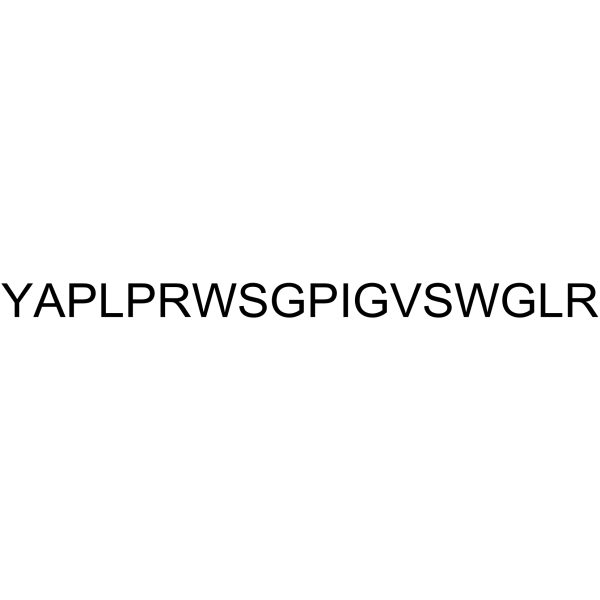
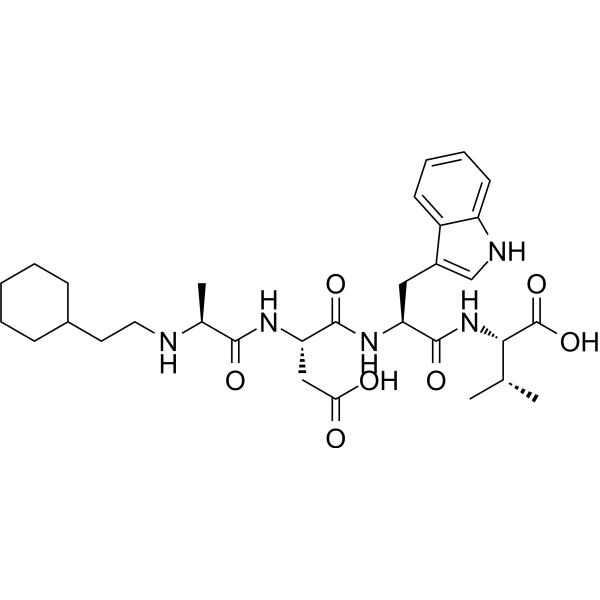
Spadin, a natural peptide derived from a propeptide released in blood, is a potent TREK-1 channel blocker with IC50 value of 10 nM. Spadin enhances dorsal raphe nucleus 5-HT neurotransmission in mice and induces hippocampal CREB activation and neurogenesis. Spadin can be used for antidepressant research .
loading...
    loading...
2
2 Cited Publications
Cat. No.: HY-P1422A
Research Areas:  

Neurological Disease

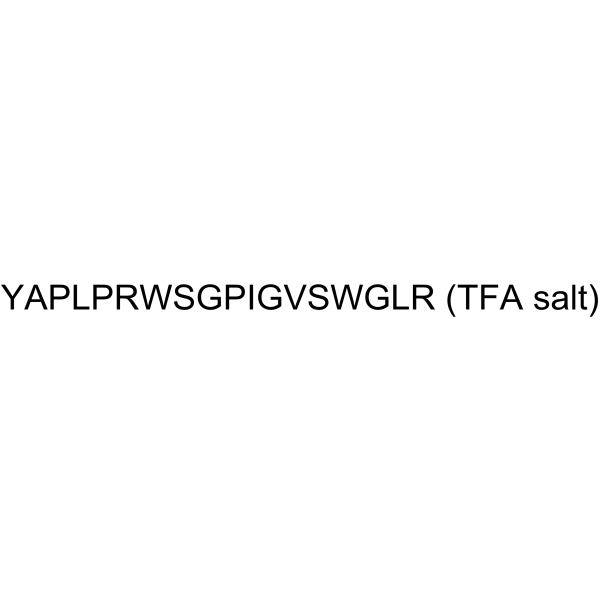
Spadin TFA, a natural peptide derived from a propeptide released in blood, is a potent TREK-1 channel blocker with an IC50 value of 10 nM. Spadin TFA enhances dorsal raphe nucleus 5-HT neurotransmission in mice and induces hippocampal CREB activation and neurogenesis. Spadin TFA can be used for antidepressant research .
loading...
    loading...
Cat. No.: HY-148417
CAS No.: 99141-91-0
Purity:  98.92%
Target:  

Serotonin Transporter

Research Areas:  

Neurological Disease

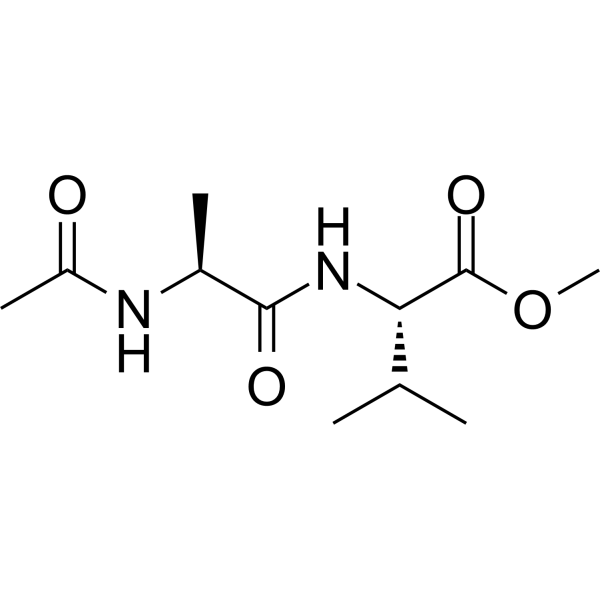
ZZL-7 is a fast-onset antidepressant agent. ZZL-7 works by disrupting the interaction between the serotonin transporter (SERT) and neuronal nitric oxide synthase (nNOS) in the dorsal raphe nucleus (DRN). ZZL-7 can cross the blood-brain barrier readily. ZZL-7 can be used for the research of major depressive disorder (MDD) .
loading...
    loading...
Cat. No.: HY-110023
CAS No.: 60525-15-7
Purity:  98.27%
Target:  

Serotonin Transporter

Research Areas:  

Neurological Disease

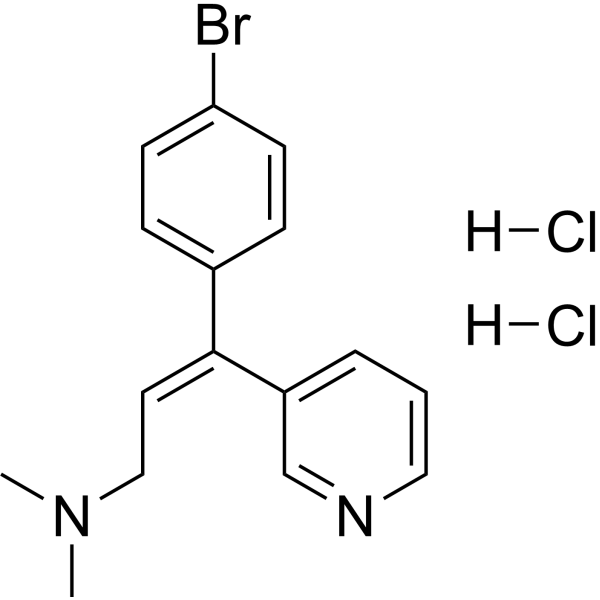
Zimelidine dihydrochloride is an orally active selective serotonin reuptake inhibitor. Zimelidine dihydrochloride competitively inhibits central 5-HT uptake and desensitizes 5-HT autoreceptors in dorsal raphe nucleus. Zimelidine dihydrochloride time-dependently modulates 5-HT neuronal firing and hippocampal CA3 responses. Zimelidine dihydrochloride strengthens central serotonergic neurotransmission and produces related behavioral changes. Zimelidine dihydrochloride exerts anxiolytic, analgesic, feeding-suppressive and tolerance-attenuating effects. Zimelidine dihydrochloride is used for the study of depressive disorders and analgesic tolerance .
loading...
    loading...
Cat. No.: HY-118835
CAS No.: 56775-88-3
Target:  

Serotonin Transporter

Research Areas:  

Neurological Disease

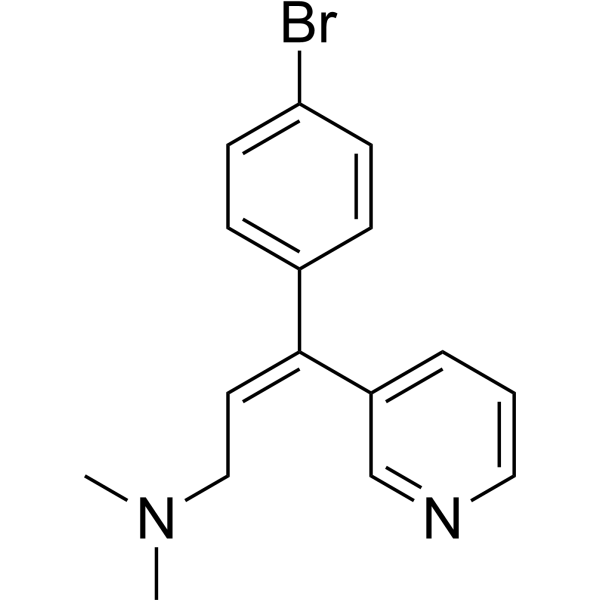
Zimelidine is an orally active selective serotonin reuptake inhibitor. Zimelidine competitively inhibits central 5-HT uptake and desensitizes 5-HT autoreceptors in dorsal raphe nucleus. Zimelidine time-dependently modulates 5-HT neuronal firing and hippocampal CA3 responses. Zimelidine strengthens central serotonergic neurotransmission and produces related behavioral changes. Zimelidine exerts anxiolytic, analgesic, feeding-suppressive and tolerance-attenuating effects. Zimelidine is used for the study of depressive disorders and analgesic tolerance .
loading...
    loading...
Cat. No.: HY-123708
CAS No.: 903878-06-8
Target:  

Galectin

Research Areas:  

Others

SNAP 398299 is a Gal3 receptor antagonist with potential anxiolytic and antidepressant effects. SNAP 398299 can partially reverse the neuropeptide Galanin-induced inhibition of dorsal raphe cell firing and the Galanin-induced hyperpolarizing current.
loading...
    loading...
Cat. No.: HY-P10029
CAS No.: 2490708-79-5
Target:  

Serotonin Transporter

Research Areas:  

Neurological Disease

Sakura-6 is a SERT-nnos interaction promoter that significantly increases the SERT-nnos complex, but reduces the level of SERT on the cell surface. Acute injection of Sakura-6 into the dorsal raphe nucleus (DRN) causes depression-like behavior in mice .
loading...
    loading...
Cat. No.: HY-110023R
CAS No.: 60525-15-7
Zimelidine dihydrochloride (Standard) is the analytical standard of Zimelidine dihydrochloride (HY-110023). This product is intended for research and analytical applications. Zimelidine dihydrochloride is an orally active selective serotonin reuptake inhibitor. Zimelidine dihydrochloride competitively inhibits central 5-HT uptake and desensitizes 5-HT autoreceptors in dorsal raphe nucleus. Zimelidine dihydrochloride time-dependently modulates 5-HT neuronal firing and hippocampal CA3 responses. Zimelidine dihydrochloride strengthens central serotonergic neurotransmission and produces related behavioral changes. Zimelidine dihydrochloride exerts anxiolytic, analgesic, feeding-suppressive and tolerance-attenuating effects. Zimelidine dihydrochloride is used for the study of depressive disorders and analgesic tolerance .
loading...
    loading...
Cat. No.: HY-118835S
CAS No.: 1185239-75-1
Zimeldine-d6 is the deuterium labeled Zimeldine (HY-118835) . Zimelidine is an orally active selective serotonin reuptake inhibitor. Zimelidine competitively inhibits central 5-HT uptake and desensitizes 5-HT autoreceptors in dorsal raphe nucleus. Zimelidine time-dependently modulates 5-HT neuronal firing and hippocampal CA3 responses. Zimelidine strengthens central serotonergic neurotransmission and produces related behavioral changes. Zimelidine exerts anxiolytic, analgesic, feeding-suppressive and tolerance-attenuating effects. Zimelidine is used for the study of depressive disorders and analgesic tolerance .
loading...
    loading...
Cat. No.: HY-100057
CAS No.: 125481-61-0
Synonyms: 6-Hydroxybuspirone; 6'-Hydroxybuspirone; BMS 528215
BMY 28674 (6-Hydroxybuspirone) is the active metabolite of the anxiolytic buspirone (HY-B1115A) and is metabolized by CYP3A4.4. BMY 28674 binds to the serotonin (5-HT) receptor subtype 5-HT1A in the rat hippocampus and dorsal raphe (EC50s are 4 and 1 μM, respectively) and is an antagonist of dopamine D2, D3, and D4 receptors (IC50s are 3.1, 4.9, and 0.85 μM, respectively). BMY 28674 also inhibits organic cation transporter 1 (OCT1), OCT2, and OCT3 expressing human transporters in S2 proximal tubule cells in a concentration-dependent manner.
loading...
    loading...
Cat. No.: HY-179579
Target:  

5-HT Receptor

Research Areas:  

Neurological Disease

TMU4142 is a selective 5-HT1a agonist with high GoA activity. TMU4142 has weak Gi3 activity, can elicit rapid antidepressant like effects without triggering significant activation of dorsal raphe nucleus (DRN) 5-HT1a R autoreceptors or serotonergic neuron firing. TMU4142 demonstrates fast-acting efficacy in mouse models of depression. TMU4142 can be used for antidepressants research .
loading...
    loading...
  • 1

