12 Results for "

rat bile

" in MedChemExpress (MCE) Product Catalog:
Products (12)

12 Results for "rat bile" in MCE Product Catalog:

6
6 Cited Publications
Cat. No.: HY-N0430A
CAS No.: 1198398-71-8
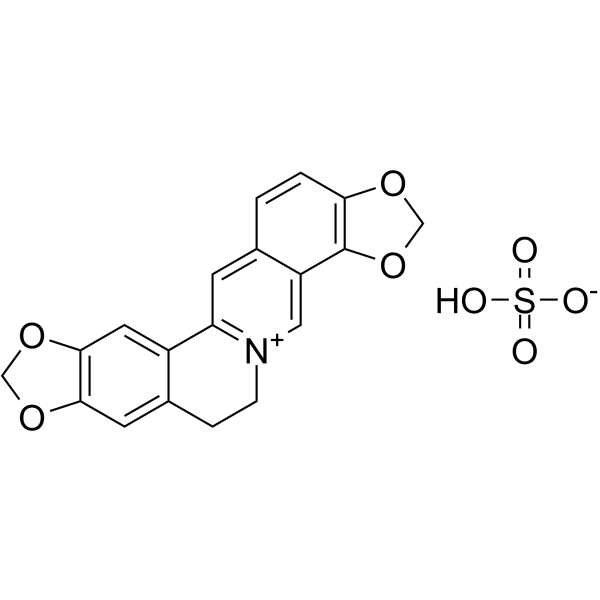
Coptisine Sulfate is an orally active and brain-penetrant alkaloid found in Coptis chinensis. Coptisine Sulfate is a reversible, uncompetitive IDO inhibitor with a Ki of 5.8 μM and an IC50 of 6.3 μM. Coptisine Sulfate suppresses neuroinflammation, reduces Aβ plaque burden and shows neuroprotective activity. Coptisine Sulfate shows anti-inflammation activity by blocking NF-κB, MAPK, and PI3K/Akt activation. Coptisine Sulfate inhibits cancer cells proliferation, induces DNA damage, G2/M phase cell cycle arrest, apoptosis, ROS production and mitochondrial dysfunction. Coptisine Sulfate inhibits Rho/ROCK pathway activation, reduces arrhythmia, limits cardiac injury marker release, reduces infarct size, and preserves cardiac function in rat myocardial ischemia/reperfusion models. Coptisine Sulfate downregulates HMGCR and upregulates LDLR and CYP7A1 to modulate cholesterol metabolism, reduces abnormal serum lipid levels, and promotes fecal bile acid excretion. Coptisine Sulfate be used for the research of cancer, hypercholesterolemia, Alzheimer’s disease, inflammatory disorders and cardiovascular disease .
loading...
    loading...
Cat. No.: HY-125934
CAS No.: 2464-18-8
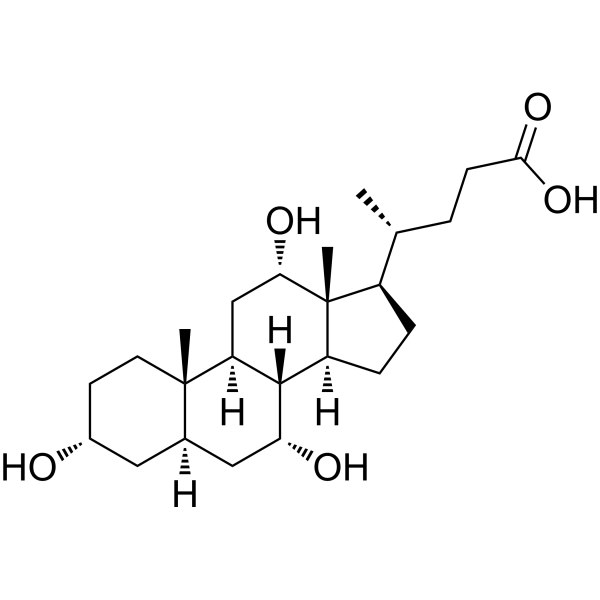
Allocholic acid is a typically fetal bile acid found in vertebrates and reappears during liver regeneration and carcinogenesis, besides it is also a conjugate acid of allocholate and an isomer of cholic acid. Allocholic acid is a potent and specific stimulant of the adult olfactory system, it has a role as a marine metabolite, a rat metabolite and a human metabolite .
loading...
    loading...
Cat. No.: HY-N0430
CAS No.: 3486-66-6
Synonyms: Coptisin
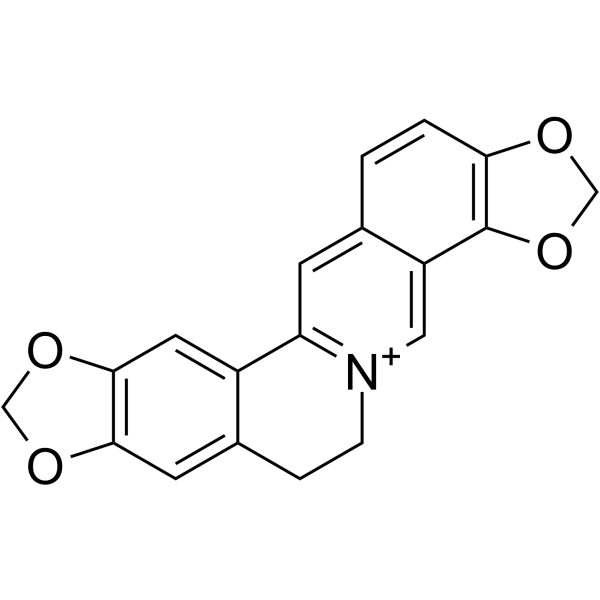
Coptisine is an orally active and brain-penetrant alkaloid found in Coptis chinensis. Coptisine is a reversible, uncompetitive IDO inhibitor with a Ki of 5.8 μM and an IC50 of 6.3 μM. Coptisine suppresses neuroinflammation, reduces Aβ plaque burden and shows neuroprotective activity. Coptisine shows anti-inflammation activity by blocking NF-κB, MAPK, and PI3K/Akt activation. Coptisine inhibits cancer cells proliferation, induces DNA damage, G2/M phase cell cycle arrest, apoptosis, ROS production and mitochondrial dysfunction. Coptisine inhibits Rho/ROCK pathway activation, reduces arrhythmia, limits cardiac injury marker release, reduces infarct size, and preserves cardiac function in rat myocardial ischemia/reperfusion models. Coptisine downregulates HMGCR and upregulates LDLR and CYP7A1 to modulate cholesterol metabolism, reduces abnormal serum lipid levels, and promotes fecal bile acid excretion. Coptisine can be used for the research of cancer, hypercholesterolemia, Alzheimer’s disease, inflammatory disorders and cardiovascular disease .
loading...
    loading...
Cat. No.: HY-B2119
CAS No.: 41945-48-6
Synonyms: Tauroglycocholic acid sodium salt
Research Areas:  

Metabolic Disease

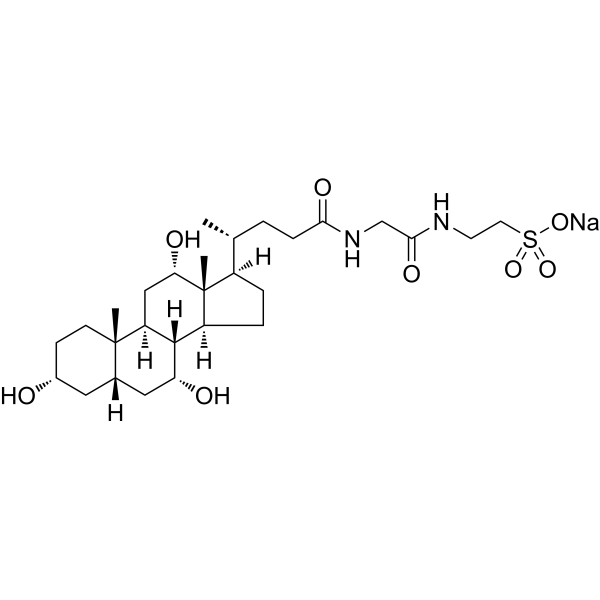
Sodium tauroglycocholate (Tauroglycocholic acid sodium salt) is a multifunctional surfactant and penetration enhancer that can serve as a cholegraphic contrast agent. In organic solvents, Sodium tauroglycocholate embeds and stabilizes invertase by forming reverse micelles, and prolongs its active lifespan. In terms of transdermal absorption, Sodium tauroglycocholate effectively regulates the flux of aminophylline through snake slough by binding to keratin filaments, disrupting keratinocytes and altering lipid components of the stratum corneum. It exhibits rapid penetration characteristics without lag time at a concentration of 100 μg/mL. Sodium tauroglycocholate does not interfere with the hepatic uptake of Gd-EOB-DTPA by the bile acid transport system in rat hepatocytes .
loading...
    loading...
Cat. No.: HY-17011
CAS No.: 77175-51-0
Target:  

Fungal

Research Areas:  

Metabolic Disease

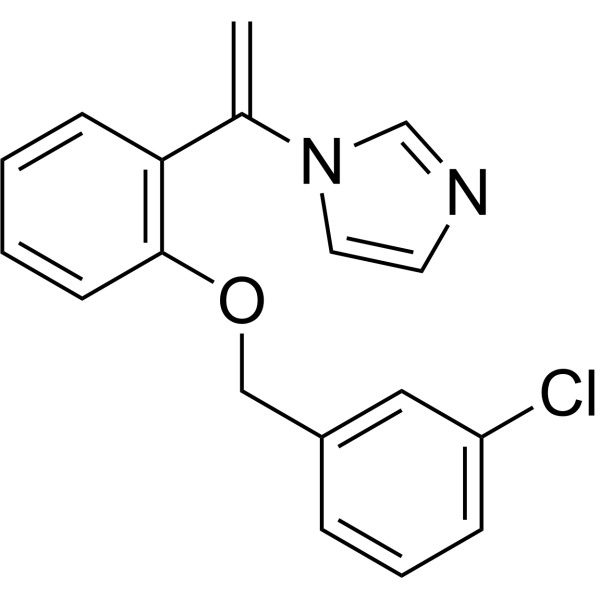
Croconazole is an antifungal agent containing imidazole rings. Croconazole has a unique structural feature of aryl vinyl at the imidazole ring N-1. Croconazole can be used for the identification and quantitative study of major metabolites in rat urine and bile .
loading...
    loading...
Cat. No.: HY-120396
CAS No.: 141318-62-9
Target:  

5-HT Receptor

Research Areas:  

Neurological Disease

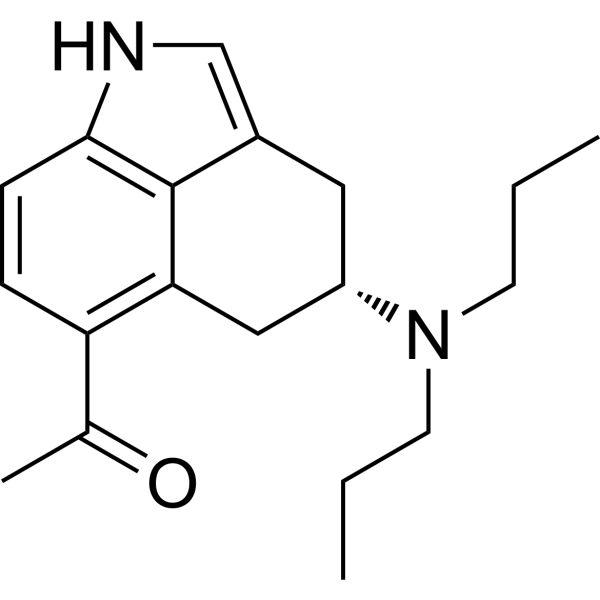
LY 293284 is a potent and selective 5-HT1A receptor agonist. LY 293284 results in a significant drop in core temperature and consumes more food in cholestasis rat induced by bile duct resection .
loading...
    loading...
Cat. No.: HY-W008125S
Synonyms: Methyl acetobromo-α-D-glucuronate-13C6 methyl ester
Acetobromo-a-D-glucuronic acid- 13C6 methyl ester (Methyl acetobromo-α-D-glucuronate- 13C6 methyl ester) is 13C labeled Acetobromo-α-D-glucuronic acid methyl ester, 98% (HY-W008125). Acetobromo-α-D-glucuronic acid methyl ester, 98% is an intermediate. Acetobromo-α-D-glucuronic acid methyl ester, 98% can be used to synthesize HMR1098-S-Glucuronide Methyl Ester. HMR1098 is a novel KATP blocker that is metabolized to S-glucuronide in rat and dog bile. Acetobromo-α-D-glucuronic acid methyl ester, 98% can be used in the research of sudden cardiac death .
loading...
    loading...
Cat. No.: HY-130301
CAS No.: 142974-51-4
Synonyms: S 0960
Gallensre (S 0960) is an apical sodium-dependent bile acid transporter inhibitor (IC50 = 5.8 μmol/L). Gallensre inhibits bile salt reabsorption in a rat model. Gallensre can be used to study metabolic diseases such as bile acid cycling .
loading...
    loading...
Cat. No.: HY-182255
CAS No.: 217187-87-6
Target:  

Endogenous Metabolite

Research Areas:  

Others

ED-594 is the glucuronide form of NB-506. ED-594 is one of the major metabolites of NB-506 in rat bile, mouse liver microsomes, rat liver microsomes and human liver microsomes .
loading...
    loading...
Cat. No.: HY-N18490
CAS No.: 53939-19-8
Category:  

Animal Steroids

Target:  

Drug Derivative

5α-Cyprinol sulfate is an orally active bile salt and heterospecific pheromone. 5α-Cyprinol sulfate promotes lipid digestion in fish. 5α-Cyprinol sulfate inhibits taurocholic acid uptake mediated by apical bile salt transporters in rat ileum. 5α-Cyprinol sulfate can be used in studies of fish toxic acute renal failure .
loading...
    loading...
Cat. No.: HY-153875
CAS No.: 389-36-6
Research Areas:  

Metabolic Disease

Saccharolactone is a potent orally active β-glucuronidase inhibitor. Saccharolactone markedly lowers biliary endogenous β-glucuronidase activity in the rat bile. Saccharolactone can stabilize glucuronide metabolites in vitro. Saccharolactone is also a strong inhibitor of CYP1A2, 2D6, 3A4 and 2C8 isoforms (IC50 < 4 mM) .
loading...
    loading...
Cat. No.: HY-187039
CAS No.: 1426129-91-0
Target:  

Others

Research Areas:  

Others

7-Glc-kaempferol 3-(6-cglc)-(1-2)-rhamnoside is a flavonol glycoside that can be found in Ginkgo biloba leaves. 7-Glc-kaempferol 3-(6-cglc)-(1-2)-rhamnoside is present in GBE50 extract, and is detected in rat bile (but not plasma) after oral administration of GBE50 extract to rats .
loading...
    loading...
  • 1

