139 Results for "

recovery

" in MedChemExpress (MCE) Product Catalog:
Products (139)

139 Results for "recovery" in MCE Product Catalog:

9
9 Publications Verification
Cat. No.: HY-103315
CAS No.: 68099-86-5
Purity:  99.98%
Synonyms: CERM 1978; Org 5730 hydrochloride
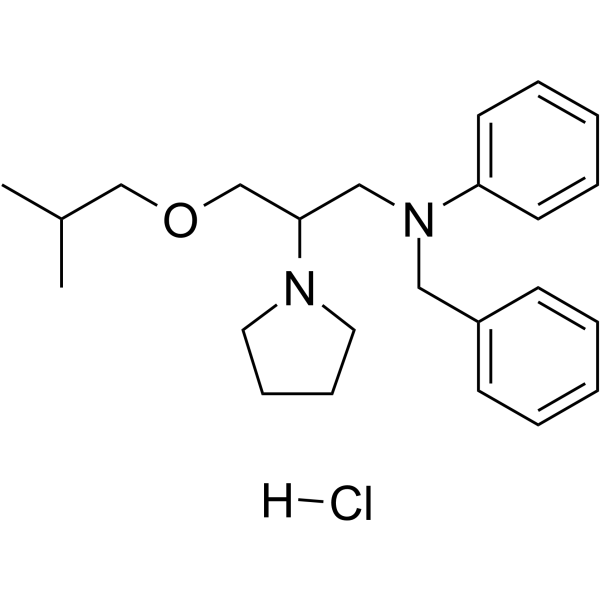
Bepridil hydrochloride (CERM 1978; Org 5730 hydrochloride) is an orally active non-selective calcium channel antagonist with multi-ion channel blocking activity. Bepridil hydrochloride modulates Calmodulin, the 20S proteasome, T-type/L-type calcium channels, cardiac sodium channels, multiple potassium channels, γ-secretase, β-secretase, and mitoKATP/sarcKATP channels. Bepridil hydrochloride acts as a hydroxyl radical scavenger, regulates mitochondrial and intracellular calcium handling, and exerts antiarrhythmic, antianginal, and cardioprotective effects. Bepridil hydrochloride alters amyloid precursor protein processing, reduces β-amyloid and thalamic calcium levels, restores seladin-1/DHCR24 expression, and improves sensorimotor recovery after cerebral ischemia. Bepridil hydrochloride also exhibits potent inhibitory effects on SARS-CoV-2 replication. Bepridil hydrochloride is used in studies related to stable angina, arrhythmias, cerebral ischemia, Alzheimer's disease, and SARS-CoV-2 infection .
loading...
    loading...
9
9 Publications Verification
Cat. No.: HY-16952
CAS No.: 64706-54-3
Synonyms: CERM 1978 free base; Org 5730
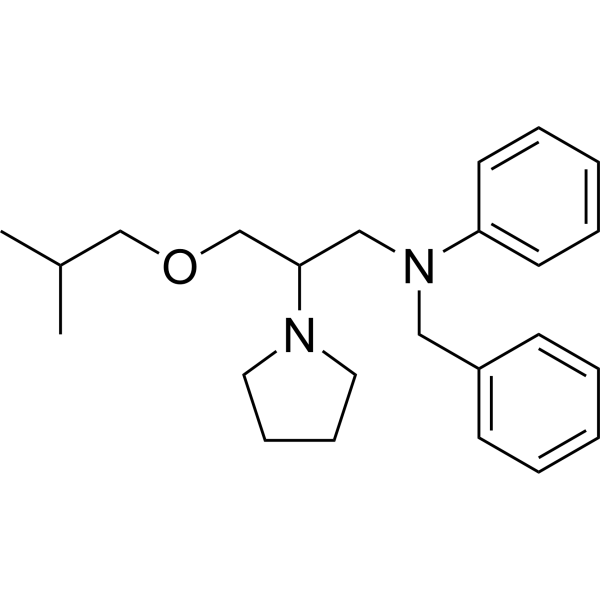
Bepridil (CERM 1978 (free base); Org 5730) is an orally active non-selective calcium channel antagonist with multi-ion channel blocking activity. Bepridil modulates Calmodulin, the 20S proteasome, T-type/L-type calcium channels, cardiac sodium channels, multiple potassium channels, γ-secretase, β-secretase, and mitoKATP/sarcKATP channels. Bepridil acts as a hydroxyl radical scavenger, regulates mitochondrial and intracellular calcium handling, and exerts antiarrhythmic, antianginal, and cardioprotective effects. Bepridil alters amyloid precursor protein processing, reduces β-amyloid and thalamic calcium levels, restores seladin-1/DHCR24 expression, and improves sensorimotor recovery after cerebral ischemia. Bepridil also exhibits potent inhibitory effects on SARS-CoV-2 replication. Bepridil is used in studies related to stable angina, arrhythmias, cerebral ischemia, Alzheimer's disease, and SARS-CoV-2 infection .
loading...
    loading...
9
9 Publications Verification
Cat. No.: HY-16952A
CAS No.: 74764-40-2
Synonyms: CERM 1978 hydrate; Org 5730 hydrochloride hydrate
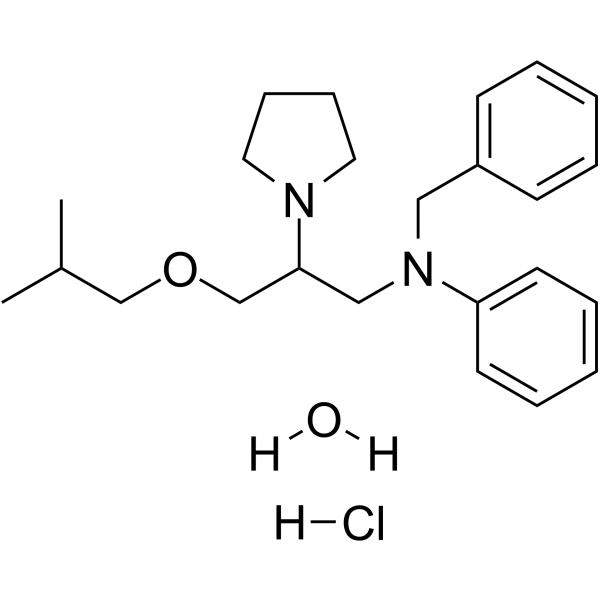
Bepridil hydrochloride hydrate (CERM 1978 hydrate; Org 5730 hydrochloride hydrate) is an orally active non-selective calcium channel antagonist with multi-ion channel blocking activity. Bepridil hydrochloride hydrate modulates Calmodulin, the 20S proteasome, T-type/L-type calcium channels, cardiac sodium channels, multiple potassium channels, γ-secretase, β-secretase, and mitoKATP/sarcKATP channels. Bepridil hydrochloride hydrate acts as a hydroxyl radical scavenger, regulates mitochondrial and intracellular calcium handling, and exerts antiarrhythmic, antianginal, and cardioprotective effects. Bepridil hydrochloride hydrate alters amyloid precursor protein processing, reduces β-amyloid and thalamic calcium levels, restores seladin-1/DHCR24 expression, and improves sensorimotor recovery after cerebral ischemia. Bepridil hydrochloride hydrate also exhibits potent inhibitory effects on SARS-CoV-2 replication. Bepridil hydrochloride hydrate is used in studies related to stable angina, arrhythmias, cerebral ischemia, Alzheimer's disease, and SARS-CoV-2 infection .
loading...
    loading...
7
7 Cited Publications
Cat. No.: HY-108901
CAS No.: 183814-30-4
Purity:  99.91%
Formoterol hemifumarate hydrate is a selective, long-acting beta 2-adrenoceptor agonist. Formoterol is a bronchodilator used for the research of the asthma and chronic obstructive pulmonary disease (COPD). Formoterol hemifumarate hydrate induces mitochondrial biogenesis and promotes cognitive recovery after traumatic brain injury .
loading...
    loading...
6
6 Cited Publications
Cat. No.: HY-111793
CAS No.: 1060524-97-1
Purity:  98.40%
Target:  

CXCR

Research Areas:  

Neurological Disease

NUCC-390 is a novel and selective small-molecule CXCR4 receptor agonist. NUCC-390 induces internalization of CXCR4 receptors and acts in an opposite way of AMD3100 (HY-10046) . NUCC-390 promotes nerve recovery of function after neurodegeneration in vivo .
loading...
    loading...
6
6 Cited Publications
Cat. No.: HY-111793A
CAS No.: 2749281-71-6
Purity:  98.19%
Target:  

CXCR

Research Areas:  

Neurological Disease

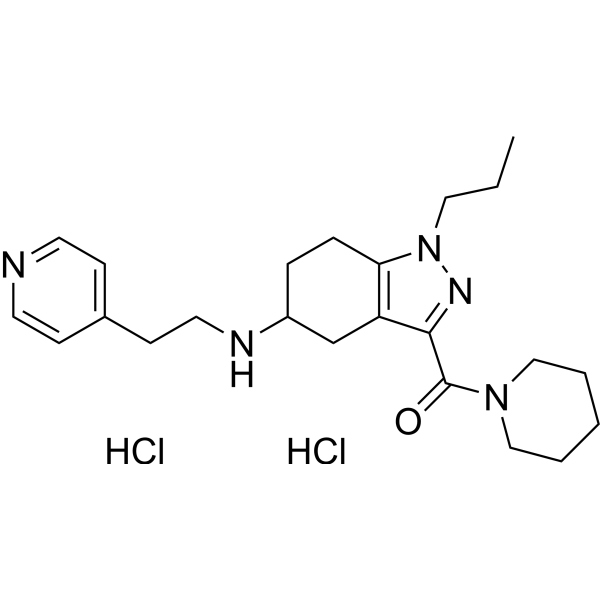
NUCC-390 dihydrochloride is a novel and selective small-molecule CXCR4 receptor agonist. NUCC-390 dihydrochloride induces internalization of CXCR4 receptors and acts in an opposite way of AMD3100 (HY-10046) . NUCC-390 dihydrochloride promotes nerve recovery of function after neurodegeneration in vivo .
loading...
    loading...
5
5 Cited Publications
Cat. No.: HY-B1752
CAS No.: 80373-22-4
Synonyms: LY 171555; (-)-LY 141865
Quinpirole (LY 171555; (-)-LY 141865) is a D2/D3 dopamine receptor agonist and a CaV1.3 calcium channel modulator. Quinpirole normalizes dendritic spine density in dopamine-depleted striatum, upregulates the protein expression of BCL2 and GluR2, downregulates the protein expression of BAX, and delays the onset of seizures. Quinpirole enhances learning and memory, inhibits neuronal apoptosis (apoptosis), and induces anxiety-like, stereotyped, and compulsive behaviors. Quinpirole disrupts prepulse inhibition in rhesus monkeys, enhances the activity of paraventricular thalamic neurons to promote recovery from Isoflurane anesthesia, and alters the composition of the gut microbiota in rats. Quinpirole can be used in research related to dyskinesia, pain, epilepsy, and neurological disorders including anxiety disorder, obsessive-compulsive disorder, and schizophrenia .
loading...
    loading...
4
4 Cited Publications
Cat. No.: HY-15529
CAS No.: 1019331-10-2
Purity:  99.74%
Research Areas:  

Cardiovascular Disease

S0859 is a selective, high-affinity generic Na +/HCO3 - transporter (NBC) inhibitor. S0859 reversibly inhibits NBC-mediated intracellular pH (pHi) recovery (Ki=1.7 μM, full inhibition at approximately 30 μM).
loading...
    loading...
4
4 Cited Publications
Cat. No.: HY-125913
CAS No.: 618-39-3
Target:  

Ser/Thr Protease

Research Areas:  

Inflammation/Immunology

Benzamidine is a competitive protease inhibitor that blocks the hydrolytic cleavage of glucagon by plasmin, trypsin and thrombin. Benzamidine effectively inhibits the degradation of glucagon by relevant proteases during the collection, storage and analysis of human plasma and blood samples. During in vivo metabolism, Benzamidine undergoes N-hydroxylation and produces multiple metabolites, exhibiting characteristics of delayed excretion or biphasic elimination. Benzamidine only induces slight single-strand DNA breaks at high concentrations and shows no significant genotoxic potential overall. Benzamidine may interfere with the detection of some glucagon antisera, but does not affect key antigen-antibody affinity at specific concentrations. Benzamidine can be used as a stabilizer in glucagon radioimmunoassays to ensure the accuracy and recovery rate of detection results .
loading...
    loading...
4
4 Cited Publications
Cat. No.: HY-18071
CAS No.: 1204329-34-9
Research Areas:  

Cardiovascular Disease

BI-9627, a chemical probe, is a potent sodium-hydrogen exchanger isoform 1 (NHE1) inhibitor (IC50 = 6 and 31 nM in intracellular pH recovery (pHi) and human platelet swelling assays). BI-9627 displays >30-fold selectivity against NHE2 and with no measurable inhibitory activity against the NHE3 isoform. BI-9627 decreases autophagy in HTR-8/SVneo cells. BI-9627 can significantly reduce the pHi of human sperm and partially reverse the effect of DMA. BI-9627 prolongs Ca 2+ recovery time in KO hiPSC-CMs. BI-9627 shows low DDI (agent-agent interaction) potential, excellent pharmacokinetics in rat and dog, and remarkably potent activity in the isolated heart model of ischemia-reperfusion injury .
loading...
    loading...
4
4 Cited Publications
Cat. No.: HY-18071A
CAS No.: 1422252-46-7
Research Areas:  

Cardiovascular Disease

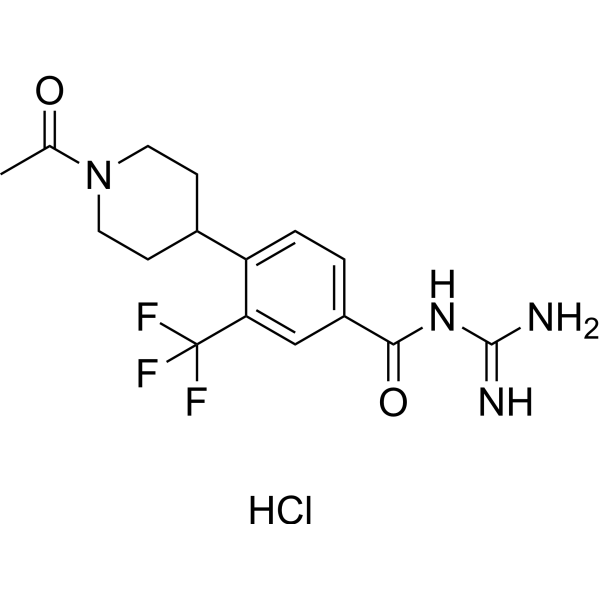
BI-9627 hydrochloride is a potent sodium-hydrogen exchanger isoform 1 (NHE1) inhibitor (IC50 = 6 and 31 nM in intracellular pH recovery (pHi) and human platelet swelling assays). BI-9627 hydrochloride displays >30-fold selectivity against NHE2 and with no measurable inhibitory activity against the NHE3 isoform. BI-9627 hydrochloride decreases autophagy in HTR-8/SVneo cells. BI-9627 hydrochloride can significantly reduce the pHi of human sperm and partially reverse the effect of DMA. BI-9627 hydrochloride prolongs Ca 2+ recovery time in KO hiPSC-CMs. BI-9627 hydrochloride shows low DDI (agent-agent interaction) potential, excellent pharmacokinetics in rat and dog, and remarkably potent activity in the isolated heart model of ischemia-reperfusion injury .
loading...
    loading...
4
4 Cited Publications
Cat. No.: HY-W018781
CAS No.: 1670-14-0
Target:  

Ser/Thr Protease

Research Areas:  

Cancer

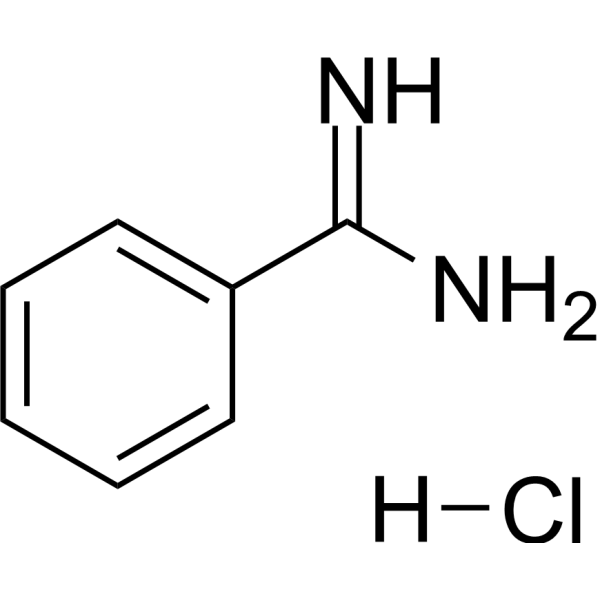
Benzamidine hydrochloride is a competitive protease inhibitor that blocks the hydrolytic cleavage of glucagon by plasmin, trypsin and thrombin. Benzamidine hydrochloride effectively inhibits the degradation of glucagon by relevant proteases during the collection, storage and analysis of human plasma and blood samples. During in vivo metabolism, Benzamidine hydrochloride undergoes N-hydroxylation and produces multiple metabolites, exhibiting characteristics of delayed excretion or biphasic elimination. Benzamidine hydrochloride only induces slight single-strand DNA breaks at high concentrations and shows no significant genotoxic potential overall. Benzamidine hydrochloride may interfere with the detection of some glucagon antisera, but does not affect key antigen-antibody affinity at specific concentrations. Benzamidine hydrochloride can be used as a stabilizer in glucagon radioimmunoassays to ensure the accuracy and recovery rate of detection results .
loading...
    loading...
4
4 Cited Publications
Cat. No.: HY-W087937
CAS No.: 206752-36-5
Synonyms: Benzenecarboximidamide hydrochloride hydrate
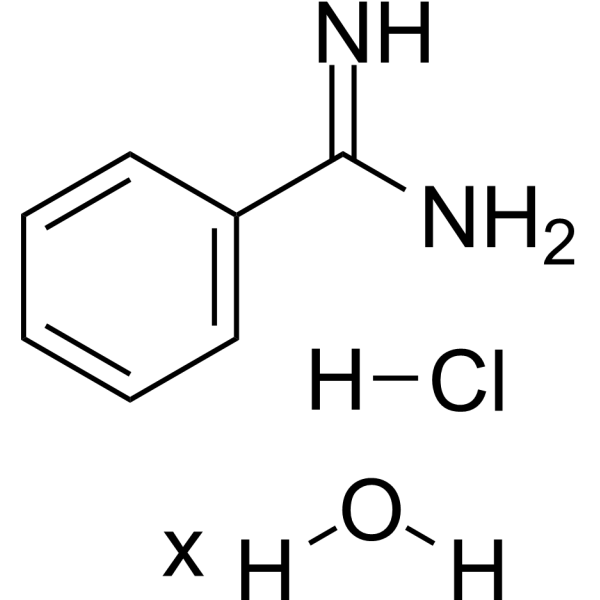
Benzamidine (Benzenecarboximidamide) hydrochloride hydrate is a competitive protease inhibitor that blocks the hydrolytic cleavage of glucagon by plasmin, trypsin and thrombin. Benzamidine hydrochloride hydrate effectively inhibits the degradation of glucagon by relevant proteases during the collection, storage and analysis of human plasma and blood samples. During in vivo metabolism, Benzamidine hydrochloride hydrate undergoes N-hydroxylation and produces multiple metabolites, exhibiting characteristics of delayed excretion or biphasic elimination. Benzamidine hydrochloride hydrate only induces slight single-strand DNA breaks at high concentrations and shows no significant genotoxic potential overall. Benzamidine hydrochloride hydrate may interfere with the detection of some glucagon antisera, but does not affect key antigen-antibody affinity at specific concentrations. Benzamidine hydrochloride hydrate can be used as a stabilizer in glucagon radioimmunoassays to ensure the accuracy and recovery rate of detection results .
loading...
    loading...
3
3 Cited Publications
Cat. No.: HY-N1401
CAS No.: 112246-15-8
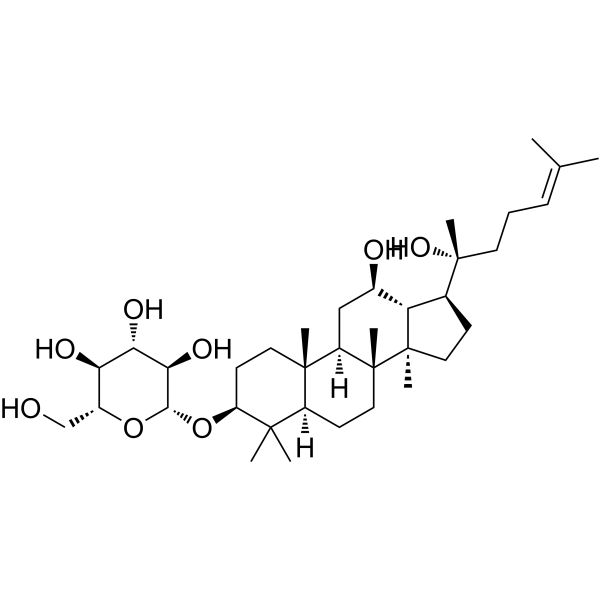
20(R)-Ginsenoside Rh2 is an orally active protopanaxadiol-type saponin with multiple biological activities. 20(R)-Ginsenoside Rh2 exerts a significant inhibitory effect on non-small cell lung cancer and liver cancer by inducing cell cycle arrest and promoting apoptosis. 20(R)-Ginsenoside Rh2 exerts anti-γ-herpesvirus effects by inhibiting viral DNA replication. 20(R)-Ginsenoside Rh2 inhibits inflammatory mediators by reducing the levels of NO, PGE2, and ROS; it can delay skin photoaging by reducing ROS and inhibiting MMP-9/2 activity. 20(R)-Ginsenoside Rh2 accelerates the recovery after muscle injury by activating the Akt1/PKB signaling pathway. 20(R)-Ginsenoside Rh2 can inhibit osteoclast formation and exert an anti-osteoporosis effect .
loading...
    loading...
2
2 Cited Publications
Cat. No.: HY-W145521
CAS No.: 9051-97-2
Synonyms: β Glucan
β-1,3-Glucan (β Glucan) is an orally active polysaccharide composed of glucose polymers. β-1,3-Glucan increase the activity of IKKβ kinase, enhances the production of nitric oxide. β-1,3-Glucan improves resistance to Vibrio harveyi infection. β-1,3-Glucan enhances immune response, promotes blood pressure recovery, reduces lung, kidney and liver damage, inhibits the growth of syngeneic tumors .
loading...
    loading...
2
2 Cited Publications
Cat. No.: HY-B0347
CAS No.: 103890-78-4
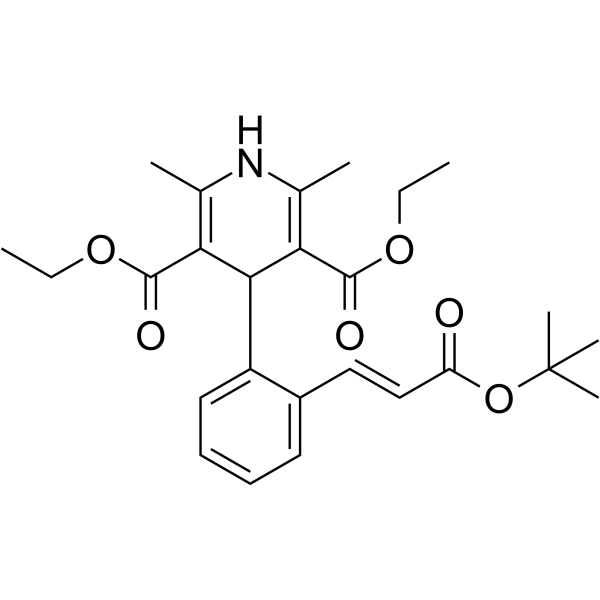
Lacidipine is an orally active and highly selective L-type calcium channel blocker that acts on smooth muscle calcium channels, primarily dilates peripheral arteries, reduces peripheral resistance, and has long-lasting anti-hypertensive activity. Lacidipine protects HKCs from apoptosis induced by ATP depletion and recovery by modulating the caspase-3 pathway. Lacidipine can be used in studies of hypertension, atherosclerosis and acute kidney injury (AKI) .
loading...
    loading...
2
2 Cited Publications
Cat. No.: HY-B1186
CAS No.: 502-55-6
Research Areas:  

Others

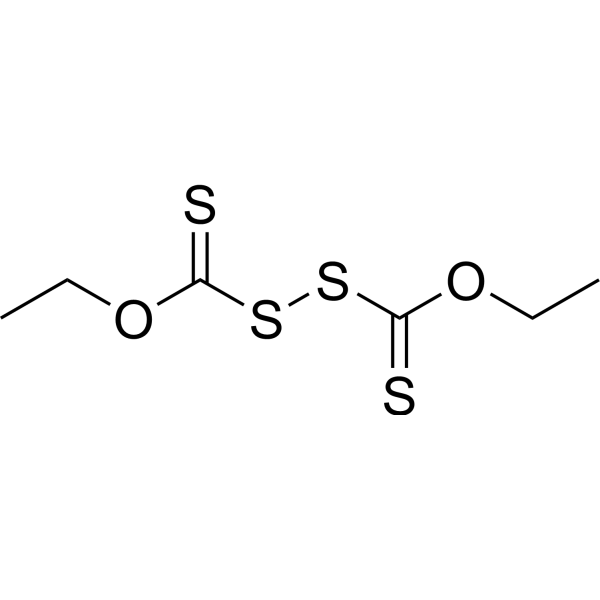
Dixanthogen is a dimer of xanthate, which forms via the oxidation of xanthate. Dixanthogen can decompose peroxides, which are key radical initiators for the oxidative degradation of polypropylene. Dixanthogen serves as a stabilizer for polypropylene, a pediculicide, and is also used in studies related to metal recovery .
loading...
    loading...
1
1 Cited Publications
Cat. No.: HY-W088070A
CAS No.: 9012-36-6
Agarose,Low melting point is a kind of agarose, a kind of polysaccharide that can be derived from seaweed. It is commonly used in molecular biology and biochemistry to isolate and purify DNA and RNA fragments. Agarose,Low melting point is a low melting point agarose, which is suitable for the recovery of large DNA fragments and enzymatic reactions in gels and other applications. In addition, it has been used in various techniques, such as pulsed field gel electrophoresis and capillary electrophoresis for analyzing genetic material.
loading...
    loading...
1
1 Cited Publications
Cat. No.: HY-W019894
CAS No.: 7773-01-5
Synonyms: Manganese dichloride
Manganese chloride is an orally active MRI liver contrast agent. Manganese chloride induces Apoptosis and activates the mTOR signaling pathway. Manganese chloride induces cognitive impairment, promotes hematopoietic recovery, and reduces radiation-induced bone marrow and brain damage. It can be used for the study of renal impairment .
loading...
    loading...
1
1 Cited Publications
Cat. No.: HY-N0670
CAS No.: 191729-45-0
Synonyms: Tenacissimoside C
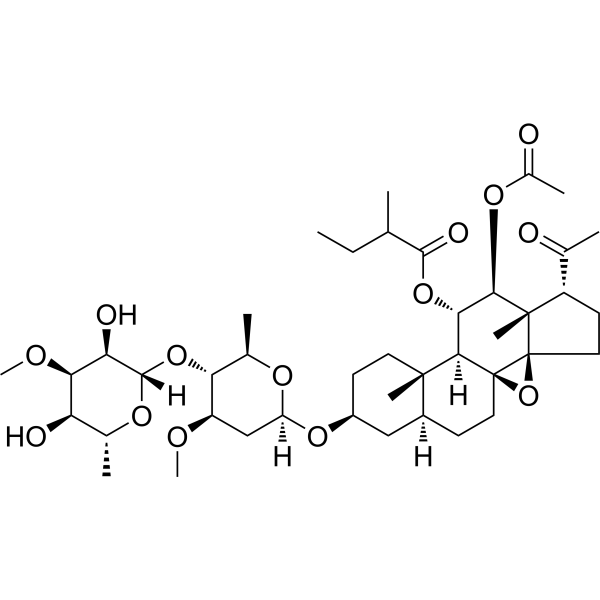
Tenacissoside H (Tenacissimoside C) is a compound found in Caulis Marsdeniae Tenacissimae. Tenacissoside H shows anti-inflammation, anti-tumor and neuroprotective effects. Tenacissoside H inhibits PI3K/Akt and NF-κB signaling pathway. Tenacissoside H inhibits cancer cells proliferation, S phase arrest, and inhibits tumor growyh in mice. Tenacissoside H promotes neurological recovery of ischemia-reperfusion injury in mice by inhibiting inflammation and apoptosis. Tenacissoside H can be used for the research of cancer, inflammation and neurological diseases, such as esophageal cancer and cerebral ischemia .
loading...
    loading...

