10 Results for "

rye

" in MedChemExpress (MCE) Product Catalog:
Products (10)

10 Results for "rye" in MCE Product Catalog:

Cat. No.: HY-N9686
CAS No.: 53034-79-0
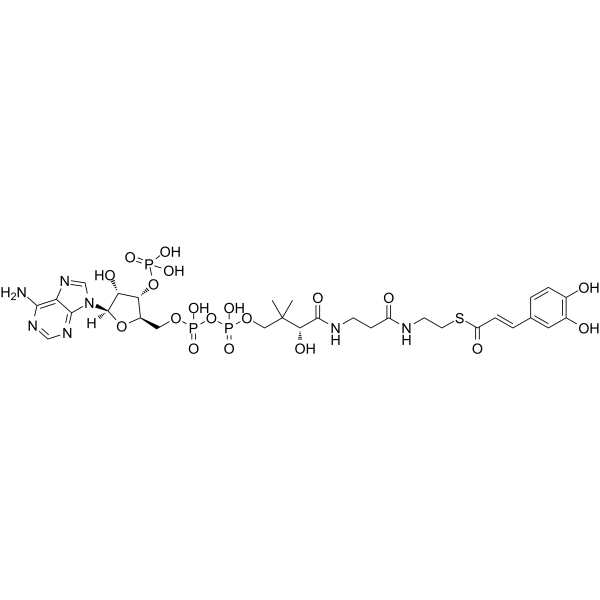
Caffeoyl-CoA is a substrate of Chalcone synthase derived from rye with a Km value of 1.45 μM .
loading...
    loading...
Cat. No.: HY-B2013
CAS No.: 71283-80-2
Research Areas:  

Others

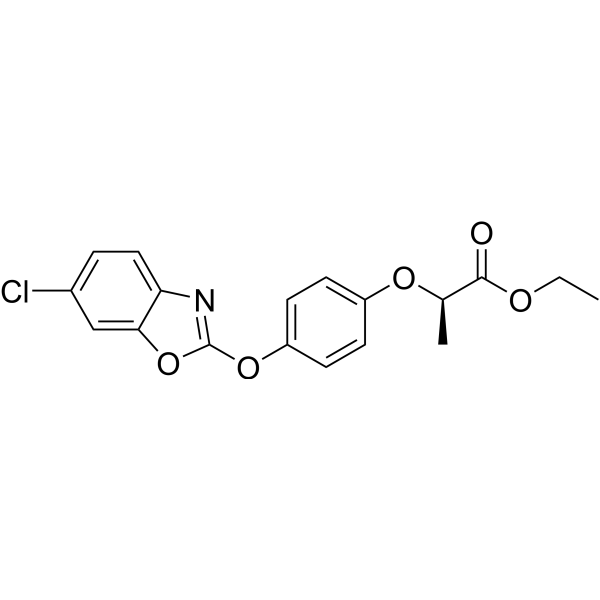
Fenoxaprop-P-ethyl is an acetyl-CoA carboxylase (ACC) inhibitor and post-emergence herbicide. Fenoxaprop-P-ethyl inhibits the conversion of acetyl-CoA to malonyl-CoA, reduces malonyl-CoA synthesis and disrupts fatty acid synthesis. Fenoxaprop-P-ethyl disrupts lipid homeostasis through cascaded inhibition of lipid metabolism, decreases total lipid content, downregulates fatty acid elongase genes and inhibits their activity. Fenoxaprop-P-ethyl disrupts fatty acid synthesis in rice seedlings and controls annual monocotyledonous weeds in wheat, durum wheat, rye, triticale and barley fields .
loading...
    loading...
Cat. No.: HY-B1859
CAS No.: 34123-59-6
Research Areas:  

Others

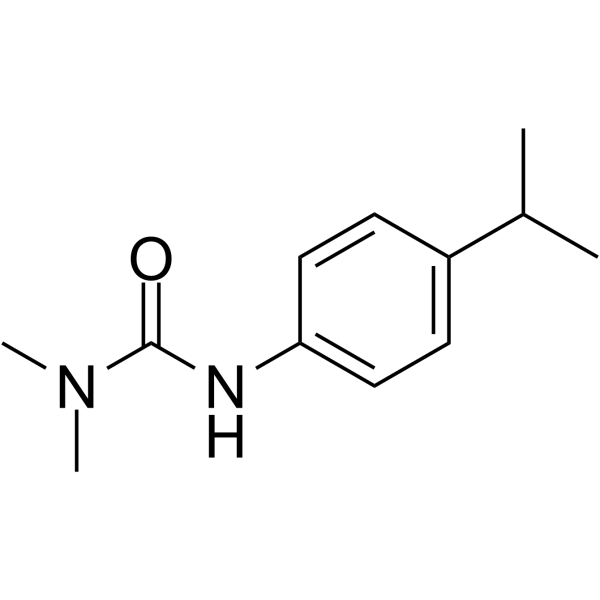
Isoproturon belongs to the phenylurea herbicide family and is a systemic and selective herbicide. Isoproturon is widely applied for killing weeds in farmland, which can be used in the control of annual grasses and broad-leaved weeds in spring and winter wheat, winter rye and spring and winter barley .
loading...
    loading...
Cat. No.: HY-B1859S1
CAS No.: 352438-80-3
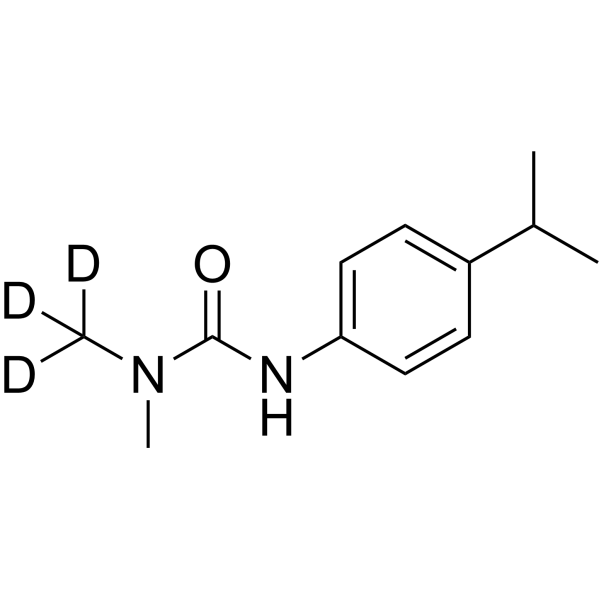
Isoproturon-d3 is the deuterium labeled Isoproturon . Isoproturon belongs to the phenylurea herbicide family and is a systemic and selective herbicide. Isoproturon is widely applied for killing weeds in farmland, which can be used in the control of annual grasses and broad-leaved weeds in spring and winter wheat, winter rye and spring and winter barley .
loading...
    loading...
Cat. No.: HY-N14220
CAS No.: 52146-62-0
Epoformin, is a fungal cyclohexene epoxide that can be isolated from Diplodia quercivora. Epoformin is an antibiotic and exhibits weak inhibitory activity against rye seedling sheath growth. Epoformin exhibits antifungal activity, inhibits Phytophthora cinnamomi and Phytophthora plurivora .
loading...
    loading...
Cat. No.: HY-B1859R
CAS No.: 34123-59-6
Research Areas:  

Others

Isoproturon (Standard) is the analytical standard of Isoproturon. This product is intended for research and analytical applications. Isoproturon belongs to the phenylurea herbicide family and is a systemic and selective herbicide. Isoproturon is widely applied for killing weeds in farmland, which can be used in the control of annual grasses and broad-leaved weeds in spring and winter wheat, winter rye and spring and winter barley .
loading...
    loading...
Cat. No.: HY-B1859S2
CAS No.: 1007461-76-8
Isoproturon-d6-1 is the deuterium labeled Isoproturon (HY-B1859). Isoproturon belongs to the phenylurea herbicide family and is a systemic and selective herbicide. Isoproturon is widely applied for killing weeds in farmland, which can be used in the control of annual grasses and broad-leaved weeds in spring and winter wheat, winter rye and spring and winter barley .
loading...
    loading...
Cat. No.: HY-N20629
CAS No.: 52483-22-4
5-Alkylresorcinol C19:1 is an unsaturated alkylresorcinol that can be isolated from rye bran .
loading...
    loading...
Cat. No.: HY-186297
CAS No.: 86248-87-5
Campesteryl linoleate is a phytosterol fatty acid ester formed by the esterification of campesterol and linoleic acid. It is found in grains such as corn, rye, wheat and spelt, and is one of the major unsaturated fatty acid sterol esters in corn. Campesteryl linoleate can be used in studies related to phytosterol metabolism, grain lipid composition and kernel black point .
loading...
    loading...
Cat. No.: HY-W750858
CAS No.: 155835-54-4
DIBOA-Glucoside is a glycoside derivative that can be found in cereal crops like rye, wheat, and maize. DIBOA-Glucoside is a stable, less toxic glucoside form of DIBOA. DIBOA-Glucoside, upon pest or pathogen attack, is hydrolyzed by an enzyme, releasing the toxic aglycone DIBOA and glucose, thereby deterring insects and suppressing weeds through an allelopathic effect .
loading...
    loading...

