16 Results for "

social memory

" in MedChemExpress (MCE) Product Catalog:
Products (16)

16 Results for "social memory" in MCE Product Catalog:

2
2 Cited Publications
Cat. No.: HY-15522
CAS No.: 847375-16-0
Target:  

Oxytocin Receptor

Research Areas:  

Neurological Disease

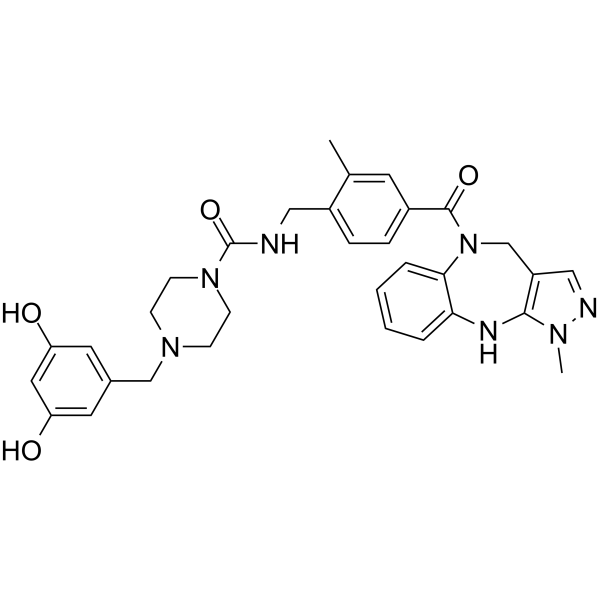
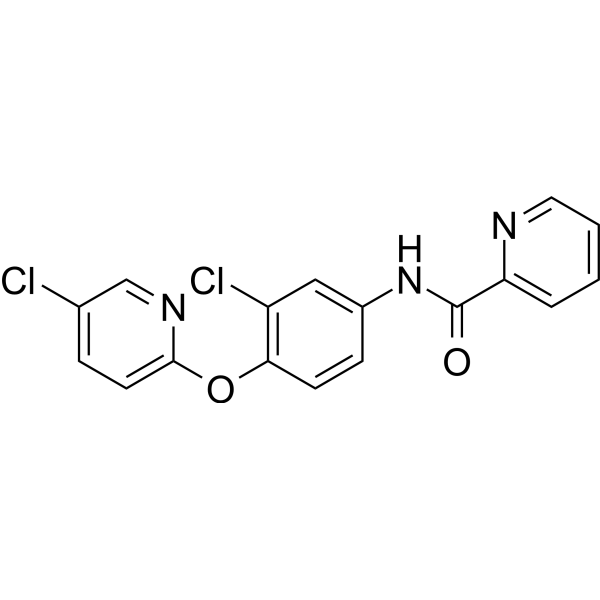
WAY-267464 is a non-peptide oxytocin receptor (OTR) agonist. WAY-267464 can impair social recognition memory in rats through a vasopressin 1A receptor antagonist action. WAY-267464 can be used for the research of psychiatric disorders, such disorders include autism spectrum disorder, schizophrenia, and social anxiety disorder .
loading...
    loading...
2
2 Cited Publications
Cat. No.: HY-138830
CAS No.: 1818252-53-7
Purity:  99.81%
Target:  

Histone Demethylase

Research Areas:  

Neurological Disease

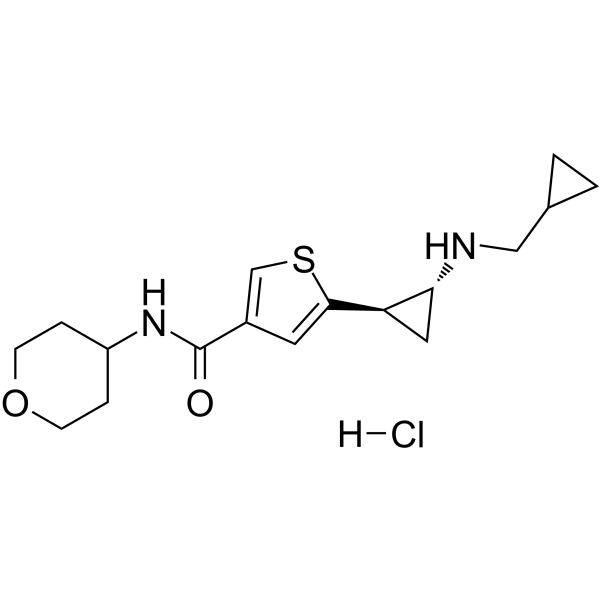
TAK-418 is an orally active, blood-brain barrier-penetrant LSD1 inhibitor with a human IC50 of 2.9 nM. TAK-418 irreversibly inhibits LSD1 by forming a compact flavin-FAD adduct with the catalytic domain FAD, blocking the demethylation of H3K4me1/2 and H3K9me1/2 without disrupting the LSD1-GFI1B interaction. TAK-418 restores normally dysregulated brain gene expression and DNA methylation, increases H3K4me1/2/3 and H3K9me2 at the Ucp2 locus, and induces Ucp2 mRNA expression. TAK-418 rescues defective H3K4 histone modifications, normalizes adult neurogenesis, and improves recognition memory, social behavior, and cognition in rodent models. TAK-418 can be used in research related to neurodevelopmental disorders, Alzheimer's disease, and autism spectrum disorders .
loading...
    loading...
2
2 Cited Publications
Cat. No.: HY-108679
CAS No.: 1432043-31-6
Target:  

Oxytocin Receptor

Research Areas:  

Neurological Disease

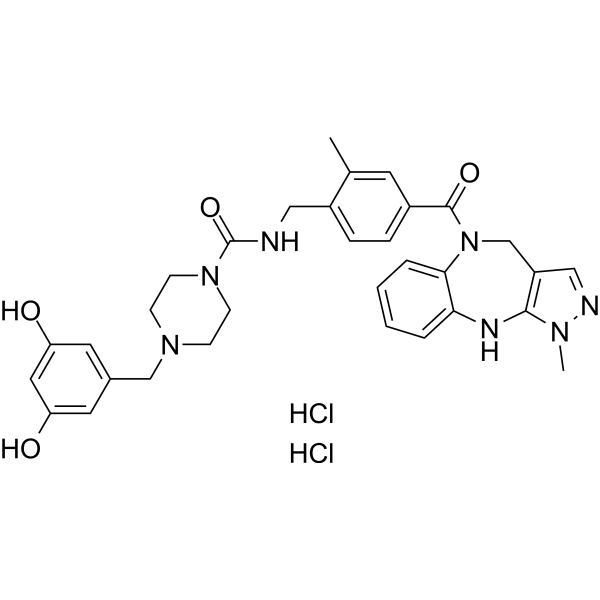
WAY-267464 (hydrochloride) is a non-peptide oxytocin receptor (OTR) agonist. WAY-267464 (hydrochloride) can impair social recognition memory in rats through a vasopressin 1A receptor antagonist action. WAY-267464 (hydrochloride) can be used for the research of psychiatric disorders, such disorders include autism spectrum disorder, schizophrenia, and social anxiety disorder .
loading...
    loading...
1
1 Cited Publications
Cat. No.: HY-P0267
CAS No.: 121062-08-6
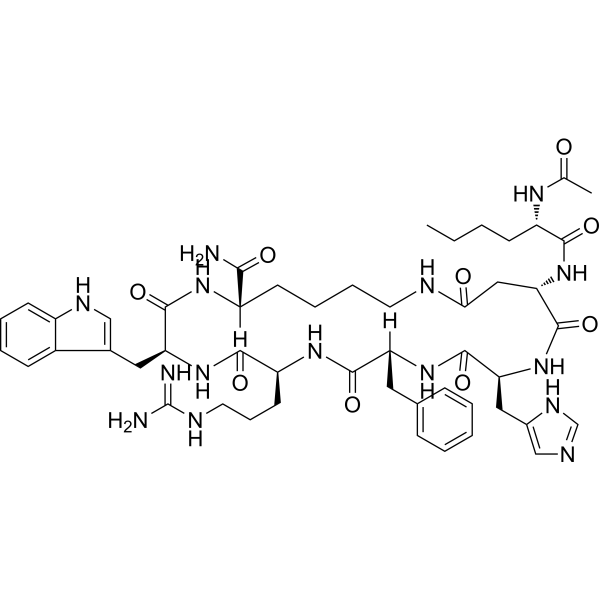
Melanotan (MT)-II is a melanocortin receptor agonist. Melanotan (MT)-II activates melanocortin receptor 3 and melanocortin receptor 4, and stimulates the release of central endogenous oxytocin. Melanotan (MT)-II reverses recognition memory impairment, increased anxiety levels and reduced exploratory tendency in zebrafish exposed to short-term high-fat diet. Melanotan (MT)-II improves impaired social behavior indicators in mouse models of autism spectrum disorder. Melanotan (MT)-II induces weight loss, reduces food intake and exerts anorectic effects. Melanotan (MT)-II increases intracavernous pressure and erectile activity in brown rats. Melanotan (MT)-II can be used in studies related to memory impairment, anxiety, reduced exploratory behavior, autism spectrum disorder, obesity and erectile dysfunction .
loading...
    loading...
Cat. No.: HY-110190
CAS No.: 1630936-95-6
Purity:  99.94%
Synonyms: ML396
Target:  

mGluR

Research Areas:  

Neurological Disease

VU0422288 (ML396) is a positive allosteric modulator of group III mGluRs. VU0422288 inhibits mGluRs with EC50s of 125 nM, 146 nM, and 108 nM for mGluR4, mGluR7, and mGluR8, respectively in calcium mobilization assays. VU0422288 reverses deficits in contextual fear memory, social recognition, and apneas in Rett syndrome (RTT) model mice .
loading...
    loading...
Cat. No.: HY-120657
CAS No.: 1481636-31-0
Purity:  99.88%
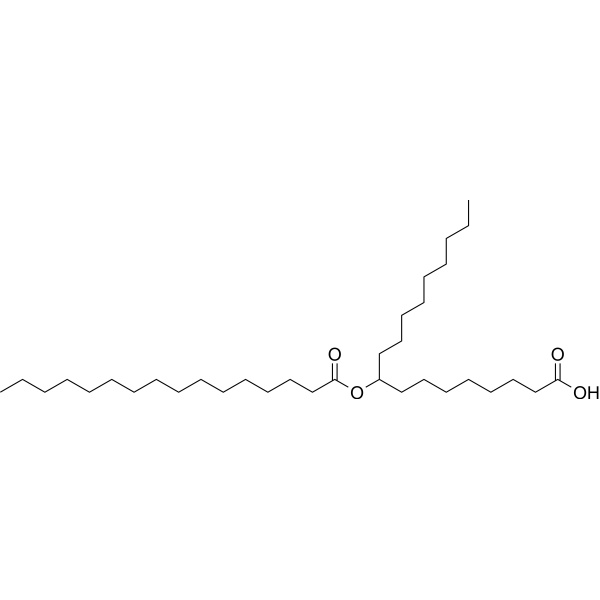
9-PAHSA is an orally active endogenous GPR120 agonist (EC50=18 μM). 9-PAHSA significantly inhibits LPS-induced inflammatory responses by blocking the NF-κB pathway. 9-PAHSA induces adipocyte browning, enhances glucose uptake and reduces lipid accumulation, while improving mitochondrial function and the survival rate of steatotic hepatocytes. In terms of neuroprotection, 9-PAHSA regulates the expression of REST and BDNF in the prefrontal cortex of diabetic mice, and effectively prevents spatial working memory deficits and abnormal social behaviors. 9-PAHSA does not directly regulate insulin secretion or improve systemic insulin sensitivity, and possesses specific anti-inflammatory, metabolic regulatory and neuroprotective properties. 9-PAHSA can be used in the research of diabetes-related cognitive impairment, obesity and non-alcoholic fatty liver disease .
loading...
    loading...
Cat. No.: HY-W770410
CAS No.: 2748638-71-1
9-PAHSA- 13C4 is 13C-labeled 9-PAHSA. 9-PAHSAis an orally active endogenous GPR120 agonist (EC50=18 μM). 9-PAHSAsignificantly inhibits LPS-induced inflammatory responses by blocking the NF-κB pathway. 9-PAHSAinduces adipocyte browning, enhances glucose uptake and reduces lipid accumulation, while improving mitochondrial function and the survival rate of steatotic hepatocytes. In terms of neuroprotection, 9-PAHSAregulates the expression of REST and BDNF in the prefrontal cortex of diabetic mice, and effectively prevents spatial working memory deficits and abnormal social behaviors. 9-PAHSAdoes not directly regulate insulin secretion or improve systemic insulin sensitivity, and possesses specific anti-inflammatory, metabolic regulatory and neuroprotective properties. 9-PAHSAcan be used in the research of diabetes-related cognitive impairment, obesity and non-alcoholic fatty liver disease .
loading...
    loading...
Cat. No.: HY-120657S
CAS No.: 2704278-85-1
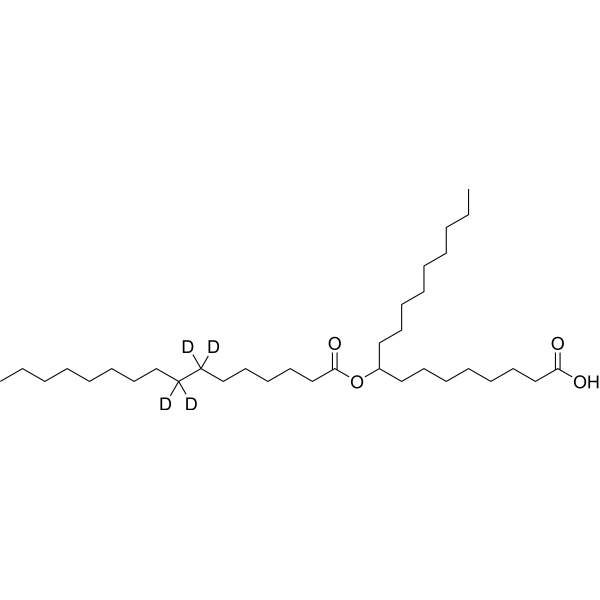
9-PAHSA-d4 is the deuterium labeled 9-PAHSA. 9-PAHSA is an orally active endogenous GPR120 agonist (EC50=18 μM). 9-PAHSA significantly inhibits LPS-induced inflammatory responses by blocking the NF-κB pathway. 9-PAHSA induces adipocyte browning, enhances glucose uptake and reduces lipid accumulation, while improving mitochondrial function and the survival rate of steatotic hepatocytes. In terms of neuroprotection, 9-PAHSA regulates the expression of REST and BDNF in the prefrontal cortex of diabetic mice, and effectively prevents spatial working memory deficits and abnormal social behaviors. 9-PAHSA does not directly regulate insulin secretion or improve systemic insulin sensitivity, and possesses specific anti-inflammatory, metabolic regulatory and neuroprotective properties. 9-PAHSA can be used in the research of diabetes-related cognitive impairment, obesity and non-alcoholic fatty liver disease .
loading...
    loading...
Cat. No.: HY-120657R
CAS No.: 1481636-31-0
9-PAHSA (Standard) is the analytical standard of 9-PAHSA (HY-120657). This product is intended for research and analytical applications. 9-PAHSA is an orally active endogenous GPR120 agonist (EC50=18 μM). 9-PAHSA significantly inhibits LPS-induced inflammatory responses by blocking the NF-κB pathway. 9-PAHSA induces adipocyte browning, enhances glucose uptake and reduces lipid accumulation, while improving mitochondrial function and the survival rate of steatotic hepatocytes. In terms of neuroprotection, 9-PAHSA regulates the expression of REST and BDNF in the prefrontal cortex of diabetic mice, and effectively prevents spatial working memory deficits and abnormal social behaviors. 9-PAHSA does not directly regulate insulin secretion or improve systemic insulin sensitivity, and possesses specific anti-inflammatory, metabolic regulatory and neuroprotective properties. 9-PAHSA can be used in the research of diabetes-related cognitive impairment, obesity and non-alcoholic fatty liver disease .
loading...
    loading...
Cat. No.: HY-120657S1
CAS No.: 2748208-06-0
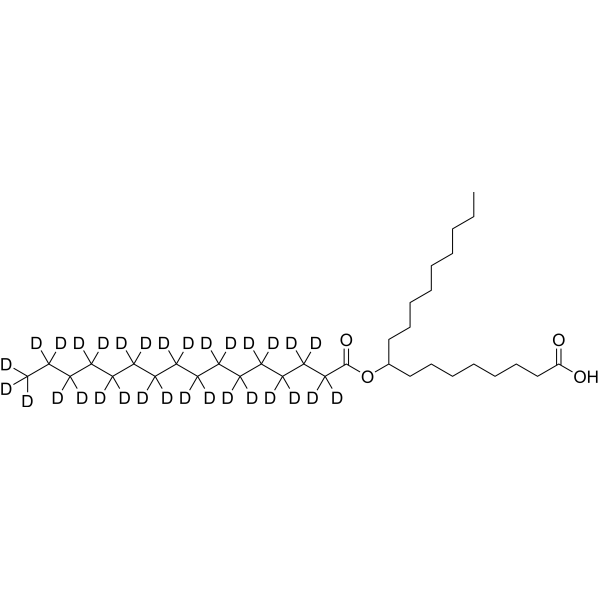
9-PAHSA-d31 is the deuterium labeled 9-PAHSA. 9-PAHSA is an orally active endogenous GPR120 agonist (EC50=18 μM). 9-PAHSA significantly inhibits LPS-induced inflammatory responses by blocking the NF-κB pathway. 9-PAHSA induces adipocyte browning, enhances glucose uptake and reduces lipid accumulation, while improving mitochondrial function and the survival rate of steatotic hepatocytes. In terms of neuroprotection, 9-PAHSA regulates the expression of REST and BDNF in the prefrontal cortex of diabetic mice, and effectively prevents spatial working memory deficits and abnormal social behaviors. 9-PAHSA does not directly regulate insulin secretion or improve systemic insulin sensitivity, and possesses specific anti-inflammatory, metabolic regulatory and neuroprotective properties. 9-PAHSA can be used in the research of diabetes-related cognitive impairment, obesity and non-alcoholic fatty liver disease .
loading...
    loading...
Cat. No.: HY-144026S
CAS No.: 1809222-43-2
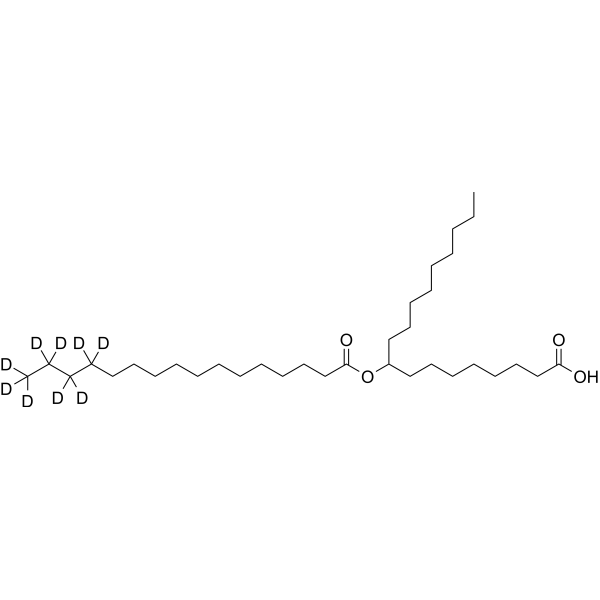
9-PAHSA-d9 is the deuterium labeled 9-PAHSA (HY-120657). 9-PAHSA is an orally active endogenous GPR120 agonist (EC50=18 μM). 9-PAHSA significantly inhibits LPS-induced inflammatory responses by blocking the NF-κB pathway. 9-PAHSA induces adipocyte browning, enhances glucose uptake and reduces lipid accumulation, while improving mitochondrial function and the survival rate of steatotic hepatocytes. In terms of neuroprotection, 9-PAHSA regulates the expression of REST and BDNF in the prefrontal cortex of diabetic mice, and effectively prevents spatial working memory deficits and abnormal social behaviors. 9-PAHSA does not directly regulate insulin secretion or improve systemic insulin sensitivity, and possesses specific anti-inflammatory, metabolic regulatory and neuroprotective properties. 9-PAHSA can be used in the research of diabetes-related cognitive impairment, obesity and non-alcoholic fatty liver disease .
loading...
    loading...
Cat. No.: HY-110190R
CAS No.: 1630936-95-6
Synonyms: ML396 (Standard)
Research Areas:  

Neurological Disease

VU0422288 (Standard) is the analytical standard of VU0422288 (HY-110190). This product is intended for research and analytical applications. VU0422288 (ML396) is a positive allosteric modulator of group III mGluRs. VU0422288 inhibits mGluRs with EC50s of 125 nM, 146 nM, and 108 nM for mGluR4, mGluR7, and mGluR8, respectively in calcium mobilization assays. VU0422288 reverses deficits in contextual fear memory, social recognition, and apneas in Rett syndrome (RTT) model mice .
loading...
    loading...
Cat. No.: HY-P0267A
CAS No.: 1036322-26-5
Melanotan (MT)-II acetate is a melanocortin receptor agonist. Melanotan (MT)-II acetate activates melanocortin receptor 3 and melanocortin receptor 4, and stimulates the release of central endogenous oxytocin. Melanotan (MT)-II acetate reverses recognition memory impairment, increased anxiety levels and reduced exploratory tendency in zebrafish exposed to short-term high-fat diet. Melanotan (MT)-II acetate improves impaired social behavior indicators in mouse models of autism spectrum disorder. Melanotan (MT)-II acetate induces weight loss, reduces food intake and exerts anorectic effects. Melanotan (MT)-II acetate increases intracavernous pressure and erectile activity in brown rats. Melanotan (MT)-II acetate can be used in studies related to memory impairment, anxiety, reduced exploratory behavior, autism spectrum disorder, obesity and erectile dysfunction .
loading...
    loading...
Cat. No.: HY-P992360

Target:  

GABA Receptor

Research Areas:  

Neurological Disease Cancer

GT-002 is a partial positive allosteric modulator targeting the α3 subtype of GABAA receptors, as well as a specific binder of tumor-associated TF-glycosylated LYPD3. GT-002 mildly enhances GABA-induced chloride currents by binding to the benzodiazepine site of GABAA receptors, thereby alleviating prefrontal hypofunction and improving cognitive, memory and social interaction abilities. GT-002 can be used in research related to schizophrenia spectrum disorders, various squamous cell carcinomas, colorectal cancer, non-small cell lung cancer, and aromatic L-amino acid decarboxylase deficiency .
loading...
    loading...
Cat. No.: HY-138830B
CAS No.: 1818252-52-6
Target:  

Histone Demethylase

Research Areas:  

Neurological Disease

TAK-418 free base is an orally active, blood-brain barrier-penetrant LSD1 inhibitor with a human IC50 of 2.9 nM. TAK-418 free base irreversibly inhibits LSD1 by forming a compact flavin-FAD adduct with the catalytic domain FAD, blocking the demethylation of H3K4me1/2 and H3K9me1/2 without disrupting the LSD1-GFI1B interaction. TAK-418 free base restores normally dysregulated brain gene expression and DNA methylation, increases H3K4me1/2/3 and H3K9me2 at the Ucp2 locus, and induces Ucp2 mRNA expression. TAK-418 free base rescues defective H3K4 histone modifications, normalizes adult neurogenesis, and improves recognition memory, social behavior, and cognition in rodent models. TAK-418 free base can be used in research related to neurodevelopmental disorders, Alzheimer's disease, and autism spectrum disorders .
loading...
    loading...
Cat. No.: HY-W657887
CAS No.: 154866-92-9
GSK-3β/G9a-IN-1 (Compound T2) is an orally active, selective, blood-brain-barrier permeable, competitive G9a (substrate-competitive, IC50: 1.1 μM) and GSK-3β (ATP competitive, IC50: 0.8 μM) inhibitor. GSK-3β/G9a-IN-1 is a potent H3K9me2 inhibitor that reshapes chromatin landscape. GSK-3β/G9a-IN-1 lowers tau phosphorylation, reduces Aβ aggregation. GSK-3β/G9a-IN-1 displays inhibition toward glucocorticoid receptor, androgen receptor, and alpha-2A adrenergic receptor. GSK-3β/G9a-IN-1 also upregulates SAGA complex members such as Eny2 and Sgf29. GSK-3β/G9a-IN-1 markedly improves memory, restores social behaviors, and increases synaptic complexity in late-onset Alzheimer’s disease .
loading...
    loading...
  • 1

