178 Results for "

species selectivity

" in MedChemExpress (MCE) Product Catalog:
Products (178)

178 Results for "species selectivity" in MCE Product Catalog:

92
92 Publications Verification
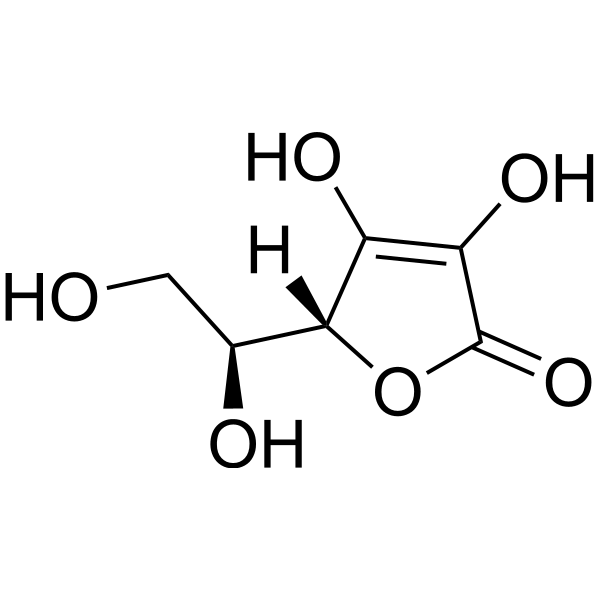
Cat. No.: HY-B0166
CAS No.: 50-81-7
Synonyms: L-Ascorbate; Vitamin C
L-Ascorbic acid (L-Ascorbate), an electron donor, is an endogenous antioxidant agent. L-Ascorbic acid inhibits selectively Cav3.2 channels with an IC50 of 6.5 μM. L-Ascorbic acid is also a collagen deposition enhancer and an elastogenesis inhibitor . L-Ascorbic acid exhibits anti-cancer effects through the generation of reactive oxygen species (ROS) and selective damage to cancer cells .
loading...
    loading...
85
85 Cited Publications
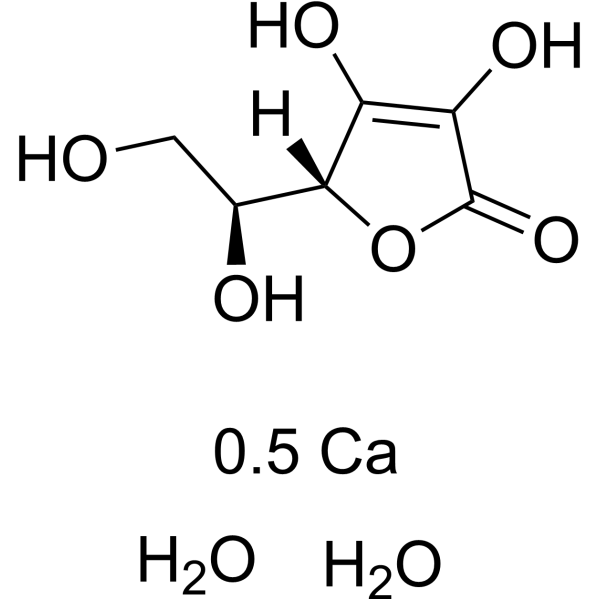
Cat. No.: HY-B0166C
CAS No.: 5743-28-2
Synonyms: L-Ascorbate calcium dihydrate; Vitamin C calcium dihydrate
L-Ascorbic acid calcium dihydrate (L-Ascorbate calcium dihydrate), an electron donor, is an endogenous antioxidant agent. L-Ascorbic acid calcium dihydrate inhibits selectively Cav3.2 channels with an IC50 of 6.5 μM. L-Ascorbic acid calcium dihydrate is also a collagen deposition enhancer and an elastogenesis inhibitor . L-Ascorbic acid calcium dihydrate exhibits anti-cancer effects through the generation of reactive oxygen species (ROS) and selective damage to cancer cells .
loading...
    loading...
72
72 Cited Publications
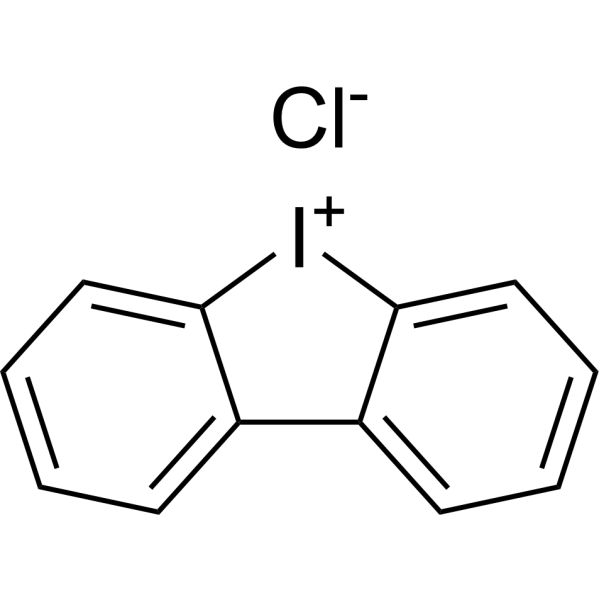
Cat. No.: HY-100965
CAS No.: 4673-26-1
Purity:  99.91%
Synonyms: DPI
Diphenyleneiodonium chloride is a NADPH oxidase (NOX) inhibitor and also functions as a TRPA1 activator with an EC50 of 1 to 3 μM. Diphenyleneiodonium chloride selectively inhibits intracellular reactive oxygen species.
loading...
    loading...
32
32 Cited Publications
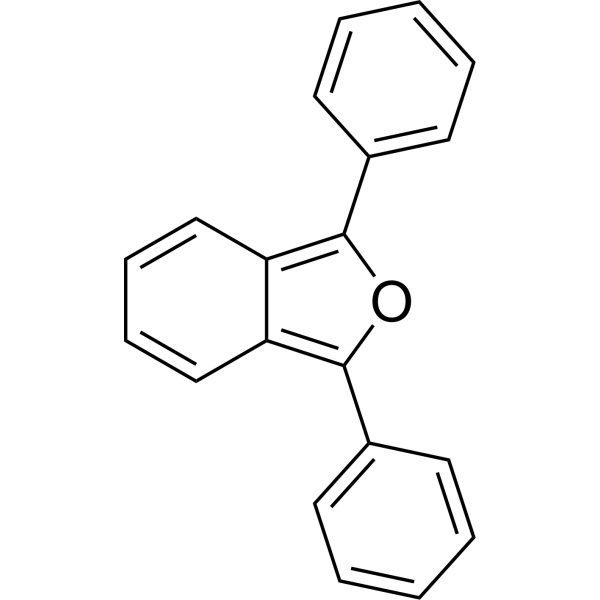
Cat. No.: HY-W011664
CAS No.: 5471-63-6
Synonyms: DPBF
1,3-Diphenylisobenzofuran (DPBF) has been developed as a selective probe for the detection and quantitative determination of hydrogen peroxide in samples containing different reactive nitrogen and oxygen species (RNOS). DPBF is a fluorescent probe which, for almost 20 years, was believed to react in a highly specific manner toward some reactive oxygen species such as singlet oxygen and hydroxy, alkyloxy or alkylperoxy radicals .
loading...
    loading...
25
25 Cited Publications
Cat. No.: HY-113324
CAS No.: 53-57-6
Purity:  99.49%
NADPH is a coenzyme of glutathione reductase (GR), thioredoxin reductase (TrxR) and NADPH oxidase (NOX), and participates in redox reactions as a hydrogen donor. NADPH has the characteristic of selectively participating in the regulation of cellular redox homeostasis. NADPH exerts antioxidant activity and resists reactive oxygen species (ROS) damage by providing reducing equivalents for the regeneration of glutathione (GSH) and thioredoxin (Trx); at the same time, it acts as a substrate of NOX to generate superoxide anions, mediating oxidative stress and immune response. NADPH participates in maintaining the intracellular reducing environment, biosynthesis and regulating gene expression (such as the Nrf2 pathway), and is mainly used in the study of oxidative stress-related diseases (such as cardiovascular diseases, neurodegenerative diseases, cancer) and immune regulation mechanisms .
loading...
    loading...
18
18 Cited Publications
Cat. No.: HY-136174
CAS No.: 2381037-82-5
Purity:  99.86%
Target:  

PARP

Research Areas:  

Cancer

RBN-2397 is a potent, accross species and orally active NAD + competitive inhibitor of PARP7 (IC50<3 nM). RBN-2397 selectively binds to PARP7 (Kd=0.001 μM) and restores IFN signaling. RBN-2397 has the potential for the study of advanced or metastatic solid tumors .
loading...
    loading...
12
12 Cited Publications
Cat. No.: HY-13402
CAS No.: 172732-68-2
Purity:  99.23%
Synonyms: LY315920
Target:  

Phospholipase

Research Areas:  

Inflammation/Immunology

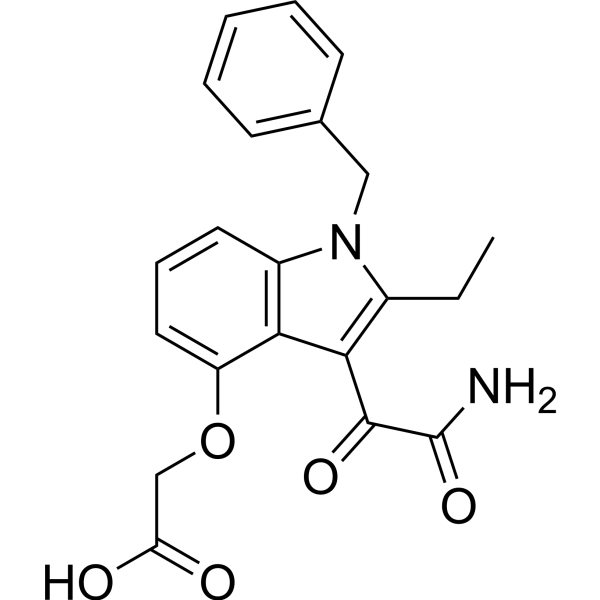
Varespladib (LY315920) is a potent and selective group IIA, secretory phospholipase A2 (sPLA2) inhibitor with an IC50 of 9 nM. Varespladib exhibits the significant inhibitory effect on sPLA2 activity in serum from various species including rat, rabbit, guinea pig and human with IC50s of 8.1 nM, 5.0 nM, 3.2 nM and 6.2 nM, respectively .
loading...
    loading...
12
12 Cited Publications
Cat. No.: HY-13402A
CAS No.: 172733-42-5
Purity:  ≥98.0%
Synonyms: LY315920 sodium
Target:  

Phospholipase

Research Areas:  

Inflammation/Immunology

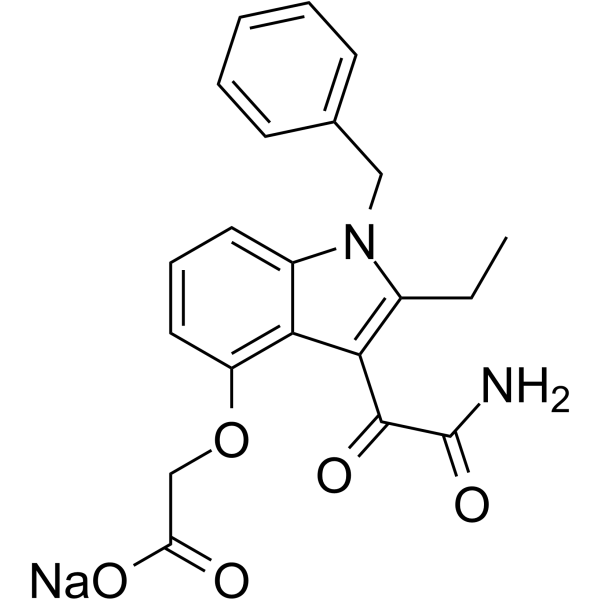
Varespladib sodium (LY315920 sodium) is a potent and selective group IIA, secretory phospholipase A2 (sPLA2) inhibitor with an IC50 of 9 nM. Varespladib sodium exhibits the significant inhibitory effect on sPLA2 activity in serum from various species including rat, rabbit, guinea pig and human with IC50s of 8.1 nM, 5.0 nM, 3.2 nM and 6.2 nM, respectively .
loading...
    loading...
10
10 Cited Publications
Cat. No.: HY-N0069
CAS No.: 20311-51-7
Synonyms: Solamargin; δ-Solanigrine
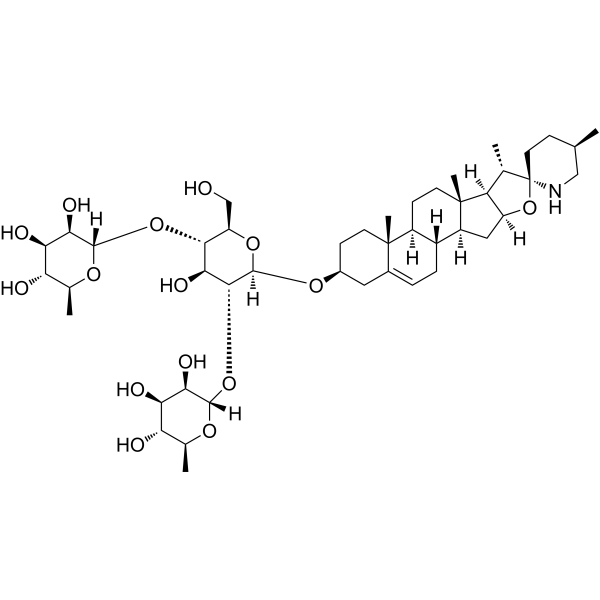
Solamargine, a derivative from the steroidal solasodine in Solanum species, exhibits anticancer activities in numerous types of cancer. Solamargine induces non-selective cytotoxicity and P-glycoprotein inhibition. Solamargine significantly inhibits migration and invasion of HepG2 cells by down-regulating MMP-2 and MMP-9 expression and activity .
loading...
    loading...
10
10 Cited Publications
Cat. No.: HY-19975
CAS No.: 946387-07-1
Target:  

TRP Channel

Research Areas:  

Neurological Disease Cancer

RN-1734 is selective antagonist of the TRPV4 channel, completely antagonizes 4αPDD-mediated activation of TRPV4 with comparable, low micromolar IC50s for all three species (hTRPV4: 2.3 μM, mTRPV4: 5.9 μM, rTRPV4: 3.2 μM) . RN-1734 clearly decreases the production of tumor necrosis factor α (TNF-α) and interleukin 1β (IL-1β) without altering the number of olig2-positive cells .
loading...
    loading...
6
6 Cited Publications
Cat. No.: HY-109142
CAS No.: 1422500-60-4
Purity:  95.51%
Synonyms: AK0529; RO-0529
Target:  

RSV

Research Areas:  

Infection

Ziresovir (AK0529;RO-0529) is a potent, selective, and orally bioavailable respiratory syncytial virus (RSV) fusion (F) protein (RSV F) protein inhibitor. Ziresovir shows anti-RSV activity (EC50=3 nM) and highlights pharmacokinetics in animal species .
loading...
    loading...
5
5 Cited Publications
Cat. No.: HY-10301
CAS No.: 957118-49-9
Purity:  99.60%
Target:  

CGRP Receptor

Research Areas:  

Neurological Disease

MK-3207 is an orally active, highly selective and species-specific CGRP receptor antagonist (for human CGRP receptor: IC50=0.12 nM; Ki=0.024 nM). MK-3207 can be used for migraine studies .
loading...
    loading...
5
5 Cited Publications
Cat. No.: HY-111226
CAS No.: 877387-37-6
Purity:  99.85%
GSK5182 is a highly selective and orally active inverse agonist of estrogen-related receptor γ (ERRγ) with an IC50 of 79 nM. GSK5182 does not interact with other nuclear receptors, including ERRα or ERα. GSK5182 also induces reactive oxyen species (ROS) generation in hepatocellular carcinoma (HCC) .
loading...
    loading...
4
4 Cited Publications
Cat. No.: HY-N12257
CAS No.: 27220-57-1
Antimycin A2 is a selective inhibitor of the cytochrome b-c1 complex in the mitochondrial electron transport chain. Antimycin A2 disrupts mitochondrial membrane potential and produces reactive oxygen species (ROS) by inhibiting electron transfer between cytochrome b and c. Antimycin A2 has bactericidal and piscicidal activity, as well as tumor cell growth inhibitory effects, and can induce S-phase cell cycle arrest and apoptosis in HeLa cells. Antimycin A2 is suitable for research of cervical cancer and fisheries management. Antimycin A2 can be naturally isolated from the fermentation products of Streptomyces sp. strains .
loading...
    loading...
3
3 Cited Publications
Cat. No.: HY-18719A
CAS No.: 1032008-74-4
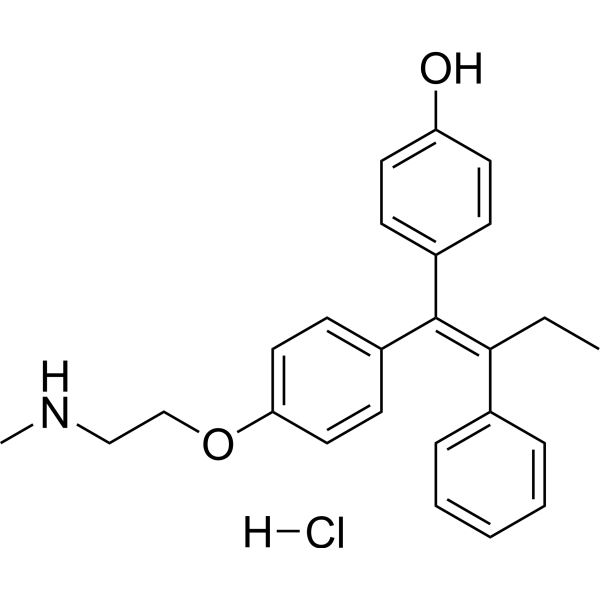
Endoxifen Z-isomer hydrochloride is an orally active selective PKCβ1 inhibitor with an IC50 of 360 nM against human PKCβ1. It also acts as an estrogen receptor modulator and antiestrogen. Endoxifen Z-isomer hydrochloride binds to and blocks ERα, ERβ and PKCβ1, inhibits estrogen and PI3K/AKT/mTORC1 signaling pathways, suppresses the expression of genes associated with cell cycle, cell proliferation and extracellular matrix remodeling, and induces apoptosis, reactive oxygen species (ROS) production and hypoxic features. Endoxifen Z-isomer hydrochloride inhibits tumor growth in breast tumor and glioblastoma models, reduces bone turnover and blood lipid levels, and does not require metabolism via CYP2D6. It can be used in research related to ER + breast cancer, invasive breast cancer, glioblastoma multiforme, type I bipolar disorder, desmoid tumor, gynecological malignancies, melanoma and hormone receptor-positive solid tumors .
loading...
    loading...
3
3 Cited Publications
Cat. No.: HY-18719
CAS No.: 112093-28-4
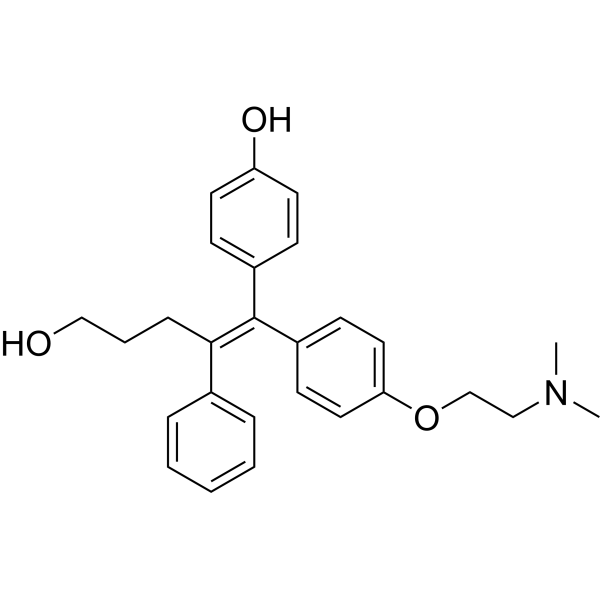
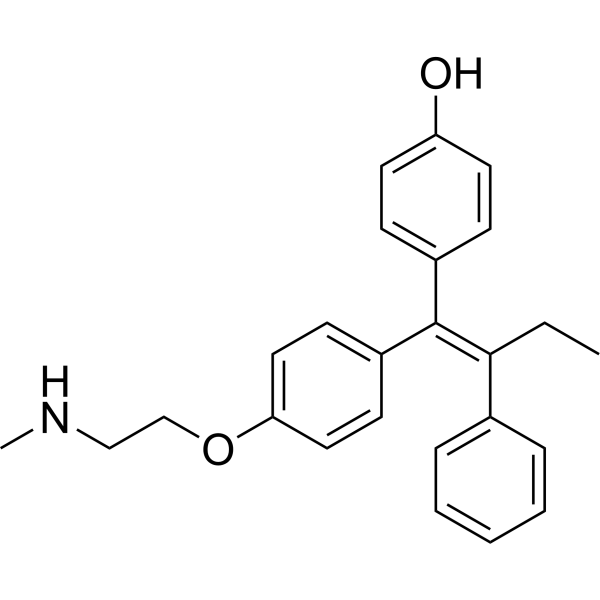
Endoxifen Z-isomer is an orally active selective PKCβ1 inhibitor with an IC50 of 360 nM against human PKCβ1. Endoxifen Z-isomer also acts as an estrogen receptor modulator and antiestrogen. Endoxifen Z-isomer binds to and blocks ERα, ERβ and PKCβ1, inhibits estrogen and PI3K/AKT/mTORC1 signaling pathways, suppresses the expression of genes associated with cell cycle, cell proliferation and extracellular matrix remodeling, and induces apoptosis, reactive oxygen species (ROS) production and hypoxic features. Endoxifen Z-isomer inhibits tumor growth in breast tumor and glioblastoma models, reduces bone turnover and blood lipid levels, and does not require metabolism via CYP2D6. Endoxifen Z-isomer can be used in research related to ER + breast cancer, invasive breast cancer, glioblastoma multiforme, type I bipolar disorder, desmoid tumor, gynecological malignancies, melanoma and hormone receptor-positive solid tumors .
loading...
    loading...
2
2 Cited Publications
Cat. No.: HY-B0166R
CAS No.: 50-81-7
Synonyms: L-Ascorbate (Standard); Vitamin C (Standard)
L-Ascorbic acid (Standard) is the analytical standard of L-Ascorbic acid. This product is intended for research and analytical applications. L-Ascorbic acid (L-Ascorbate), an electron donor, is an endogenous antioxidant agent. L-Ascorbic acid inhibits selectively Cav3.2 channels with an IC50 of 6.5 μM. L-Ascorbic acid is also a collagen deposition enhancer and an elastogenesis inhibitor . L-Ascorbic acid exhibits anti-cancer effects through the generation of reactive oxygen species (ROS) and selective damage to cancer cells .
loading...
    loading...
2
2 Cited Publications
Cat. No.: HY-145733
CAS No.: 2247061-09-0
Purity:  99.62%
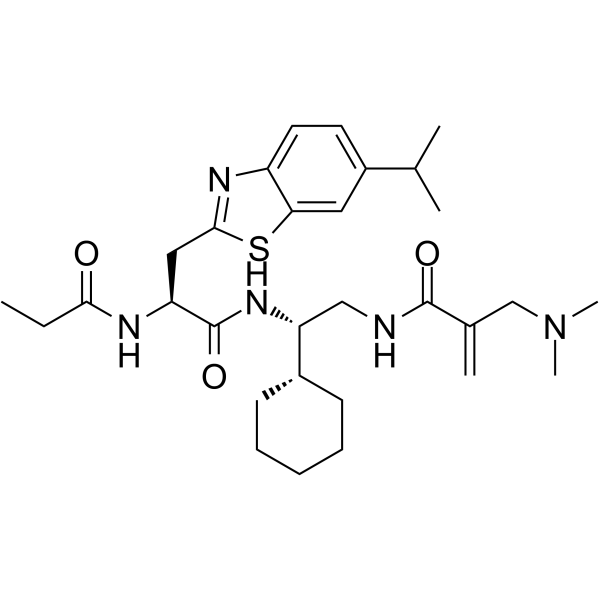
DI-1859 is a DCN1 and cullin 3 inhibitor with a Ki of <1 nM against human DCN1. DI-1859 forms a covalent bond with Cys115 of DCN1, cleaves its dimethylamino group, disrupts the DCN1-UBC12 interaction, and selectively inhibits the neddylation modification of cullin 3 relative to other cullins. DI-1859 inactivates CRL3, promotes the accumulation of NRF2 and SLC7A11, upregulates the expression of HO-1 and NQO1, reduces reactive oxygen species (ROS) levels, enhances insulin signaling, promotes insulin secretion, activates RhoA, regulates the phosphorylation of AKT, without completely blocking the neddylation modification of cullin 3 or restoring the expression of IRS-1. DI-1859 can be used in the research of Acetaminophen (HY-66005)-induced hepatotoxicity, hyperglycemia, metabolic dysfunction-associated steatotic liver disease, insulin resistance, breast cancer and lung cancer .
loading...
    loading...
1
1 Cited Publications
Cat. No.: HY-137464A
CAS No.: 2088453-21-6
Purity:  99.11%
Target:  

Glycosidase

Research Areas:  

Inflammation/Immunology

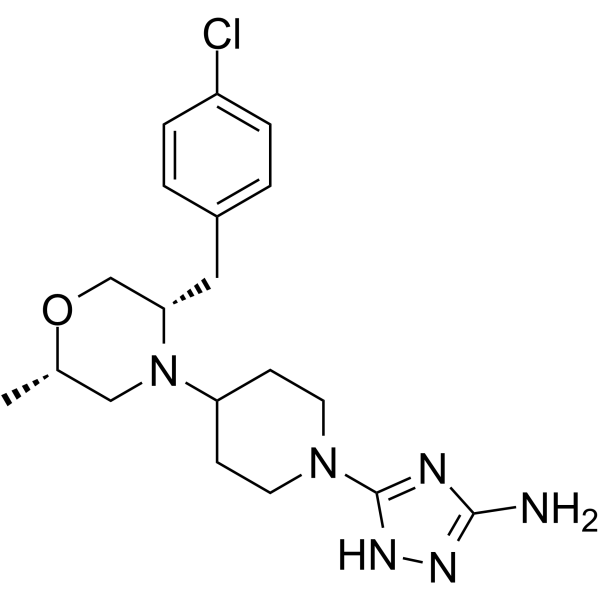
OATD-01 is a highly potent, first-in-class, orally active and selective chitinase inhibitor with low nanomolar activity toward CHIT1 (hCHIT1,IC50=23 nM). OATD-01 shows excellect PK profile in multiple species and is selectivity against a panel of other off-targets. OATD-01 exhibits significant antifibrotic efficacy in vivo and can be used for pulmonary fibrosis (IPF) research .
loading...
    loading...
1
1 Cited Publications
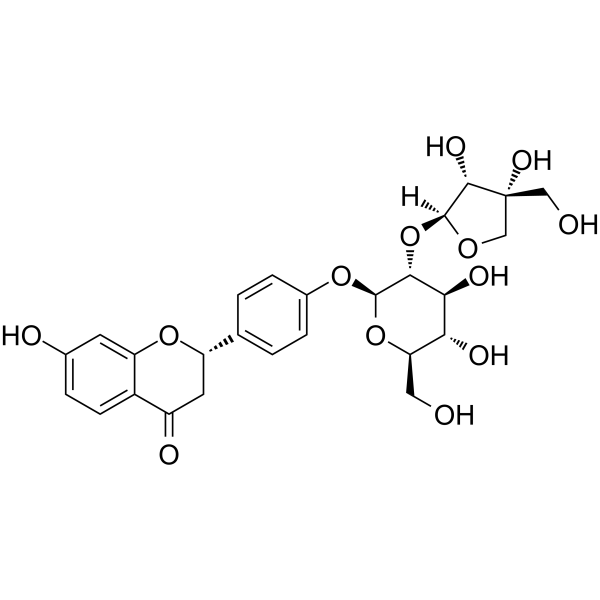
Cat. No.: HY-N1471
CAS No.: 74639-14-8
Liquiritin apioside is an orally active inhibitor of TRPV1 receptor. Liquiritin apioside selectively inhibits laryngeal chemoreflex (LCR) and has no significant effect on mechanoreflex (LMR). Liquiritin apioside inhibits LCR by inhibiting reactive oxygen species (ROS) and NADPH oxidase, weakening the interaction between ROS and TRPV1. Liquiritin apioside can be used in the research of respiratory-related diseases .
loading...
    loading...

