11 Results for "

sunflower

" in MedChemExpress (MCE) Product Catalog:
Products (11)

11 Results for "sunflower" in MCE Product Catalog:

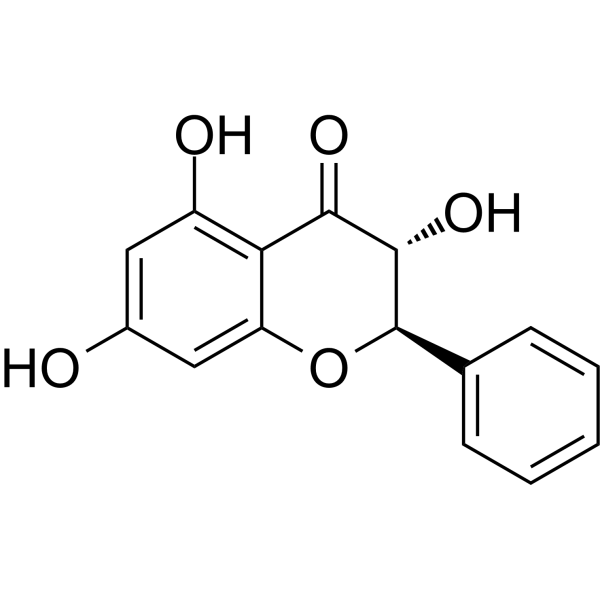
Cat. No.: HY-N3062
CAS No.: 548-82-3
Synonyms: 3,5,7-Trihydroxyflavanone
Pinobanksin is an antioxidant and anti-ferroptosis agent found in sunflower honey and propolis, with oral activity. Pinobanksin enhances Nrf2-mediated antioxidant defense, inhibits NF-κB inflammation, and suppresses apoptosis and ferroptosis in in vivo models and normal cells. Pinobanksin exhibits apoptosis-inducing effects on B-cell lymphoma cells. Pinobanksin can be used in research related to perfluorooctane sulfonate-induced renal/cardiac toxicity, acute colitis, and B-cell lymphoma .
loading...
    loading...
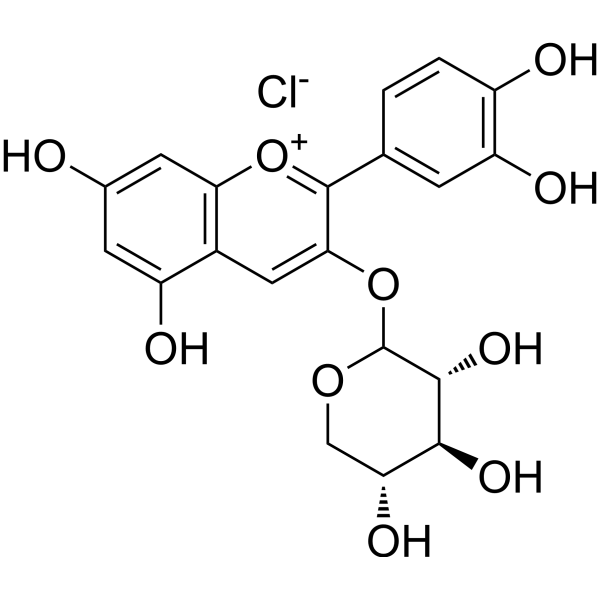
Cat. No.: HY-N4144
CAS No.: 29761-24-8
Cyanidin 3-xyloside is an anthocyanin that can be isolated from the hulls of purple sunflower .
loading...
    loading...
Cat. No.: HY-133823
CAS No.: 2271-34-3
Synonyms: C16:1 (cis-11/trans-11) Fatty acid
Category:  

Natural Products

Target:  

Endogenous Metabolite

11-Hexadecenoic acid is a monounsaturated fatty acid. 11-cis-Hexadecenoic acid and 11-trans-hexadecenoic acid have been found in ewe milk fat, and levels of each increase with dietary lipid supplementation of linseed, sunflower, olive, or fish oils. 11-trans-Hexadecenoic acid has also been found in intramuscular fat samples isolated from male and female foals. This product is a mixture of 11-cis- and 11-trans-hexadecenoic acids.
loading...
    loading...
Cat. No.: HY-N9573
CAS No.: 17811-28-8
Target:  

Fungal

Zinniol is a penta-substituted benzene phytotoxin that can be produced by a variety of phytopathogenic fungi. Zinniol can be detected in sunflower tissues in the early stage of infection and may be involved in the occurrence of sunflower diseases .
loading...
    loading...
Cat. No.: HY-N16314
CAS No.: 322647-44-9
Sunflower PG sodium is a phospholipid extracted from sunflowers.
loading...
    loading...
Cat. No.: HY-W753927
CAS No.: 2420-42-0
Synonyms: C18:2(9E,12Z); C18:2 n-6
Target:  

Endogenous Metabolite

Research Areas:  

Metabolic Disease

9(E),12(Z)-Octadecadienoic acid is an ω-6 polyunsaturated fatty acid and an isomer of linoleic acid (HY-N0729) that contains a trans double bond at the C9 position. It has been found as a minor component of bovine milk fat and in partially hydrogenated vegetable oils. 9(E),12(Z)-Octadecadienoic acid levels increase in rabbit meat following supplementation with heated sunflower oil, α-tocopheryl acetate, and zinc.
loading...
    loading...
Cat. No.: HY-N20161
Synonyms: sunflower extract
Category:  

Extract

Target:  

Bacterial

Sunflower dish extract is a type of sunflower extract that has antioxidant, antibacterial, and antiproliferative effects.
loading...
    loading...
Cat. No.: HY-N13287
CAS No.: 494-56-4
Ayapin is a major phytoalexin found in sunflower. Ayapin inhibits the growth of S. scerorotiorum (IC50 of 0.16 mM for 50% inhibition). Ayapin can be used in anti-sclerotinia research .
loading...
    loading...
Cat. No.: HY-W704603
CAS No.: 2410-28-8
Synonyms: 1,2-Olein-3-Stearin; TG(18:1/18:1/18:0)
Target:  

Endogenous Metabolite

Research Areas:  

Metabolic Disease

1,2-Dioleoyl-3-stearoyl-rac-glycerol is a triacylglycerol that contains oleic acid (HY-N1446) at the sn-1 and sn-2 positions and stearic acid (HY-B2219) at the sn-3 position. It has been found in sunflower, corn, and soybean oils, as well as ostrich oil.
loading...
    loading...
loading...
    loading...
Cat. No.: HY-W012832
CAS No.: 15707-23-0
2-Ethyl-3-methylpyrazine is a GABAA receptor potentiator, Antibacterial agent and Antifungal agent, with a Kp of 1.14 mM for GABAA. 2-Ethyl-3-methylpyrazine forms via the Maillard reaction in sunflower seeds and also exists in the crust of wheat bread. 2-Ethyl-3-methylpyrazine regulates mood or states of consciousness via central GABAA receptors. 2-Ethyl-3-methylpyrazine inhibits the growth of Ralstonia solanacearum and Magnaporthe oryzae. 2-Ethyl-3-methylpyrazine acts as an anxiolytic. 2-Ethyl-3-methylpyrazine is one of the sources of cocoa aroma, imparting nutty, corn-like, burnt, cereal, roasted and earthy flavors to foods. 2-Ethyl-3-methylpyrazine can be used in studies related to anxiety disorders and plant bacterial, fungal and oomycete infections .
loading...
    loading...
  • 1

