19 Results for "

temperature probe

" in MedChemExpress (MCE) Product Catalog:
Products (19)

19 Results for "temperature probe" in MCE Product Catalog:

7
7 Publications Verification
Cat. No.: HY-128692
CAS No.: 67769-47-5
Purity:  99.67%
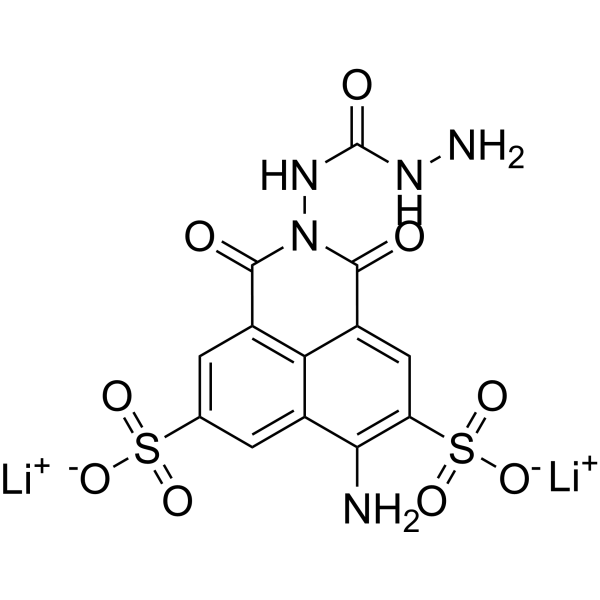
Luc Yellow CH dilithium is a high-intensity fluorescent probe containing free hydrazyl groups. Luc Yellow CH can react with fatty aldehydes at room temperature. Luc Yellow CH serves as a biological tracer to monitor neuronal branching, regeneration, gap junction detection and characterization, and selective ablation of cells after aldehyde fixation. Luc Yellow CH displays the maximum excitation/emission of 430 nm/540 nm, respectively .
loading...
    loading...
7
7 Publications Verification
Cat. No.: HY-W127715
CAS No.: 71206-95-6
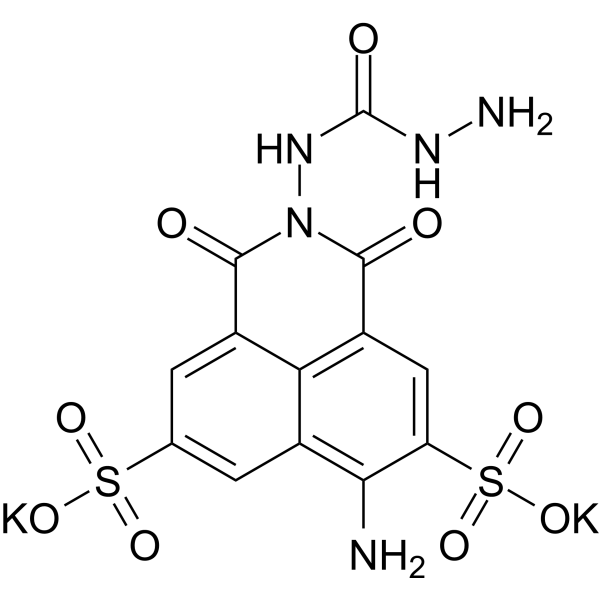
Lucifer Yellow CH dipotassium is a high-intensity fluorescent probe containing free hydrazyl groups. Lucifer Yellow CH can react with fatty aldehydes at room temperature. Lucifer Yellow CH serves as a biological tracer to monitor neuronal branching, regeneration, gap junction detection and characterization, and selective ablation of cells after aldehyde fixation. Lucifer yellow CH displays the maximum excitation/emission of 430 nm/540 nm, respectively .
loading...
    loading...
Cat. No.: HY-W013967
CAS No.: 1720-32-7
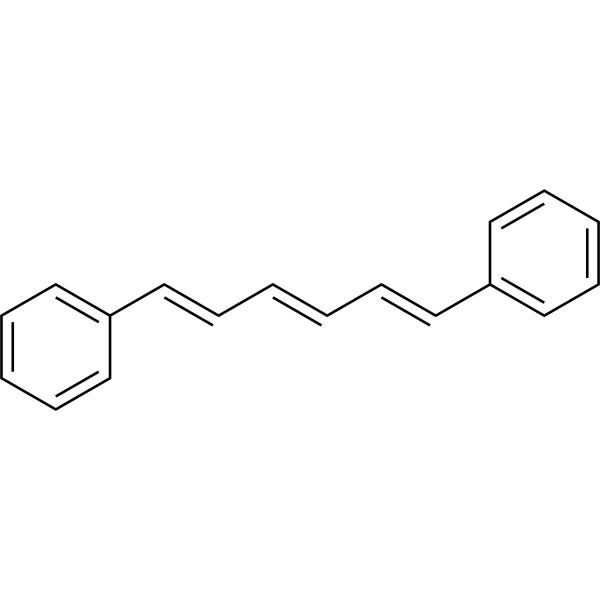
1,6-Diphenylhexa-1,3,5-triene is a membrane intercalator and hydrophobic fluorescent probe. 1,6-Diphenylhexa-1,3,5-triene intercalates into the non-polar region of lipid bilayers of adipocyte membranes with probe/membrane equilibrium affected by temperature, probe concentration, and membrane concentration. 1,6-Diphenylhexa-1,3,5-triene’s fluorescence intensity correlating with adipocyte membrane probe incorporation (Ex/Em = 350/452 nm) .
loading...
    loading...
Cat. No.: HY-W248115
CAS No.: 137829-79-9
Research Areas:  

Others

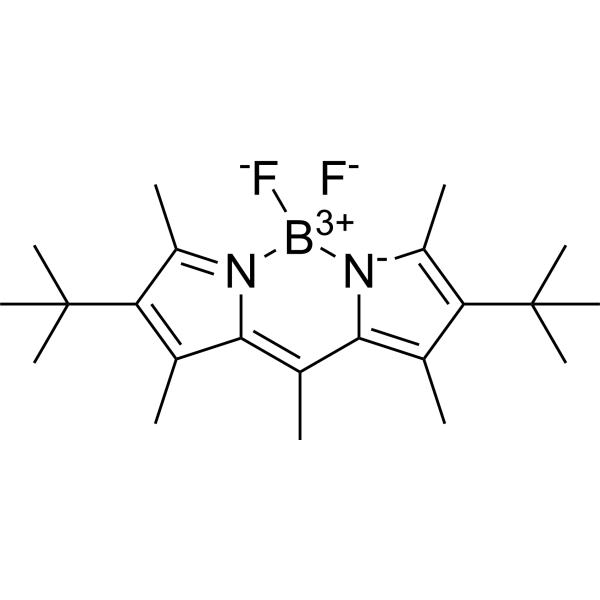
Pyrromethene 597 is a temperature-sensitive BODIPY-class laser fluorescent dye whose fluorescence anisotropy decreases with increasing temperature, Ex/Em =527/557 nm. Pyrromethene 597 can serve as a temperature probe in solution and as a whispering gallery mode (WGM) microlaser gain medium. Pyrromethene 597 can be doped into photoresists for in situ fabrication of microlaser devices within living cells. Pyrromethene 597 can be used in fluorescence imaging and microlaser-related research .
loading...
    loading...
Cat. No.: HY-D1422
CAS No.: 1445108-32-6
Synonyms: BDNCA-346
Target:  

Fluorescent Dye

Research Areas:  

Others

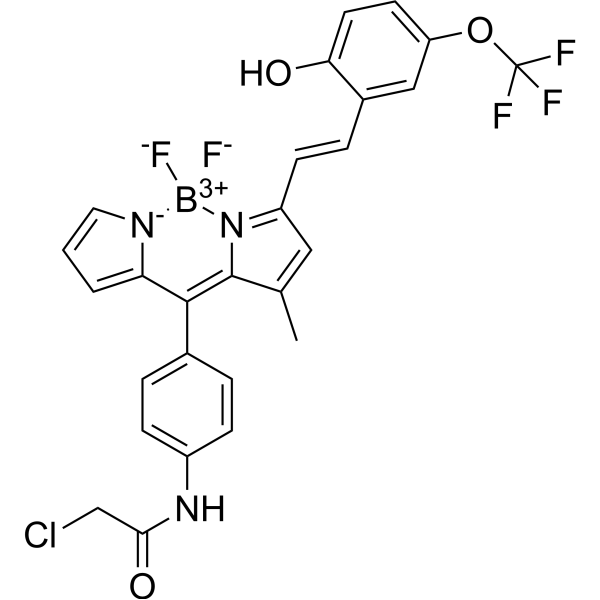
ER Tracker Yellow (BDNCA-346) is a Fluorescent probe for targeted visualization of temperature at the endoplasmic reticulum. Its detection mechanism depends on temperature, with fluorescence intensity decreasing at higher temperatures due to preferential non-radiative processes; this intensity reversibly returns to baseline when cooled, provided the probe does not precipitate or degrade. It localizes specifically to the endoplasmic reticulum, where it may covalently attach to biomacromolecules via a thiol-reactive moiety, and its fluorescence remains stable after cell fixation; its fluorescence intensity is unaffected by physiological pH ranges of 5.0–8.0 and free Ca²⁺ concentrations of 0–800 μM. Its excitation/emission wavelength is Ex/Em = 559/581 nm[1].
loading...
    loading...
Cat. No.: HY-W007648
CAS No.: 3196-73-4
Synonyms: β-Alanine methyl ester hydrochloride
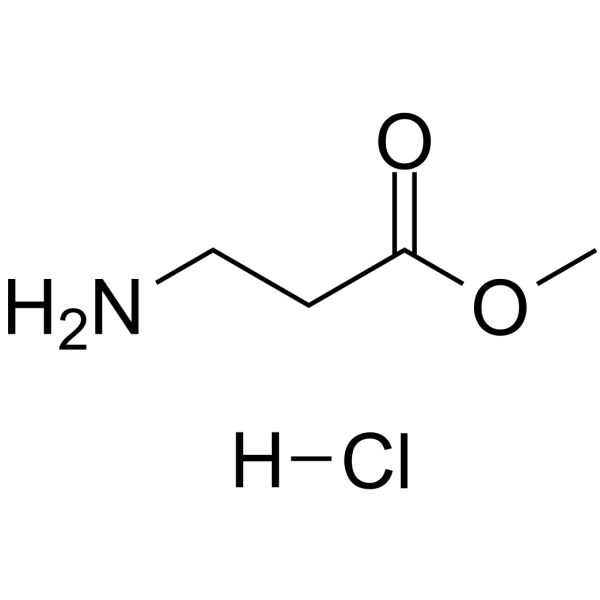
Methyl 3-aminopropanoate hydrochloride (β-Alanine methyl ester hydrochloride) is a β-alanine derivative with antioxidant activity. Methyl 3-aminopropanoate hydrochloride reduces oxidation-related changes in Glycine max soybean oil and degummed Glycine max soybean oil at frying temperatures, including the loss of olefinic protons and bis-allylic protons as well as the formation of polymerized triglycerides. Methyl 3-aminopropanoate hydrochloride contributes to the synthesis of the Bcl-2 inhibitor probe Nap-4 .
loading...
    loading...
Cat. No.: HY-W001952
CAS No.: 15231-91-1
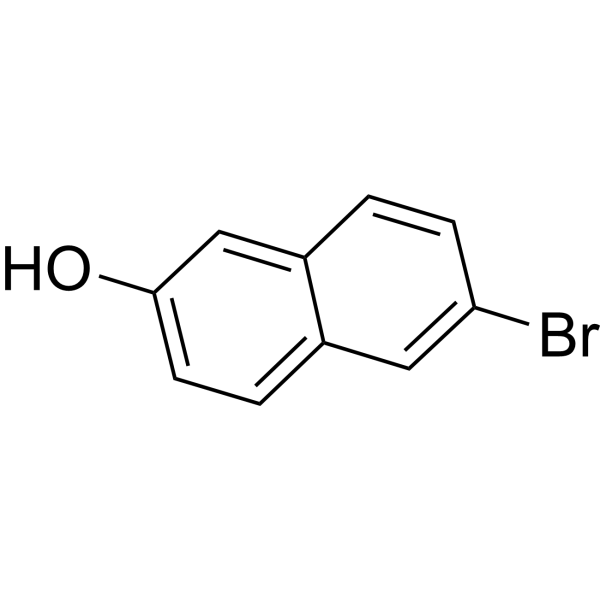
6-Bromo-2-naphthol is an RTP (real-time polymerase chain reaction) probe that forms a 1:1 or 2:1 complex with β-cyclodextrin (β-CD). 6-Bromo-2-naphthol is capable of real-time monitoring of PCR reactions and quantification of specific nucleic acid sequences. RTP probes are a class of small DNA or RNA sequences labeled with fluorescent dyes and quencher molecules, which can be widely used in gene expression analysis, SNP genotyping, and pathogen detection. 6-Bromo-2-naphthol embeds into the cyclodextrin cavity through hydrophobic interactions, inhibits the oxygen quenching effect, and emits a phosphorescent signal at room temperature. 6-Bromo-2-naphthol can also be used as an intermediate for the synthesis of antibacterial azo dyes, and its derivatives show antibacterial activity against Staphylococcus aureus, Escherichia coli and other bacteria .
loading...
    loading...
Cat. No.: HY-125209A
CAS No.: 2253744-57-7
Research Areas:  

Cancer

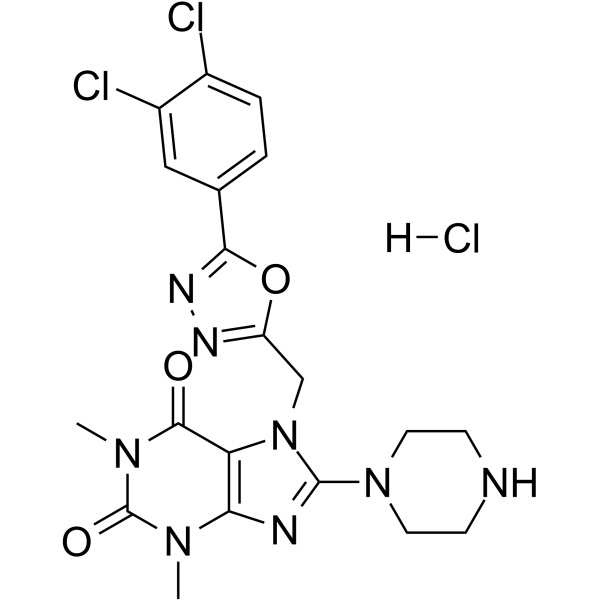
TH5427 hydrochloride is a NUDT5 inhibitor with a human target IC50 of 29 nM, ~690-fold selectivity over MTH1 in vitro, and selective functional inhibition over other NUDIX hydrolases including NUDT9 .TH5427 hydrochloride binds to the active site of NUDT5, blocking enzymatic activity related to ADP-ribose metabolism and PAR-derived ATP synthesis .TH5427 hydrochloride blocks progestin-dependent nuclear ATP synthesis, impairs progestin-induced chromatin remodeling, inhibits histone H1 displacement, disrupts progestin-dependent gene regulation, and abrogates progestin-dependent proliferation in breast cancer cells .TH5427 hydrochloride functions as a versatile probe to study nuclear ATP dynamics and ADP-ribose-related metabolism in cells .TH5427 hydrochloride engages NUDT5 at physiological temperatures, as demonstrated by Drug Affinity Responsive Target Stability (DARTS) assay .TH5427 hydrochloride stabilizes NUDT5 against thermal denaturation in cell lysates and intact cells, as shown by cellular thermal shift assay (CETSA) .TH5427 hydrochloride functionally inhibits NUDT5 activity, leading to downstream effects on oxidative DNA damage and DNA replication in triple-negative breast cancer (TNBC) cells .TH5427 hydrochloride suppresses proliferation of TNBC cells without inducing cell death or apoptosis, slows DNA replication in TNBC cells, promotes accumulation of oxidative DNA lesions, and triggers DNA damage response in TNBC cells .TH5427 hydrochloride suppresses growth of TNBC cells in vitro, inhibits growth of TNBC xenograft tumors in nude mice in vivo, and shows greater potency against TNBC cell lines compared to ER-positive and normal-like breast cell lines .TH5427 hydrochloride can be used for the research of breast cancer and triple-negative breast cancer .
loading...
    loading...
Cat. No.: HY-NP0144
Synonyms: WGA (Fluorescein)
Succinylated Wheat Germ Agglutinin (Fluorescein) (WGA (Fluorescein)) is a fluorescent lectin that acts as a probe to specifically bind biomolecules. Succinylated Wheat Germ Agglutinin (Fluorescein) binds to cell surface glycoconjugates containing N-acetylglucosamine. Succinylated Wheat Germ Agglutinin (Fluorescein) is a selective agglutinating agent targeting specific red blood cells, thymocytes, splenocytes and lymphocytes. Succinylated Wheat Germ Agglutinin (Fluorescein) binds to fibroblasts and lymphocytes via dual binding sites in a temperature-dependent, saturable manner. Succinylated Wheat Germ Agglutinin (Fluorescein) can be used for quantitative studies of cell surface receptor glycoconjugates (Ex=495 nm, Em=515 nm) .
loading...
    loading...
Cat. No.: HY-W800701
CAS No.: 2762752-63-4
BP Fluor 546 DBCO is an azide-reactive probe that can be used for imaging azide-tagged biomolecules via a copper-free click reaction. The DBCO moiety reacts with azides to form a stable triazole and does not require a Cu-catalyst or elevated temperatures. In applications where the presence of copper is a concern, BP Fluor 546 DBCO is an ideal alternative to copper-requiring fluorescent alkynes. BP Fluor 546 is a water-soluble, pH-insensitive (from pH 4-10), orange-fluorescent dye with absorption and emission maxima at 554 and 570 nm, respectively. It can be used with the 488 nm and 532 nm laser lines. BP Fluor 546 dye conjugates to a variety of antibodies, peptides, proteins, tracers, and amplification substrates, which are often used for generating stable signals in imaging and flow cytometry.
loading...
    loading...
Cat. No.: HY-D0267
CAS No.: 117-92-0
Quinaldine red is a fluorescent probe for determining the melting temperature (Tm) of proteins .
loading...
    loading...
Cat. No.: HY-151691
CAS No.: 1676067-48-3
Target:  

ADC Linkers

Research Areas:  

Others

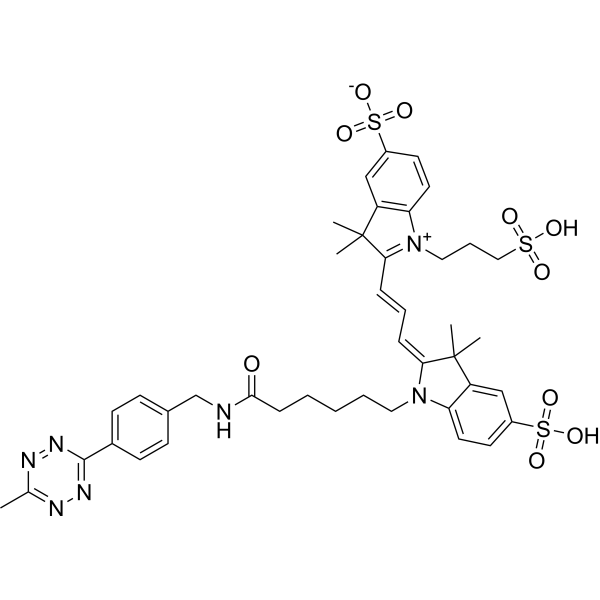
Trisulfo-Cy3 Methyltetrazine is a click chemistry reagent containing an methyltetrazine group. Methyltetrazine-activated Cy3 probe reacts with TCO-containing compounds via an Inverse-Electron-Demand Diels-Alder reaction to form a stable covalent bond and does not require Cu-catalyst or elevated temperatures .
loading...
    loading...
Cat. No.: HY-W800696
CAS No.: 2644752-86-1
BP Fluor 430 Azide is a water-soluble, green-fluorescent, azide-activated probe that reacts with terminal alkynes via a copper-catalyzed click reaction (CuAAC). It also reacts with strained cyclooctyne via a copper-free click chemistry reaction to form a stable triazole and does not require a Cu-catalyst or elevated temperatures. BP Fluor 430 is a bright, photostable, green-fluorescent probe with excitation near its absorption maximum at 432 nm and emission maximum at 539 nm. This probe is water soluble and pH-insensitive from pH 4 to pH 10. A next generation probe, BP Fluor 430 Picolyl Azide, is also available for detection of low abundance alkyne-tagged biomolecules.
loading...
    loading...
Cat. No.: HY-W800692
CAS No.: 2644752-84-9
BP Fluor 350 Azide is a blue-fluorescent, azide-activated probe that reacts with terminal alkynes via a copper-catalyzed click reaction (CuAAC). It also reacts with strained cyclooctyne via a copper-free click chemistry reaction to form a stable triazole and does not require Cu-catalyst or elevated temperatures. BP Fluor 350 is a water-soluble, moderately photostable, blue-fluorescent probe optimally excited by the 350 nm laser line. It is routinely used for generation of stable signal in imaging and flow cytometry. The brightness and photostability of blue dyes are best suited to direct imaging of high-abundance targets.
loading...
    loading...
Cat. No.: HY-D3145
CAS No.: 1680195-45-2
Target:  

Fluorescent Dye

Research Areas:  

Others

BODIPY-1 is a lysosome-targeted temperature probe. BODIPY-1 relies on temperature-driven changes in microviscosity and hydrophobicity, as well as its own lysosome-targeting morpholine group; at room temperature, its fluorescence is quenched by intramolecular rotation, but upon heating, the oligo (ethylene glycol) groups undergo thermal dehydration, increasing the microviscosity and hydrophobicity around the fluorophore, which disfavors photoinduced electron transfer (PET) and progressively enhances fluorescence, while aggregates formed above its phase transition temperature also produce fluorescence. In neutral aqueous solution, its detection wavelengths are Ex/Em = 490/542 nm at 25°C and Ex/Em = 490/557 nm at 55°C, and the emission maximum at ~557 nm at high temperature shows more than a 3-fold enhancement .
loading...
    loading...
Cat. No.: HY-D3144
CAS No.: 2713577-11-6
Target:  

Fluorescent Dye

Research Areas:  

Others

RhBIV is a thermosensitive rhodamine B (RhB)-derived fluorescent probe that fluorescently labels cellular mitochondria and detects mitochondrial temperature in vitro and in vivo. RhBIV contains a quaternized rhodamine B core, which confers a positive charge for binding to the negatively charged mitochondrial membrane, and an ortho-substituted electron-donating piperidine group; at lower temperatures, RhBIV forms an unstable ion pair form under kinetic control and exhibits strong fluorescence, whereas elevated temperature disrupts or partially interrupts the ion pair form, favoring formation of the conjugated RhBV form and leading to loss of fluorescence. RhBIV exhibits decreased fluorescence responsiveness with increasing temperature over the range of 20-42°C. RhBIV enables biological imaging of cells and mice, mitochondrial thermogenesis imaging, dynamic observation in mitochondrial thermogenesis imaging experiments, and non-invasive imaging of mitochondrial function in living animals (Ex/Em = 520/592 nm) .
loading...
    loading...
Cat. No.: HY-W800691
CAS No.: 2644752-83-8
Target:  

Fluorescent Dye

Research Areas:  

Others

BP Fluor 350 Picolyl Azide is a blue-fluorescent azide-activated probe that reacts with terminal alkynes via a copper-catalyzed click reaction (CuAAC). It also reacts with strained cyclooctyne via a copper-free click chemistry reaction to form a stable triazole and does not require Cu-catalyst or elevated temperatures.
loading...
    loading...
Cat. No.: HY-W800699
CAS No.: 2644752-85-0
BP Fluor 430 DBCO reacts with azides via a copper-free click chemistry reaction to form a stable triazole and does not require a Cu-catalyst or elevated temperatures. In applications where the presence of copper is a concern, BP Fluor 430 DBCO is an ideal alternative to copper requiring fluorescent alkynes. BP Fluor 430 is a bright, photostable, green-fluorescent probe optimally excited near its absorption maximum at 432 nm. Its emission peak at 539 nm is pH independent over a wide pH range. BP Fluor DBCO reagent is not suitable for staining intracellular components of fixed and permeabilized cells due to high backgrounds.
loading...
    loading...
Cat. No.: HY-D3103
CAS No.: 1027058-07-6
Target:  

Fluorescent Dye

Research Areas:  

Others

CMTDP is a Fluorescent probe for detecting local polarity changes around the Cys34 domain of bovine serum albumin during pH-induced N→B conformational transition. It is a thiol-specific and polarity-sensitive probe; it covalently labels the free cysteine residue at position 34 (Cys34) of bovine serum albumin, and its fluorescence maximum emission wavelength shifts in response to solvent polarity, but not to pH and temperature. When labeled to BSA, as the local polarity around the Cys34 domain increases with rising pH, the probe shows a bathchromic shift in fluorescence emission wavelength and a decrease in fluorescence intensity, which allows quantification of the local polarity change via the relationship between emission wavelength shift and dielectric constant. CMTDP itself has absorption peaks at ~392 and 508 nm, and CMTDP-labeled BSA has excitation maxima at 376 and 470 nm at pH 6.0, with the shorter-wavelength excitation peak red-shifting as pH increases while the longer one remains stable; when excited at 470 nm, the fluorescence emission maximum shifts from 570 nm at pH 6.0 to 577 nm at pH 9.1, while free CMTDP at pH 7.4 has an emission maximum at 621 nm. The excitation/emission wavelengths for CMTDP-labeled BSA are Ex/Em = 376/570 nm at pH 6.0, Ex/Em = ~376+/573 nm at pH 7.4, Ex/Em = ~376+/575 nm at pH 8.0, Ex/Em = ~376+/577 nm at pH 9.1, and for free CMTDP at pH 7.4, Ex/Em (when excited at 470 nm) = 470/621 nm[1].
loading...
    loading...
  • 1

