
14 Results for "

temperature stability

" in MedChemExpress (MCE) Product Catalog:
Products (14)

14 Results for "temperature stability" in MCE Product Catalog:

1
1 Cited Publications
Cat. No.: HY-W014130
CAS No.: 155-84-0
Synonyms: Ac-Arg-OH
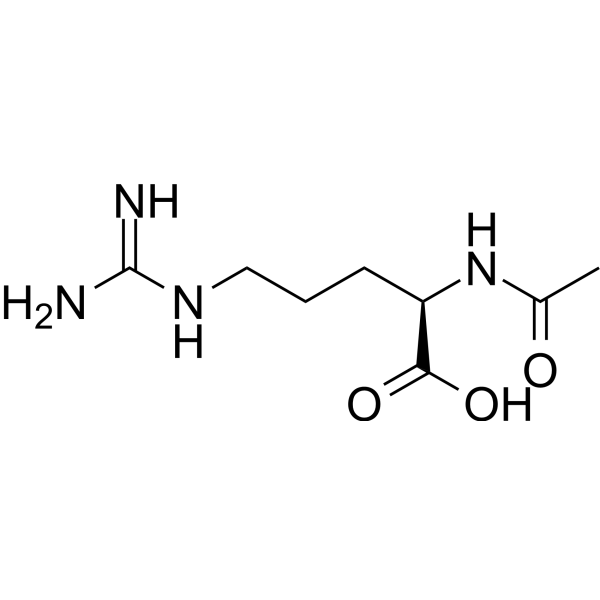
N-Acetyl-L-arginine (Ac-Arg-OH) is one of the guanidino compounds found elevated in the serum of a hemodialyzed renal insufficient (uremic) pediatric population. N-Acetyl-L-arginine shows synergistic activity with glycine buffer. N-Acetyl-L-arginine suppresses the aggregation of intravenous immunoglobulins with a minimum decrease in transition temperature. N-Acetyl-L-arginine dramatically reduces IL-1 expression in the presence of silicone oil. N-Acetyl-L-arginine also demonstrates colloidal stability .
loading...
    loading...
Cat. No.: HY-W099535
CAS No.: 2044-56-6
Research Areas:  

Others

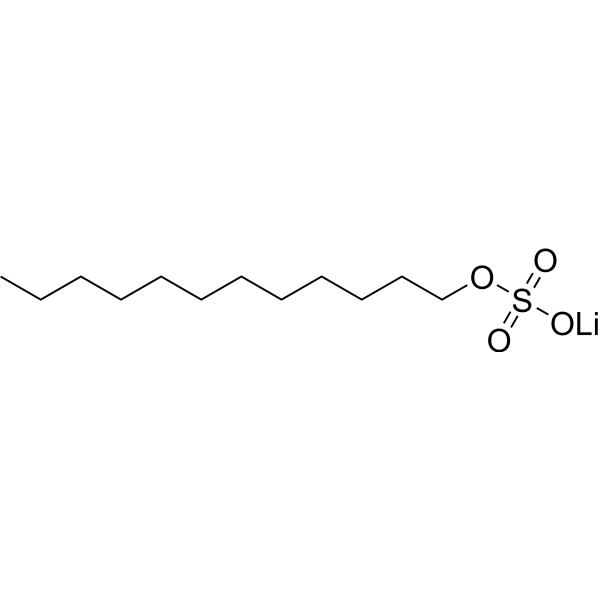
Lithium dodecyl sulfate is an anionic hydrocarbon surfactant with both surface tension reduction and interfacial adsorption capabilities. Lithium dodecyl sulfate forms micelles in aqueous solutions via entropy-driven (low temperature) and enthalpy-driven (high temperature) mechanisms, and can also form an adsorption layer at the air-water interface with quantifiable surface excess and minimum area per molecule. Lithium dodecyl sulfate exhibits favorable equilibrium surface tension and foamability, but shows low foam stability above its critical micelle concentration. When acting synergistically with tetrabutylammonium bromide, Lithium dodecyl sulfate also exhibits unique cloud point behavior due to micelle aggregation and phase separation .
loading...
    loading...
Cat. No.: HY-143202
CAS No.: 207131-40-6
Purity:  99.68%
Research Areas:  

Others

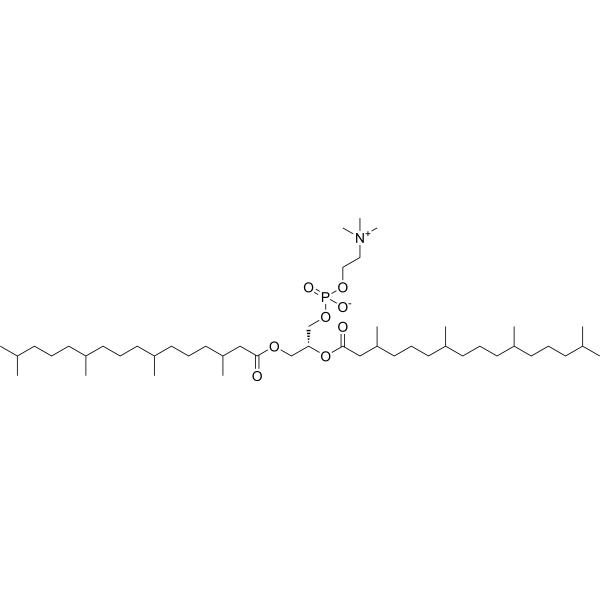
DPhPC is a phospholipid compound characterized by high mechanical and chemical stability, broad temperature phase stability, and high electrical resistance. DPhPC readily forms unilamellar vesicles and solid-supported bilayers. DPhPC is commonly used as a component of nanoliposomal drug carriers or as a model membrane material for studies on membrane proteins/ion channels .
loading...
    loading...
Cat. No.: HY-129047B
CAS No.: 9002-07-7
Research Areas:  

Others

Recombinant Trypsin Solution is an animal-free trypsin solution used to digest cells or tissues. Recombinant Trypsin Solution has high stability at room temperature and gentle digestion, and can be used to digest weakly adherent cells or stem cells under low serum or serum-free culture conditions. Compared with traditional trypsin digestion solution, Recombinant Trypsin Solution does not contain any animal-derived ingredients, is gentle and effective, and can replace the application of animal-derived trypsin in cell digestion .
loading...
    loading...
Cat. No.: HY-P2776
CAS No.: 9001-51-8
Target:  

Hexokinase

Research Areas:  

Metabolic Disease

Hexokinase, microorganism is a hexokinase derived from microorganisms. It catalyzes the phosphorylation of glucose at the C6 position using ATP and Mg 2+, exhibits broad substrate specificity, and demonstrates thermal stability under neutral to weakly alkaline pH and high-temperature conditions. Hexokinase, microorganism uses ATP as the primary phosphate donor for sugar phosphorylation reactions. Hexokinase, microorganism belongs to the prokaryotic hexokinase family and catalyzes sugar phosphorylation reactions in carbohydrate metabolism .
loading...
    loading...
Cat. No.: HY-E70318
Target:  

Endogenous Metabolite

Research Areas:  

Others

Penicillin G acylase (Immobilized) is an immobilized penicillin acylase with improved temperature and pH stability. Penicillin G acylase (Immobilized) has reusable performance and high recovery rates, retaining much of its original activity after 12 cycles. Among them, Penicillin G acylase (Immobilized) can catalyze penicillin G (PG) to generate 6-aminopenicillanic acid (6-APA) and 7-aminodeacetoxycephalosporanic acid, which are key intermediates for β-lactam antibiotics .
loading...
    loading...
Cat. No.: HY-125209A
CAS No.: 2253744-57-7
Research Areas:  

Cancer

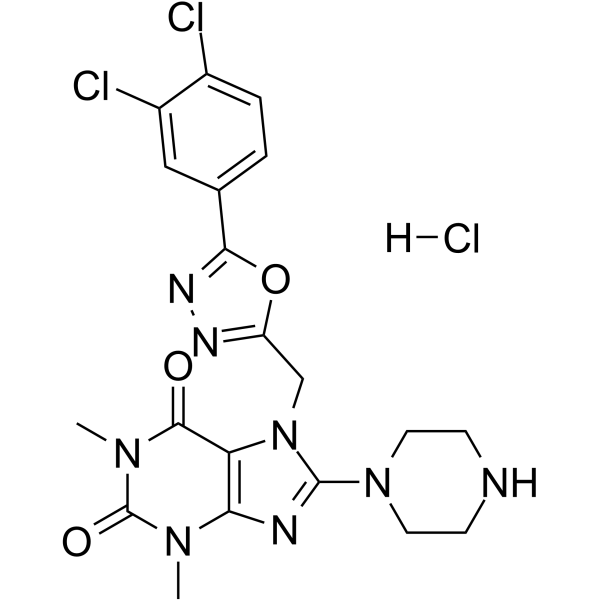
TH5427 hydrochloride is a NUDT5 inhibitor with a human target IC50 of 29 nM, ~690-fold selectivity over MTH1 in vitro, and selective functional inhibition over other NUDIX hydrolases including NUDT9 .TH5427 hydrochloride binds to the active site of NUDT5, blocking enzymatic activity related to ADP-ribose metabolism and PAR-derived ATP synthesis .TH5427 hydrochloride blocks progestin-dependent nuclear ATP synthesis, impairs progestin-induced chromatin remodeling, inhibits histone H1 displacement, disrupts progestin-dependent gene regulation, and abrogates progestin-dependent proliferation in breast cancer cells .TH5427 hydrochloride functions as a versatile probe to study nuclear ATP dynamics and ADP-ribose-related metabolism in cells .TH5427 hydrochloride engages NUDT5 at physiological temperatures, as demonstrated by Drug Affinity Responsive Target Stability (DARTS) assay .TH5427 hydrochloride stabilizes NUDT5 against thermal denaturation in cell lysates and intact cells, as shown by cellular thermal shift assay (CETSA) .TH5427 hydrochloride functionally inhibits NUDT5 activity, leading to downstream effects on oxidative DNA damage and DNA replication in triple-negative breast cancer (TNBC) cells .TH5427 hydrochloride suppresses proliferation of TNBC cells without inducing cell death or apoptosis, slows DNA replication in TNBC cells, promotes accumulation of oxidative DNA lesions, and triggers DNA damage response in TNBC cells .TH5427 hydrochloride suppresses growth of TNBC cells in vitro, inhibits growth of TNBC xenograft tumors in nude mice in vivo, and shows greater potency against TNBC cell lines compared to ER-positive and normal-like breast cell lines .TH5427 hydrochloride can be used for the research of breast cancer and triple-negative breast cancer .
loading...
    loading...
Cat. No.: HY-W014130R
CAS No.: 155-84-0
Synonyms: Ac-Arg-OH (Standard)
N-Acetyl-L-arginine (Ac-Arg-OH) is one of the guanidino compounds found elevated in the serum of a hemodialyzed renal insufficient (uremic) pediatric population. N-Acetyl-L-arginine shows synergistic activity with glycine buffer. N-Acetyl-L-arginine suppresses the aggregation of intravenous immunoglobulins with a minimum decrease in transition temperature. N-Acetyl-L-arginine dramatically reduces IL-1 expression in the presence of silicone oil. N-Acetyl-L-arginine also demonstrates colloidal stability .
loading...
    loading...
Cat. No.: HY-E70124B
CAS No.: 9013-79-0
Research Areas:  

Metabolic Disease

Esterase, Bacillus stearothermophilus is a carboxylate hydrolase. Esterase, Bacillus stearothermophilus has a higher temperature stability .
loading...
    loading...
Cat. No.: HY-P11171
Target:  

Inhibitory Antibodies

Research Areas:  

Others

Cysteine proteinase inhibitor peptide is a peptide that can be isolated form the culture media of Candida albicans with a molecular weight of 15 kDa and a PI of 4.9. Cysteine proteinase inhibitor peptide exhibits stability under both high temperature and a broad pH range .
loading...
    loading...
Cat. No.: HY-143202S
DPhPC-d87 is the deuterium labeled DPhPC (HY-143202). DPhPC is a phospholipid compound characterized by high mechanical and chemical stability, broad temperature phase stability, and high electrical resistance. DPhPC readily forms unilamellar vesicles and solid-supported bilayers. DPhPC is commonly used as a component of nanoliposomal drug carriers or as a model membrane material for studies on membrane proteins/ion channels .
loading...
    loading...
Cat. No.: HY-143202S1
CAS No.: 1638338-77-8
DPhPC-d78 is the deuterium labeled DPhPC (HY-143202). DPhPC is a phospholipid compound characterized by high mechanical and chemical stability, broad temperature phase stability, and high electrical resistance. DPhPC readily forms unilamellar vesicles and solid-supported bilayers. DPhPC is commonly used as a component of nanoliposomal drug carriers or as a model membrane material for studies on membrane proteins/ion channels .
loading...
    loading...
Cat. No.: HY-184756
CAS No.: 25212-74-2
Synonyms: Polyphenylene sulfide; PPS
Research Areas:  

Others

Poly (1,4-phenylene sulfide) (Polyphenylene sulfide; PPS) is a semicrystalline high-performance engineering plastic and also a thermoplastic aromatic sulfide polymer, which possesses multiple properties including high temperature stability, flame retardancy, chemical resistance, favorable mechanical and electrical properties, and inertness to singlet oxygen. Poly (1,4-phenylene sulfide) can be applied to relevant research in fields such as machinery and industrial manufacturing .
loading...
    loading...
Cat. No.: HY-117387
CAS No.: 107572-73-6
Target:  

Endogenous Metabolite

Research Areas:  

Infection

BFE-37 is a yeast introduction with heat resistance activity. The survival rate change of BFE-37 after heating at 55 °C for 5 minutes was 6.53 log CFU/mL, showing its strong heat resistance in acidic orange juice. The dynamic behavior of BFE-37 at different temperatures showed a first-order logarithmic linear inactivation characteristic, which indicates its stability in heat treatment. The study of BFE-37 helps to understand the effect of mild heat treatment on juice and provide guidance for microbial control in the food industry .
loading...
    loading...
  • 1

