
19 Results for "

thickening agent

" in MedChemExpress (MCE) Product Catalog:
Products (19)

19 Results for "thickening agent" in MCE Product Catalog:

Cat. No.: HY-W250721
CAS No.: 9007-20-9
Synonyms: CBM 980
Carbomer 980 (CBM 980) is an acrylic acid polymer, which can be used as a thickening agent. Carbomer 980 provides a stable gel matrix, exhibits good heat, light and microbial contamination resistance. Carbomer 980 facilitates the drug release and local application, which can be used in the pharmaceutical industry .
loading...
    loading...
Cat. No.: HY-W250721B
CAS No.: 9007-20-9
Synonyms: CBM 934
Carbomer 934 (CBM 934) is an acrylic acid polymer, which can be used as a thickening agent. Carbomer 934 which forms a high viscosity gel, provides a stable gel matrix, and exhibits good heat, light and microbial contamination resistance. Carbomer 934 facilitates the drug release and local application, which can be used in the pharmaceutical industry .
loading...
    loading...
Cat. No.: HY-W250721C
CAS No.: 9007-20-9
Synonyms: CBM 941
Carbomer 941 (CBM 941) is an acrylic acid polymer, which can be used as a thickening agent. Carbomer 941 provides a stable gel matrix, exhibits good heat, light and microbial contamination resistance. Carbomer 941 facilitates the drug release and local application, which can be used in the pharmaceutical industry .
loading...
    loading...
Cat. No.: HY-W250146
CAS No.: 9000-40-2
Synonyms: Locust bean gum, Polysaccharide>75%, 5000-6500 mPa·S
Locust bean gum is a natural polysaccharide derived from the seeds of the carob tree. It is commonly used as a thickening, stabilizing and gelling agent in a variety of foods, including dairy, baked goods and meat products. Locust bean gum has several properties suitable for these applications, including high water retention capacity, ability to form stable gels at low temperatures, and resistance to acidic conditions. Additionally, it can be used as a dietary fiber supplement due to its potential health benefits, including improving digestion and lowering cholesterol levels.
loading...
    loading...
Cat. No.: HY-100557D
CAS No.: 9004-64-2
Synonyms: Hydroxypropyl Cellulose, Viscosity(5%):75-150mPa.s, MW 100000
HPC, Viscosity (5%):75-150mPa.s (Hydroxypropyl Cellulose, Viscosity (5%):75-150mPa.s, MW 100000) is a thickening agent. HPC, Viscosity(5%):75-150mPa.s is a kind of biological materials or organic compounds that are widely used in life science research .
loading...
    loading...
Cat. No.: HY-P4286
CAS No.: 103213-38-3
Target:  

Inhibitory Antibodies

Research Areas:  

Cancer

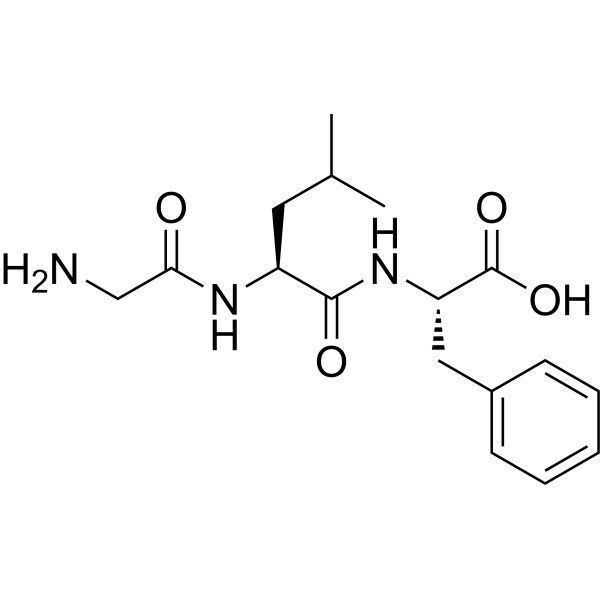
H-Gly-Leu-Phe-OH (GLF), an immunostimulatory tripeptide derived from α-lactalbumin, inhibits anticancer agent Etoposide-induced alopecia, epidermal thickening, and thinning of the adipocyte layer .
loading...
    loading...
Cat. No.: HY-W250721D
CAS No.: 9007-20-9
Synonyms: Carboxy polymethylene
Research Areas:  

Others

Carbomer (Carboxy polymethylene) is an acrylic acid polymer, which can be used as a thickening agent. Carbomer provides a stable gel matrix, exhibits good heat, light and microbial contamination resistance. Carbomer facilitates the drug release and local application, which can be used in the pharmaceutical industry .
loading...
    loading...
Cat. No.: HY-W250721F
CAS No.: 9007-20-9
Synonyms: Carboxy polymethylene (homopolymer)
Research Areas:  

Others

Carbomer homopolymer (Carboxy polymethylene (homopolymer)) is an acrylic acid polymer, which can be used as a thickening agent. Carbomer homopolymer provides a stable gel matrix, exhibits good heat, light and microbial contamination resistance. Carbomer homopolymer facilitates the drug release and local application, which can be used in the pharmaceutical industry .
loading...
    loading...
Cat. No.: HY-W250721G
CAS No.: 9007-20-9
Synonyms: Carboxy polymethylene (interpolymer)
Research Areas:  

Others

Carbomer interpolymer (Carboxy polymethylene (interpolymer)) is an acrylic acid polymer, which can be used as a thickening agent. Carbomer interpolymer provides a stable gel matrix, exhibits good heat, light and microbial contamination resistance. Carbomer interpolymer facilitates the drug release and local application, which can be used in the pharmaceutical industry .
loading...
    loading...
Cat. No.: HY-W250721J
CAS No.: 9007-20-9
Synonyms: CBM 960
Carbomer 960 is an acrylic acid polymer, which can be used as a thickening agent. Carbomer 960 which forms a high viscosity gel, provides a stable gel matrix, and exhibits good heat, light and microbial contamination resistance. Carbomer 960 facilitates the drug release and local application, which can be used in the pharmaceutical industry .
loading...
    loading...
Cat. No.: HY-W250721H
CAS No.: 9007-20-9
Synonyms: CBM 970
Carbomer 970 is an acrylic acid polymer, which can be used as a thickening agent. Carbomer 970 which forms a high viscosity gel, provides a stable gel matrix, and exhibits good heat, light and microbial contamination resistance. Carbomer 970 facilitates the drug release and local application, which can be used in the pharmaceutical industry .
loading...
    loading...
Cat. No.: HY-W250721K
CAS No.: 9007-20-9
Synonyms: CBM 996
Carbomer 996 is an acrylic acid polymer, which can be used as a thickening agent. Carbomer 996 which forms a high viscosity gel, provides a stable gel matrix, and exhibits good heat, light and microbial contamination resistance. Carbomer 996 facilitates the drug release and local application, which can be used in the pharmaceutical industry .
loading...
    loading...
Cat. No.: HY-W250721L
CAS No.: 9007-20-9
Synonyms: CBM 676
Carbomer 676 is an acrylic acid polymer, which can be used as a thickening agent. Carbomer 676 which forms a high viscosity gel, provides a stable gel matrix, and exhibits good heat, light and microbial contamination resistance. Carbomer 676 facilitates the drug release and local application, which can be used in the pharmaceutical industry .
loading...
    loading...
Cat. No.: HY-W250721I
CAS No.: 9007-20-9
Synonyms: CBM 990
Carbomer 990 is an acrylic acid polymer, which can be used as a thickening agent. Carbomer 990 which forms a high viscosity gel, provides a stable gel matrix, and exhibits good heat, light and microbial contamination resistance. Carbomer 990 facilitates the drug release and local application, which can be used in the pharmaceutical industry .
loading...
    loading...
Cat. No.: HY-155084
CAS No.: 2982657-98-5
Target:  

Fungal

Research Areas:  

Infection

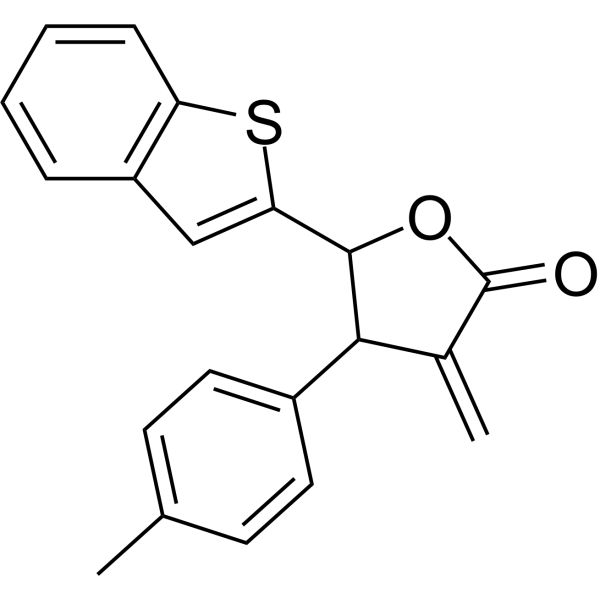
Antifungal agent 61 (Compound 38) is an antifungal agent. Antifungal agent 61 inhibits V. mali with an EC50 value of 0.50 mg/L. Antifungal agent 61 inhibits V. mali by causing cell deformation and contraction, reducing the number of intracellular mitochondria, thickening the cell wall, and increasing the permeability of the cell membrane .
loading...
    loading...
Cat. No.: HY-156802
CAS No.: 29710-31-4
Research Areas:  

Others

Cetyl octanoate is an ester compound that can be used as a thickening agent, a Surfactant, and other additives .
loading...
    loading...
Cat. No.: HY-N18823
CAS No.: 84681-71-0
Category:  

Extract

Target:  

Others

Hydrogenated rapeseed oil is a vegetable oil which is hydrogenated. Hydrogenated rape oil can be ued as an emollient, thickening agent.
loading...
    loading...
Cat. No.: HY-189253
CAS No.: 3134062-94-2
Antimicrobial agent-57 is an agricultural antimicrobial agent that acts as a mitochondrial respiratory chain complex III inhibitor (IC50 = 8.82 mg/L). Antimicrobial agent-57 binds to the Qo site, disrupts the mitochondrial respiratory chain of P. capsici, and inhibits respiration. Antimicrobial agent-57 induces ultrastructural damage to hyphae, including cell wall thickening, mitochondrial degradation, vacuole enlargement, and lipid droplet reduction. Antimicrobial agent-57 inhibits hyphal respiratory metabolism. Antimicrobial agent-57 can be used for research on Phytophthora capsici infection .
loading...
    loading...
Cat. No.: HY-164381
CAS No.: 74512-12-2
Target:  

Fungal

Research Areas:  

Infection

Omoconazole is an imidazole-derived azole antifungal agent. Omoconazole exhibits broad-spectrum in vitro activity against dermatophytes, yeasts, and dimorphic fungi, exerting fungistatic effects at low concentrations and fungicidal effects at high concentrations. Omoconazole accumulates in the skin, binds to keratin, and is slowly transferred from the stratum corneum to the viable epidermis. Omoconazole inhibits the growth of dermatophytes, impairs daughter cell separation in Candida albicans, induces cell wall thickening, disrupts intracellular cytoplasmic organelles, and leads to cell death. Omoconazole is used in studies related to dermatophytosis and superficial fungal infections .
loading...
    loading...
  • 1

