
14 Results for "

thoracic

" in MedChemExpress (MCE) Product Catalog:
Products (14)

14 Results for "thoracic" in MCE Product Catalog:

7
7 Publications Verification
Cat. No.: HY-N6771
CAS No.: 18172-33-3
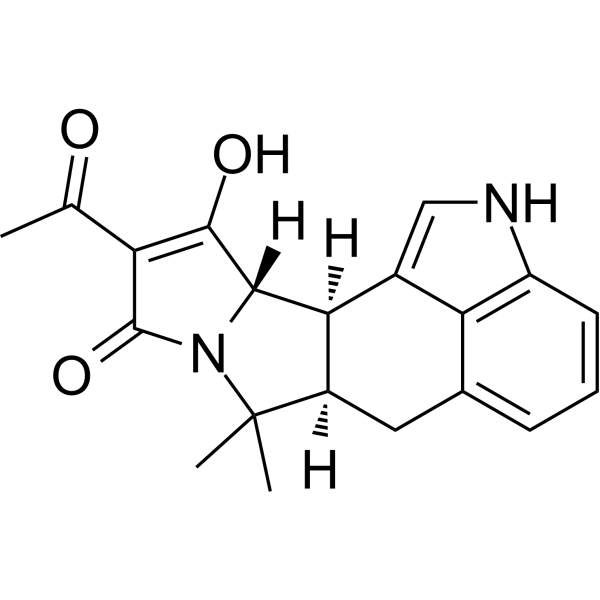
Cyclopiazonic acid is an endoplasmic reticulum calcium ATPase (ECAs) inhibitor and human respiratory syncytial virus (RSV) inhibitor (EC50 value of 4.13 μ M), which can reduce the antagonistic effect of 5-HT receptors in rat thoracic aorta, induce p53 dependent cell apoptosis and reproductive toxicity in mouse testes, and inhibit the biological activation of aflatoxin B [1][4][5].
loading...
    loading...
2
2 Cited Publications
Cat. No.: HY-70075
CAS No.: 620113-73-7
Target:  

RGS Protein

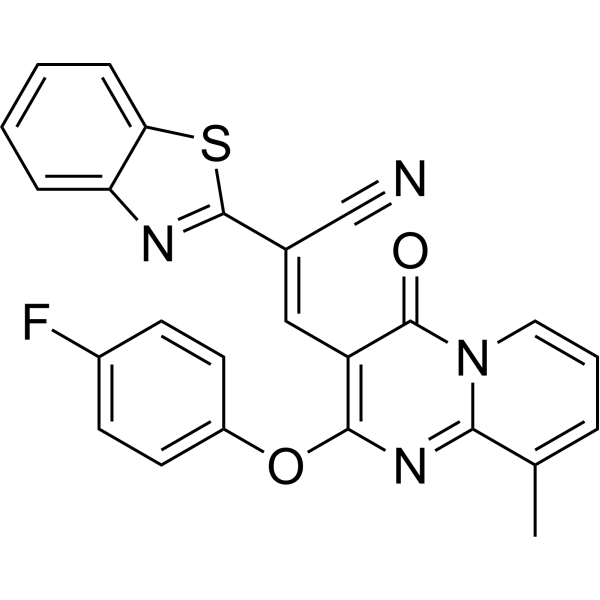
CCG-63808 is a selective, reversible RGS4 inhibitor with an IC50 of 10 μM for the Gαo-RGS4 interaction . CCG-63808 enhances the contractile response of lymphatic smooth muscle and potentiates agonist-mediated thoracic duct contraction. CCG-63808 can be used in research related to neuropathic pain and hypertension .
loading...
    loading...
1
1 Cited Publications
Cat. No.: HY-P5521
CAS No.: 3033299-76-9
Target:  

Inhibitory Antibodies

Research Areas:  

Cardiovascular Disease

mLR12 is a Trem1 inhibitory peptide. mLR12 decreases aortic rupture rate in BAPN-induced Thoracic aortic aneurysm and dissection (TAAD) mice model .
loading...
    loading...
Cat. No.: HY-P99112
CAS No.: 1535963-91-7
Synonyms: RG-6168; SA-237

Target:  

Interleukin Related

Research Areas:  

Inflammation/Immunology Cancer

Satralizumab is a humanized monoclonal antibody that targets IL-6R. Satralizumab prevents dTAA formation and progression in rattus norvegicus. Satralizumab can be used for neuromyelitis optica spectrum disorder (NMOSD) and descending thoracic aorta aneurysm (dTAA) research .
loading...
    loading...
Cat. No.: HY-122215
CAS No.: 62774-96-3
Synonyms: N-696
Target:  

Adrenergic Receptor

Research Areas:  

Endocrinology

Tilisolol hydrochloride (N-696) is a non-selective β-adrenergic antagonist with vasodilatory and hypotensive activities. Tilisolol hydrochloride exerts its effects in canine coronary arteries by opening ATP-sensitive K+ channels. Tilisolol hydrochloride exhibits concentration-dependent relaxation in KCl-precontracted rat thoracic aorta. Tilisolol hydrochloride reduces diastolic blood pressure in a dose-dependent manner and slightly increases heart rate in spinal cord stimulated rats .
loading...
    loading...
Cat. No.: HY-108055
CAS No.: 669089-53-6
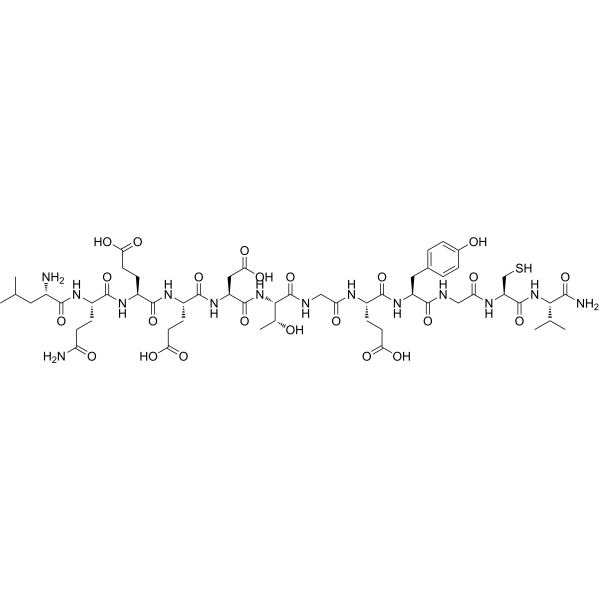
Urantide is a selective and competitive urotensin-II (UT) receptor antagonist peptide (pKB=8.3) that blocks human urotensin-II (hU-II)-induced contractions in rat thoracic aorta ex vivo. Urantide can be used to study the (patho)physiological role of hU-II in the mammalian cardiovascular system .
loading...
    loading...
Cat. No.: HY-N11925
CAS No.: 112923-64-5
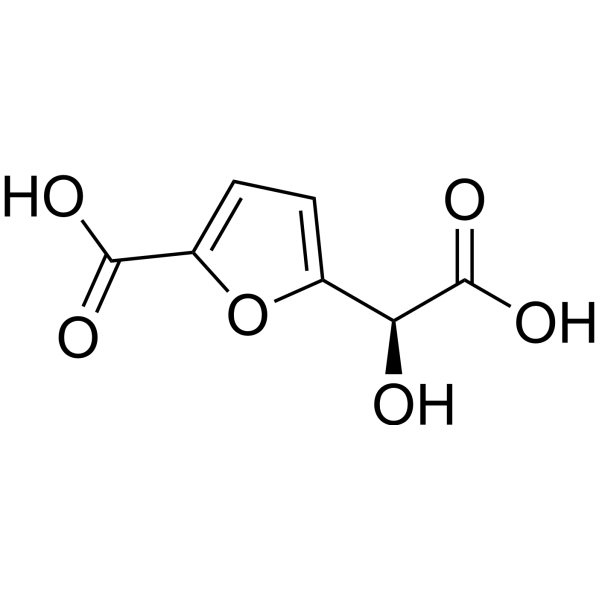
(+)-Osbeckic acid is a vasorelaxatant that can be isolated from Tartary Buckwheat. (+)-Osbeckic acid has a potent vasorelaxant effect in Sprague-Dawley rat thoracic aorta rings with an EC50 of 887 μM .
loading...
    loading...
Cat. No.: HY-W184837
CAS No.: 113578-26-0
Synonyms: KR-1008
Target:  

Calcium Channel

Research Areas:  

Cardiovascular Disease

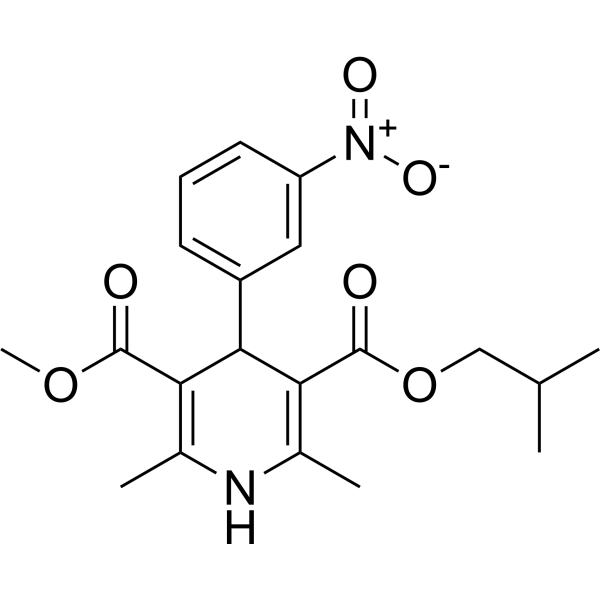
m-Nisoldipine (KR-1008) is a dihydropyridine calcium antagonist that can significantly increase cardiac output and heart index, significantly reduce the negative inotropic effect on the myocardium, and has a relatively high selectivity for the thoracic aorta. m-Nisoldipine can be used in the research of cardiovascular diseases .
loading...
    loading...
Cat. No.: HY-N6771R
CAS No.: 18172-33-3
Cyclopiazonic acid (Standard) is the analytical standard of Cyclopiazonic acid (HY-N6771). This product is intended for research and analytical applications. Cyclopiazonic acid is an endoplasmic reticulum calcium ATPase (ECAs) inhibitor and human respiratory syncytial virus (RSV) inhibitor (EC50 value of 4.13 μ M), which can reduce the antagonistic effect of 5-HT receptors in rat thoracic aorta, induce p53 dependent cell apoptosis and reproductive toxicity in mouse testes, and inhibit the biological activation of aflatoxin B [1][4][5].
loading...
    loading...
Cat. No.: HY-W142457
CAS No.: 18479-58-8
Dihydromyrcenol is an orally active flavor ingredient and Antifungal agent. Dihydromyrcenol acts as a toxicant. Dihydromyrcenol induces phototoxicity-related growth inhibition in Bakers' Yeast. In pregnant rats, Dihydromyrcenol causes threshold maternal toxicity by reducing feed consumption and body weight gain, and also induces threshold developmental toxicity by decreasing fetal body weight, inhibiting ossification of metatarsal bones in the hind paws, increasing the number of extra thoracic vertebrae ribs, and altering vertebral counts .
loading...
    loading...
Cat. No.: HY-182701
CAS No.: 149685-89-2
5-HT3 antagonist-7 (Compound 7e) is a competitive and selective 5-HT3 receptor antagonist. 5-HT3 antagonist-7 inhibits 5-HT-induced contractions in guinea pig ileum and guinea pig thoracic aorta. 5-HT3 antagonist-7 prevents 2-methyl-5-HT-induced vomiting episodes in ferrets .
loading...
    loading...
Cat. No.: HY-N6771S
CAS No.: 2815925-39-2
Cyclopiazonic acid- 13C20 is the 13C-labeled Cyclopiazonic acid (HY-N6771). Cyclopiazonic acid is an endoplasmic reticulum calcium ATPase (ECAs) inhibitor and human respiratory syncytial virus (RSV) inhibitor (EC50 value of 4.13 μ M), which can reduce the antagonistic effect of 5-HT receptors in rat thoracic aorta, induce p53 dependent cell apoptosis and reproductive toxicity in mouse testes, and inhibit the biological activation of aflatoxin B .
loading...
    loading...
Cat. No.: HY-159978
CAS No.: 1628848-73-6
Synonyms: EOS789
Atidafonat is an orally active sodium-dependent phosphate transporter inhibitor, with IC50 values of 6.8, 1.5, and 1.7 μM against human NaPi-IIb, PiT-1, PiT-2, respectively; and IC50 values of 3.9, 1.9, and 1.7 μM against rat NaPi-IIb, PiT-1, PiT-2, respectively. Atidafonat inhibits intestinal phosphate absorption, increases fecal phosphate excretion, reduces urinary phosphate excretion, and decreases the levels of serum phosphate, FGF23, and adult parathyroid hormone. Atidafonat ameliorates ectopic thoracic aortic calcification, renal injury and hyperphosphatemia, and inhibits the expression of fibrosis markers. Atidafonat can be used for the research of hyperphosphatemia and chronic kidney disease-mineral and bone disorder (CKD-MBD) .
loading...
    loading...
Cat. No.: HY-188122
CAS No.: 113960-50-2
Meglumine cyclic adenylate is a cAMP analog. Meglumine cyclic adenylate promotes STAT3 phosphorylation at Ser727 and mitochondrial translocation. Meglumine cyclic adenylate inhibits cell apoptosis by reducing cytochrome c release and caspase-3 activation. Meglumine cyclic adenylate suppresses the expression of NF-κBp65, activates adenylate cyclase 3, and inhibits phosphodiesterase 4D. Meglumine cyclic adenylate enhances myocardial contractility, increases myocardial Ca 2+ influx, dilates peripheral blood vessels, improves hypotension and bradycardia, promotes spinal cord function recovery, and regulates fear extinction and anxiety-like behaviors. Meglumine cyclic adenylate can be used in research related to cerebral ischemia/reperfusion injury, systemic inflammatory response syndrome, acute T4 thoracic spinal cord injury, and post-traumatic stress disorder (PTSD) .
loading...
    loading...
  • 1

