20 Results for "

toluene

" in MedChemExpress (MCE) Product Catalog:
Products (20)

20 Results for "toluene" in MCE Product Catalog:

Cat. No.: HY-W101367
CAS No.: 19542-77-9
Synonyms: N-Acetyl-S-benzyl-L-cysteine; Benzylmercapturic acid
Target:  

Drug Metabolite

Research Areas:  

Others

Ac-Cys(Bzl)-OH (N-Acetyl-S-benzyl-L-cysteine) is a toluene metabolite. Ac-Cys(Bzl)-OH in urine samples is a good marker of occupational toluene exposure.
loading...
    loading...
Cat. No.: HY-W103225
CAS No.: 613-31-0
Target:  

Bacterial

Research Areas:  

Infection

Dihydroanthracene (9,10-Dihydroanthracene) is a substrate for toluene dioxygenase (TDO) expressed by Pseudomonas putida UV4. Toluene dioxygenase (TDO) expressed by Pseudomonas putida UV4 catalyzes the benzylic monooxygenation of Dihydroanthracene to 9-hydroxy-9,10-DHA as the only product .
loading...
    loading...
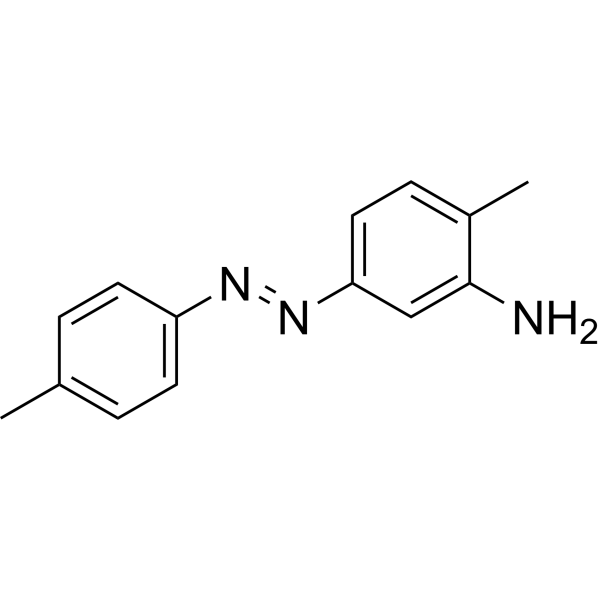
Cat. No.: HY-W040297
CAS No.: 97-56-3
Synonyms: o-toluene-azo-o-toluidine
2-Methyl-5-(p-tolyldiazenyl)aniline is a biochemical reagent that can be used as a biological material or organic compound for life science related research.
loading...
    loading...
Cat. No.: HY-W174556
CAS No.: 6315-20-4
Synonyms: 3-mBSA
Target:  

Drug Derivative

Research Areas:  

Others

2-(3-Methylbenzyl)succinic acid (3-mBSA) is a degradation product of anaerobic toluene and ethylbenzene/xylene. 2-(3-Methylbenzyl)succinic acid can serve as a qualitative in situ indicator of toluene and ethylbenzene/xylene in contaminated groundwater .
loading...
    loading...
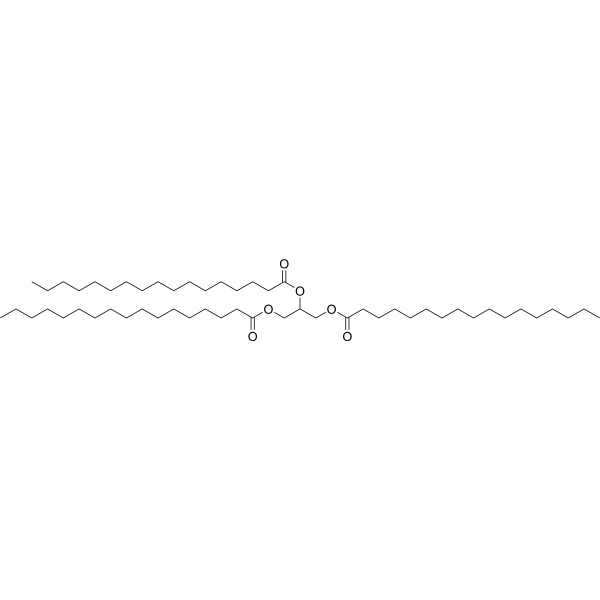
Cat. No.: HY-141642
CAS No.: 2438-40-6
Purity:  ≥98.0%
Synonyms: Glycerol triheptadecanoate; Trimargarin
Research Areas:  

Others

Triheptadecanoin (Glycerol triheptadecanoate) is an internal standard for the rapid GC analysis of fatty acid methyl esters in edible fats and oils. Triheptadecanoin enables the quantitative analysis of trans-fatty acid content in edible fats and oils via a rapid GC method. Triheptadecanoin smoothly undergoes methylation with m-TFPTAH in toluene solution at room temperature .
loading...
    loading...
Cat. No.: HY-W749199
CAS No.: 2732154-68-4
2-Ethyl toluene- 13C6 is the 13C-labeled 1-Ethyl-2-methylbenzene (HY-W008826).
loading...
    loading...
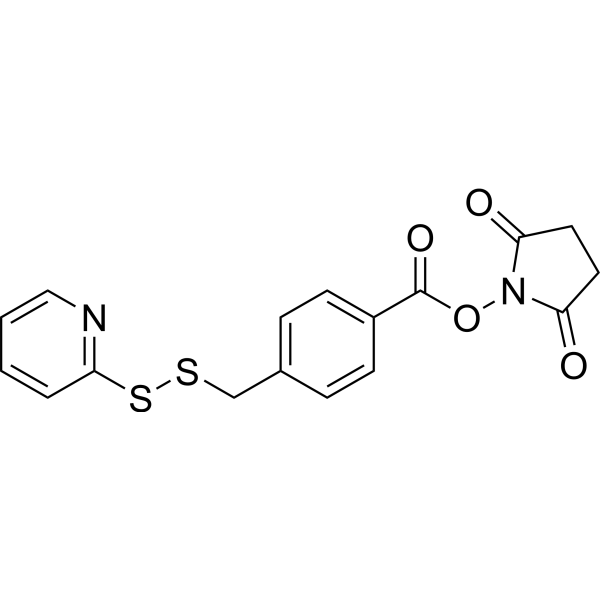
Cat. No.: HY-133538
CAS No.: 160854-54-6
Target:  

ADC Linkers

Research Areas:  

Cancer

4-Succinimidyl-oxycarbonyl-α-(2-pyridyldithio)toluene is a non-cleavable ADC linker used in the synthesis of antibody-drug conjugates (ADCs) .
loading...
    loading...
Cat. No.: HY-W040301
CAS No.: 98-51-1
Synonyms: p-tert-Butyl toluene; 1-(tert-Butyl)-4-methylbenzene
Research Areas:  

Others

4-tert-Butyltoluene (p-tert-Butyl toluene) is a pharmaceutical synthesis intermediate .
loading...
    loading...
Cat. No.: HY-20550R
CAS No.: 120511-72-0
Synonyms: α,α,α',α'-5-Pentamethyl-1,3-benzenediacetonitrile (Standard)
Target:  

Reference Standards

3,5-Bis(2-cyanoprop-2-yl)toluene (Standard) is the analytical standard of 3,5-Bis(2-cyanoprop-2-yl)toluene. This product is intended for research and analytical applications.
loading...
    loading...
Cat. No.: HY-W100312S
CAS No.: 1398044-44-4
Synonyms: toluene, 2-amino-13C6 hydrochloride
Research Areas:  

Others

o-Toluidine-13C6 hydrochloride (Toluene, 2-amino-13C6 hydrochloride) is the 13C labeled isotope of o-Toluidine hydrochloride (HY-W100312) .
loading...
    loading...
Cat. No.: HY-W749377
CAS No.: 2724878-50-4
Synonyms: toluene, 2,3,4,5,6-pentabromo-13C6
1,2,3,4,5-Pentabromo-6-methylbenzene- 13C6 (Toluene, 2,3,4,5,6-pentabromo- 13C6) is the 13C-labeled 1,2,3,4,5-Pentabromo-6-methylbenzene (HY-W274110).
loading...
    loading...
Cat. No.: HY-W040297R
CAS No.: 97-56-3
Synonyms: o-toluene-azo-o-toluidine (Standard)
2-Methyl-5-(p-tolyldiazenyl)aniline (Standard) is the analytical standard of 2-Methyl-5-(p-tolyldiazenyl)aniline. This product is intended for research and analytical applications. 2-Methyl-5-(p-tolyldiazenyl)aniline is a biochemical reagent that can be used as a biological material or organic compound for life science related research.
loading...
    loading...
Cat. No.: HY-W112606
CAS No.: 865756-74-7
Target:  

MOFs

Research Areas:  

Others

2,6-Bis(4-pyridyl)toluene is a metal-organic framework (MOF).
loading...
    loading...
Cat. No.: HY-W124430
CAS No.: 17919-31-2
Synonyms: toluene,p,p'-methylenedi
Target:  

MOFs

Research Areas:  

Others

([1,1'-Biphenyl]-4,4'-diylbis(methylene))bis(phosphonic acid) (Toluene,p,p'-methylenedi) is a metal-organic framework (MOF).
loading...
    loading...
Cat. No.: HY-W112605
CAS No.: 865756-45-2
Synonyms: 4-[2-[2-Methyl-3-(2-pyridin-4-ylethynyl)phenyl]ethynyl]pyridine
Target:  

MOFs

Research Areas:  

Others

2,6-Bis(4-pyridylethynyl)toluene (4-[2-[2-Methyl-3-(2-pyridin-4-ylethynyl)phenyl]ethynyl]pyridine) is a metal-organic framework (MOF).
loading...
    loading...
Cat. No.: HY-175996S
Synonyms: o-toluene-azo-o-toluidine-d6
2-Methyl-5-(p-tolyldiazenyl)aniline-d6 (o-Toluene-azo-o-toluidine-d6) is the deuterium labeled 2-Methyl-5-(p-tolyldiazenyl)aniline (HY-W040297). 2-Methyl-5-(p-tolyldiazenyl)aniline is a biochemical reagent that can be used as a biological material or organic compound for life science related research.
loading...
    loading...
Cat. No.: HY-D3007
LD-CK is a fluorescent probe based on a coumarin-chromone structure, specifically designed to visualize lipid droplet polarity changes and endowed with multimodal imaging capability. LD-CK contains a high-performance lipophilic coumarin moiety, which enables it to specifically target lipid droplets upon cellular entry while minimizing background fluorescence to the greatest extent. LD-CK has an excitation wavelength (Ex) of 488 nm and an emission wavelength (Em) of 540 nm (in low-polarity environments such as toluene) or 640 nm (in high-polarity environments such as glycerol), with its emission peak undergoing a redshift as solvent polarity increases .
loading...
    loading...
Cat. No.: HY-D3071
CAS No.: 1510814-96-6
Target:  

Fluorescent Dye

Research Areas:  

Inflammation/Immunology

LW-1 is a fluorescent probe targeting polarity detection of lipid droplets (LD). LW-1 produces a strong solvatochromic effect via the intramolecular charge transfer (ICT) mechanism: as environmental polarity increases, the emission wavelength red-shifts and the fluorescence intensity decreases significantly (emission at 557 nm in toluene and 642 nm in acetonitrile, with an 85 nm red-shift); fluorescence enhances in low-polarity lipid droplets. LW-1 can be used for lipid droplet polarity detection, differentiation between cancer cells and normal cells, monitoring of lipid droplet polarity changes under different physiological conditions such as starvation, oleic acid treatment and oxidative stress, as well as ex vivo imaging of polarity changes in lung tissues of asthmatic mice. The detection wavelength for cell imaging with LW-1 is Ex/Em = 405/500-550 nm (green channel) .
loading...
    loading...
Cat. No.: HY-D3104
CAS No.: 2767443-23-0
Target:  

Fluorescent Dye

Research Areas:  

Others

ERNT is a fluorescent probe for monitoring endoplasmic reticulum (ER) polarity and detecting endoplasmic reticulum stress (ERS) during the progression of dynamic liver injury. ERNT functions based on a donor-π-acceptor (D-π-A) structure with an intramolecular charge transfer (ICT) effect. ERNT has multiple excitation/emission pairs: for in vitro cell imaging, the green channel has Ex/Em = 488/500-550 nm, and the red channel has Ex/Em = 488/570-620 nm; for in vivo liver imaging, Ex/Em = 520/620 nm; for solvent optical tests, Ex = 470 nm, with the maximum emission peak at 548 nm in low-polarity toluene and 668 nm in high-polarity DMSO. ERNT can evaluate the efficacy of hepatoprotective interventions by detecting changes in ER polarity, and also exhibits excellent photostability and low cytotoxicity .
loading...
    loading...
Cat. No.: HY-D3084
Target:  

Fluorescent Dye

Research Areas:  

Cancer

C-TPA is a fluorescent probe used for hypochlorite detection and bioimaging of lipid droplet polarity in cancer cells. For hypochlorite detection, when its derivative C-TPA-S is exposed to hypochlorite, an oxidative desulfurization reaction converts the thiocarbonyl group of C-TPA-S to the carbonyl group of C-TPA, thus restoring bright fluorescence from the almost non-fluorescent C-TPA-S. For bioimaging of lipid droplet polarity, the intramolecular charge transfer process between its Triphenylamine (HY-W011998) donor group and Coumarin (HY-N0709) acceptor group endows C-TPA with solvatochromism-it exhibits stronger fluorescence in less polar environments (such as lipid droplets in cancer cells) and weaker fluorescence in more polar environments (such as lipid droplets in normal cells), enabling the differentiation of cancer cells and cancer tissues from normal cells and normal tissues. The excitation wavelength of C-TPA is 405 nm, and the emission wavelengths used for cell and tissue imaging cover 425-475 nm and 500-550 nm; in solvents, its emission peak shifts from 494 nm in non-polar toluene to 528 nm in polar water .
loading...
    loading...
  • 1

