11 Results for "

triticale bran

" in MedChemExpress (MCE) Product Catalog:
Products (11)

11 Results for "triticale bran" in MCE Product Catalog:

7
7 Cited Publications
Cat. No.: HY-B0710
CAS No.: 107-43-7
Synonyms: Trimethylglycine; carboxy-N,N,N-trimethylmethanaminium
Betaine (Trimethylglycine) is a natural compound found in many foods and also an active methyl-donor which can maintain normal DNA methylation patterns [1,2]. Betaine is found ubiquitously in plants, animals, microorganisms, and rich dietary sources including seafood, spinach, and wheat bran. Betaine also acts as an osmolyte, to maintain the avian’s cellular water and ion balance to improve the avian’s capacity against heat stress via preventing dehydration and osmotic inactivation. It helps in maintaining the protective osmolytic activity, especially in heat-stressed birds. Betaine may promote various intestinal microbes against osmotic variations and thus improve microbial fermentation activity .
loading...
    loading...
Cat. No.: HY-B2013
CAS No.: 71283-80-2
Research Areas:  

Others

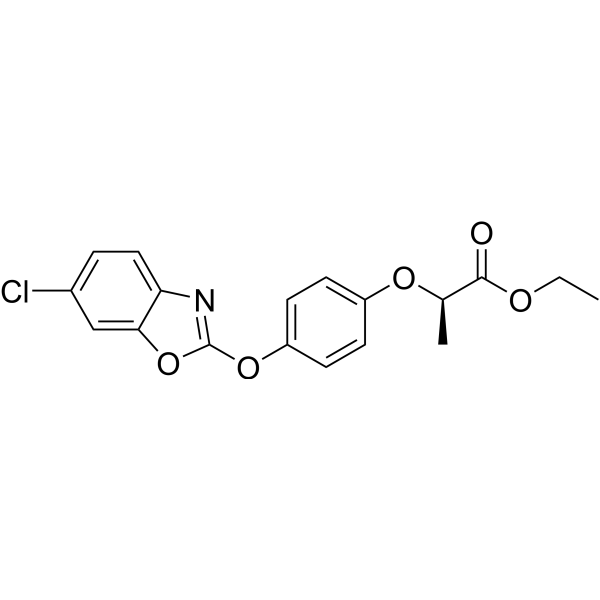
Fenoxaprop-P-ethyl is an acetyl-CoA carboxylase (ACC) inhibitor and post-emergence herbicide. Fenoxaprop-P-ethyl inhibits the conversion of acetyl-CoA to malonyl-CoA, reduces malonyl-CoA synthesis and disrupts fatty acid synthesis. Fenoxaprop-P-ethyl disrupts lipid homeostasis through cascaded inhibition of lipid metabolism, decreases total lipid content, downregulates fatty acid elongase genes and inhibits their activity. Fenoxaprop-P-ethyl disrupts fatty acid synthesis in rice seedlings and controls annual monocotyledonous weeds in wheat, durum wheat, rye, triticale and barley fields .
loading...
    loading...
Cat. No.: HY-B0710R
CAS No.: 107-43-7
Synonyms: Trimethylglycine (Standard); carboxy-N,N,N-trimethylmethanaminium (Standard)
Betaine (Standard) is the analytical standard of Betaine. This product is intended for research and analytical applications. Betaine (Trimethylglycine) is a natural compound found in many foods and also an active methyl-donor which can maintain normal DNA methylation patterns [1,2]. Betaine is found ubiquitously in plants, animals, microorganisms, and rich dietary sources including seafood, spinach, and wheat bran. Betaine also acts as an osmolyte, to maintain the avian’s cellular water and ion balance to improve the avian’s capacity against heat stress via preventing dehydration and osmotic inactivation. It helps in maintaining the protective osmolytic activity, especially in heat-stressed birds. Betaine may promote various intestinal microbes against osmotic variations and thus improve microbial fermentation activity .
loading...
    loading...
Cat. No.: HY-B0710S
CAS No.: 309762-22-9
Synonyms: Trimethylglycine-13C3; Carboxy-N,N,N-trimethylmethanaminium-13C3
Betaine- 13C3 (Trimethylglycine- 13C3) is the 13C labeled isotope of Betaine (HY-B0710). Betaine (Trimethylglycine) is a natural compound found in many foods and also an active methyl-donor which can maintain normal DNA methylation patterns [1,2]. Betaine is found ubiquitously in plants, animals, microorganisms, and rich dietary sources including seafood, spinach, and wheat bran. Betaine also acts as an osmolyte, to maintain the avian’s cellular water and ion balance to improve the avian’s capacity against heat stress via preventing dehydration and osmotic inactivation. It helps in maintaining the protective osmolytic activity, especially in heat-stressed birds. Betaine may promote various intestinal microbes against osmotic variations and thus improve microbial fermentation activity .
loading...
    loading...
Cat. No.: HY-W749362
CAS No.: 20972-07-0
Category:  

500 - Internal Server Error | MedChemExpress

Oops!

Sorry, Something went wrong on our server.
Our team has been notified and is working to fix the issue.