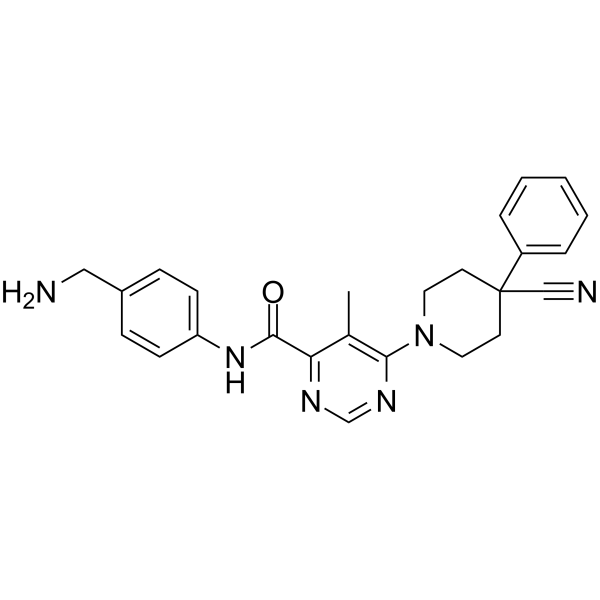
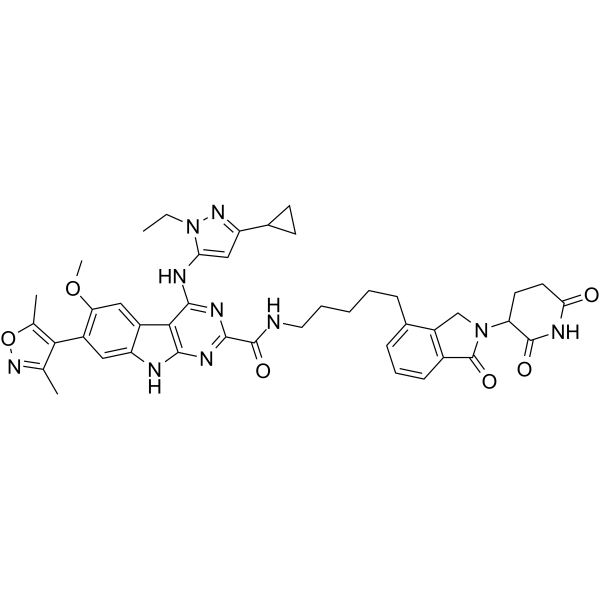
539 Results for "

ubiquitination

" in MedChemExpress (MCE) Product Catalog:
Products (539)

539 Results for "ubiquitination" in MCE Product Catalog:

101
101 Publications Verification
Cat. No.: HY-100487
CAS No.: 1450833-55-2
Purity:  98.38%
Synonyms: MLN7243
Research Areas:  

Cancer

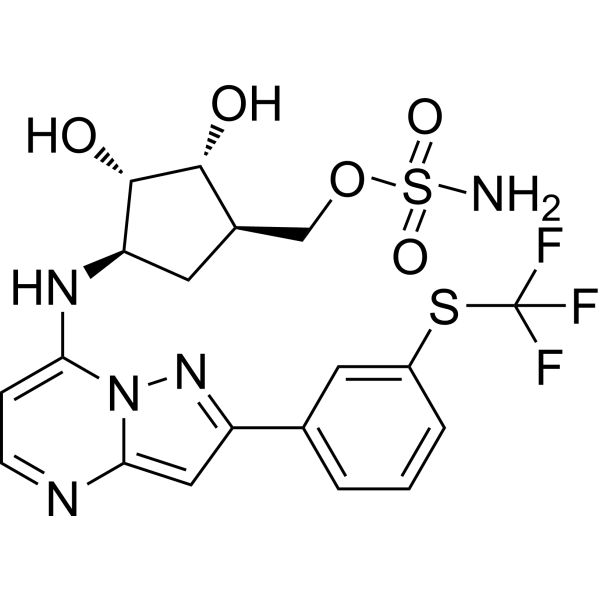
TAK-243 (MLN7243) is a first-in-class, selective ubiquitin activating enzyme, UAE (UBA1) inhibitor (IC50=1 nM), which blocks ubiquitin conjugation, disrupting monoubiquitin signaling as well as global protein ubiquitination. TAK-243 (MLN7243) induces endoplasmic reticulum (ER) stress, abrogates NF-κB pathway activation and promotes apoptosis .
loading...
    loading...
64
64 Cited Publications
Cat. No.: HY-A0003
CAS No.: 191732-72-6
Synonyms: CC-5013
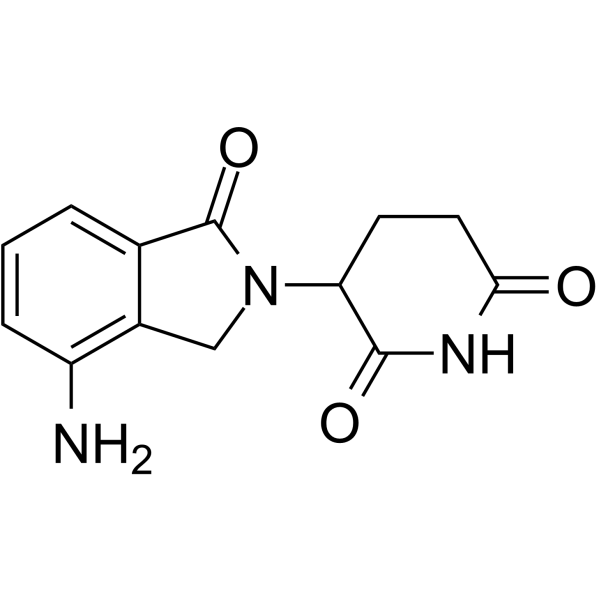
Lenalidomide (CC-5013) is an orally active immunomodulatory agent that binds CRBN as a molecular glue to alter substrate specificity, inducing ubiquitination and proteasome-dependent degradation of IKZF1, IKZF3 and CK1α. Lenalidomide induces apoptosis by degrading IKZF1/3, and activates p53 by degrading CK1α. Lenalidomide promotes IL-2 release and effector functions of CD8 + T/NK cells, while inhibiting TNF-α secretion and M1-type pyroptosis. Lenalidomide can be used in research related to hematological malignancies, acute liver failure and acute kidney injury .
loading...
    loading...
64
64 Cited Publications
Cat. No.: HY-A0003B
CAS No.: 847871-99-2
Synonyms: CC-5013 hemihydrate
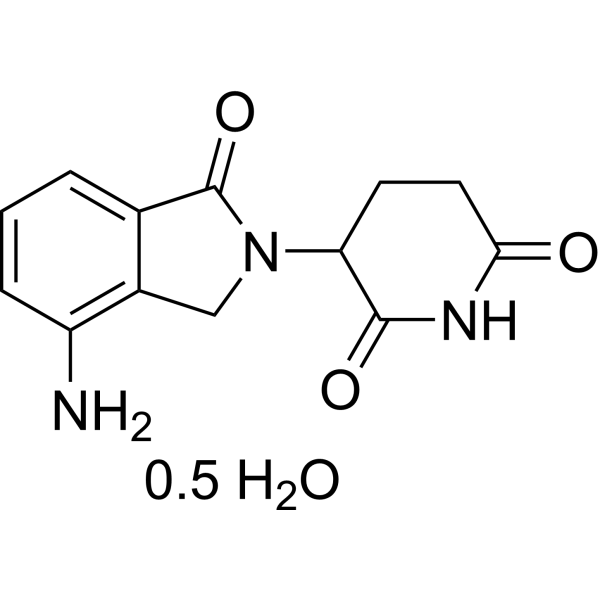
Lenalidomide hemihydrate (CC-5013 hemihydrate) is an orally active immunomodulatory agent that binds CRBN as a molecular glue to alter substrate specificity, inducing ubiquitination and proteasome-dependent degradation of IKZF1, IKZF3 and CK1α. Lenalidomide hemihydrate induces apoptosis by degrading IKZF1/3, and activates p53 by degrading CK1α. Lenalidomide hemihydrate promotes IL-2 release and effector functions of CD8 + T/NK cells, while inhibiting TNF-α secretion and M1-type pyroptosis. Lenalidomide hemihydrate can be used in research related to hematological malignancies, acute liver failure and acute kidney injury .
loading...
    loading...
23
23 Cited Publications
Cat. No.: HY-101140
CAS No.: 1799974-70-1
Purity:  98.67%
Research Areas:  

Inflammation/Immunology

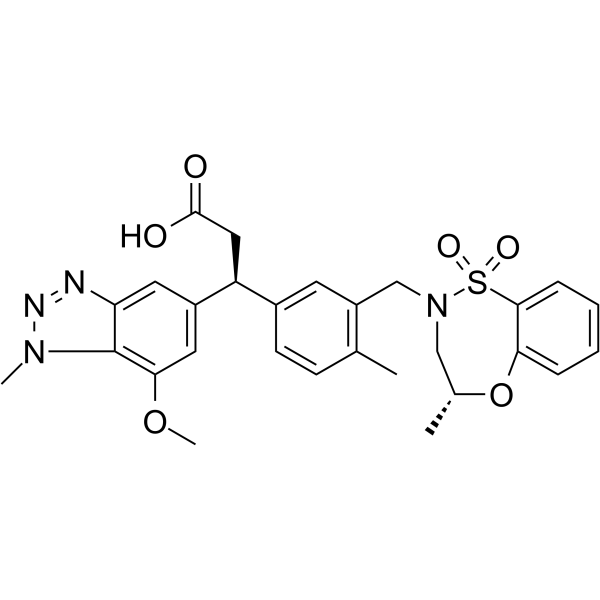
KI696 is a selective KEAP1/NRF2 protein-protein interaction inhibitor with a human Kd value of 1.3 nM. KI696 acts by competitively occupying the NRF2-binding pocket of the KEAP1 Kelch domain. KI696 blocks KEAP1-mediated ubiquitination and degradation of NRF2, promotes the translocation of NRF2 to the nucleus, activates the expression of downstream antioxidant genes, increases intracellular glutathione levels, and alleviates oxidative stress-induced cell damage and inflammatory cell infiltration in the lungs. KI696 reduces ozone-induced pulmonary oxidative damage and inflammatory cell accumulation in rats, and upregulates pulmonary antioxidant genes. KI696 can be used in research related to chronic obstructive pulmonary disease, oxidative stress and inflammation .
loading...
    loading...
21
21 Cited Publications
Cat. No.: HY-101488
CAS No.: 1010100-07-8
Purity:  99.85%
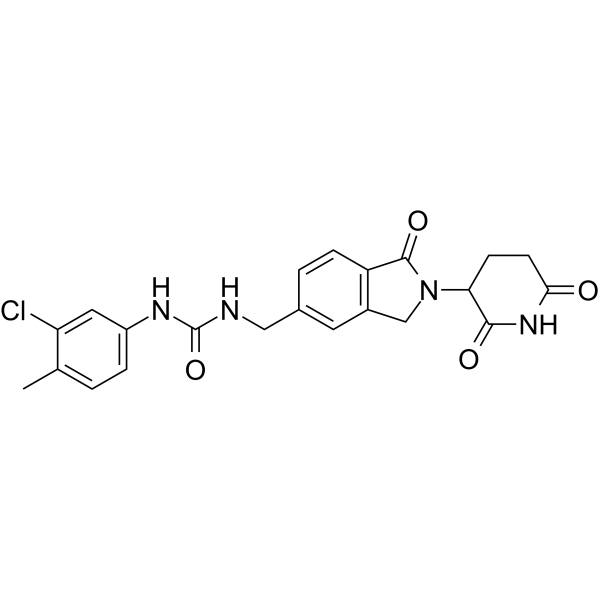
CC-885, a cereblon (CRBN) modulator, acts as a molecular glue degrader targeting GSPT1 with a Kd of 350 nM. CC-885 binds to CRBN to alter the substrate specificity of the CRL4 E3 ligase, promoting the ubiquitination and proteasomal degradation of GSPT1, BNIP3L, PLK1, CDK4, IKZF1/3, GSPT2, WIZ, CHD7, GOLM1, CK1α and ETS1. CC-885 induces apoptosis, cell cycle arrest, transcriptional downregulation and antiproliferation in cancer cells. CC-885 is applicable to research related to relapsed/refractory acute myeloid leukemia, MYC-driven tumors, metastatic castration-resistant prostate cancer, multiple myeloma, hepatocellular carcinoma, glioblastoma, VHL-deficient clear cell renal cell carcinoma and non-small cell lung cancer .
loading...
    loading...
18
18 Cited Publications
Cat. No.: HY-N0527
CAS No.: 14937-32-7
Synonyms: Penta-O-galloyl-β-D-glucose; 1,2,3,4,6-Pentagalloyl glucose
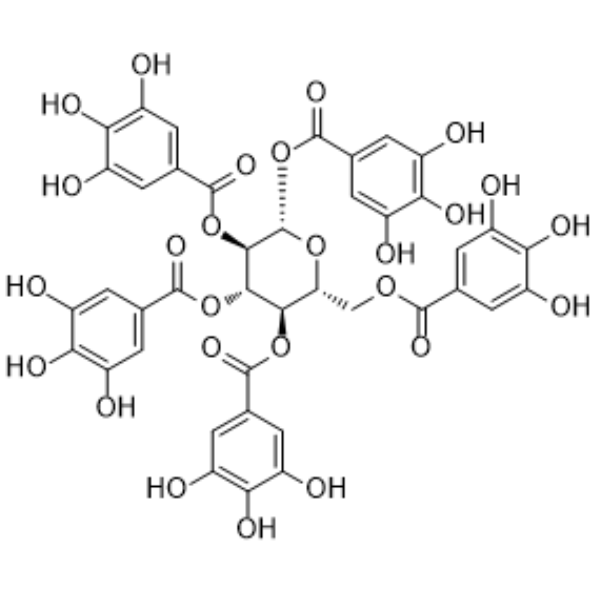
Pentagalloylglucose (Penta-O-galloyl-β-D-glucose) is an orally active gallic tannin compound and an inducer of apoptosis and autophagy. Pentagalloglucose induces cell apoptosis and autophagy through the GSK3β/β-catenin pathway. Pentagalloylglucose inhibits UBE2T-mediated p53 ubiquitination, upregulates p53, downregulates RRM1/RRM2 in pancreatic cancer organoids. Pentagalloglucose has antioxidant, anti mutagenic, anti-inflammatory, anticonvulsant, cardioprotective, anti allergic, cholesterol lowering, and anti-tumor activities .
loading...
    loading...
12
12 Cited Publications
Cat. No.: HY-114421
CAS No.: 2064175-41-1
Purity:  99.89%
Synonyms: dTAG-13
Research Areas:  

Cancer

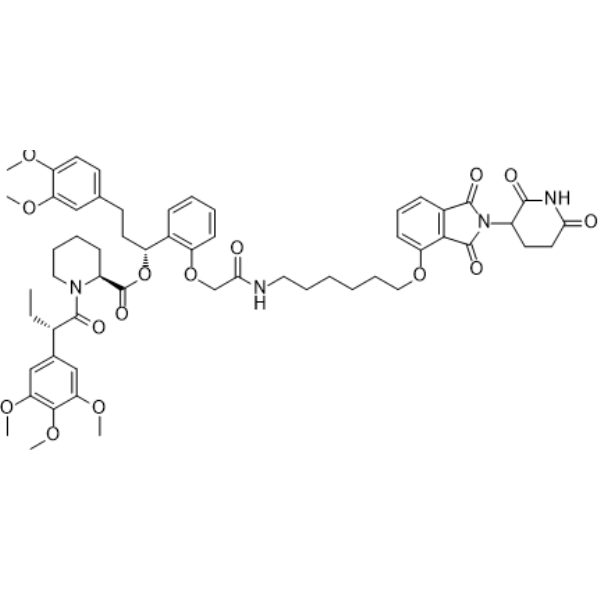
FKBP12 PROTAC dTAG-13 (dTAG-13) is a FKBP12 F36V PROTAC degrader and a PXR partial agonist. FKBP12 PROTAC dTAG-13 induces ubiquitination and proteasomal degradation of proteins tagged with FKBP12 F36V, without degrading wild-type FKBP12 or un-fused PXR. It weakly promotes the recruitment of SRC-1, strongly inhibits the interaction between NCoR and PXR, and upregulates the expression of CYP3A4 and other drug metabolism-related genes. FKBP12 PROTAC dTAG-13 is applicable to research related to breast cancer and leukemia [1] .
loading...
    loading...
10
10 Cited Publications
Cat. No.: HY-138641
CAS No.: 2222112-77-6
Purity:  98.99%
Synonyms: ARV-110
Research Areas:  

Cancer

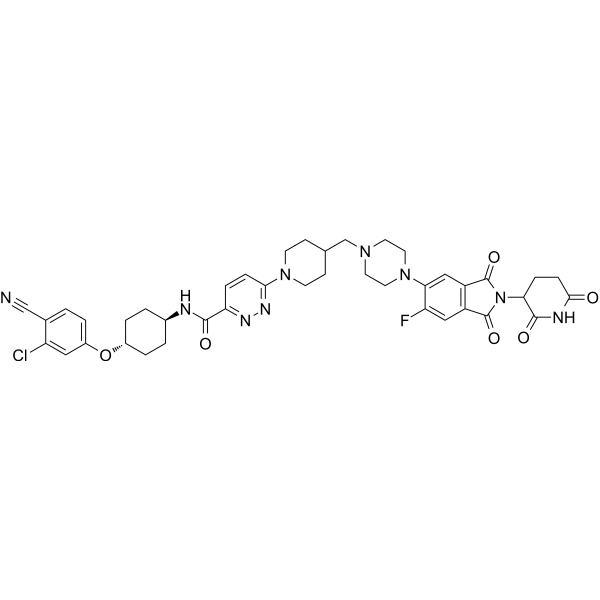
Bavdegalutamide (ARV-110) is an orally active, specific androgen receptor (AR) PROTAC degrader. Bavdegalutamide promotes ubiquitination and degradation of AR. Bavdegalutamide can be used for the research of prostate cancer .
loading...
    loading...
10
10 Cited Publications
Cat. No.: HY-123937
CAS No.: 2139287-33-3
Purity:  99.16%
Research Areas:  

Infection Cancer

THAL-SNS-032 is a selective CDK9 PROTAC degrader. THAL-SNS-032 recruits CRBN to form a ternary complex with CDK9, thereby triggering ubiquitination and proteasomal degradation of CDK9. THAL-SNS-032 also induces the degradation of CDK1, CDK2 and CDK7. THAL-SNS-032 elevates pH2AX levels, reduces MCL1s expression, and activates caspase-3. THAL-SNS-032 induces cancer cell apoptosis, regulates transcription, and inhibits the replication of human cytomegalovirus (CMV) and SARS-CoV-2. THAL-SNS-032 can be used in research related to breast cancer, leukemia, cytomegalovirus infection and SARS-CoV-2 infection .
loading...
    loading...
9
9 Cited Publications
Cat. No.: HY-112438
CAS No.: 2241025-68-1
Purity:  99.75%
Target:  

Deubiquitinase

Research Areas:  

Cancer

MF-094 is a potent and selective USP30 inhibitor with an IC50 of 120 nM. MF-094 increases protein ubiquitination and accelerates mitophagy .
loading...
    loading...
9
9 Cited Publications
Cat. No.: HY-129602
CAS No.: 2429877-44-9
Purity:  99.73%
Target:  

PROTACs STAT Apoptosis

Research Areas:  

Cancer

SD-36 is a potent STAT3 PROTAC degrader with a Kd of 44.4 nM and a Ki of 11 nM. SD-36 recruits the cereblon/culin 4A E3 ligase complex to mediate ubiquitination and proteasomal degradation of STAT3, inducing G1 phase cell cycle arrest and apoptosis. SD-36 is useful for research on acute myeloid leukemia, anaplastic large cell lymphoma, and hematopoietic and lymphoid malignancies .
loading...
    loading...
9
9 Cited Publications
Cat. No.: HY-123834
CAS No.: 824983-91-7
Purity:  99.85%
Target:  

FLAP ATM/ATR

Research Areas:  

Cancer

FEN1-IN-1 (compound 1) is a small molecule flap endonuclease 1 (FEN1) inhibitor with antitumor activity. FEN1-IN-1 binds to the active site of FEN1 and partly achieves inhibition by the co-ordination of Mg 2+ ions. FEN1-IN-1 initiaties a DNA damage response and activates the ATM checkpoint signalling pathway, the phosphorylation of histone H2AX and the ubiquitination of FANCD2 in mammalian cells. FEN1-IN-1 is promising for research of cancers .
loading...
    loading...
7
7 Cited Publications
Cat. No.: HY-18638
CAS No.: 30675-13-9
Synonyms: 4,5,6,7-Tetrachloroindan-1,3-dione
Target:  

Deubiquitinase

Research Areas:  

Neurological Disease

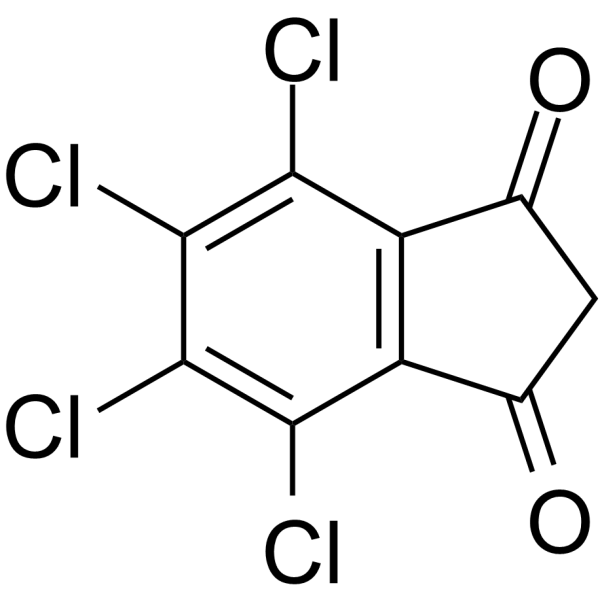
TCID (4,5,6,7-Tetrachloroindan-1,3-dione) is a potent and selective neuronal ubiquitin C-terminal hydrolase (UCH-L3) inhibitor with an IC50 of 0.6 μM . TCID diminishes glycine transporter GlyT2 ubiquitination in brainstem and spinal cord primary neurons .
loading...
    loading...
7
7 Cited Publications
Cat. No.: HY-130800
CAS No.: 1860875-51-9
Purity:  99.76%
Synonyms: CC-90009
Eragidomide (CC-90009) is a GSPT1 Molecular Glue degrader. Eragidomide exhibits antiproliferative and pro-apoptotic (apoptosis) activities against acute myeloid leukemia cells. Eragidomide recruits the CRL4CRBN E3 ubiquitin ligase complex to selectively target GSPT1 for ubiquitination and proteasomal degradation. Eragidomide reduces leukemia cell engraftment and eliminates leukemia stem cells. Eragidomide promotes the activation of the GCN1/GCN2/ATF4 pathway and the integrated stress response pathway, inhibits global protein translation, promotes preferential translation of ATF4, and induces the accumulation of ATF4, CHOP and ATF3. The response to Eragidomide is regulated by the ILF2/ILF3 heterodimer complex, the mTOR signaling pathway and the integrated stress response. Eragidomide can be used in research related to acute myeloid leukemia and relapsed/refractory acute myeloid leukemia .
loading...
    loading...
5
5 Cited Publications
Cat. No.: HY-110182
CAS No.: 1253491-42-7
Purity:  99.94%
Target:  

MDM-2/p53

Research Areas:  

Cancer

SP-141 is a specific inhibitor of MDM2. SP-141 promotes MDM2 auto-ubiquitination and degradation. SP-141 might be used for the research of pancreatic cancer and breast cancer cells .
loading...
    loading...
5
5 Cited Publications
Cat. No.: HY-123844
CAS No.: 1883863-52-2
Purity:  99.94%
dBET57 is a potent and selective BRD4BD1 PROTAC degrader with a DC50 of approximately 500 nM. dBET57 forms a ternary complex with CRL4 CRBN and BRD4BD1, induces the ubiquitination and degradation of BRD4, and indirectly inhibits the transcription of MYCN, c-Myc and PD-L1, ultimately leading to cell cycle arrest and apoptosis. dBET57 can be used in related research on neuroblastoma, non-small cell lung cancer and colorectal cancer .
loading...
    loading...
5
5 Cited Publications
Cat. No.: HY-120929
CAS No.: 1875036-74-0
Purity:  98.28%
Target:  

E1/E2/E3 Enzyme c-Myc

Research Areas:  

Inflammation/Immunology Cancer

BI8622 is a specific inhibitor of the ubiquitin ligase HUWE1 with an IC50 of 3.1 μM. BI8622 can decrease the protein expression levels of c-myc and glycolytic markers as well as immune modulatory markers after HUWE1 inhibition in triple-negative breast cancer (TNBC) cell lines. BI8622 significantly protects against cisplatin (HY-17394)-induced acute kidney injury (AKI). BI8622 significantly reduces the growth of multiple myeloma (MM) cell lines and induces cell cycle arrest. BI8622 can prevent HUWE1-dependent TTBK2 ubiquitination. BI8622 can be studied in research for various diseases including medulloblastoma, acute kidney injury, breast cancer and MM .
loading...
    loading...
5
5 Cited Publications
Cat. No.: HY-101519
CAS No.: 2093388-62-4
Purity:  99.59%
Synonyms: ZBC 260
BETd-260 (ZBC 260) is a BET PROTAC degrader. BETd-260 recruits BRD2, BRD3, and BRD4 to the CUL4-RBX1-DDB1-CRBN E3 ubiquitin ligase complex, driving cereblon-, proteasome-, and NEDD8-activating enzyme-dependent ubiquitination and degradation, with a DC50 of approximately 30-100 pM in RS4;11 cells. BETd-260 induces cancer cell apoptosis via endogenous signaling pathways, regulates the expression of the Bcl-2 family, inhibits the oncogene c-Myc, and reduces cell viability. BETd-260 suppresses tumor growth in mouse xenograft models with good biosafety. BETd-260 can be used in research related to acute leukemia, hepatocellular carcinoma, osteosarcoma, and triple-negative breast cancer .
loading...
    loading...
4
4 Cited Publications
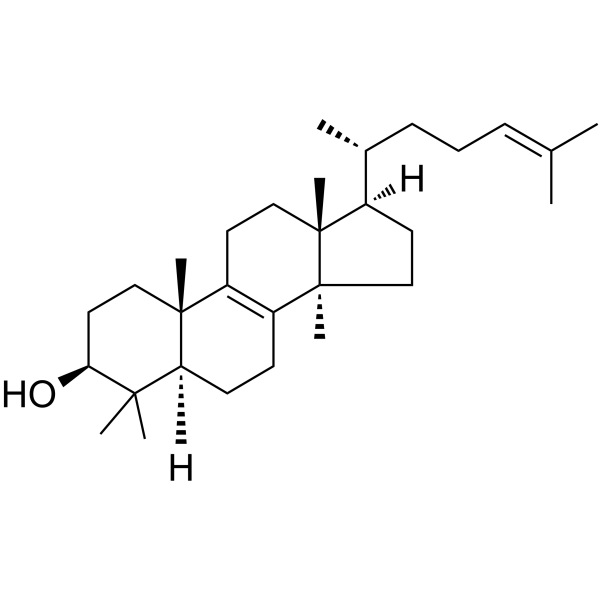
Cat. No.: HY-W020033
CAS No.: 79-63-0
Lanosterol is an intermediate of cholesterol synthesis and use of lanosterol induces ubiquitination and degradation of a rate-controlling enzyme of cholesterol synthesis, i.e., HMG CoA reductase. Lanosterol suppresses the aggregation and cytotoxicity of misfolded proteins linked with neurodegenerative diseases .
loading...
    loading...
4
4 Cited Publications
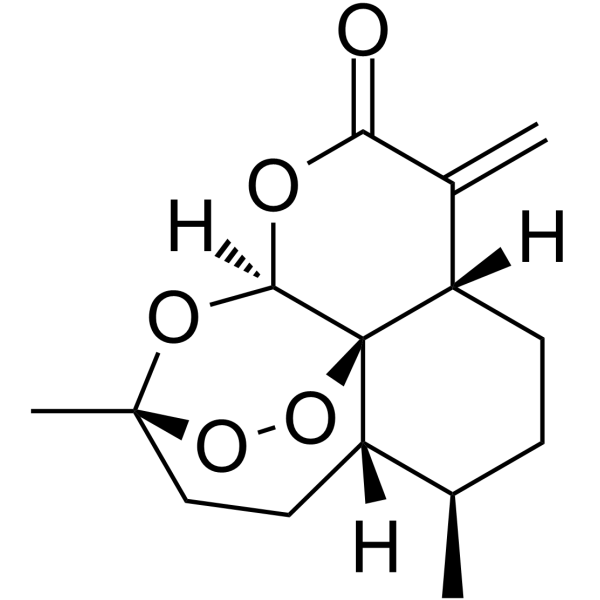
Cat. No.: HY-122550
CAS No.: 101020-89-7
Purity:  99.93%
Artemisitene, a natural derivative of Artemisinin, is a Nrf2 activator with antioxidant and anticancer activities. Artemisitene activates Nrf2 by decreasing Nrf2 ubiquitination and increasing its stability .
loading...
    loading...

